
A pellet stove here is the exception, not the rule.
With a short heating season and winter lows averaging 26°F, La Vergne just doesn't get cold enough, long enough, for pellet heat to compete with gas. If you still want one, I'll match you with a vetted local dealer who can actually get it installed right.
Every Project Starts From One of These Five Situations
Why gas—not pellet—is the default in La Vergne.
La Vergne sits in climate zone 4A at a modest 590 feet, with winter lows averaging a mild 26°F and a short heating season—closer to a heating footprint you'd see in the mid-South than anything approaching Duluth or Fargo territory. That's the core reason pellet stoves haven't caught on locally the way they have in colder biomass-heavy markets: the payback math on a $3,000-$6,000 pellet insert stretches thin when the heating season is short and natural gas is cheap and widely available through this stretch of Rutherford County.
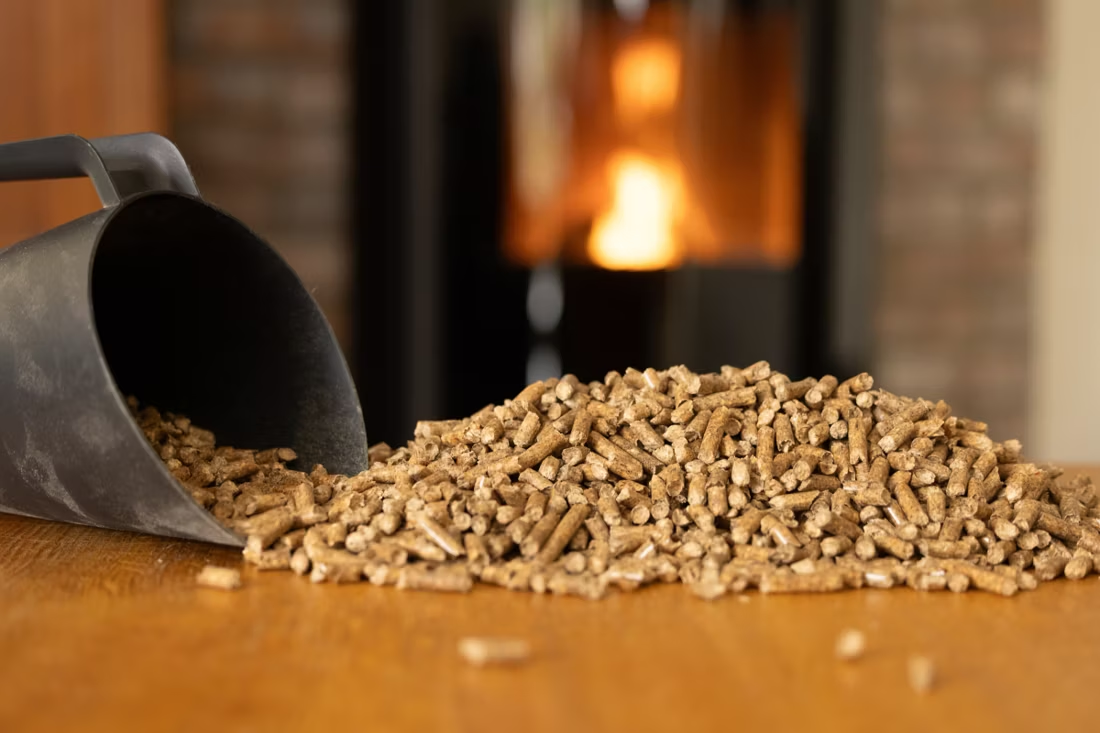
That doesn't mean a pellet stove is off the table—it means it's a niche choice here. Some homeowners still want one for a supplemental heat source in a bonus room, for the thermostat-like convenience without a gas line, or as backup heat that runs on Nashville Electric Service power rather than relying on a furnace during an ice storm. Regional pellet brands like Lignetics, Hamer Pellet Fuel, and Greenway Renewable Energy do serve the Middle Tennessee market, so fuel supply isn't the obstacle—installer familiarity and demand are. If you go this route, expect to lean harder on us to find a dealer who actually stocks and services pellet units regularly, rather than someone who installs one every few years.
Three steps. No salesperson until you're ready.
Tell us about your project
Your zip code, your situation, and the fuel you're leaning toward—or let the answers point you to one.
See what's actually available
The brands dealers within 100 miles genuinely carry—real options, never a catalog mirage.
Get your dealer & Project Guide
A trusted local dealer, plus the free Project Guide & Parts List that names every component of the job.
Frequently Asked Questions
Is a pellet stove even a good fit for a La Vergne home?
Honestly, for most La Vergne homes, no—not as a primary heat source. With winter lows averaging 26°F and only a short heating season each year, the climate here is mild enough that natural gas or a heat pump running on Nashville Electric Service power handles the job more cheaply over a full winter. Where a pellet stove does make sense is as a secondary heat source for a specific room, a hedge against occasional ice-storm power outages (pellet stoves need electricity for the auger, so pair with a small battery backup if outages are your concern), or simply because you like tending a stove. It's a legitimate choice, just not the local default.
How much does a pellet stove installation cost in La Vergne?
Because pellet installs are infrequent in this market, pricing tends to track the regional Southeast average rather than a heavily competed local rate: typically $3,000 to $6,500 depending on whether you're doing a freestanding stove with a simple through-wall vent kit or a full insert into an existing masonry firebox. There's no local price war driving costs down the way there is for gas fireplace installs here, so get more than one quote and confirm the dealer has actually installed a pellet unit before, not just gas inserts.
Where do I even buy pellet fuel near La Vergne?
Pellet fuel isn't stocked on every corner here the way it might be in Minnesota or upstate New York, but it's not hard to source. Lignetics, Hamer Pellet Fuel, and Greenway Renewable Energy all distribute through the broader Middle Tennessee and Southeast region, and farm supply or hardware stores in Rutherford County typically special-order or seasonally stock 40-pound bags from one of those brands. Because La Vergne's heating season is short, plan to buy what you need for the winter rather than assuming year-round shelf stock like you'd find further north.
Do I need a permit to install a pellet stove in La Vergne?
Yes—any new solid-fuel appliance, including a pellet stove, needs a building permit, typically through the City of La Vergne Codes Department if you're inside city limits, or Rutherford County Codes if you're outside them. The permit process covers hearth clearances and the vent termination location on the exterior wall. Because pellet installs are uncommon locally, it's worth confirming your installer has pulled this specific permit type before—the inspection criteria differ slightly from a gas fireplace permit.
What size pellet stove do I need for a La Vergne home?
Given the mild winter lows here—averaging 26°F, well short of what you'd see in Bozeman or Minneapolis—most La Vergne installs lean toward small to mid-size units rated for 1,000 to 1,800 square feet, usually intended to heat a specific zone like an addition or bonus room rather than the whole house. Going bigger just means more idling and more frequent low-burn cycling, which is harder on the auger motor and igniter than running a right-sized unit at a steady rate.
Pellet stove vs. gas fireplace—which makes more sense here?
For most La Vergne homeowners, gas wins on nearly every practical measure: it's cheaper to install with the wide natural gas coverage across Rutherford County, it fires instantly with no fuel bags to haul, and it doesn't need electricity to run (a real plus during ice-storm outages, when Nashville Electric Service crews are stretched thin). Pellet stoves make more sense if you specifically want the visual and radiant feel of a real flame with actual fuel, don't have gas service at your address, or want a heat source independent of your central HVAC zone. It's a preference-driven choice here, not a climate-driven one.
Can a pellet stove run during a power outage in La Vergne?
Not on its own—the auger, igniter, and combustion blower all need electricity, so a standard pellet stove goes cold the moment Nashville Electric Service power drops, which can happen during the ice storms that occasionally hit Rutherford County in January and February. Some homeowners pair a pellet stove with a small battery backup or generator sized for the stove's low draw (usually under 500 watts) specifically to keep it running through a multi-hour outage. If outage resilience is your main goal, a wood-burning option is actually more reliable, though wood stoves are similarly uncommon in this market for the same climate reasons.
How often does a pellet stove need cleaning and maintenance in this climate?
Because La Vergne's heating season is short—well under half the year compared to colder Midwest and Northeast markets—a pellet stove here typically needs less annual burn time and correspondingly lighter maintenance. Still, plan on a weekly ash pan cleanout during active use and a full burn-pot and exhaust-vent cleaning at least once a season, plus an annual professional service to check the auger motor and gaskets. Skipping the annual service is the most common way these units fail early, especially given how infrequently local techs see pellet units compared to gas fireplaces.
Are there rebates or incentives for a pellet stove in La Vergne?
There's no Tennessee-specific pellet stove rebate program active locally, and given the mild climate here, biomass heating incentives common in colder Northeast states haven't extended to Middle Tennessee. The federal biomass stove tax credit (25D) has applied in past years to units meeting a 75%+ efficiency rating, so it's worth asking your dealer whether the specific model you're considering currently qualifies—that's a bigger factor in your total cost than any local program.
Why is my open fireplace making my house colder?
Open fireplaces suck—literally. As the fire burns, it consumes air your furnace already paid to heat and pulls it out through the chimney, so the house is actually colder after the fire goes out than before you lit it. An insert fixes this: it seals the chimney, puts fixed glass across the front, and turns that hole in your house into a real heat source.
How often does a pellet stove need cleaning?
A clean pellet stove is a happy pellet stove. Plan on cleaning the burn pot about once a week when you're burning regularly—ash and clinkers gum up the air holes just like a pellet barbecue. Most pellet stove problems trace back to skipped cleaning that nobody explained up front. Some designs make it easy with a trapdoor burn pot: pull a lever and the gunk drops into the ash pan.
How much should I budget for a fireplace?
For an average home—covering the fireplace, the vent pipe, and basic installation—a budget between $3,900 and $5,500 gives you a lot of options across wood, gas, and pellet. By the time you add finish work, gas line, and electrical, the average complete installation lands between $5,000 and $12,000 all-in. In a remodel or new build, a good rule is to put about 2.5% of the total project cost toward the fireplace.
Can a fireplace actually lower my heating bill?
Yes—by creating a comfort zone. A furnace heats every square foot of the house just to warm the one room you're in; a gas fireplace on low burns roughly a sixth of the gas a typical furnace does. Set the furnace around 55–60 degrees as a baseline, then heat the rooms your family actually uses. Families who heat this way commonly save $20–$60 a month.
Nearby Dealers
Hearth shops serving La Vergne and the surrounding area.
Pellet Brands Stocked Around La Vergne
Manufacturers will point you to the nearest stocking dealer.
Get your free Project Guide & Parts List for a La Vergne pellet stove.
Tell me about your home and why you're considering pellet over gas, and I'll match you with a trusted local dealer who actually installs pellet units—plus a free Project Guide & Parts List with the exact vent kit and parts your project needs.
Find Your Fireplace →