
Real flame look, real heat, no chimney required in Knox County.
From downtown Knoxville to Farragut, Karns, and Halls, electric fireplaces deliver instant ambiance and supplemental heat without venting, gas lines, or firewood. Find the right unit and connect with a trusted local dealer.
Every Project Starts From One of These Five Situations
Mild winters, easy installs, real convenience.
Knox County sits in climate zone 4A—a mixed-humid zone where winter lows average around 26 degrees and the heating season runs roughly 3,900 heating degree days a year, less than half what a place like Minneapolis logs. That's real winter, but not brutal winter: most Knoxville-area homes need supplemental warmth in specific rooms for a few cold months, not a primary heat source that has to carry the whole house through sub-zero nights. That's exactly the niche electric fireplaces fill well.
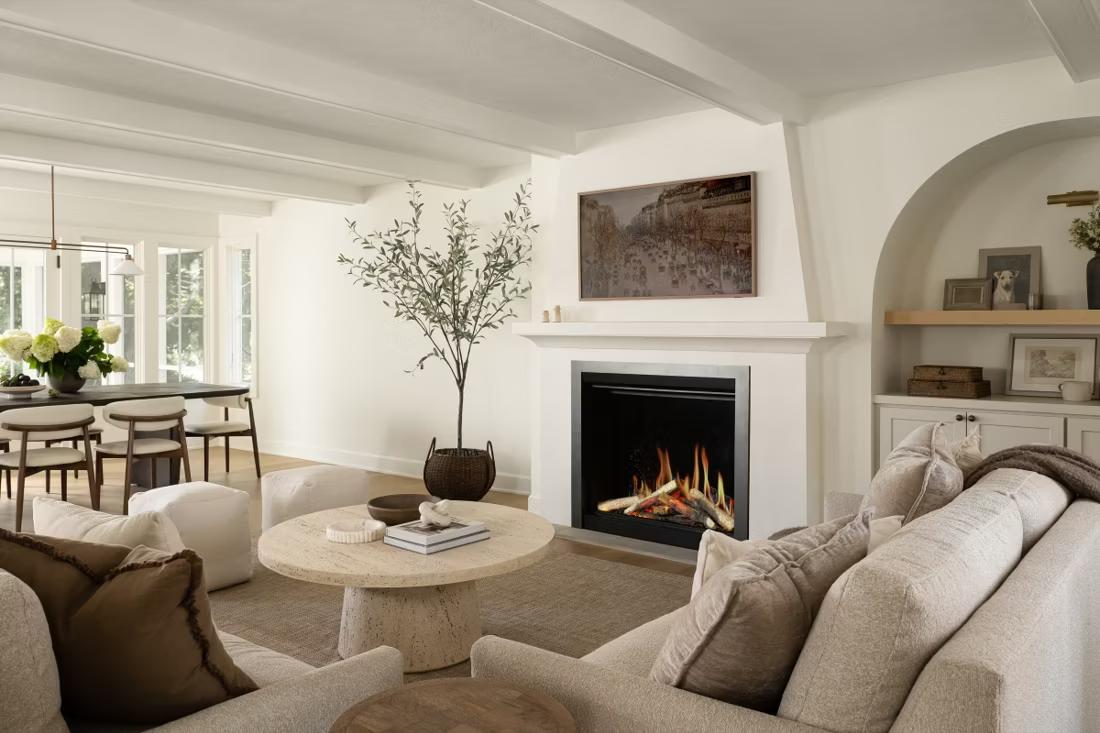
Plenty of older homes across Knoxville, Farragut, and the county's in-town neighborhoods still have the original wood-burning fireplace and oak or hickory mantel, but many homeowners are swapping in an electric insert rather than dealing with cutting, stacking, and cleaning up after cordwood. New construction and condos, where a masonry chimney was never built in the first place, lean on electric fireplaces even more—no flue, no gas line, no combustion byproducts, just a standard outlet or a dedicated circuit. It's the fastest fuel type to install in the county, and one of the few a homeowner can plug in the same day it arrives, though a licensed electrician is still the right call for any built-in unit tied to a new circuit.
Three steps. No salesperson until you're ready.
Tell us about your project
Your zip code, your situation, and the fuel you're leaning toward—or let the answers point you to one.
See what's actually available
The brands dealers within 100 miles genuinely carry—real options, never a catalog mirage.
Get your dealer & Project Guide
A trusted local dealer, plus the free Project Guide & Parts List that names every component of the job.
Frequently Asked Questions
How much does it cost to install an electric fireplace in Knox County?
Electric fireplace installation in Knox County typically runs $300 to $2,000, and the spread comes down to the type of unit rather than site work. A plug-in insert that drops into an existing masonry firebox can be a same-day, no-permit project on the low end. A wall-mounted or built-in unit that needs a dedicated 120V or 240V circuit run by a licensed electrician, plus any surrounding millwork or a new mantel, lands on the higher end. Unlike a gas or wood project, there's no chimney, venting, or gas line to price in, which is why electric is consistently the least expensive fireplace fuel to install across Knoxville and the surrounding county.
Do I need a permit to install an electric fireplace in Knox County?
Most plug-in electric fireplaces and inserts don't require a permit anywhere in Knox County, since they simply plug into an existing outlet. If your project involves a built-in unit that needs a new dedicated circuit, a licensed electrician will typically pull an electrical permit through the Knoxville-Knox County Codes Administration for work inside city limits, or the county's building office for unincorporated areas. The permit covers the wiring, not the fireplace itself—there's no combustion appliance to inspect the way there is with gas or wood. Local dealers who sell built-in units usually coordinate this step with an electrician as part of the install.
What size electric fireplace do I need for my Knox County home?
Electric fireplaces are sized more by room and application than by whole-house heat load, since most Knox County installs are supplemental rather than primary heat. A compact 1,000 to 1,500-watt insert handles a bedroom or den; a larger wall-mounted unit rated near 1,500 watts, the standard max for a single 120V circuit, can noticeably take the edge off a living room on one of the county's occasional nights in the teens. Because Knoxville's winter lows average in the mid-20s rather than the single digits, most homeowners are heating a specific room comfortably rather than trying to replace a furnace—a local dealer can walk through your room dimensions and insulation to recommend wattage and placement.
What's the difference between an electric fireplace, an electric insert, and an electric log set?
An electric insert is built to slide into an existing masonry firebox—the most common upgrade for older Knoxville homes with a wood-burning fireplace nobody uses anymore. A built-in electric fireplace is a standalone unit framed into a wall, common in new construction or remodels where there's no existing chimney. An electric log set is the simplest option—a self-contained log unit that sits inside an existing firebox with no insert surround, often the lowest-cost way to add flame effect and modest heat to a fireplace that's otherwise sitting empty. All three run on standard household power; the difference is mainly how much of the existing masonry opening you want to keep visible.
Do electric fireplaces actually produce heat, or are they just for looks?
Most electric fireplaces sold today include a heater—typically a 1,500-watt resistance or infrared element—that can run independently of the flame effect, so you can have the visual with the heat off in mild weather, or both together when Knox County temperatures drop into the 20s and 30s overnight. Output-wise, 1,500 watts is roughly 5,100 BTUs, enough to comfortably heat a single room in the 200 to 400 square foot range, not a whole home. For homeowners who want ambiance most of the year and useful supplemental warmth for the coldest weeks, that's usually the right amount of heat—a local dealer can confirm sizing against your specific room.
Will my electric fireplace work during a power outage?
No—electric fireplaces require a functioning outlet or circuit, so they go dark along with everything else in a power outage. Knox County's grid, served by KUB within Knoxville and by several regional electric cooperatives in outlying parts of the county, generally sees shorter outage windows than mountainous parts of East Tennessee, but ice storms do happen. If backup heat during outages matters to you, a gas fireplace with a battery-backed ignition system is worth comparing—electric fireplaces are best understood as a convenience and ambiance choice for Knox County's mild winters, not an emergency heat source.
How much does it cost to run an electric fireplace in Knox County?
A typical 1,500-watt electric fireplace costs roughly 15 to 25 cents an hour to run at full heat, depending on your KUB or local co-op electric rate—call it $1.50 to $2.50 for a five-hour evening. Running just the flame effect without the heater draws a fraction of that, often under 50 watts. For a Knox County home using the heater as supplemental warmth in one room rather than running the furnace harder throughout the house, that's typically cheaper per hour than raising the thermostat, though actual savings depend on your home's layout and how well you can close off the room being heated.
Where's the best place to install an electric fireplace in a Knox County home?
Bedrooms, dens, and living rooms without an existing gas line are the most common placements, and it's also the go-to solution for finished basements—common in Knox County's newer construction—where running a gas line or masonry chimney was never part of the build. Older homes in Fountain City, Bearden, and other in-town Knoxville neighborhoods with an existing but unused wood-burning fireplace are prime candidates for an insert conversion, since the firebox opening is already there and the mantel and surround stay intact. A local dealer can also advise on TV-above-fireplace setups, which are popular with electric units since there's no heat or venting concern for electronics mounted above the unit the way there can be with gas or wood.
Electric vs. gas fireplace—which is right for my Knox County home?
Gas fireplaces produce significantly more heat—a mid-size gas insert can put out 20,000 to 30,000 BTUs, versus roughly 5,000 BTUs from a typical electric unit—and can serve as genuine supplemental or even primary heat during a cold snap. Electric fireplaces install faster and cheaper, need no gas line or venting, and work in condos, apartments, and rooms where running gas isn't practical or allowed. For Knox County's moderate winters, where the heating season is real but not extreme, electric is often enough for homeowners who mainly want ambiance and light supplemental heat in a specific room, while homeowners who want a fireplace to meaningfully offset furnace use during the coldest weeks usually lean toward gas. Both fuels are available through local Knoxville-area dealers, and many showrooms will let you see both burning side by side.
Can I put a TV above my fireplace?
Yes—with an asterisk. Fireplaces are hot and TVs don't like heat. Either put a mantel between them to deflect rising warmth, or choose a fireplace with heat-management technology that creates a cool zone on the wall above—the wall stays around 125 degrees, barely warm, while the room still gets full heat. If you like clean lines and don't want a mantel, heat management is the answer.
Does an electric fireplace need a vent or chimney?
No—that's its superpower. An electric fireplace needs a wall and an outlet, period. No vent pipe, no gas line, no clearances to design around, which is why it works in bedrooms, offices, apartments, and walls where venting a gas or wood unit would be impractical or impossible. Installation is typically the simplest and least expensive of any fireplace type.
Can a fireplace actually lower my heating bill?
Yes—by creating a comfort zone. A furnace heats every square foot of the house just to warm the one room you're in; a gas fireplace on low burns roughly a sixth of the gas a typical furnace does. Set the furnace around 55–60 degrees as a baseline, then heat the rooms your family actually uses. Families who heat this way commonly save $20–$60 a month.
Should the dealer who sells my fireplace also install it?
Ideally, yes. A fireplace project involves vent pipe, gas line, electrical, and often tile or stone. Hire three or four separate trades and you own the liability and the game of telephone between them. One company selling and installing means one accountable party, start to finish—ask about factory training, on-time completion records, and what happens if an inspection fails.
Stove and Fireplace Dealers in Knox County
Listings include WhyFire partner dealers, dealers we have verified as authorized for the brands we recommend, and established local businesses that carry hearth products. Every listing shows which one it is. The ones marked Preferred run on WhyFire's software, so they can show you real pricing and book your appointment right here. No manufacturer pays for placement. How we verify dealers →
Archies Stone And Fireplaces
Pool Warehouse
Southern Flame
Englands Woodstove Store
Tn Gas Company
Find your electric fireplace in Knox County.
Tell us about your room and we'll match you with the right electric fireplace or insert, plus a free Project Guide & Parts List and a trusted local Knox County dealer to install it.
Find Your Fireplace →