
Electric heat that fits your Farragut lifestyle.
No chimney, no gas line, no venting—just a clean, controllable flame for Farragut's mild Tennessee Valley winters. Find the right unit and connect with a trusted local dealer.
Every Project Starts From One of These Five Situations
The clean, flexible option for Farragut's mild winters.
Farragut sits in the Tennessee Valley at just under 1,000 feet elevation, in climate zone 4A with average winter lows around 28°F and a fairly mild winter heating load—a fraction of what a place like Duluth, MN or Burlington, VT sees. Most homes here rely on a heat pump or central HVAC for primary heat, which is exactly the situation where an electric fireplace shines: it doesn't need to carry the whole house through winter, it just needs to make one room feel finished and warm on demand.
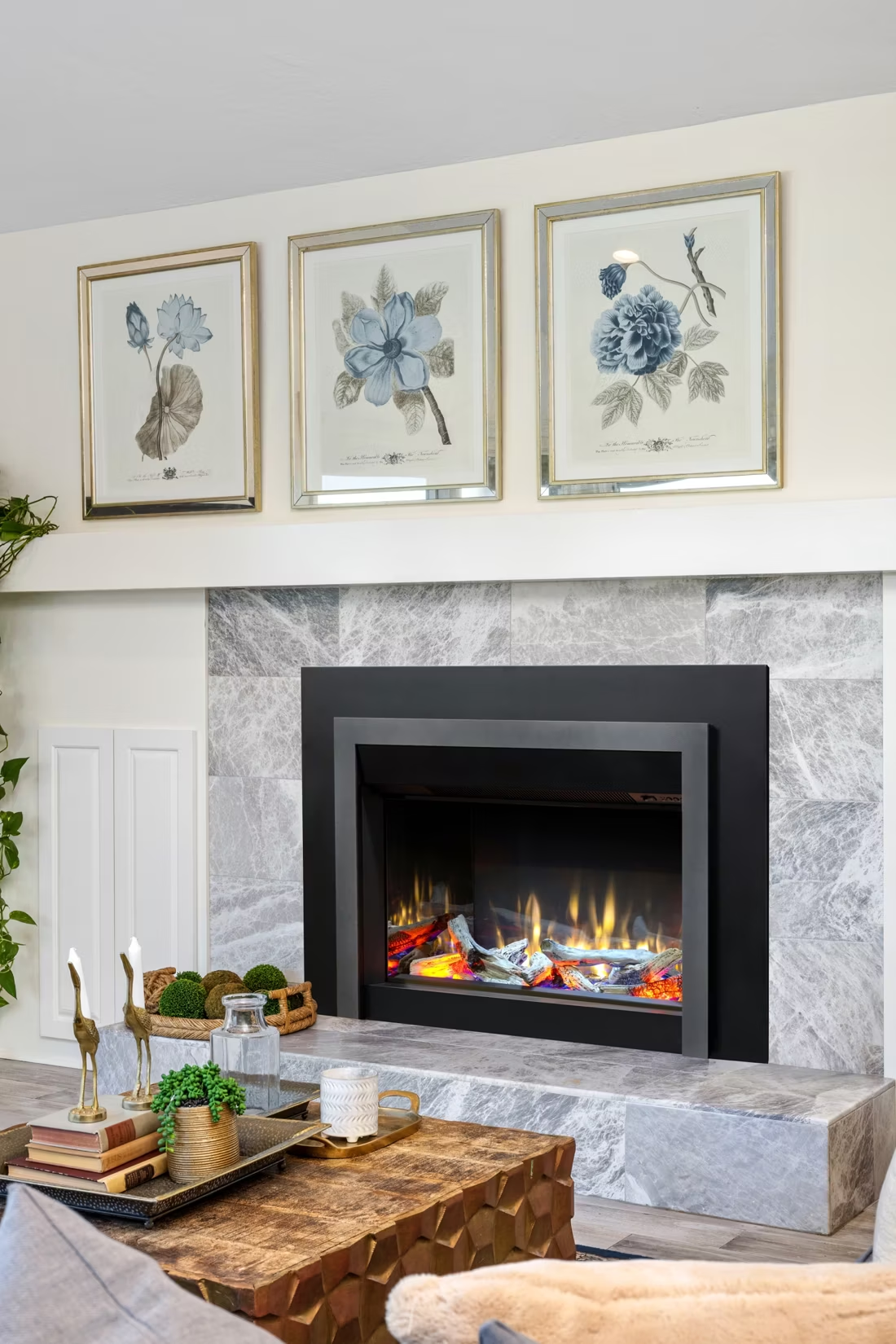
Because electric units don't burn fuel, there's no chimney, no gas line, and no combustion venting to plan around—which makes them a favorite in Farragut's newer construction, finished basements, and additions in neighborhoods like those around Turkey Creek and Concord Road, where running a flue simply isn't practical. With residential electricity through LCUB (Lenoir City Utilities Board) running about $0.12 per kWh, an electric fireplace is also cheap to operate as a zone-heat supplement to your existing system, not a replacement for it.
Three steps. No salesperson until you're ready.
Tell us about your project
Your zip code, your situation, and the fuel you're leaning toward—or let the answers point you to one.
See what's actually available
The brands dealers within 100 miles genuinely carry—real options, never a catalog mirage.
Get your dealer & Project Guide
A trusted local dealer, plus the free Project Guide & Parts List that names every component of the job.
Frequently Asked Questions
How much does an electric fireplace installation cost in Farragut?
Costs vary widely by unit type. A plug-in freestanding or wall-mount electric fireplace can be up and running the same day for $300 to $800, since it just needs a standard outlet. A built-in linear electric fireplace or an electric insert set into an existing masonry firebox typically runs $1,500 to $3,500 installed, including framing, trim, and any dedicated circuit work an electrician needs to run. Local dealers in the Knoxville-Farragut area will size and quote based on your specific fireplace opening or wall.
Do I need a permit to install an electric fireplace in Farragut?
Usually not for a plug-in unit—it's treated like any other appliance. Built-in electric fireplaces that require a new dedicated circuit or wall framing typically need an electrical permit, which most local installers pull through the Town of Farragut's Community Development Department or Knox County Codes Administration depending on your address. Because there's no combustion involved, there's no gas line permit, no chimney inspection, and no venting code to satisfy—which is part of why electric installs move faster than gas or wood projects.
How much does it cost to run an electric fireplace day to day?
Most electric fireplaces draw around 1,500 watts on the heater setting. At LCUB's residential rate of roughly $0.1195 per kWh, that works out to about 18 cents an hour to run the heat, or just a fraction of a cent per hour if you're running flame effects only with the heater off. Compared to raising the thermostat on a central heat pump to warm a whole house, using an electric fireplace to heat the one room you're actually sitting in is usually the cheaper option on a mild Farragut evening.
Will an electric fireplace actually heat my room, or is it just for looks?
Most electric fireplaces are rated for 400 to 1,000 square feet of supplemental heat, putting out roughly the equivalent of a 5,000 BTU space heater. That's plenty to take the chill off a family room, sunroom, or finished basement on a 28-degree Farragut morning, but it isn't sized to replace your heat pump as whole-home heat. Homeowners here typically use electric fireplaces the way they're meant to be used—as a supplemental, on-demand heat source for the room they're in, with the flame effect running independently of the heater whenever they want ambiance without the warmth.
What's the difference between an electric insert, a built-in, and a freestanding electric stove?
An electric insert is built to slide into an existing masonry fireplace opening, giving a wood-burning fireplace new life without touching the chimney. A built-in linear electric fireplace is designed to be framed into a wall from scratch—common in new construction and remodels around Farragut's newer subdivisions. A freestanding electric stove looks like a traditional wood stove but plugs into a standard outlet, making it the simplest option for a room where you want stove styling without any installation work at all. All three run off standard household current, so the real decision is aesthetic and where in the room you want the heat source.
What size electric fireplace do I need for my Farragut home?
For a family room or great room in the 200 to 400 square foot range, a 40- to 50-inch linear unit is typically enough. Larger open-concept spaces, common in Farragut's newer builds, often call for a 60- to 74-inch unit or a wider insert to properly fill a feature wall and provide noticeable heat. Since electric fireplaces are sized more by the wall or opening they fill than by strict BTU heating math, a local dealer measuring your actual space will get you a better fit than sizing off square footage alone.
Electric vs. gas—which is right for my Farragut home?
Gas fireplaces put out real, sustained heat and can serve as a legitimate backup heat source, which matters more in colder climates than it does in Farragut's mixed-humid, moderate-winter setting. Electric fireplaces trade some heat output for simplicity: no gas line, no venting, no annual gas appliance service, and instant installation in basements, condos, or interior walls where running a flue isn't an option. For most Farragut homeowners adding a secondary fireplace to a family room or finished basement purely for ambiance and light supplemental warmth, electric is the lower-cost, lower-hassle choice. For a primary living space where real heat output matters during winter storms, gas is worth a look too—a local dealer can walk through both.
Are electric fireplaces safe around kids and pets?
Electric fireplaces are generally considered the safest hearth option for households with young kids or pets. The glass front stays cool to the touch since there's no real flame or combustion heat behind it, and there's no risk of carbon monoxide, gas leaks, or hot ash and embers. Many models also include a heater on/off switch that's separate from the flame effect, so you can run the visual flame safely with the heat off entirely—a common setup in Farragut playrooms and finished basements.
Where can I install an electric fireplace in my home?
Because there's no venting or gas line required, electric fireplaces can go almost anywhere with access to power: interior walls, finished basements, media rooms, sunrooms, even bedrooms. This flexibility is a big reason they're popular in Farragut's basement finish-outs and additions, where running a chimney or gas line after the fact would mean tearing into finished space. The main installation consideration is simply whether you need a dedicated circuit for a larger built-in unit—your electrician or local dealer can confirm that during a quick site visit.
Can I put a TV above my fireplace?
Yes—with an asterisk. Fireplaces are hot and TVs don't like heat. Either put a mantel between them to deflect rising warmth, or choose a fireplace with heat-management technology that creates a cool zone on the wall above—the wall stays around 125 degrees, barely warm, while the room still gets full heat. If you like clean lines and don't want a mantel, heat management is the answer.
Do electric fireplaces actually produce heat?
Yes—most put out around 4,800–5,000 BTUs from a standard outlet, which comfortably warms a bedroom, office, or den as a comfort-zone heater. What they won't do is carry a whole house the way wood, gas, or pellet can. Think of electric as ambiance-first with honest supplemental heat: flames on with no heat in July, flames plus warmth in January.
How much should I budget for a fireplace?
For an average home—covering the fireplace, the vent pipe, and basic installation—a budget between $3,900 and $5,500 gives you a lot of options across wood, gas, and pellet. By the time you add finish work, gas line, and electrical, the average complete installation lands between $5,000 and $12,000 all-in. In a remodel or new build, a good rule is to put about 2.5% of the total project cost toward the fireplace.
Can I install a fireplace myself?
If you're putting a fire in your house on purpose, it's best to work with an expert. Unless you're genuinely experienced in framing, gas line, vent pipe, and the national code on clearances to combustibles, have a professional do it—and ideally the same company that sells you the fireplace, so warranty, service, and liability all live under one roof.
Nearby Dealers
Hearth shops serving Farragut and the surrounding area.
Electric Service in Farragut
An electric fireplace's heater draws about 1,500 watts—pennies per hour at local rates.
City Of Lenoir - (Tn)
Find your electric fireplace in Farragut.
Tell us a bit about your home and we'll match you with the right electric fireplace, insert, or stove—and connect you with a trusted local dealer.
Find Your Fireplace →