
Keep Your Family Warm and Safe—No Matter What
Wood heat isn't the default in Roane County, but for backup warmth during ice storms and the appeal of a real fire, it's a solid supplemental choice. We'll help you find the right unit and a trusted local dealer.
Every Project Starts From One of These Five Situations
A supplemental choice, not a necessity—and that's okay.
Kingston sits at about 880 feet in the Tennessee Valley, where winter lows average a relatively mild 28°F and the town logs a fairly light heating season overall—less than half the winter heating load a place like Burlington, VT sees in a typical winter. Central HVAC, heat pumps, and gas handle most of the heating load here without much trouble, which is why wood-burning stoves and fireplaces aren't the primary heat source in most Roane County homes the way they'd be farther north or at higher elevation.
That said, wood heat hasn't disappeared from Kingston—it's just occupying a different role. Homeowners near Watts Bar Lake often add a wood stove or insert as backup heat for the ice storms that occasionally knock out power along the valley, or simply because they like the ambiance of a real fire and have easy access to oak, hickory, and maple. Cutting permits through the Cherokee National Forest run about $20 per cord during the May-to-October season, and with no local air quality non-attainment issues, there's no burn-ban culture to navigate like you'd find in smokier western basins.
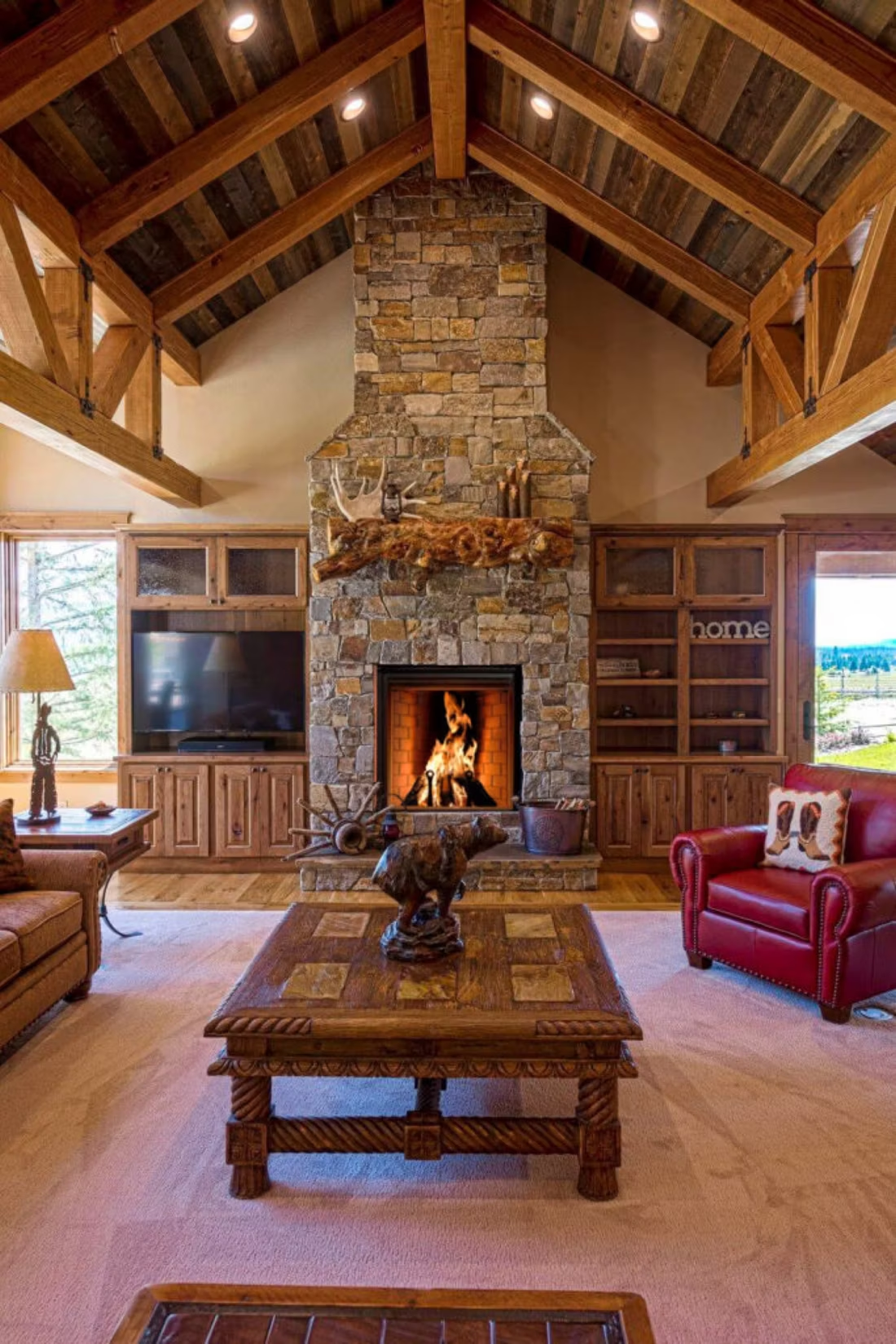
Firewood Cutting Permits Near Kingston
Three steps. No salesperson until you're ready.
Tell us about your project
Your zip code, your situation, and the fuel you're leaning toward—or let the answers point you to one.
See what's actually available
The brands dealers within 100 miles genuinely carry—real options, never a catalog mirage.
Get your dealer & Project Guide
A trusted local dealer, plus the free Project Guide & Parts List that names every component of the job.
Frequently Asked Questions
How much does a wood stove installation cost in Kingston?
Most wood stove and insert installations run in the $3,500 to $7,500 range depending on the unit, whether you're venting through an existing masonry chimney or installing new Class A pipe, and any hearth pad work needed for clearance. Because wood heat is less common here than in colder parts of the country, Kingston has fewer dedicated hearth specialists than a city like Knoxville—some homeowners end up working with a Knoxville-area dealer who services Roane County, which is worth factoring into scheduling and delivery timelines.
Does wood heat even make sense in Kingston's climate?
For most homes, no—not as a primary heat source. With winter lows averaging around 28°F and a mild heating season compared to colder regions, a heat pump or gas furnace will comfortably carry a Kingston home through the season. Where wood still makes sense is as a backup heat source for winter storms that take out power along the Tennessee Valley, or for homeowners who simply want the ambiance and independence of a real wood fire in the den or living room. It's a lifestyle choice here more than a heating necessity, and that's a fine reason to install one.
Do I need a permit to install a wood stove in Kingston?
Yes—new wood-burning appliance installations typically require a building permit through the Roane County Building Department, and the unit itself needs to meet current EPA emissions standards. A licensed installer will usually pull the permit as part of the job. Kingston doesn't have the air quality non-attainment restrictions you'd see in some western cities, so there's no seasonal curtailment schedule to plan around—once it's installed and inspected, you can burn whenever you like.
Where can I get firewood or cut my own near Kingston?
Oak, hickory, and maple are the most common species burned locally, with pine available for kindling and shoulder-season fires. Several small suppliers around Roane County deliver firewood by the cord, and prices vary with species and season—hickory and oak command a premium for their heat output and longer burn time. If you'd rather cut your own, the Cherokee National Forest issues personal-use cutting permits for about $20 per cord, valid during the May-through-October season, which lines up well with stocking up before the first cold snap.
Should I install a wood stove or a wood insert in my existing fireplace?
Many older homes in and around Kingston already have a masonry fireplace, and in that case a wood insert is usually the better upgrade—it uses your existing chimney with a stainless liner and turns an inefficient open hearth into a real heat source. If you don't have an existing fireplace, or you're heating a detached space like a workshop or lake cabin near Watts Bar, a freestanding stove with new Class A chimney pipe is the more straightforward install. A local dealer can walk your existing setup and tell you which route makes sense in about fifteen minutes.
How often does my chimney need to be inspected in Kingston?
An annual inspection before burning season is the standard recommendation from the Chimney Safety Institute of America, and it holds true here even though Kingston winters are shorter than colder climates. Because most local wood stoves get lighter, more occasional use—backup heat and ambiance fires rather than daily primary heat—creosote buildup is usually slower than in a home burning around the clock. Still, a yearly sweep and inspection in late summer or early fall is worth the modest cost to catch any issues before the first cold front comes through the valley.
Wood vs. gas—which makes more sense for a Kingston home?
Gas is the more practical everyday choice for most Kingston homes—natural gas and propane fireplaces offer instant, thermostat-controlled heat that fits well with a climate where you're not running the fireplace all winter long. Wood's advantage is independence: it keeps working when an ice storm takes down power lines along the Tennessee Valley and your gas furnace's electronic ignition or blower won't run. Plenty of local homeowners land on both—a gas insert for daily convenience in the main living area, and a wood stove in a den, basement, or lake cabin for backup and atmosphere.
Wood vs. electric heat during a power outage—what actually keeps me warm?
This is really the core reason most Kingston homeowners consider wood in the first place. Electric heat—including baseboard units and heat pumps served by City of Rockwood, which bills around 12.7 cents per kWh here—stops working the moment the power goes out, and ice storms in the Tennessee Valley can knock out power for days at a time. A wood stove needs no electricity at all to produce heat, which is exactly why it earns a spot in so many homes here as backup rather than primary heat. If daily convenience is the priority, electric wins; if storm resilience matters most, wood is hard to beat.
What kind of wood stove is best suited for Kingston's mild winters?
You generally don't need the 20-plus-hour catalytic burn times that homeowners in much colder climates rely on. A mid-sized non-catalytic stove from a brand like Pacific Energy or Lopi is plenty for occasional backup heat or evening ambiance fires in a Kingston home, and it's simpler to operate and maintain than a catalytic unit built for round-the-clock winter use. If you're heating a smaller cabin or single room near Watts Bar Lake, a compact stove rated for under 1,000 square feet is usually sufficient—a local dealer can size it against your actual space.
Why is a fireplace insert so efficient?
An insert does two things: it seals the chimney completely, so you stop losing air you already paid to heat, and it radiates warmth into the room through the firebox and glass. Most add a heat-exchange fan that pulls cool room air underneath, wraps it around the hot firebox, and pushes it back out warm. Your home is more efficient before you've even lit the first fire.
What's the difference between an insert and a zero-clearance fireplace?
An insert is a fireplace that slides into a pre-existing wood-burning fireplace—if you don't have one, there's nothing to insert it into. A zero-clearance fireplace is built into a framed wall, which makes it the answer for remodels and new construction. Simple test: existing masonry fireplace means insert; blank or framed wall means zero-clearance.
Does a fireplace add value to my home?
On average, a fireplace adds back to the home about the same amount you spent installing it. Add the monthly savings from heating the rooms you actually use instead of the whole house—often hundreds of dollars a year—and the value case is strong before you even count what a fire does for how your family uses the room.
Can I install a fireplace myself?
If you're putting a fire in your house on purpose, it's best to work with an expert. Unless you're genuinely experienced in framing, gas line, vent pipe, and the national code on clearances to combustibles, have a professional do it—and ideally the same company that sells you the fireplace, so warranty, service, and liability all live under one roof.
Nearby Dealers
Hearth shops serving Kingston and the surrounding area. Every listing shows whether it is a WhyFire partner, a dealer we have verified as authorized for the brands we recommend, or a local business carrying hearth products. No manufacturer pays for placement. How we verify dealers →
Southern Flame
Pool Warehouse
Find your wood stove in Kingston.
Tell us about your home and how you plan to use wood heat—daily ambiance, backup power, or both—and we'll match you with a trusted local dealer and a free Project Guide & Parts List built for your project.
Find Your Fireplace →