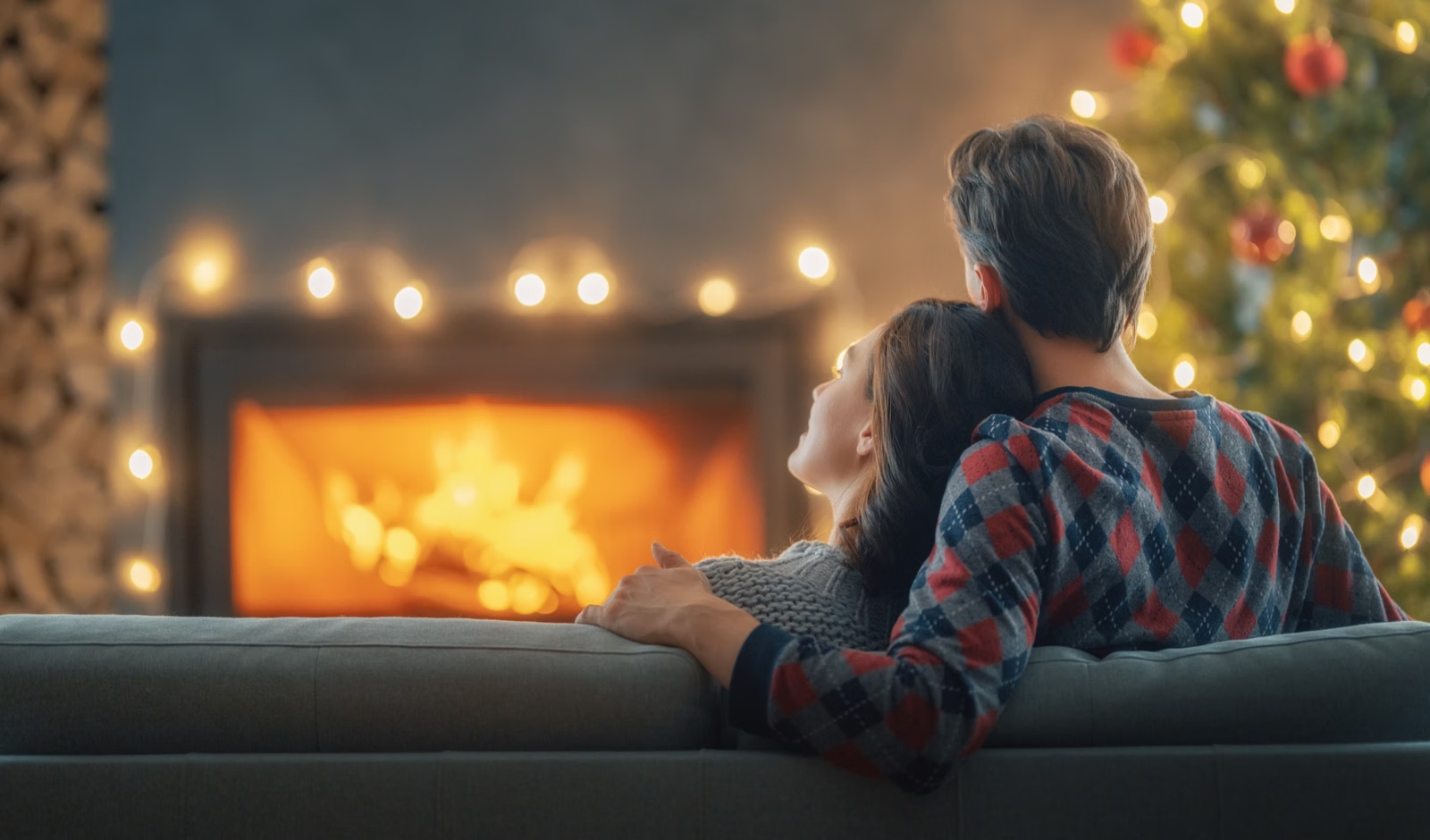
Keep Your Family Warm and Safe—No Matter What
Most Lewis County homes heat with electricity or propane, but a wood stove still has a place here—as ice-storm backup, supplemental heat, or a way to use the oak and hickory already on the property. We'll connect you with a local dealer who installs it correctly.
Every Project Starts From One of These Five Situations
Timber country, but not typical heat country.
Hohenwald sits in the rolling hills of Lewis County at just under 1,000 feet, where winters are mild by national standards—a 28°F average low and a relatively short, mild heating season, a fraction of what places like Duluth, MN or Burlington, VT see. Meriwether Lewis Electric Cooperative serves the area at a competitive 13.68 cents per kWh, and between reliable electric service and propane availability, most Hohenwald homes simply don't need wood as a primary heat source the way colder or off-grid regions do.
That said, Lewis County is genuinely timber country—oak, hickory, maple, and pine stands cover much of the county, and plenty of rural properties have wood on hand whether they use it or not. The homeowners who do install a stove here usually aren't chasing BTUs to survive the winter; they're planning for the ice storm that occasionally takes down cooperative power lines, adding ambiance to a rural property, or putting a woodlot to use. It's a smaller, more deliberate slice of the market than you'd find further north, and that's exactly why getting the sizing, venting, and permit details right matters more, not less.
Three steps. No salesperson until you're ready.
Tell us about your project
Your zip code, your situation, and the fuel you're leaning toward—or let the answers point you to one.
See what's actually available
The brands dealers within 100 miles genuinely carry—real options, never a catalog mirage.
Get your dealer & Project Guide
A trusted local dealer, plus the free Project Guide & Parts List that names every component of the job.
Frequently Asked Questions
Does it even make sense to install a wood stove in Hohenwald?
For most homes, wood won't be the primary heat source—Meriwether Lewis Electric Cooperative keeps power affordable and reliable enough that heat pumps and propane furnaces cover day-to-day heating needs without much competition. Where a wood stove earns its keep in Hohenwald is as backup heat during winter ice storms that occasionally take down rural power lines, as supplemental heat in a detached shop or addition, or on properties where the owner already has standing oak or hickory and wants to use it. If any of those describe your situation, a properly sized, EPA-certified stove is a reasonable investment even in a mild climate zone like 4A.
How much does a wood stove installation cost in Hohenwald?
Because wood heat is a smaller niche here than in colder states, there isn't a deep local pricing history to draw on, but a typical freestanding wood stove installation—stove, hearth pad, and Class A chimney—generally runs $3,500 to $7,500 in a Middle Tennessee home. Venting through an existing masonry chimney with a stainless liner tends to land on the lower end; new construction requiring a full through-roof chimney system runs higher. A local dealer can give you a firm number after seeing your home's layout.
What firewood species should I plan to burn around Hohenwald?
Lewis County's hardwood stands are genuinely good firewood country. Oak and hickory are the workhorses—dense, high-BTU, and widely available from local landowners and tree services, though they need 12 to 18 months of seasoning before they'll burn clean. Maple splits easier and seasons faster, making it a good shoulder-season wood. Pine is common too, but it's lower-BTU and resinous, so it's better reserved for kindling and quick starts than for overnight loads—burning green or resinous pine as a primary fuel is the fastest way to build up creosote.
Do I need a permit to install a wood stove in Lewis County?
Most jurisdictions in Tennessee, including Lewis County, require a building permit for a new wood-burning appliance installation, and the unit itself needs to meet current EPA 2020 NSPS emissions standards. Lewis County doesn't publish an extensive wood-stove-specific code like you'd find in a non-attainment area out West, but a licensed local installer will still pull the permit, size the chimney to code, and make sure clearances to combustibles are correct—steps worth insisting on even where enforcement is light.
Will a wood stove keep my house warm if the power goes out?
Yes, and this is one of the strongest arguments for wood heat in a place like Hohenwald. Meriwether Lewis Electric Cooperative's rural lines can go down during ice storms, and unlike a propane furnace with an electric blower or a pellet stove that needs power for its auger, a freestanding wood stove keeps producing heat with no electricity at all. For homeowners who've been through a multi-day outage on a cold snap, that's often the deciding factor over other fuel types.
Wood stove vs. propane—which makes more sense for a Hohenwald home?
Propane and natural gas are the standard, low-effort choice here—no wood handling, no ash, instant on-off heat, and it's what most local furnaces and inserts already run on. Wood asks more of you: seasoning firewood, feeding the stove, sweeping the chimney. What it gives back is heat that doesn't depend on the grid or a propane delivery truck, plus the option to burn wood you may already have on your own property. Many Hohenwald homeowners who add a wood stove keep propane as their everyday heat and treat the stove as backup and ambiance rather than a replacement.
Where do I get firewood near Hohenwald?
Lewis County doesn't border national forest land, so there's no Forest Service cutting permit system to rely on the way there is out West. Firewood here typically comes from private landowners clearing timber, local tree removal and logging operations, or small sawmills processing oak and hickory offcuts. Cords are generally inexpensive given how much hardwood grows in the area—ask any local installer or hearth dealer, and they'll usually be able to point you to a supplier they trust.
How often should I have my chimney inspected in Hohenwald's climate?
The Chimney Safety Institute of America recommends an annual inspection for any wood-burning appliance, and that holds even in a milder climate like Hohenwald's. Because most local stoves see occasional or backup use rather than all-winter-long burning, creosote buildup is usually slower here than in a colder-climate home running the stove daily—but slower isn't the same as none, and an annual sweep before the first cold snap each fall is still the right habit.
What size wood stove do I actually need in Hohenwald?
With a relatively short, mild heating season and a 28°F average winter low, Hohenwald's heating load is modest compared to colder parts of the country—you're not fighting sub-zero nights the way a home in International Falls, MN would be. A small to mid-size stove (rated for roughly 1,000 to 1,800 square feet) is usually plenty for supplemental or backup heat in an average local home. If you're aiming to heat a larger area or an uninsulated shop or addition, a local dealer can size it up from there during an in-home visit.
Why is a fireplace insert so efficient?
An insert does two things: it seals the chimney completely, so you stop losing air you already paid to heat, and it radiates warmth into the room through the firebox and glass. Most add a heat-exchange fan that pulls cool room air underneath, wraps it around the hot firebox, and pushes it back out warm. Your home is more efficient before you've even lit the first fire.
Why won't my new wood stove get going like my old one?
New wood stoves are 70%+ efficient, so far less heat goes up the flue—which also means less draft to get a fire established. The rule: build a genuinely hot fire for about 45 minutes before you choke it down. Skip that and you get smoke in the room, creosote in the chimney, and a fire that never takes off. Most performance complaints trace straight back to this.
How much should I budget for a fireplace?
For an average home—covering the fireplace, the vent pipe, and basic installation—a budget between $3,900 and $5,500 gives you a lot of options across wood, gas, and pellet. By the time you add finish work, gas line, and electrical, the average complete installation lands between $5,000 and $12,000 all-in. In a remodel or new build, a good rule is to put about 2.5% of the total project cost toward the fireplace.
Does a fireplace add value to my home?
On average, a fireplace adds back to the home about the same amount you spent installing it. Add the monthly savings from heating the rooms you actually use instead of the whole house—often hundreds of dollars a year—and the value case is strong before you even count what a fire does for how your family uses the room.
Nearby Dealers
Hearth shops serving Hohenwald and the surrounding area. Every listing shows whether it is a WhyFire partner, a dealer we have verified as authorized for the brands we recommend, or a local business carrying hearth products. No manufacturer pays for placement. How we verify dealers →
Greater Dickson Gas Authority
Consolidated Trade Services
Nashville Fireplace Dist.
Phoenix Sales
Vaughan Gas
Thompson Gas
Find your wood stove in Hohenwald.
Tell us about your home and how you'd actually use a wood stove—backup heat, a shop, or daily supplemental warmth—and we'll match you with a trusted local dealer and send over a free Project Guide & Parts List with the exact parts, including the vent kit, for your project.
Find Your Fireplace →