
Pellet Heat for Henderson's Occasional Deep Freeze.
Henderson's winters rarely demand a dedicated pellet setup, but for the ice storms, power blips, and workshop chills that do show up, a well-matched unit still earns its keep. We'll connect you with a trusted local dealer who knows the difference.
Every Project Starts From One of These Five Situations
Pellet stoves are the exception, not the rule, in Chester County.
Henderson sits at 432 feet in West Tennessee's climate zone 3A, with an average winter low around 27°F and a mild heating season overall. Compare that to Duluth, MN, where winters demand far more heating, and it's clear why pellet stoves never became a household fixture here—most Chester County homes get through winter fine on a heat pump or central gas system, and there's rarely a stretch of weather severe enough to justify a dedicated pellet-burning appliance as primary heat.
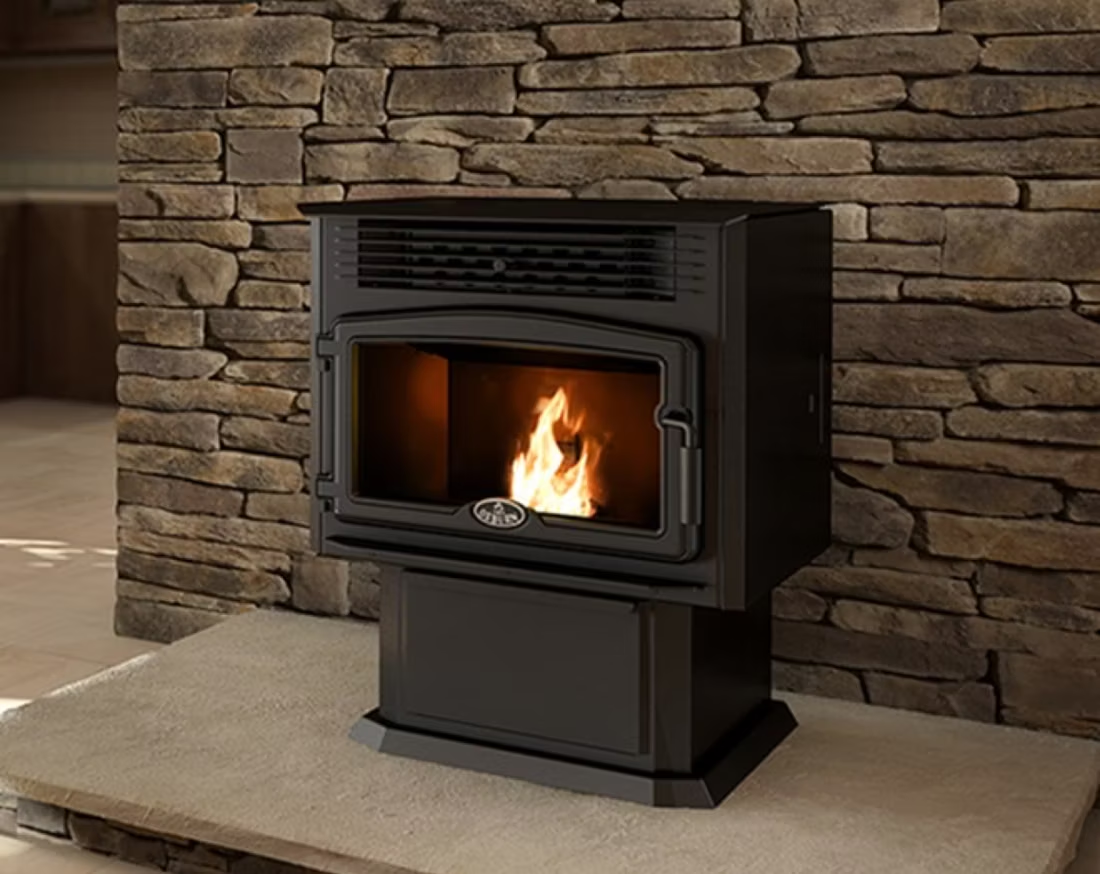
That said, pellet fuel itself isn't foreign to the region—Lignetics, Hamer Pellet Fuel, and Greenway Renewable Energy all serve the broader Tennessee market, so sourcing bags isn't the obstacle it might seem. What's rare in Henderson isn't the fuel, it's the use case: a pellet stove here tends to show up in a detached workshop, a hunting camp, or as supplemental warmth for a homeowner who likes the ambiance and the lower ash mess of pellets over cordwood. If that's your situation, a local dealer can tell you honestly whether it makes sense for your space, or whether a gas unit—standard and widely supported here—is the more practical call.
Three steps. No salesperson until you're ready.
Tell us about your project
Your zip code, your situation, and the fuel you're leaning toward—or let the answers point you to one.
See what's actually available
The brands dealers within 100 miles genuinely carry—real options, never a catalog mirage.
Get your dealer & Project Guide
A trusted local dealer, plus the free Project Guide & Parts List that names every component of the job.
Frequently Asked Questions
Are pellet stoves common in Henderson, TN?
Not really, and we'll say that plainly rather than oversell it. With a mild heating season and average winter lows around 27°F, most homes in Chester County rely on heat pumps or natural gas for primary heat, and pellet stoves are considered a niche or supplemental appliance rather than a mainstream heating solution. That doesn't mean they don't exist here—you'll find them in workshops, cabins, and the occasional main house where someone specifically wants the convenience of pellets over cordwood—but it's a small slice of the local market compared to colder states.
Why don't more homes in Chester County use pellet stoves?
The math doesn't favor them here. Southwest Tennessee EMC's residential rate of about $0.129 per kWh keeps electric heat pump operation reasonably affordable, and natural gas service covers a meaningful share of the area, so most homeowners already have an efficient, low-maintenance primary heat source. A pellet stove adds an appliance, a hopper to fill, and a fuel supply chain to manage—worthwhile in a place with long, brutal winters, but a harder sell when the coldest stretch of the year might last a few weeks rather than five months.
What would I actually use a pellet stove for in Henderson?
The homeowners who install one locally are usually solving a specific problem: heating a detached garage or workshop that isn't on the main HVAC system, adding backup warmth to a hunting camp or outbuilding in rural Chester County, or wanting a lower-maintenance alternative to a wood stove for occasional ambiance. It's rarely the answer for whole-home primary heat in this climate—that's what your heat pump or gas furnace is already doing.
Where can I get pellet fuel locally?
Tennessee is actually decent pellet-producing territory—Hamer Pellet Fuel and Greenway Renewable Energy both operate in the state, alongside national suppliers like Lignetics. Farm supply stores and hardware retailers in West Tennessee will often special-order bags even if they don't stock them on a shelf year-round, since local demand is lower than in the Northeast or Upper Midwest. If you do install a stove, plan on buying a season's worth of pellets in the fall rather than counting on walk-in availability in January.
Will a pellet stove keep my house warm if the power goes out?
No—this is the most important thing to understand before buying one for backup heat. Pellet stoves rely on an electric auger to feed fuel and a blower to circulate heat, so when Southwest Tennessee EMC lines go down in an ice storm, the stove goes down with them unless you have a generator or battery backup wired in. If outage-proof heat is your actual goal, a gas fireplace with a standing pilot, or a wood-burning unit, will serve you better than pellets.
Pellet stove vs. wood stove—does either make sense for a Henderson home?
Both are considered niche here rather than standard, but if you're set on burning something, the choice comes down to convenience versus fuel cost. Pellet stoves are easier to load and produce less mess, but they need electricity and a purchased fuel supply. Wood stoves work without power and pair with the oak, hickory, and maple that grow throughout Chester County, but they need seasoned, dry wood and more hands-on tending. In a mild climate like this one, either is really a supplemental or specialty choice rather than a primary heating decision.
Is a pellet stove a good investment in a mild climate like Henderson's?
It depends on what you're solving for. As a primary heat source, the payback math is weak—with such a short, mild heating season, you simply won't burn enough fuel in a typical winter to offset the appliance and installation cost against an efficient electric heat pump at Southwest Tennessee EMC's rates. As a supplemental heater for a workshop, sunroom, or detached space that isn't on central HVAC, it can make more sense, since you're heating a smaller area for shorter stretches rather than trying to carry the whole house through winter.
What size pellet stove do I need if I do install one?
Because most Henderson installs are supplemental rather than whole-home, sizing usually skews smaller than what you'd see recommended in a colder state. A small unit in the 40,000-50,000 BTU range is often plenty for a garage, workshop, or single large room. Whole-home sizing is rarely the right call here given how mild the winters run—a local dealer can walk your specific space and tell you honestly if you're better served by a smaller unit than the
Pellet vs. gas—which is right for my Henderson home?
For most homes here, gas wins. It's a standard, well-supported fuel option in Henderson with reliable venting hardware and service technicians who work on it regularly, and it doesn't require you to manage a pellet supply chain in a region where pellets aren't sold on every corner. Pellet stoves still have a place for a specific need—a workshop, a hunting property, or a homeowner who simply prefers the pellet-burning experience—but if you're choosing based on practicality alone in this climate, gas is the more conventional and better-supported path.
How often does a pellet stove need cleaning?
A clean pellet stove is a happy pellet stove. Plan on cleaning the burn pot about once a week when you're burning regularly—ash and clinkers gum up the air holes just like a pellet barbecue. Most pellet stove problems trace back to skipped cleaning that nobody explained up front. Some designs make it easy with a trapdoor burn pot: pull a lever and the gunk drops into the ash pan.
Why is a fireplace insert so efficient?
An insert does two things: it seals the chimney completely, so you stop losing air you already paid to heat, and it radiates warmth into the room through the firebox and glass. Most add a heat-exchange fan that pulls cool room air underneath, wraps it around the hot firebox, and pushes it back out warm. Your home is more efficient before you've even lit the first fire.
How much should I budget for a fireplace?
For an average home—covering the fireplace, the vent pipe, and basic installation—a budget between $3,900 and $5,500 gives you a lot of options across wood, gas, and pellet. By the time you add finish work, gas line, and electrical, the average complete installation lands between $5,000 and $12,000 all-in. In a remodel or new build, a good rule is to put about 2.5% of the total project cost toward the fireplace.
Can a fireplace actually lower my heating bill?
Yes—by creating a comfort zone. A furnace heats every square foot of the house just to warm the one room you're in; a gas fireplace on low burns roughly a sixth of the gas a typical furnace does. Set the furnace around 55–60 degrees as a baseline, then heat the rooms your family actually uses. Families who heat this way commonly save $20–$60 a month.
Nearby Dealers
Hearth shops serving Henderson and the surrounding area. Every listing shows whether it is a WhyFire partner, a dealer we have verified as authorized for the brands we recommend, or a local business carrying hearth products. No manufacturer pays for placement. How we verify dealers →
Walt Mestan Dba The Fireplace Center
Acme Brick Company
Pellet Brands Stocked Around Henderson
Manufacturers will point you to the nearest stocking dealer.
Find your pellet stove in Henderson.
Tell us about your space and what you're actually trying to heat, and we'll match you with a trusted local dealer and send over a free Project Guide & Parts List—including the vent kit—sized honestly for a Henderson home.
Find Your Fireplace →