
Instant heat for Hancock County, without a wood pile to tend.
Reliable, on-demand heat for the hollows and ridges around Sneedville, Kyles Ford, and the Clinch Mountain communities—propane-fired in most of the county, with the right unit sized for winter lows near 26°F. Find what a local pro can actually install, and get matched with a trusted dealer.
Every Project Starts From One of These Five Situations
Convenience matters more in a county this rural.
Hancock County is one of Tennessee's smallest and most rural counties—about 1,590 people spread across ridges and hollows in the shadow of Clinch Mountain and Newman's Ridge, with Sneedville as the county seat. Winters here run cold but not extreme: an average low around 26°F and roughly 4,217 heating degree days, a fraction of what a place like Duluth, MN sees in a season, but enough that a lot of homes still lean on wood cut from the oak, hickory, maple, and pine stands that cover the county. Gas has become the practical alternative for homeowners who want dependable heat without splitting and hauling wood every winter.
There's no municipal natural gas utility serving Hancock County—this is propane country, delivered by tank and refilled by regional suppliers, the same way most rural counties in this part of northeast Tennessee heat their water and their kitchens. That's not a limitation so much as the standard setup here: a properly sized propane tank and a direct-vent gas fireplace or insert gives you flip-a-switch heat in a farmhouse on Newman's Ridge or a cabin along the Clinch River just as reliably as natural gas would in a bigger town. The right installer sizes the tank, runs the line, and vents the unit correctly—which matters more in a county where the nearest big-box store isn't a quick trip.
Three steps. No salesperson until you're ready.
Tell us about your project
Your zip code, your situation, and the fuel you're leaning toward—or let the answers point you to one.
See what's actually available
The brands dealers within 100 miles genuinely carry—real options, never a catalog mirage.
Get your dealer & Project Guide
A trusted local dealer, plus the free Project Guide & Parts List that names every component of the job.
Frequently Asked Questions
How much does a gas fireplace installation cost in Hancock County?
A typical gas fireplace or insert installation in Hancock County runs roughly $3,500 to $9,000, with the spread coming down to the unit itself, whether a new propane tank needs to be set, and how much line and venting work is involved. A gas insert going into an existing masonry fireplace with propane already on site sits toward the lower end. A new direct-vent fireplace in a remodel—with fresh venting, a new gas run, and possibly a new propane tank—lands higher. Because this is a rural county without a dense network of installers, expect your quote to include some travel time from Sneedville or neighboring counties.
Do I need natural gas, or does propane work fine?
Propane is the standard fuel for gas fireplaces throughout Hancock County—there's no municipal natural gas line serving the county, so nearly every gas fireplace installation here runs on propane, either from an existing household tank or a new tank set specifically for the fireplace. Almost every gas fireplace, insert, or stove sold today can be configured for propane with the correct orifice and regulator, so fuel type isn't a limiting factor on which unit you choose—it just needs to be specified correctly at the time of purchase.
Can I convert my existing wood fireplace to gas?
Yes, and it's a common upgrade in a county where a lot of older homes were built around a wood-burning masonry fireplace. A gas insert slides into the existing firebox and uses a stainless liner run up your current chimney, so you keep the look of the original fireplace while gaining instant propane heat and losing the wood splitting and ash cleanup. Expect the project to run in the same $3,500 to $8,000 range as a standalone insert install, plus the cost of a new propane tank if the house isn't already set up for it.
Will my gas fireplace work if the power goes out?
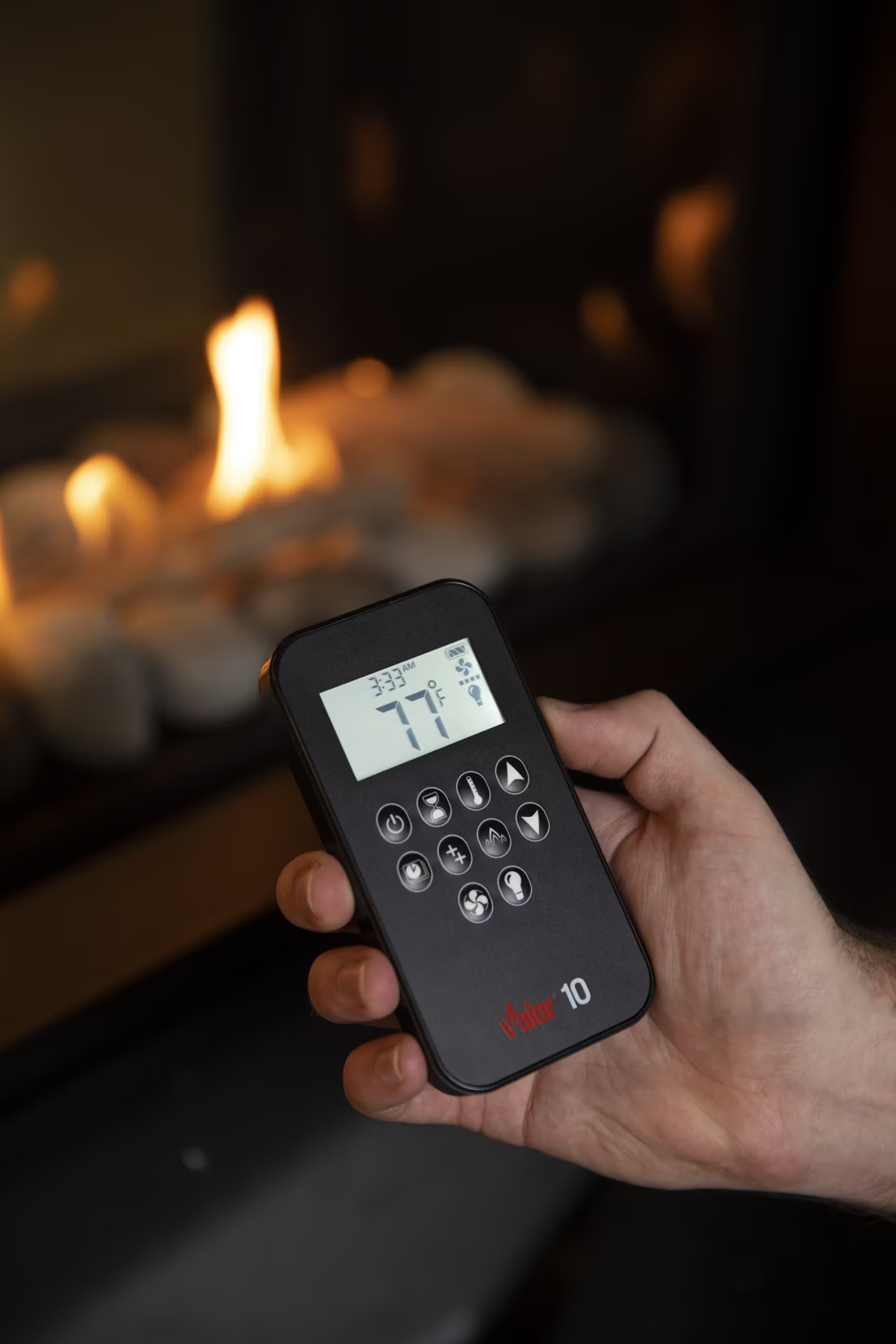
Most modern gas fireplaces will, which matters in a county where ice storms and downed lines on the mountain roads can knock out power for a while. Units with intermittent pilot ignition (IPI) run on a small battery backup that kicks in automatically when the electricity drops, so the fireplace still lights on demand. Valor fireplaces take it a step further—their pilot assembly generates its own electricity through the thermocouple, so there's no battery to remember to replace. Ask your dealer which ignition system is on any unit you're considering if backup heat is a priority.
What's the difference between a gas fireplace, insert, and stove?
A gas fireplace is a built-in unit framed into a wall, typically chosen for new construction or a full remodel. A gas insert is built to slide into an existing masonry fireplace opening, using your current chimney as the vent path. A gas stove is a freestanding cabinet-style unit that sits on the floor like a wood stove but burns propane. For Hancock County's older homes with an existing fireplace, an insert is usually the most cost-effective route since it reuses infrastructure that's already there.
Do I need a permit to install a gas fireplace in Hancock County?
Generally yes—new gas line and appliance work requires a building permit through the county building permit office based in Sneedville, and any propane line work should be done by a licensed installer. Most established hearth dealers coordinate the permit, the gas-fitting, and the final inspection as part of the install, so you're not left managing separate trades yourself—which is especially useful given how spread out services are across the county.
Vented vs. vent-free gas fireplaces—which should I choose?
Vented (direct-vent) gas fireplaces pull combustion air from outside and exhaust it back outside through sealed venting, which keeps combustion byproducts out of the living space. Vent-free units burn propane directly into the room without external venting—they're legal in Tennessee but come with strict room-sizing and ventilation rules, and they add moisture and trace combustion gases to indoor air. For most Hancock County homes, especially older farmhouses without a lot of air sealing, a direct-vent unit is the safer and more commonly recommended choice, and it's what most local dealers will steer you toward first.
How often should a gas fireplace be serviced?
Plan on an annual inspection, ideally before the first cold nights hit in October or November. A technician checks the burner, pilot assembly, venting, and gas connections, and cleans the glass and interior—a much lighter lift than sweeping a wood chimney, but just as important given how remote parts of the county are if something fails mid-winter. Expect to pay somewhere in the $150 to $250 range for a standard annual service call, with a possible small travel fee added for outlying areas.
Gas vs. wood—which makes more sense for a Hancock County home?
Wood is deeply rooted here—oak, hickory, and pine are abundant, cutting permits through the Nantahala-Pisgah National Forests run about $20 per cord during the May-to-October season, and a wood stove keeps working when the power and the propane truck both can't get up the mountain in an ice storm. Gas wins on convenience: no splitting, hauling, or ash, instant heat at the flip of a switch, and a cleaner look for a main living room. Plenty of homes here run both—propane gas in the main living space for daily use, a wood stove or insert as backup and for the cabin or hunting camp down the road.
Can I put a TV above my fireplace?
Yes—with an asterisk. Fireplaces are hot and TVs don't like heat. Either put a mantel between them to deflect rising warmth, or choose a fireplace with heat-management technology that creates a cool zone on the wall above—the wall stays around 125 degrees, barely warm, while the room still gets full heat. If you like clean lines and don't want a mantel, heat management is the answer.
What's the difference between an insert and a zero-clearance fireplace?
An insert is a fireplace that slides into a pre-existing wood-burning fireplace—if you don't have one, there's nothing to insert it into. A zero-clearance fireplace is built into a framed wall, which makes it the answer for remodels and new construction. Simple test: existing masonry fireplace means insert; blank or framed wall means zero-clearance.
What is an in-home preview and do I need one?
It's a visit where a hearth professional measures your space, confirms the model you picked actually works in your home, and walks the specs—framing, gas line, venting, finish work—before anything is ordered. Some details you just can't know until you see the house. Never make a down payment without one; it's the single most-skipped step that burns buyers.
Does a fireplace add value to my home?
On average, a fireplace adds back to the home about the same amount you spent installing it. Add the monthly savings from heating the rooms you actually use instead of the whole house—often hundreds of dollars a year—and the value case is strong before you even count what a fire does for how your family uses the room.
Stove and Fireplace Dealers in Hancock County
Listings include WhyFire partner dealers, dealers we have verified as authorized for the brands we recommend, and established local businesses that carry hearth products. Every listing shows which one it is. The ones marked Preferred run on WhyFire's software, so they can show you real pricing and book your appointment right here. No manufacturer pays for placement. How we verify dealers →
Professional Fireplace & Chimney Service
Myers Home Center
Southwest Heating & Air
Lee Propane
Heritage Propane
Claiborne County Utility
Find your gas fireplace in Hancock County.
Tell us a bit about your home and we'll put together a free Project Guide & Parts List—the right propane gas fireplace or insert, the vent kit it needs, and a trusted local dealer who can actually install it in Hancock County.
Find Your Fireplace →