
Heat that works where the gas lines don't reach.
No natural gas main runs through Hancock County, and not every hollow along the Powell River has easy chimney access either. An electric fireplace or insert plugs into power from Powell Valley Electric Cooperative and heats a room the same day it's installed. Find the right unit and connect with a trusted local dealer.
Every Project Starts From One of These Five Situations
The simplest heat option in Tennessee's smallest county.
Hancock County sits wedged between Clinch Mountain and the Powell River in the Cumberland Gap region of northeast Tennessee, with Sneedville as the only incorporated town. At a population of roughly 1,590 by this data and a climate zone of 4A, winters here are real but not brutal—average lows around 26°F and about 4,217 heating degree days a year, meaning a solid heating season without the deep-freeze extremes of places like Duluth or Fargo. Ridge homes catch more wind and ice than valley floor properties along the Powell River, but the county doesn't see the sustained sub-zero stretches that push families toward wood as their only option.
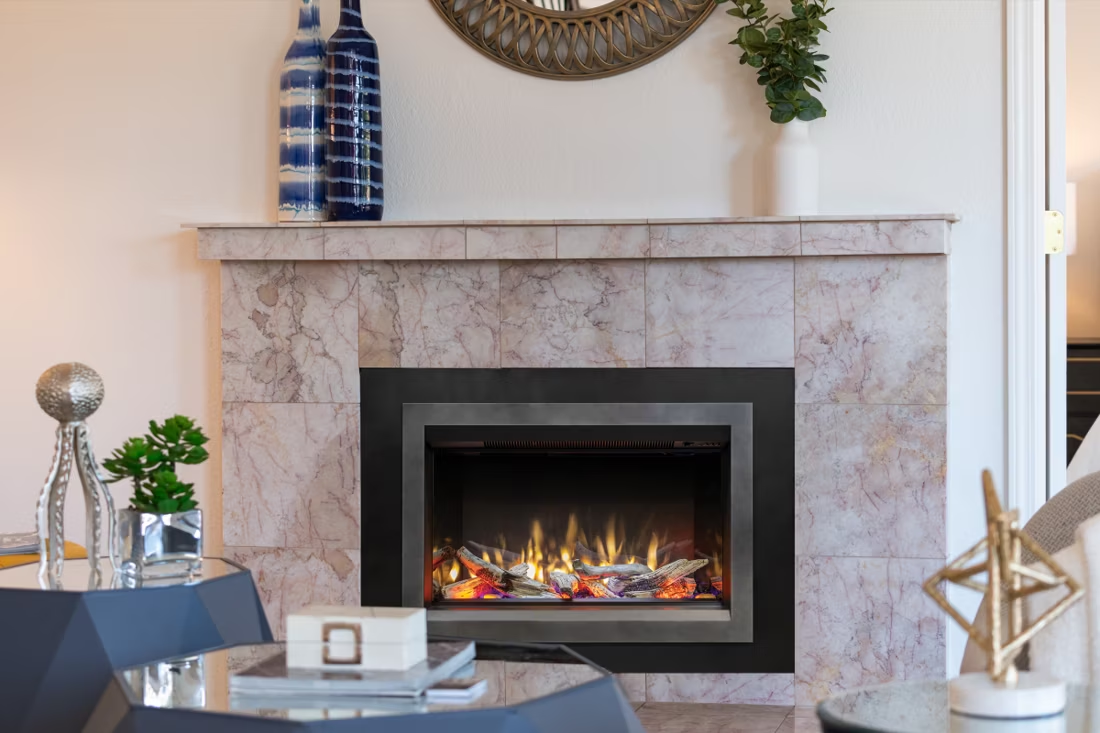
With no natural gas infrastructure serving the county, most homes here run on electric heat pumps supplied by Powell Valley Electric Cooperative, sometimes backed up by wood cut from private land or a Nantahala-Pisgah National Forest cutting permit. An electric fireplace or insert fits naturally into that setup—it doesn't touch your existing heating system, doesn't need a flue or gas line, and can go into a bedroom, den, or rental unit with nothing more than a standard outlet or a dedicated circuit. For a county this small and this spread out, that kind of no-fuss install matters.
Three steps. No salesperson until you're ready.
Tell us about your project
Your zip code, your situation, and the fuel you're leaning toward—or let the answers point you to one.
See what's actually available
The brands dealers within 100 miles genuinely carry—real options, never a catalog mirage.
Get your dealer & Project Guide
A trusted local dealer, plus the free Project Guide & Parts List that names every component of the job.
Frequently Asked Questions
How much does an electric fireplace installation cost in Hancock County?
Most electric fireplace inserts and wall-mount units in Hancock County run $300 to $1,200 installed, depending on whether the unit plugs into an existing standard outlet or needs a dedicated 240-volt circuit run by an electrician. Built-in linear units set into a wall or existing masonry opening cost more once framing and trim work are added—often $1,500 to $2,500. Because there's no venting, chimney, or gas line involved, labor costs stay lower here than for wood or gas installs, and most jobs are done in a single day.
Do I need a permit to install an electric fireplace in Hancock County?
In most cases, no. A plug-in electric fireplace or insert that uses an existing standard outlet doesn't require a building permit since there's no venting or structural change involved. If you're adding a new dedicated circuit for a higher-wattage insert, the electrician pulling that permit will typically handle it through the Hancock County building office in Sneedville. Either way, it's far less paperwork than a wood stove or gas line installation.
What size electric fireplace do I need for my Hancock County home?
Most electric inserts and wall units put out around 4,600 to 5,200 BTU (roughly 1,500 watts), which is enough to supplement heat in a single room of 400 to 1,000 square feet—a den, bedroom, or living area. In Hancock County's climate zone (4A, about 4,217 heating degree days), electric fireplaces are almost always installed as zone heat alongside a central heat pump rather than as the sole heat source for the home. Ridge and hilltop homes exposed to wind along Clinch Mountain may want the higher end of that wattage range; sheltered valley homes near the Powell River can usually get by with less.
What's the difference between an electric fireplace and an electric heat pump?
A heat pump is your whole-home HVAC system—it heats and cools the entire house and is what most Powell Valley Electric Cooperative customers already rely on for primary heat. An electric fireplace or insert is a supplemental, room-by-room heater with a visual flame effect; it won't replace your heat pump on a cold January night, but it takes the edge off a chilly room, adds ambiance, and lets you turn down the thermostat elsewhere in the house to save on the electric bill.
Will my electric fireplace work during a power outage?
No—electric fireplaces require power to run, so they won't operate during an outage, and that's worth being honest about in a rural county like this one. Ice storms on Clinch Mountain ridges can knock out Powell Valley Electric Cooperative service for hours or, in bad years, days. If backup heat during outages matters to you, many Hancock County households pair an electric fireplace for daily convenience with a wood stove—burning locally common oak, hickory, or maple—as the outage-proof option in the same home.
What's the best electric fireplace for a Hancock County home?
For most homes here, a mid-size electric insert or wall-mount unit from a mainstream brand like Dimplex or Napoleon covers the job well—realistic flame technology, a built-in thermostat, and enough output to warm a single room without straining an older home's wiring. If you're set on replacing an existing wood-burning fireplace opening, an electric insert sized to that opening gives you the look of a fire without any chimney maintenance. A local dealer can walk through wattage and placement options based on your home's layout and existing electrical panel.
Electric fireplace vs. wood stove—which makes more sense here?
Wood is deeply practical in Hancock County—cutting permits through the Nantahala-Pisgah National Forests run about $20 per cord from May through October, and oak, hickory, and maple are all common locally, making self-supplied firewood cheap for anyone with land or access. A wood stove also keeps working when the power's out. An electric fireplace, on the other hand, needs no cutting, splitting, hauling, or chimney cleaning—you flip a switch and get heat and ambiance instantly. For a spare bedroom, a rental property, or a household that doesn't want to manage wood, electric is the lower-effort choice; for a primary heat source that survives an ice storm, wood still has the edge.
Where can I find a dealer who installs electric fireplaces near Hancock County?
Given the county's small population, most hearth dealers serving Hancock County are based in nearby towns like Rogersville, Kingsport, or Morristown and travel into Sneedville and the surrounding ridges and hollows for installs. That's exactly the kind of match Find My Fireplace exists for—we're not a manufacturer or a store, we connect you with a trusted local dealer who actually services this part of northeast Tennessee, sizes the unit to your home, and handles the install correctly the first time.
Electric vs. pellet stove—which is right for my Hancock County home?
Pellet stoves burn bagged pellets from regional suppliers like Lignetics, Hamer Pellet Fuel, or Greenway Renewable Energy, and they produce real, substantial heat—but they need a vent, a hopper to refill, and electricity to run the auger and blower, so they still go dark in an outage. Electric fireplaces skip the venting and the pellet bags entirely, making them the lower-maintenance option for supplemental heat or ambiance in a spare room. If you want serious heat output for a whole living area and don't mind refilling a hopper, pellet is worth a look; if you want simple, plug-in warmth with no fuel to store, electric is the easier path.
Can I put a TV above my fireplace?
Yes—with an asterisk. Fireplaces are hot and TVs don't like heat. Either put a mantel between them to deflect rising warmth, or choose a fireplace with heat-management technology that creates a cool zone on the wall above—the wall stays around 125 degrees, barely warm, while the room still gets full heat. If you like clean lines and don't want a mantel, heat management is the answer.
Does an electric fireplace need a vent or chimney?
No—that's its superpower. An electric fireplace needs a wall and an outlet, period. No vent pipe, no gas line, no clearances to design around, which is why it works in bedrooms, offices, apartments, and walls where venting a gas or wood unit would be impractical or impossible. Installation is typically the simplest and least expensive of any fireplace type.
Can a fireplace actually lower my heating bill?
Yes—by creating a comfort zone. A furnace heats every square foot of the house just to warm the one room you're in; a gas fireplace on low burns roughly a sixth of the gas a typical furnace does. Set the furnace around 55–60 degrees as a baseline, then heat the rooms your family actually uses. Families who heat this way commonly save $20–$60 a month.
How much should I budget for a fireplace?
For an average home—covering the fireplace, the vent pipe, and basic installation—a budget between $3,900 and $5,500 gives you a lot of options across wood, gas, and pellet. By the time you add finish work, gas line, and electrical, the average complete installation lands between $5,000 and $12,000 all-in. In a remodel or new build, a good rule is to put about 2.5% of the total project cost toward the fireplace.
Stove and Fireplace Dealers in Hancock County
Listings include WhyFire partner dealers, dealers we have verified as authorized for the brands we recommend, and established local businesses that carry hearth products. Every listing shows which one it is. The ones marked Preferred run on WhyFire's software, so they can show you real pricing and book your appointment right here. No manufacturer pays for placement. How we verify dealers →
Professional Fireplace & Chimney Service
Myers Home Center
Southwest Heating & Air
Lee Propane
Heritage Propane
Claiborne County Utility
Find your electric fireplace in Hancock County.
Tell us a bit about your home and we'll match you with the right electric fireplace or insert, plus a free Project Guide & Parts List—a plan for your electric project in Hancock County with the exact parts and a recommended local dealer.
Find Your Fireplace →