
Zone heat for Grainger County homes, without the venting hassle.
From Rutledge to Bean Station to the ridges above Cherokee Lake, electric fireplaces give Grainger County homes real ambiance and supplemental warmth on a standard circuit—no chimney, no gas line, no permit for most units.
Every Project Starts From One of These Five Situations
The easiest fireplace upgrade in a heat-pump county.
Grainger County sits in climate zone 4A, with an average winter low around 27°F and a heating season on par with places like Louisville, KY or Richmond, VA—real winter, but nowhere near the extremes of a place like Burlington, VT or Duluth, MN. Most homes here, whether on the valley floor near Rutledge or up toward the Clinch Mountain foothills, rely on heat pumps as their primary system. That's exactly the setup where an electric fireplace earns its keep: it adds instant zone heat to a living room or bedroom on the shoulder-season nights when running the whole heat pump feels like overkill, and it does it without touching your existing HVAC or venting.
A lot of Grainger County's housing stock—farmhouses scattered across the county's tomato fields, newer construction around Bean Station, and manufactured and modular homes common throughout this rural county—was never built with a masonry chimney in mind. Electric fireplaces solve that outright: a mantel package or wall-mount unit plugs into a standard outlet, an insert can drop into an existing wood-burning firebox with no liner or gas line required, and Appalachian Electric Cooperative's service covers the county reliably enough that backup heat during outages isn't the main draw here—ambiance and targeted comfort are.
Three steps. No salesperson until you're ready.
Tell us about your project
Your zip code, your situation, and the fuel you're leaning toward—or let the answers point you to one.
See what's actually available
The brands dealers within 100 miles genuinely carry—real options, never a catalog mirage.
Get your dealer & Project Guide
A trusted local dealer, plus the free Project Guide & Parts List that names every component of the job.
Frequently Asked Questions
How much does an electric fireplace installation cost in Grainger County?
Most electric fireplace projects in Grainger County fall into two categories. A plug-in insert or freestanding unit that uses an existing 120V outlet typically runs $300 to $1,500 installed, including the unit and any mantel or surround work. A built-in wall unit or a larger insert that needs a dedicated 20-amp circuit runs higher—usually $1,000 to $3,500—once you add an electrician's time to run new wiring, which is common in older Grainger County farmhouses that weren't wired with a spare circuit near the fireplace wall. Homes further out toward Washburn or the county line may see a modest travel charge from installers based in Knoxville or Morristown.
Do I need a permit to install an electric fireplace in Grainger County?
For a plug-in electric fireplace or insert that uses an existing outlet, no permit is required—it's treated like any other appliance. If your installation requires new wiring or a dedicated circuit, that electrical work falls under the Grainger County Building Department's jurisdiction and needs to be pulled by a licensed electrician. Most local dealers who sell built-in units either employ a licensed electrician or coordinate directly with one, so you're not left tracking down the permit yourself.
What size electric fireplace do I need for my Grainger County home?
Electric fireplaces are rated in watts and BTUs rather than by the whole-house heating math you'd use for wood or gas. A standard 1,500-watt unit puts out about 5,000 BTUs, which comfortably heats a single room of 300 to 400 square feet—enough for a living room or den in most Grainger County homes. Since the county's winters are moderate rather than extreme, you're rarely sizing for whole-home heat; you're sizing for the specific room where you want supplemental warmth. A local dealer can walk your space and tell you whether a mantel unit, insert, or wall-mount fits best.
What's the difference between an electric insert, mantel package, and wall-mount unit?
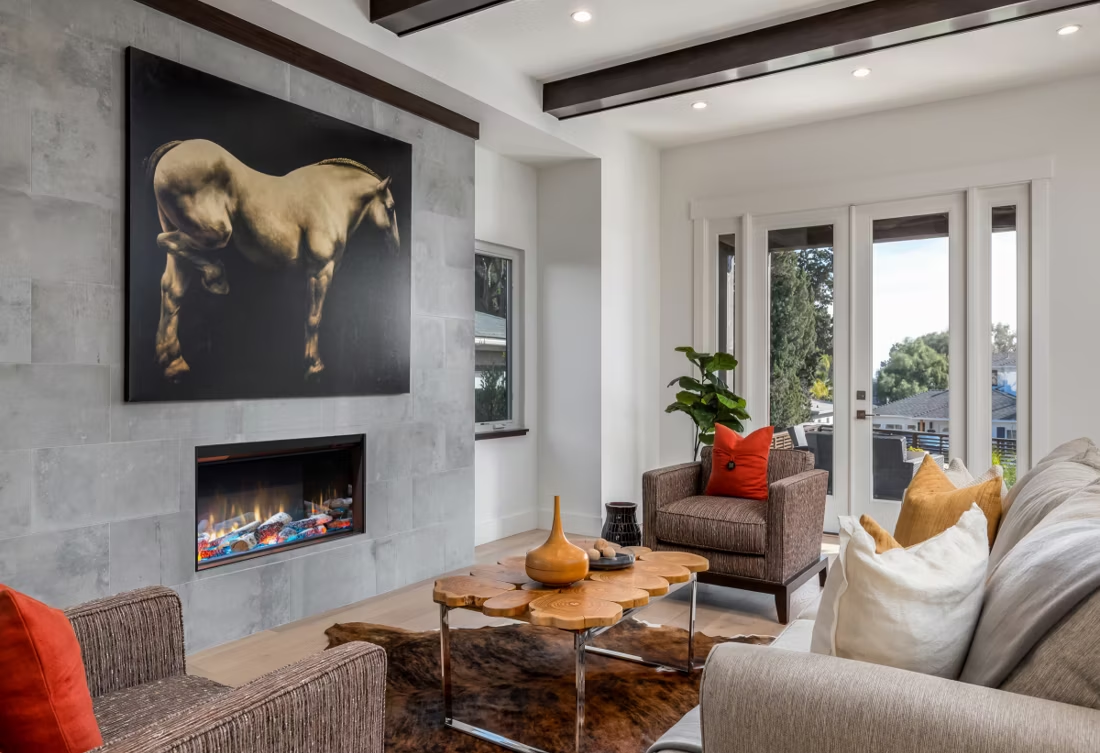
An electric insert is built to slide into an existing masonry or prefab firebox—a common upgrade for older Grainger County homes with a wood-burning fireplace that's gone unused for years. A mantel package pairs an electric firebox with a surround and mantel shelf, giving you a complete fireplace look in a room that never had one. A wall-mount unit hangs flush like a large television and works well in newer construction or manufactured homes where floor space is tight. All three run on standard household current and require no venting, chimney, or gas line.
How much does it cost to run an electric fireplace day to day?
A typical 1,500-watt electric fireplace costs roughly 15 to 25 cents per hour to run at full heat, based on residential electric rates through Appalachian Electric Cooperative, which serves Grainger County. Most owners run their unit on the flame-only setting (no heat) for ambiance most of the year and switch on the heater during cooler evenings, which keeps the operating cost well below running a heat pump on emergency heat or supplementing with a space heater.
Can I convert my existing wood-burning fireplace to electric?
Yes, and it's one of the most common projects among older homes in Grainger County that have an unused masonry fireplace. An electric insert or log set drops into the existing firebox, plugs into a nearby outlet (or a new dedicated circuit if the unit draws more power), and requires no chimney liner, no venting, and no gas line—since there's no combustion, the existing flue can simply stay capped. It's a straightforward way to bring a dormant fireplace back into daily use without the maintenance that comes with burning wood.
How much maintenance does an electric fireplace need?
Very little. There's no chimney to sweep, no gas line to inspect, and no creosote or soot to manage. Periodic dusting of the heating element and a check that the fan isn't obstructed covers most of it. LED flame units may need bulb replacement after several years of regular use, and it's worth having an electrician verify the circuit periodically if the unit runs daily through the winter—but there's no annual safety inspection requirement like you'd see with a wood stove or gas appliance in Grainger County.
Electric vs. wood vs. propane—which fits my Grainger County home?
Wood remains a strong option here, with oak, hickory, and maple common across the county and Forest Service cutting permits available through the Nantahala-Pisgah National Forests for $20 a cord during the May-through-October season—a real cost advantage for families who already have a chimney. Propane offers instant, higher-output heat and works well as backup during outages, since most of the county isn't on natural gas. Electric fits best when you want a clean, low-maintenance ambiance upgrade in a room without an existing chimney, or when you're supplementing a heat pump rather than replacing your primary heat source. Given Grainger County's moderate winters, electric is a genuinely popular middle option rather than a compromise.
Does an electric fireplace work well in a manufactured or modular home?
It's often the best fit. Many manufactured and modular homes across Grainger County have limited structural allowance for a masonry chimney or heavy zero-clearance unit, and local code restricts open-flame appliances in some manufactured housing without specific listings. A wall-mount or mantel-style electric fireplace sidesteps all of that—it adds no load-bearing requirement, needs no venting penetration through the roof, and can usually be installed in an afternoon by an electrician tying into an existing circuit or adding a dedicated one.
Can I put a TV above my fireplace?
Yes—with an asterisk. Fireplaces are hot and TVs don't like heat. Either put a mantel between them to deflect rising warmth, or choose a fireplace with heat-management technology that creates a cool zone on the wall above—the wall stays around 125 degrees, barely warm, while the room still gets full heat. If you like clean lines and don't want a mantel, heat management is the answer.
Do electric fireplaces actually produce heat?
Yes—most put out around 4,800–5,000 BTUs from a standard outlet, which comfortably warms a bedroom, office, or den as a comfort-zone heater. What they won't do is carry a whole house the way wood, gas, or pellet can. Think of electric as ambiance-first with honest supplemental heat: flames on with no heat in July, flames plus warmth in January.
Does a fireplace add value to my home?
On average, a fireplace adds back to the home about the same amount you spent installing it. Add the monthly savings from heating the rooms you actually use instead of the whole house—often hundreds of dollars a year—and the value case is strong before you even count what a fire does for how your family uses the room.
Can a fireplace actually lower my heating bill?
Yes—by creating a comfort zone. A furnace heats every square foot of the house just to warm the one room you're in; a gas fireplace on low burns roughly a sixth of the gas a typical furnace does. Set the furnace around 55–60 degrees as a baseline, then heat the rooms your family actually uses. Families who heat this way commonly save $20–$60 a month.
Stove and Fireplace Dealers in Grainger County
Listings include WhyFire partner dealers, dealers we have verified as authorized for the brands we recommend, and established local businesses that carry hearth products. Every listing shows which one it is. The ones marked Preferred run on WhyFire's software, so they can show you real pricing and book your appointment right here. No manufacturer pays for placement. How we verify dealers →
Professional Fireplace & Chimney Service
Smoky Mountain Buildings
Claiborne County Utility
Heritage Propane
Heritage Propane
Find your electric fireplace in Grainger County.
Tell us a bit about your home and we'll match you with the right electric fireplace, insert, or mantel unit—plus a free Project Guide & Parts List and a trusted local dealer to install it.
Find Your Fireplace →