
Find the Right Hearth for Your Grainger County Home.
Wood, gas, pellet, and electric fireplace resources for every community in Grainger County—from Rutledge and Bean Station out to Blaine and Washburn. Get matched with a trusted local hearth dealer instead of guessing at a big-box store.
Every Project Starts From One of These Five Situations
Moderate winters, deep Appalachian wood-heat tradition in Grainger County, Tennessee.
Grainger County sits in the rolling foothills between the Clinch and Holston river valleys, with roughly 7,000 residents spread across a mostly rural landscape near Cherokee Lake and Norris Lake. Winters here are real but not brutal—an average winter low around 27°F and about 4,017 heating degree days put Grainger County in climate zone 4A, far milder than a Duluth, MN or Fargo, ND winter, but still cold enough that a home needs a dependable primary heat source from November through March. The hardwood forests that cover much of the county—oak, hickory, and maple, with pine mixed in on the ridges—have supported a wood-heating tradition here for generations, and some residents still drive out for firewood cutting permits through the Nantahala-Pisgah National Forests.
What you'll find on this hub: hearth retailers, service technicians, and fuel suppliers who cover the whole county, plus a directory of every town and community—Rutledge, Bean Station, Blaine, Washburn, and Thorn Hill included. Pick your fuel below to see local dealers, realistic installation costs, and unit recommendations suited to this part of East Tennessee, whether you're heating a farmhouse on county road frontage or a lake cabin near Cherokee Lake.
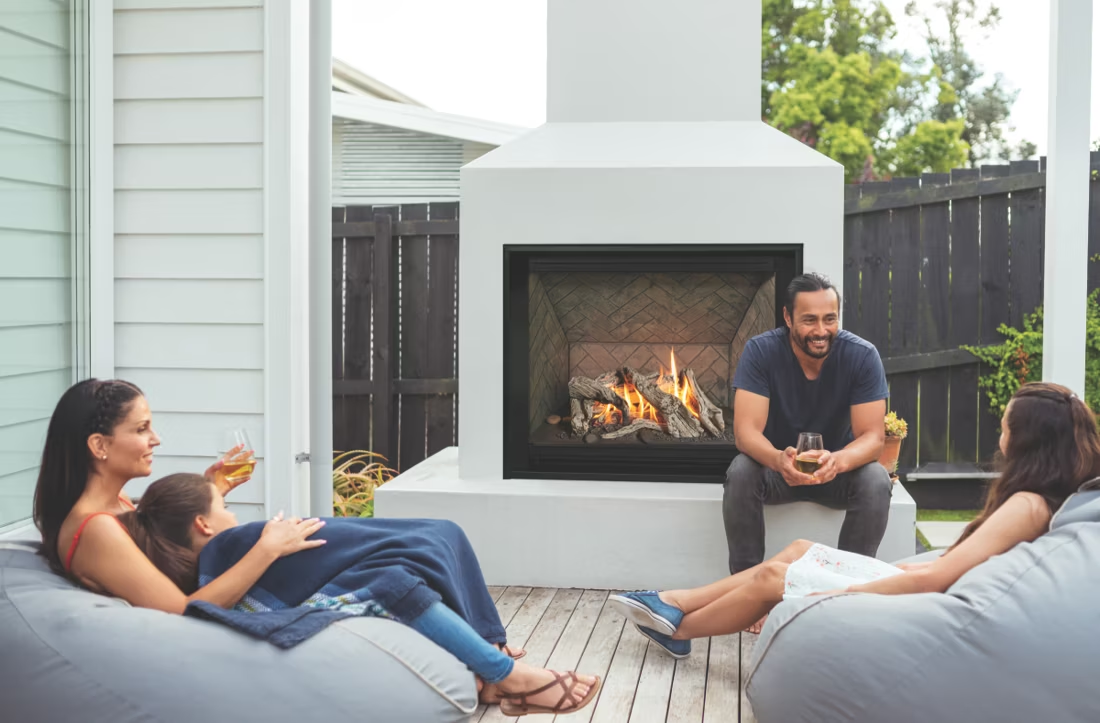
Four fuels. One honest answer for Grainger County.
Three steps. No salesperson until you're ready.
Tell us about your project
Your zip code, your situation, and the fuel you're leaning toward—or let the answers point you to one.
See what's actually available
The brands dealers within 100 miles genuinely carry—real options, never a catalog mirage.
Get your dealer & Project Guide
A trusted local dealer, plus the free Project Guide & Parts List that names every component of the job.
Frequently Asked Questions
Which fuel works best in Grainger County?
It depends on the house and how you already heat. Wood is the traditional choice here—oak, hickory, and maple burn long and hot, pine works fine as kindling and shoulder-season fuel, and a lot of Grainger County residents already have access to a woodlot or a neighbor who sells split cords. Gas, in practice, means propane for most of the county—there's little municipal natural gas infrastructure outside the towns, so a propane fireplace or insert means a tank and a delivery contract, not a gas line. Pellet stoves are a solid middle ground if you want wood-like heat without splitting and stacking; Lignetics and Hamer Pellet Fuel bags are both carried by regional suppliers. Electric fireplaces work well for supplemental heat in a bedroom or den, but with an average winter low of 27°F, electric alone isn't going to carry a Grainger County home through January. Most households here end up pairing wood or propane as the main heat source with electric for accent rooms.
Do I need a permit to install a fireplace in Grainger County?
It varies more here than in a city with a full building code. Grainger County has not adopted the Tennessee State Building Code countywide, so a lot of wood stove and insert installs in unincorporated areas go in without a formal county permit—though within Rutledge or Bean Station city limits, you'll want to check with the town office first. Gas installations are the exception no matter where you live: a licensed gas-fitter still needs to run and pressure-test the propane line, and most propane suppliers won't hook up a tank to an uninspected connection. Electric fireplace installs typically don't need a permit unless you're adding a new circuit for a built-in unit. Regardless of what the county requires on paper, your homeowners insurance carrier will often ask for proof of a certified installation if you ever file a claim, so it's worth getting documentation even when a permit isn't strictly mandatory.
Are there air quality restrictions on wood burning in Grainger County?
No—Grainger County has no wood-burning advisories, nonattainment designations, or seasonal curtailment periods, unlike some western basin counties that deal with winter inversions. You're free to run a wood stove or insert daily through the heating season without checking a burn-ban notice first. That said, an EPA-certified stove still burns cleaner and gets more heat out of the same cord of oak or hickory than an older uncertified unit, so it's worth asking your dealer about current EPA 2020 NSPS-compliant models even without a regulatory requirement pushing you there.
Can one local hearth retailer handle all four fuel types?
Given the size of Grainger County, most of the retailers who serve it are multi-fuel dealers based in Knoxville, Morristown, or Rogersville rather than storefronts inside the county itself. Dealers who carry wood, gas, pellet, and electric side by side are worth prioritizing if you're still deciding between fuels, since they can show you working displays and talk through trade-offs—cord wood versus propane delivery, for instance, or pellet convenience versus wood's lower running cost when you're cutting your own. Some suppliers focus narrowly on firewood or propane and aren't hearth retailers at all; the county + fuel pages above separate installers from fuel-only suppliers so you're not calling the wrong number.
How does service work if I live outside Rutledge or Bean Station?
Most technicians who cover Grainger County are based in Knoxville or Morristown and drive out for appointments, so expect a modest trip charge for addresses well off Highway 11W or 92—often $40–$75 depending on distance. Scheduling in September or October, before the first cold snap, gets you a much shorter wait than calling in December when everyone's chimney sweep and gas inspection lists fill up at once. If you're heating with wood as your primary source, having a backup plan—a small propane heater or a second wood stove—is worth considering for the stretch of winter when a tech can't get out right away.
What's the typical cost range for fireplace installation across all fuel types in Grainger County?
Costs run a bit below what you'd see in a larger East Tennessee market, but the same rough bands apply. Wood stove or insert: roughly $4,000–$8,000 installed, depending on chimney condition and whether new hearth pad or clearances work is needed. Propane fireplace, insert, or stove: roughly $4,000–$9,000, with the tank setup and gas-fitter work adding to the low end if you don't already have propane service. Pellet stove or insert: roughly $4,000–$6,500 for a typical install. Electric fireplace: $200–$2,500 for the unit itself, plus $300–$1,000 in labor if it's a built-in requiring a new circuit rather than a plug-in unit. Ask your local dealer for a written estimate before committing—the county + fuel pages above break these numbers down further by fuel.
What is an in-home preview and do I need one?
It's a visit where a hearth professional measures your space, confirms the model you picked actually works in your home, and walks the specs—framing, gas line, venting, finish work—before anything is ordered. Some details you just can't know until you see the house. Never make a down payment without one; it's the single most-skipped step that burns buyers.
Can I install a fireplace myself?
If you're putting a fire in your house on purpose, it's best to work with an expert. Unless you're genuinely experienced in framing, gas line, vent pipe, and the national code on clearances to combustibles, have a professional do it—and ideally the same company that sells you the fireplace, so warranty, service, and liability all live under one roof.
Can a fireplace actually lower my heating bill?
Yes—by creating a comfort zone. A furnace heats every square foot of the house just to warm the one room you're in; a gas fireplace on low burns roughly a sixth of the gas a typical furnace does. Set the furnace around 55–60 degrees as a baseline, then heat the rooms your family actually uses. Families who heat this way commonly save $20–$60 a month.
Wood, gas, pellet, or electric—how do I choose?
Match the fuel to your life, not the other way around. Wood: lowest fuel cost and total power-outage independence, but you're hauling and stacking. Gas: press a button, set a thermostat, no maintenance to speak of. Pellet: wood economics with automatic feeding, in exchange for weekly cleaning and a need for electricity. Electric: plugs in anywhere with honest supplemental heat. Nobody regrets the fuel that fits how they actually live.
Stove and Fireplace Dealers in Grainger County
Listings include WhyFire partner dealers, dealers we have verified as authorized for the brands we recommend, and established local businesses that carry hearth products. Every listing shows which one it is. The ones marked Preferred run on WhyFire's software, so they can show you real pricing and book your appointment right here. No manufacturer pays for placement. How we verify dealers →
Smoky Mountain Buildings
Claiborne County Utility
Heritage Propane
Heritage Propane
Get matched with a Grainger County hearth dealer.
Pick your fuel below and we'll match you with a trusted local dealer and send you a free Project Guide & Parts List—the right unit, the vent kit, and a plan built for your Grainger County home.
Find Your Fireplace →