
Reliable Warmth for Sumner County Winters.
Instant, even heat for Gallatin homes near the Cumberland River and Old Hickory Lake—find the right gas fireplace or insert and get matched with a trusted local dealer.
Every Project Starts From One of These Five Situations
Convenient heat built for Gallatin's mild winters.
Gallatin sits at just 522 feet in elevation along the Cumberland River, about 30 miles northeast of Nashville. Winters here are mild by national standards—average lows around 25°F and roughly 4,300 heating degree days a year, a fraction of what a city like Duluth, MN or Burlington, VT sees. That climate reality is why wood and pellet heating never took hold as primary systems here the way they do farther north: gas and electric handle the vast majority of Sumner County's supplemental and zone-heat needs.
Gallatin has grown fast—from roughly 23,000 residents in 2000 to nearly 45,000 today—and much of that new housing stock, particularly the subdivisions off Long Hollow Pike and Nashville Pike, was built with natural gas plumbed in from the start. Piedmont Natural Gas serves much of the developed city, while homes on the rural edges of Sumner County more often rely on propane. Either way, a gas fireplace or insert delivers real, instant heat at the flip of a switch, pairs well with central HVAC for zone heating on cold snaps, and—with the right ignition system—keeps working when Middle Tennessee storms knock out power.
Three steps. No salesperson until you're ready.
Tell us about your project
Your zip code, your situation, and the fuel you're leaning toward—or let the answers point you to one.
See what's actually available
The brands dealers within 100 miles genuinely carry—real options, never a catalog mirage.
Get your dealer & Project Guide
A trusted local dealer, plus the free Project Guide & Parts List that names every component of the job.
Frequently Asked Questions
How much does a gas fireplace installation cost in Gallatin?
Most gas fireplace installations in Gallatin run $3,800 to $9,500. A direct-vent gas insert going into a home that already has a masonry fireplace and an existing gas line sits at the lower end. A new built-in gas fireplace for a great room or basement remodel—with framing, venting, and a fresh gas line run from the meter—runs higher, and homes needing a new propane tank instead of natural gas service will add to that. Local dealers will size and quote the job after an in-home visit.
Can I convert an existing wood fireplace to gas in Gallatin?
If you own one of Gallatin's older homes near the historic downtown square or along Broadway, there's a good chance you have a wood-burning masonry fireplace that's a strong candidate for a gas insert conversion—typically $4,000 to $7,500 depending on whether new gas line work is needed. Wood-burning fireplaces are less common in Gallatin's newer subdivisions, most of which were built within the last two decades with gas or electric in mind from the start, so this conversion question comes up mostly with older housing stock and downtown-area homes.
Do I need natural gas, or should I use propane?
Either works, and the right choice usually comes down to where your home sits. Piedmont Natural Gas serves much of the developed City of Gallatin, so if your home already has a gas water heater, range, or furnace, adding a fireplace is straightforward. Homes farther out in unincorporated Sumner County, or in newer developments that were built all-electric, typically rely on propane instead—either an existing tank or a new one installed by a local propane supplier. Most gas fireplace models can be configured for either fuel; your installer sets the correct orifice and regulator.
Will my gas fireplace still work if the power goes out?
Most modern gas fireplaces will, which matters in Sumner County—the March 2020 tornado outbreak that hit Middle Tennessee left thousands of homes here without power for days. Units with IPI (intermittent pilot ignition) run on a battery backup that kicks in automatically when the grid drops, so the fireplace still lights on demand. Valor fireplaces take a different approach: they generate their own electricity through the pilot's thermocouple, so there's no battery to remember or replace at all. Ask your local dealer about the ignition system on any model you're considering if outage resilience matters to you.
What's the difference between a gas fireplace, gas insert, and gas stove?
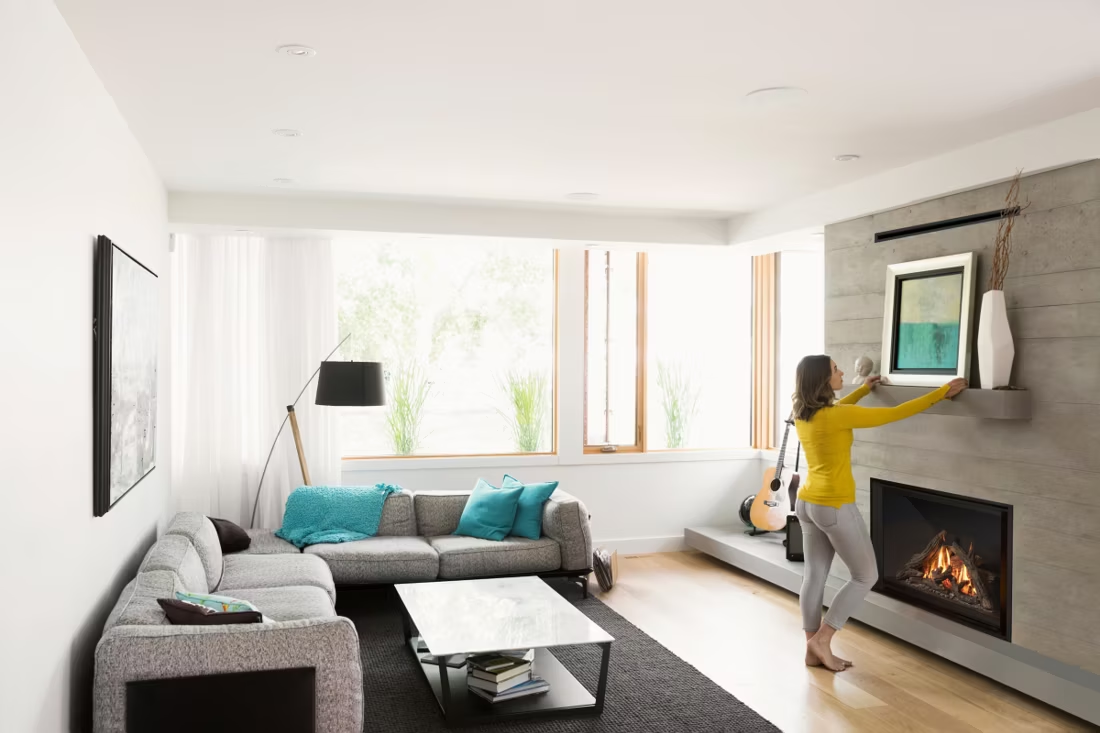
A gas fireplace is a fully built-in unit framed into a wall—common in Gallatin's newer great-room construction. A gas insert slides into an existing masonry fireplace opening and uses the chimney as its vent path, which is the typical route for older downtown Gallatin homes upgrading from wood or an unused hearth. A gas stove is a freestanding cabinet unit that sits on the floor, useful in additions or rooms without an existing chimney. A local dealer can walk your specific room and tell you which fits.
Do I need a permit to install a gas fireplace in Gallatin?
Yes. Inside city limits, the City of Gallatin Building & Codes Department requires a building permit and a gas permit for new installations; homes in unincorporated Sumner County go through the Sumner County Codes Department instead. The gas line connection itself has to be run or verified by a licensed gas fitter. Most established local hearth dealers handle all of this permitting and inspection coordination as part of the installation, so you're not left managing separate trades.
Should I get a vented or vent-free gas fireplace?
Vented (direct-vent) units draw combustion air from outside and exhaust fully outside through a sealed pipe—they're the more universally recommended choice and the type most Gallatin dealers install by default. Vent-free units burn directly into the room and are legal in Tennessee within specific room-size and BTU limits, but they also release water vapor into the living space, which is worth weighing in a humid climate like Middle Tennessee where indoor moisture control already matters in newer, tightly sealed homes. For most Gallatin living rooms and basements, direct-vent is the simpler, safer call.
How often does a gas fireplace need to be serviced?
Plan on an annual inspection, ideally in early fall before the first cold snap. A licensed technician checks the burner, pilot assembly, gas connections, and venting, and cleans the glass and interior. Local gas appliance service providers in the Gallatin and Hendersonville area typically charge $125 to $200 for this visit—modest compared to the cost of a failed ignition system or a venting issue caught too late.
Gas vs. electric fireplace—which makes more sense for my home?
Electric fireplaces are inexpensive to install (often $400 to $1,200) and run on the City of Gallatin's residential rate of about 11.8 cents per kWh, but most units top out around 5,000 to 9,000 BTU of supplemental heat—closer to ambiance than real heating power. Gas fireplaces cost more upfront but typically put out 20,000 to 40,000 BTU, enough to genuinely warm a room during Gallatin's occasional hard freezes. Electric makes sense for renters, homes without gas access, or rooms where you just want the look and a little warmth. For anyone wanting a unit that can actually carry the heat load on a cold January night, gas is the stronger fit.
Is my gas fireplace wasting gas?
If it was installed more than 15 years ago, probably. Older gas fireplaces keep a standing pilot light burning all the time, and that little flame can cost a couple hundred dollars a year. Newer models use pilot-on-demand ignition—the pilot lights only when you use the fireplace and goes out when you turn it off.
What do I measure to size a fireplace insert?
Four numbers tell you what fits: the front width, the front height, the back width, and the overall depth of your existing fireplace opening. Grab a tape measure, jot those down, and snap a photo of the wall—those two things do more to move your project forward than anything else you can do today.
Can a fireplace actually lower my heating bill?
Yes—by creating a comfort zone. A furnace heats every square foot of the house just to warm the one room you're in; a gas fireplace on low burns roughly a sixth of the gas a typical furnace does. Set the furnace around 55–60 degrees as a baseline, then heat the rooms your family actually uses. Families who heat this way commonly save $20–$60 a month.
Can I install a fireplace myself?
If you're putting a fire in your house on purpose, it's best to work with an expert. Unless you're genuinely experienced in framing, gas line, vent pipe, and the national code on clearances to combustibles, have a professional do it—and ideally the same company that sells you the fireplace, so warranty, service, and liability all live under one roof.
Nearby Dealers
Hearth shops serving Gallatin and the surrounding area.
Find your gas fireplace in Gallatin.
Tell us about your home and we'll put together a free Project Guide & Parts List for your Gallatin gas fireplace project—the right unit, the vent kit, and a trusted local dealer to install it.
Find Your Fireplace →