
Steady pellet heat for Cumberland Plateau winters.
Thermostat-controlled warmth for Jamestown, the Big South Fork area, and the rest of rural Fentress County—without stacking a woodpile. Find the right pellet stove or insert and connect with a trusted local dealer.
Every Project Starts From One of These Five Situations
Consistent heat, without the woodpile.
Fentress County sits on the Cumberland Plateau in Tennessee's Upper Cumberland region, with Jamestown as the county seat and the Big South Fork National River and Recreation Area stretching along its northern edge. Winters here are real but not extreme—average lows around 25°F and roughly 4,486 heating degree days a year, which is moderate compared to harsher cold-climate benchmarks like Burlington, VT, where annual HDD runs closer to 8,000. That milder profile is exactly the range where pellet stoves perform well: enough cold to justify a dedicated heat source, without demanding the marathon overnight burn times of a true northern climate.
The oak, hickory, maple, and pine forests that cover the plateau also happen to be the raw material behind hardwood pellet production, and regional brands including Lignetics, Hamer Pellet Fuel, and Greenway Renewable Energy keep supply close to home rather than trucked in from across the country. Fentress County has no air quality non-attainment designations or winter burn curtailment periods to navigate, so pellet stove operation here is straightforward—no yellow-day restrictions, no smoke advisories to check before lighting up. What pellet heat adds for a rural county this size is convenience: load the hopper, set the thermostat, and let the auger do the work, with a cleaner burn and less ash than cordwood—though it's worth remembering pellet stoves run on electricity, so a battery backup or generator matters if plateau ice storms take down power for more than a few hours.
Three steps. No salesperson until you're ready.
Tell us about your project
Your zip code, your situation, and the fuel you're leaning toward—or let the answers point you to one.
See what's actually available
The brands dealers within 100 miles genuinely carry—real options, never a catalog mirage.
Get your dealer & Project Guide
A trusted local dealer, plus the free Project Guide & Parts List that names every component of the job.
Frequently Asked Questions
How much does a pellet stove installation cost in Fentress County?
A typical pellet stove installation in Fentress County runs roughly $3,000 to $6,500, depending on whether you're installing a freestanding stove with new venting or a pellet insert into an existing fireplace opening. Inserts that can reuse an existing masonry chimney with a liner tend to land on the lower end, while a new freestanding stove in a home without a chimney—common on newer plateau properties—costs more once wall or roof venting is factored in. A trusted local dealer will give you a firm number after seeing your home, but this range is a realistic starting point for budgeting.
What size pellet stove do I need for my home?
Sizing depends on square footage, ceiling height, and how much of your home you're trying to heat. Fentress County's heating demand—about 4,486 heating degree days a year with average winter lows near 25°F—is moderate rather than severe, closer to a mixed-humid climate than a deep-freeze one like Duluth, MN. That means most homes here do well with a small to mid-size pellet stove (rated for 1,000 to 1,800 square feet) rather than the largest units on the market, unless you're heating an older farmhouse with poor insulation or trying to cover a whole home rather than a single living area. A local dealer can size your space accurately during an in-home visit, which matters—an undersized unit won't keep up on the coldest plateau nights, and an oversized one will short-cycle and waste pellets.
Where can I find certified pellet stove installers near me?
Look for installers with NFI (National Fireplace Institute) hearth certification, which covers proper venting, clearances, and code compliance for pellet appliances. Given Fentress County's small population and rural footprint, dealer coverage tends to come from hearth retailers serving the broader Upper Cumberland region rather than a shop on every corner in Jamestown—so expect installers who travel across county lines as part of normal business. The same rule applies here as anywhere: avoid handyman installs for a fuel-burning appliance. Improper venting on a pellet unit, even though it's a lower-temperature exhaust than wood, is still a code and safety issue, and a certified installer keeps your warranty intact.
What's the difference between a pellet stove and a pellet insert?
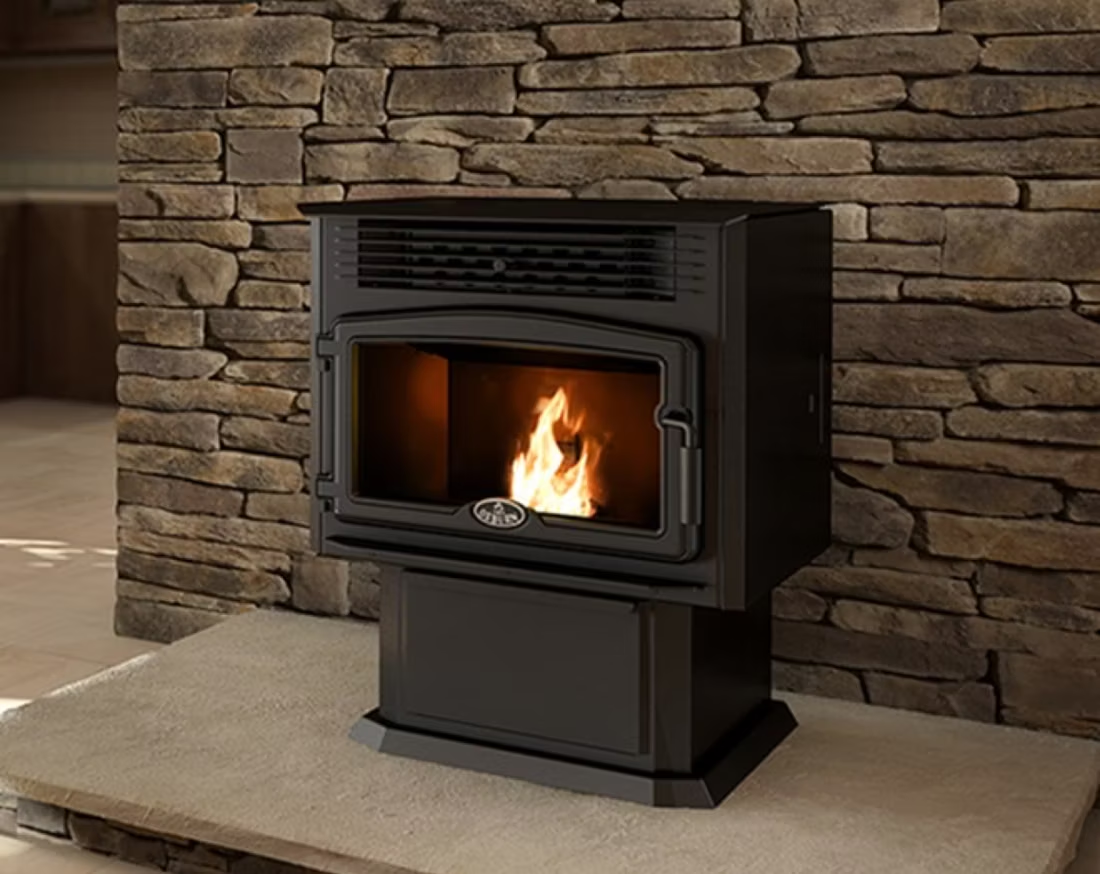
A pellet stove is a freestanding unit that sits on its own hearth pad and vents through a wall or the roof—it can go almost anywhere in a home with the right clearances. A pellet insert is built to slide into an existing masonry fireplace opening, turning an old wood-burning fireplace into a hopper-fed, thermostat-controlled heat source using the existing chimney as the vent path. For Fentress County homes with an older fireplace already in place—common in the county's farmhouses and older Jamestown-area properties—an insert is usually the simpler, less invasive upgrade. Homes without an existing fireplace are better suited to a freestanding stove.
Do I need a permit to install a pellet stove in Fentress County?
Most new pellet stove installations require a building permit through the Fentress County building codes office, primarily to confirm the venting and clearances meet code—the same requirement that applies to any solid-fuel appliance. Unlike counties with air quality non-attainment status, Fentress County has no winter burn curtailment periods or smoke advisories to work around, so once the unit is permitted and installed correctly, there's nothing further to check before lighting it. Most local dealers handle the permit paperwork as part of the installation, so it typically isn't something you have to manage yourself.
What's the best pellet stove for Fentress County's climate?
Because winters here are moderate rather than extreme, most homeowners don't need the largest, longest-burning units on the market—a mid-size pellet stove from a mainstream hearth brand carried by Appalachian-region dealers is usually plenty. What matters more locally is hopper capacity and auger reliability, since pellet stoves depend on a steady electrical feed and rural plateau properties can see longer outage recovery times after ice storms than towns closer to the interstate. Ask your local dealer about units with a longer hopper burn time (24+ hours on a full load) so you're not refilling constantly during a cold stretch, and pair the stove with hardwood pellets from regional producers like Lignetics or Greenway Renewable Energy for consistent BTU output.
How often does a pellet stove need to be cleaned and serviced?
Plan on cleaning the ash pan and burn pot weekly during regular use, and a full professional service—including the exhaust venting, hopper, and auger mechanism—once a year, typically before the start of heating season in the fall. Pellet stoves produce far less creosote than wood stoves, so the fire-safety risk is lower, but the mechanical parts (auger motor, igniter, fans) do wear and benefit from an annual once-over. Local hearth dealers serving Fentress County typically offer this service, and it's worth scheduling before the first cold snap rather than after something stops working.
Where can I buy pellets in Fentress County?
Hardwood pellets from regional producers—Lignetics, Hamer Pellet Fuel, and Greenway Renewable Energy—are the most common brands stocked by dealers and farm supply stores serving the county, and pricing typically falls in the $220 to $280 per ton range depending on the retailer and time of year. Buying early in the fall, before the first cold spell drives demand up, is the usual advice from local dealers. Because the county is rural with a small population base, availability can be tighter than in a larger market, so many homeowners buy a season's supply at once rather than restocking bag by bag through the winter.
Pellet stove vs. wood stove—which is right for my home?
Wood stoves burn cordwood cut from the oak, hickory, maple, and pine that cover the Cumberland Plateau, work without electricity, and are the better choice if you want a heat source that keeps running through an extended power outage—a real consideration on rural plateau roads after an ice storm. Pellet stoves are more convenient day to day—load the hopper, set the thermostat, get a consistent burn with far less ash and no splitting or stacking wood—but they need a steady electrical supply to run the auger and blower, so they go dark in an outage unless backed by a generator or battery system. For a primary living space in a home with reliable power, pellet is often the easier daily choice; for a true emergency-heat backup, wood still has the edge. Plenty of Fentress County homes end up with one of each.
Why is a fireplace insert so efficient?
An insert does two things: it seals the chimney completely, so you stop losing air you already paid to heat, and it radiates warmth into the room through the firebox and glass. Most add a heat-exchange fan that pulls cool room air underneath, wraps it around the hot firebox, and pushes it back out warm. Your home is more efficient before you've even lit the first fire.
Why is my open fireplace making my house colder?
Open fireplaces suck—literally. As the fire burns, it consumes air your furnace already paid to heat and pulls it out through the chimney, so the house is actually colder after the fire goes out than before you lit it. An insert fixes this: it seals the chimney, puts fixed glass across the front, and turns that hole in your house into a real heat source.
Does a fireplace add value to my home?
On average, a fireplace adds back to the home about the same amount you spent installing it. Add the monthly savings from heating the rooms you actually use instead of the whole house—often hundreds of dollars a year—and the value case is strong before you even count what a fire does for how your family uses the room.
How much should I budget for a fireplace?
For an average home—covering the fireplace, the vent pipe, and basic installation—a budget between $3,900 and $5,500 gives you a lot of options across wood, gas, and pellet. By the time you add finish work, gas line, and electrical, the average complete installation lands between $5,000 and $12,000 all-in. In a remodel or new build, a good rule is to put about 2.5% of the total project cost toward the fireplace.
Stove and Fireplace Dealers in Fentress County
Listings include WhyFire partner dealers, dealers we have verified as authorized for the brands we recommend, and established local businesses that carry hearth products. Every listing shows which one it is. The ones marked Preferred run on WhyFire's software, so they can show you real pricing and book your appointment right here. No manufacturer pays for placement. How we verify dealers →
Middle Tennessee Natural Gas
Middle Tn Natural Gas - Crossville
Spar-Gas
Volunteer Hearth & Home
Ap Hearth LLC
Pellet Brands Stocked Around Fentress County
Manufacturers will point you to the nearest stocking dealer.
Find your pellet stove in Fentress County.
Tell us about your home and we'll match you with a trusted local Fentress County dealer and put together a free Project Guide & Parts List—the exact stove or insert, vent kit, and installation plan for your pellet project.
Find Your Fireplace →