
Keep Your Family Warm and Safe—No Matter What
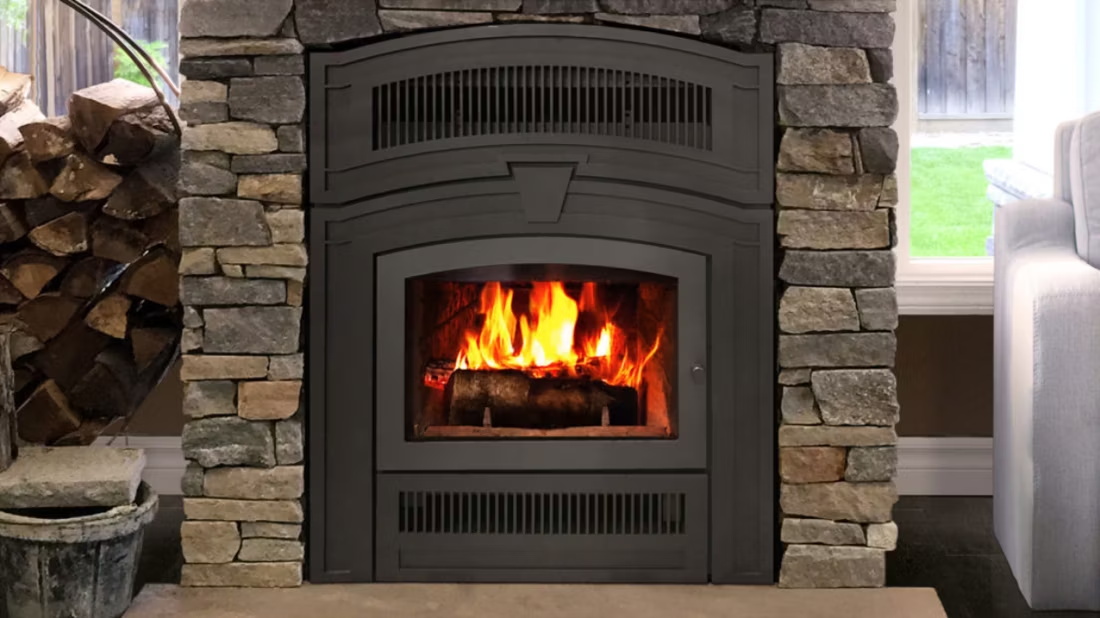
Winters in Fayette County are mild by national standards, but Mid-South ice storms can knock out power for days at a time. A wood stove or insert gives you supplemental heat, real ambiance, and a backup plan when the grid goes down—from Somerville to Piperton to the rural stretches in between.
Every Project Starts From One of These Five Situations
Supplemental warmth and storm-ready backup for the Mid-South.
Fayette County sits in Climate Zone 3A on the western edge of Tennessee, just east of Memphis, with an average winter low around 29°F and roughly 3,293 heating degree days a year—a fraction of what colder regions like Duluth or Fargo see. That means wood heat here isn't about surviving subzero nights; it's about taking the edge off a cold front, warming up an old farmhouse in Somerville or Oakland without running the furnace nonstop, and having a reliable heat source when winter ice storms—a recurring feature of Mid-South weather—knock out power across the county for days.
Fayette County's rural landscape means firewood is rarely scarce. Oak and hickory, both dense, high-BTU hardwoods, are common byproducts of land clearing and local tree service work throughout the county, with maple and pine also available for kindling or quicker-burning fuel. There's no non-attainment designation or winter inversion problem here, so there are no seasonal burn restrictions to plan around—you can burn on your own schedule. Whether you're upgrading an existing masonry fireplace in an older Fayette County home or adding a freestanding stove to a newer build, a properly sized, correctly vented unit from a trusted local dealer is the difference between a stove that performs and one that smokes up the room.
Three steps. No salesperson until you're ready.
Tell us about your project
Your zip code, your situation, and the fuel you're leaning toward—or let the answers point you to one.
See what's actually available
The brands dealers within 100 miles genuinely carry—real options, never a catalog mirage.
Get your dealer & Project Guide
A trusted local dealer, plus the free Project Guide & Parts List that names every component of the job.
Frequently Asked Questions
How much does a wood stove installation cost in Fayette County?
A typical wood stove or insert installation in Fayette County runs roughly $3,500 to $8,000, depending on the unit, whether you're venting into an existing masonry chimney or building new Class A pipe, and any hearth pad work needed for clearance compliance. Many of the county's older farmhouses around Somerville and Oakland already have a masonry fireplace, which usually keeps costs toward the lower end since an insert can use the existing flue with a stainless liner. New construction or homes without an existing chimney run higher once full venting is factored in. A local dealer will give you a firm number after seeing the space.
What size wood stove do I need for a Fayette County home?
Because Fayette County's winters are moderate—average lows in the upper 20s rather than the single digits you'd see in a place like Bismarck or Minneapolis—most homes here do fine with a small to mid-size stove rated for supplemental heat, roughly 1,000 to 1,800 square feet of coverage. Homes using wood as a true primary heat source, which is more common in older, less-insulated farmhouses on larger rural lots, may want to size up. An oversized stove in a well-insulated Fayette County home will smolder, run inefficiently, and build creosote faster than it should, so getting the sizing right during an in-home visit matters more than picking the biggest unit available.
Where can I find certified wood stove installers near Fayette County?
Look for installers carrying NFI (National Fireplace Institute) or CSIA (Chimney Safety Institute of America) certification—both indicate formal training specific to wood-burning appliances, not just general contracting experience. Because Fayette County is largely rural, some certified hearth dealers are based in or near the Memphis metro and serve Somerville, Oakland, Piperton, and Rossville as part of their regular service area; expect installers to confirm coverage and any travel considerations for more remote parts of the county. Having the same company sell and install the stove simplifies warranty coverage and keeps clearance and venting work up to code.
Wood stove or wood insert—which fits my Fayette County home?
A wood insert slides into an existing masonry fireplace and turns a drafty, inefficient opening into a sealed, high-output heater—a natural fit for the many older homes around Somerville and Oakland built with a traditional brick fireplace. A freestanding wood stove sits on its own hearth pad and can go almost anywhere with the right clearances, which makes it the better option for newer construction or additions without an existing chimney. If you already have a fireplace you rarely use because it lets more heat out than it puts in, an insert is usually the higher-value upgrade.
Do I need a permit to install a wood stove in Fayette County?
Yes—new wood stove and insert installations in Fayette County require a building permit through the Fayette County Building & Codes Department, and the unit itself needs to meet current EPA 2020 NSPS emissions standards. Most local hearth dealers handle the permit application and inspection scheduling as part of the installation, so you generally don't have to navigate it yourself. There are no seasonal burn curtailment periods to work around here, since Fayette County doesn't carry an air quality non-attainment designation.
What's the best wood stove for Fayette County's climate?
With average winter lows around 29°F and moderate heating demand overall, Fayette County homeowners generally don't need the extreme-cold-climate catalytic stoves that colder regions like Burlington or Bozeman rely on for 20-hour overnight burns. A mid-size non-catalytic stove from a brand like Pacific Energy, Vermont Castings, or Lopi typically handles supplemental heating needs well here, burning local oak or hickory efficiently without requiring an oversized firebox. Homeowners using wood as a true primary heat source in an older, less-insulated farmhouse may still want to talk to a local dealer about a larger firebox for longer burn times.
How often should my chimney be inspected in Fayette County?
The CSIA recommends an annual inspection for any wood-burning appliance, and that holds true in Fayette County even with a shorter, milder burn season than colder climates. Plan on a full sweep and inspection each late summer or early fall before the first cold front rolls through, especially if you're burning dense hardwoods like oak and hickory that produce more creosote buildup than softer woods when the stove isn't run hot enough. Rural properties with longer emergency response times are a good reason not to skip this step.
Where can I get firewood in Fayette County?
Fayette County's rural land base means firewood is generally easy to come by—much of it sourced from local tree service work and land clearing rather than public forest permits, since there's no national forest land in the immediate area. Oak and hickory are the most sought-after local species for heat output, with maple and pine also common and better suited to quick-burning or kindling use. Cord prices in the area typically run in line with regional Mid-South rates, and many rural landowners trade or sell firewood informally, so asking around locally or checking with a hearth dealer for a referral is often the fastest route.
Wood stove vs. pellet stove—which is right for my Fayette County home?
A wood stove burns cordwood, needs no electricity to run, and is a genuine asset when Mid-South ice storms take down power lines across Fayette County—which happens more often than in most regions this far south. A pellet stove, using bagged pellets from regional suppliers like Lignetics, Hamer Pellet Fuel, or Greenway Renewable Energy, is easier to load and produces less ash, but it depends on an electric auger and blower, so it goes dark in the same outage that a wood stove would keep burning through. Given how often winter storms interrupt power locally, many Fayette County homeowners lean toward wood for its outage-proof reliability, while reserving pellet stoves for homes that prioritize convenience and have backup power already in place.
Why is my open fireplace making my house colder?
Open fireplaces suck—literally. As the fire burns, it consumes air your furnace already paid to heat and pulls it out through the chimney, so the house is actually colder after the fire goes out than before you lit it. An insert fixes this: it seals the chimney, puts fixed glass across the front, and turns that hole in your house into a real heat source.
Why won't my new wood stove get going like my old one?
New wood stoves are 70%+ efficient, so far less heat goes up the flue—which also means less draft to get a fire established. The rule: build a genuinely hot fire for about 45 minutes before you choke it down. Skip that and you get smoke in the room, creosote in the chimney, and a fire that never takes off. Most performance complaints trace straight back to this.
Can a fireplace actually lower my heating bill?
Yes—by creating a comfort zone. A furnace heats every square foot of the house just to warm the one room you're in; a gas fireplace on low burns roughly a sixth of the gas a typical furnace does. Set the furnace around 55–60 degrees as a baseline, then heat the rooms your family actually uses. Families who heat this way commonly save $20–$60 a month.
How much should I budget for a fireplace?
For an average home—covering the fireplace, the vent pipe, and basic installation—a budget between $3,900 and $5,500 gives you a lot of options across wood, gas, and pellet. By the time you add finish work, gas line, and electrical, the average complete installation lands between $5,000 and $12,000 all-in. In a remodel or new build, a good rule is to put about 2.5% of the total project cost toward the fireplace.
Stove and Fireplace Dealers in Fayette County
Listings include WhyFire partner dealers, dealers we have verified as authorized for the brands we recommend, and established local businesses that carry hearth products. Every listing shows which one it is. The ones marked Preferred run on WhyFire's software, so they can show you real pricing and book your appointment right here. No manufacturer pays for placement. How we verify dealers →
Wells Building Supply
Acme Brick Company
31w - Mason, Tn
The Chimney Doctor
Bishop Hearth And Home, Inc.
eFireplaceStore.com
Southern Hearth
Find your wood fireplace in Fayette County.
Tell us a bit about your home and we'll match you with a trusted local dealer and send over a free Project Guide & Parts List—sized for your space, with the vent kit and parts you'll actually need for a wood stove or insert in Fayette County.
Find Your Fireplace →