
Real fireplace warmth in Cocke County, no chimney required.
From Newport to the cabin communities near the Smokies, electric fireplaces bring ambiance and supplemental heat without venting, gas lines, or a masonry chimney. Find the right unit and a local pro to install it.
Every Project Starts From One of These Five Situations
A flexible fit for the Smoky Mountains foothills.
Cocke County is home to about 7,800 people spread from Newport out toward Cosby and the edge of Great Smoky Mountains National Park. At climate zone 4A with roughly 3,672 heating degree days and average winter lows around 28°F, the county's winters are real but moderate—nowhere near the sustained sub-zero stretches you'd see in Duluth MN or Burlington VT. Wood and gas are both standard heating fuels here, and oak, hickory, maple, and pine are all common firewood species cut locally with permits through the Nantahala-Pisgah National Forests (about $20 per cord, May through October). Electric fireplaces occupy a different niche: they're not typically the primary heat source for a Cocke County home, but they're a genuinely useful one.
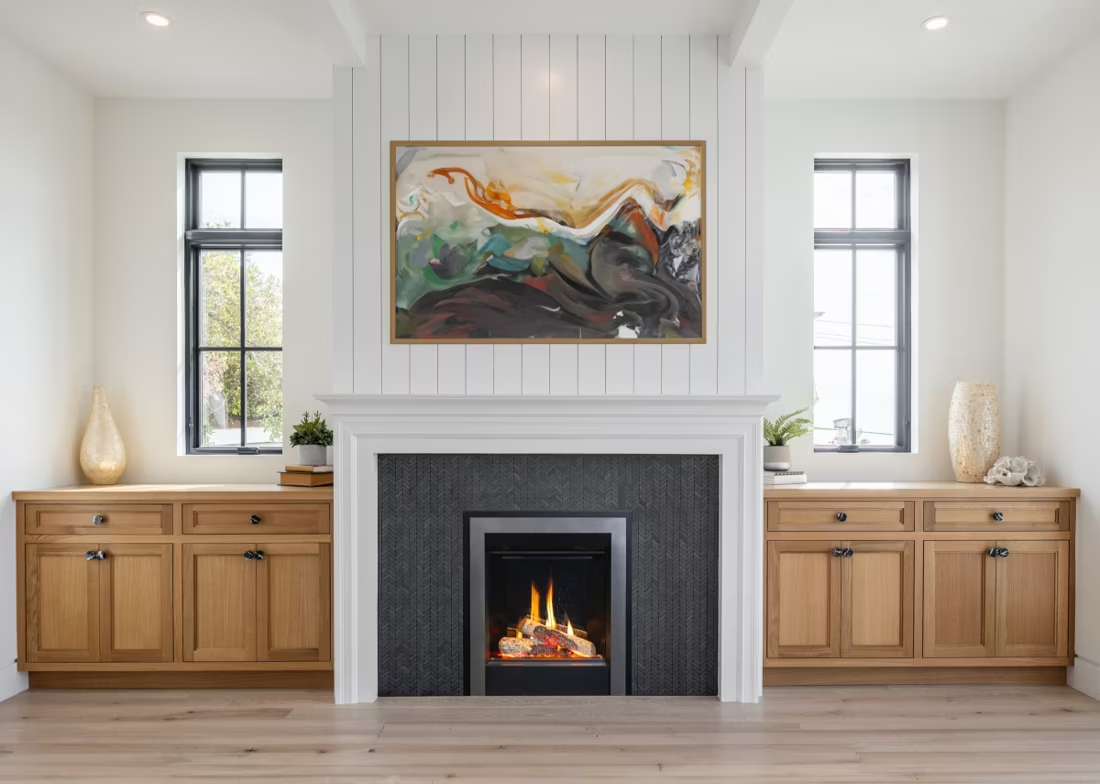
An electric fireplace or insert doesn't need a chimney, a gas line, or combustion air—which makes it a fast retrofit into an existing fireplace opening, a good option for additions and finished basements far from the ductwork, and a common choice for the manufactured and mobile homes found throughout the county's rural stretches. It's also a popular pick for cabin owners renting to Smokies tourists near Cosby and along the Pigeon Forge corridor, where insurance carriers and liability concerns often steer short-term rental properties away from live-flame wood or gas units. Power comes off the TVA grid through the local utility serving your address, and running one is inexpensive compared to running a furnace around the clock.
Three steps. No salesperson until you're ready.
Tell us about your project
Your zip code, your situation, and the fuel you're leaning toward—or let the answers point you to one.
See what's actually available
The brands dealers within 100 miles genuinely carry—real options, never a catalog mirage.
Get your dealer & Project Guide
A trusted local dealer, plus the free Project Guide & Parts List that names every component of the job.
Frequently Asked Questions
How much does an electric fireplace installation cost in Cocke County?
A basic plug-in freestanding electric fireplace runs $150 to $600 for the unit and needs nothing more than an existing outlet. A built-in wall unit or an insert that replaces the guts of an old wood-burning fireplace typically costs $1,200 to $3,500 once you factor in the unit, trim kit, and any electrical work—some models need a dedicated 20-amp circuit, which means bringing in a licensed electrician. Either way, there's no chimney lining, no gas line, and no venting to budget for, which keeps electric the least expensive fireplace fuel to install in the county.
Do I need a permit to install an electric fireplace in Cocke County?
Most plug-in electric fireplaces need no permit at all—they're treated as an appliance, not a fixed heating system, since there's no venting or gas involved. If you're having a built-in unit hardwired or adding a new dedicated circuit for a wall-mounted fireplace, that electrical work generally does require a permit and inspection through the county, same as any other electrical addition. There's no combustion inspection to worry about, which is a real difference from the permitting wood and gas installs go through here.
Will an electric fireplace actually heat my Cocke County home?
It depends on the room and your expectations. Most electric fireplace heaters max out around 1,500 watts, which is enough to noticeably warm a single room but not a whole house. Cocke County's winters—averaging around 28°F lows with about 3,672 heating degree days—are moderate compared to a place like Burlington VT, so an electric unit can genuinely carry a bonus room, sunroom, or basement on its own during most of the season. For a primary heat source during the coldest stretches, wood or gas still does more work; electric is best thought of as targeted, on-demand supplemental heat paired with your existing central system.
What's the difference between an electric fireplace and an electric insert?
A freestanding electric fireplace is a self-contained unit—often built into a mantel or cabinet—that plugs into a standard outlet and can go almost anywhere. An electric insert is sized to slide into an existing fireplace opening, including an old wood-burning masonry fireplace, giving you flame visuals and heat without touching the chimney at all. For Cocke County homes with an existing fireplace that's rarely used or hasn't been swept in years, an insert is often the simplest way to get a working, safe fireplace back without chimney repair costs.
Are electric fireplaces a good fit for manufactured or mobile homes in Cocke County?
Yes—this is one of the more common reasons homeowners in the rural parts of the county choose electric. Manufactured homes have specific restrictions around venting penetrations and clearances for wood or gas appliances, and electric units sidestep that entirely since there's no chimney or flue to run through the roof. You still want to check the manufacturer's clearance specs and make sure the circuit can handle the load, but electric is generally the most straightforward fireplace option for a manufactured home in this county.
Why do so many cabin rentals near the Smokies use electric fireplaces?
Cocke County sits right at the edge of Great Smoky Mountains National Park, and a large share of local cabins operate as short-term rentals for tourists heading into Cosby or Pigeon Forge. Insurance policies for rental properties are often stricter about live-flame appliances, and wood-burning units in particular add liability and cleaning burden between guest turnovers. An electric fireplace gives cabin owners the visual and ambiance guests expect without an open flame, combustion byproducts, or the need to teach every renter how to safely run a wood stove.
Electric vs. wood—which is right for my Cocke County home?
Wood is deeply practical here: oak, hickory, maple, and pine are all locally available, Forest Service cutting permits through the Nantahala-Pisgah National Forests run about $20 per cord from May through October, and a wood stove keeps working when the power goes out. Electric offers instant on-off convenience, zero ash or creosote, and no chimney to maintain, but it depends entirely on the grid staying up. For a primary heat source in an older farmhouse or a home without central heat, wood still tends to win in this county. For a den, guest suite, rental cabin, or a home that already has reliable central heat and just wants ambiance and a heat boost, electric is the lower-hassle choice.
Will an electric fireplace raise my power bill much?
Not dramatically if you're using it as intended—for supplemental heat in one room rather than as your whole-house furnace. A typical 1,500-watt unit run on high costs roughly 15 to 20 cents per hour at typical Tennessee residential electric rates, since power in Cocke County flows off the TVA system through your local utility. Running one for a few hours in the evening in a single room adds up to a modest monthly increase—far less than trying to heat an entire home with electric resistance heat alone.
How long does an electric fireplace installation take?
A plug-in freestanding unit can be unboxed and running the same day—there's no inspection or curing time involved. A built-in wall unit or insert that needs a new dedicated circuit typically takes a half day to a full day once an electrician is on site, mostly depending on how far the new wiring has to run from your panel. Either way, it's a much shorter timeline than a wood or gas installation, since there's no venting to size or chimney work to schedule around.
Can I put a TV above my fireplace?
Yes—with an asterisk. Fireplaces are hot and TVs don't like heat. Either put a mantel between them to deflect rising warmth, or choose a fireplace with heat-management technology that creates a cool zone on the wall above—the wall stays around 125 degrees, barely warm, while the room still gets full heat. If you like clean lines and don't want a mantel, heat management is the answer.
Do electric fireplaces actually produce heat?
Yes—most put out around 4,800–5,000 BTUs from a standard outlet, which comfortably warms a bedroom, office, or den as a comfort-zone heater. What they won't do is carry a whole house the way wood, gas, or pellet can. Think of electric as ambiance-first with honest supplemental heat: flames on with no heat in July, flames plus warmth in January.
How much should I budget for a fireplace?
For an average home—covering the fireplace, the vent pipe, and basic installation—a budget between $3,900 and $5,500 gives you a lot of options across wood, gas, and pellet. By the time you add finish work, gas line, and electrical, the average complete installation lands between $5,000 and $12,000 all-in. In a remodel or new build, a good rule is to put about 2.5% of the total project cost toward the fireplace.
Can I install a fireplace myself?
If you're putting a fire in your house on purpose, it's best to work with an expert. Unless you're genuinely experienced in framing, gas line, vent pipe, and the national code on clearances to combustibles, have a professional do it—and ideally the same company that sells you the fireplace, so warranty, service, and liability all live under one roof.
Stove and Fireplace Dealers in Cocke County
Listings include WhyFire partner dealers, dealers we have verified as authorized for the brands we recommend, and established local businesses that carry hearth products. Every listing shows which one it is. The ones marked Preferred run on WhyFire's software, so they can show you real pricing and book your appointment right here. No manufacturer pays for placement. How we verify dealers →
Professional Fireplace & Chimney Service
Heritage Propane
Smoky Mountain Buildings
Heritage Propane
East Tennessee Fireplace Co.
American Fireplaces
Admiral Propane LLC
Area – Gatlinburg, Tn
Find your electric fireplace in Cocke County.
Tell us a bit about your home or cabin and we'll put together a free Project Guide & Parts List—the right electric fireplace or insert for your space, plus a trusted local dealer to install it.
Find Your Fireplace →