
Heat that holds through a Smoky Mountain winter in Cocke County.
Wood, gas, pellet, and electric fireplace resources for Newport, Parrottsville, Del Rio, Cosby, Hartford, and every foothill community in Cocke County. Find the right unit and get matched with a trusted local hearth retailer.
Every Project Starts From One of These Five Situations
Foothill winters, oak-and-hickory heat, and mixed-fuel homes across Cocke County, Tennessee.
Cocke County sits where the Great Smoky Mountains foothills meet the Pigeon River and French Broad River valleys, right on the North Carolina line. Elevation runs from around 1,100 feet along the river bottoms up past 4,000 feet toward the national park boundary near Cosby. Winters here are real but moderate—about 3,672 heating degree days a year and an average winter low near 28°F, roughly a third of what a place like Burlington, Vermont racks up in a season. That means most homes need a solid primary heat source for a few cold months rather than a fuel that has to run flat-out from October through May. Oak, hickory, maple, and pine are the wood species people actually burn here, much of it self-cut or bought from a neighbor, with some cutting permits pulled through the Nantahala-Pisgah National Forests office for households near the park.
This hub covers every fuel and every town in the county—hearth retailers, chimney sweeps and gas/pellet technicians, and fuel suppliers serving Newport down to Del Rio, up the Cosby Highway toward the park, and out to Parrottsville and Hartford. Pick your fuel below to see local dealers, realistic installation costs, and unit recommendations for your specific project. Whether you're heating a farmhouse off Highway 25/70 or a cabin near the Foothills Parkway, this is the starting point.
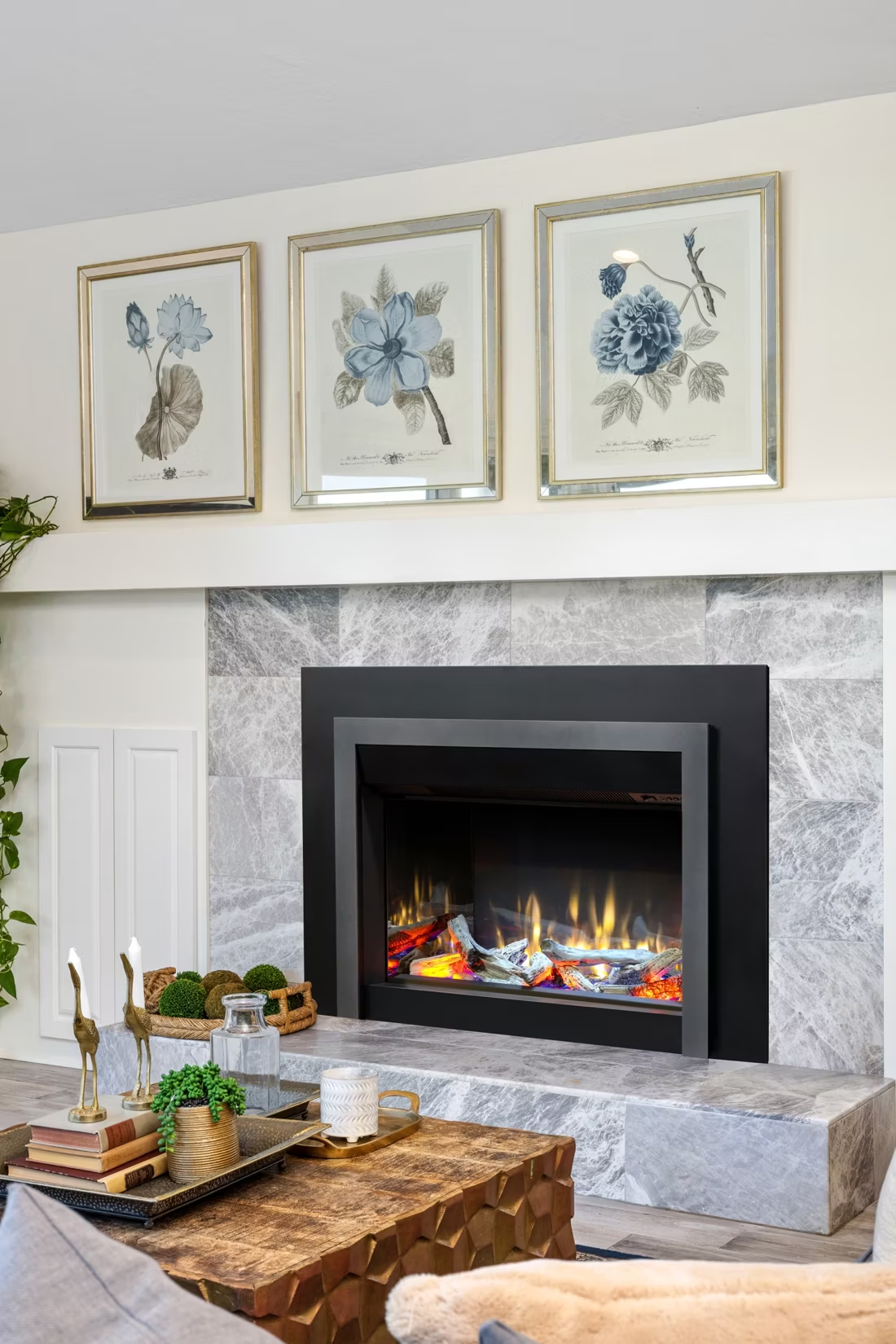
Four fuels. One honest answer for Cocke County.
Three steps. No salesperson until you're ready.
Tell us about your project
Your zip code, your situation, and the fuel you're leaning toward—or let the answers point you to one.
See what's actually available
The brands dealers within 100 miles genuinely carry—real options, never a catalog mirage.
Get your dealer & Project Guide
A trusted local dealer, plus the free Project Guide & Parts List that names every component of the job.
Frequently Asked Questions
Which fuel works best in Cocke County?
It depends on the house and the household. Wood is the traditional choice in rural Cocke County, and it makes sense here—oak and hickory burn hot and slow, pine is easy to come by for kindling, and a decent stove will carry a home through the coldest stretches without the county ever seeing Burlington, Vermont–style extremes. Gas, almost always propane rather than piped natural gas outside Newport, is the low-effort option for folks who don't want to manage a woodpile—instant heat, no ash, no chimney to sweep. Pellet stoves split the difference: wood-style ambiance and decent heat output without the felling-and-splitting labor, and Lignetics and Hamer Pellet Fuel bags are both reasonably easy to find locally. Electric fireplaces are mostly supplemental here—a good fit for a bedroom, a rental, or a room where running venting isn't practical, but not a primary heat source once temperatures drop into the 20s. A lot of homes in the hollows run wood or pellet as the main heater with a propane or electric unit in a secondary room.
Do I need a permit to install a fireplace or stove in Cocke County?
In most cases, yes. New wood stoves, inserts, gas appliances, and pellet stoves generally need a building permit through the county's building and codes office, and any new wood-burning appliance needs to meet current EPA 2020 NSPS emissions standards regardless of where in the county it's installed. Propane installations typically require a separate gas-line hookup performed by a licensed installer, which most local retailers coordinate as part of the job. Electric fireplaces usually skip the permit process unless it's a built-in unit that needs new wiring or a dedicated circuit. If you're near the national forest boundary and cutting your own firewood, that's a separate matter—permits for that go through the Nantahala-Pisgah National Forests office, not the county.
Are there any wood-burning restrictions in Cocke County?
No—Cocke County isn't in an air quality non-attainment area, and there are no winter burn bans or smoke advisories like you'd see in a basin-and-inversion region out west. That said, a well-seasoned load of oak or hickory burns cleaner and hotter than green or wet wood, and it's worth splitting and stacking firewood at least six months ahead of the season regardless of local rules. Any new wood stove installed today still has to meet EPA 2020 NSPS standards, which is a federal requirement independent of local air quality status.
Can one local hearth retailer handle all four fuel types?
Several dealers serving Cocke County carry three or four fuel types, which is useful if you're comparing options before committing. A retailer that stocks wood, propane/gas, and pellet units can walk you through the trade-offs on working showroom models rather than talking you through it over the phone. Electric fireplaces are more of a mixed bag—some hearth retailers carry a small electric lineup alongside their main business, while others focus purely on wood and gas and will point you to a big-box or specialty option for electric. If you're not sure which fuel fits your home, a multi-fuel dealer near Newport is the easiest place to start.
How does service work in the more remote parts of the county, like Cosby or Del Rio?
Most technicians covering Cocke County are based in or near Newport and travel out to Cosby, Del Rio, Hartford, and Parrottsville for both installs and annual service. Expect a modest trip charge for the more remote calls, and know that scheduling gets tighter in late fall as everyone tries to get a chimney swept or a gas unit inspected before the first cold snap. Booking service in September or October, rather than waiting for the first hard freeze, is the easiest way to avoid a multi-week wait for a technician to get out your way.
What's the typical cost range for fireplace installation across all fuel types in Cocke County?
Costs here tend to run below national averages, reflecting both the region and typical home sizes. Wood stove or insert installation: roughly $3,500–$7,500 for most jobs, higher for new construction requiring a full masonry chimney. Gas fireplace, insert, or stove (propane in most of the county): roughly $4,000–$9,000, with the lower end covering straightforward conversions where a propane line already exists. Pellet stove or insert: roughly $3,500–$6,000 for a typical install. Electric fireplace: $200–$2,500 for the unit itself, plus $300–$1,000 in labor for anything beyond a simple plug-in wall unit. Exact numbers depend on the specific retailer and home—see the county + fuel pages above for more detail tied to local pricing.
Can a fireplace actually lower my heating bill?
Yes—by creating a comfort zone. A furnace heats every square foot of the house just to warm the one room you're in; a gas fireplace on low burns roughly a sixth of the gas a typical furnace does. Set the furnace around 55–60 degrees as a baseline, then heat the rooms your family actually uses. Families who heat this way commonly save $20–$60 a month.
How much should I budget for a fireplace?
For an average home—covering the fireplace, the vent pipe, and basic installation—a budget between $3,900 and $5,500 gives you a lot of options across wood, gas, and pellet. By the time you add finish work, gas line, and electrical, the average complete installation lands between $5,000 and $12,000 all-in. In a remodel or new build, a good rule is to put about 2.5% of the total project cost toward the fireplace.
What is an in-home preview and do I need one?
It's a visit where a hearth professional measures your space, confirms the model you picked actually works in your home, and walks the specs—framing, gas line, venting, finish work—before anything is ordered. Some details you just can't know until you see the house. Never make a down payment without one; it's the single most-skipped step that burns buyers.
Can I install a fireplace myself?
If you're putting a fire in your house on purpose, it's best to work with an expert. Unless you're genuinely experienced in framing, gas line, vent pipe, and the national code on clearances to combustibles, have a professional do it—and ideally the same company that sells you the fireplace, so warranty, service, and liability all live under one roof.
Stove and Fireplace Dealers in Cocke County
Listings include WhyFire partner dealers, dealers we have verified as authorized for the brands we recommend, and established local businesses that carry hearth products. Every listing shows which one it is. The ones marked Preferred run on WhyFire's software, so they can show you real pricing and book your appointment right here. No manufacturer pays for placement. How we verify dealers →
Heritage Propane
Smoky Mountain Buildings
Heritage Propane
East Tennessee Fireplace Co.
American Fireplaces
Admiral Propane LLC
Area – Gatlinburg, Tn
Get matched with a trusted Cocke County hearth dealer.
Tell us about your project and we'll match you with a trusted local retailer, then send you a free Project Guide & Parts List—the exact parts, including the vent kit, and the dealer we recommend for your Cocke County home.
Find Your Fireplace →