
Keep Your Family Warm and Safe—No Matter What
From Cleveland to Charleston and out toward the Cherokee National Forest, Bradley County winters are mild most days—until an ice storm takes the grid down. Find the right wood stove or insert, and connect with a trusted local dealer who can size and install it correctly.
Every Project Starts From One of These Five Situations
Wood heat isn't essential here—until the ice comes.
Bradley County sits in the foothills of southeast Tennessee, climate zone 4A, with an average winter low around 29°F and a mild, short heating season—a fraction of what a place like Burlington, VT sees in a typical winter. Most days, an HVAC system handles the load just fine. But this stretch of the southern Appalachians is also known for the ice storms that periodically knock out power across Cleveland, Charleston, McDonald, and the unincorporated stretches toward the Ocoee corridor, sometimes for days. For a lot of Bradley County homeowners, a wood stove isn't primary heat—it's the thing that keeps the house livable when the power lines go down under ice-weighted limbs.
There's no shortage of fuel to run one. Bradley County's woodlots and the nearby Cherokee National Forest produce plenty of oak, hickory, and maple—all dense, high-BTU hardwoods that burn long and hot—along with pine for quick kindling and shoulder-season fires. Cutting permits through the Cherokee National Forest run about $20 per cord and are available May through October, which lines up well with the off-season timing most people need to season wood before burning it. Bradley County also has no air quality non-attainment concerns or winter inversion restrictions, so there's no burn-ban season to plan around like in some parts of the country—just normal code compliance and a properly installed stove.
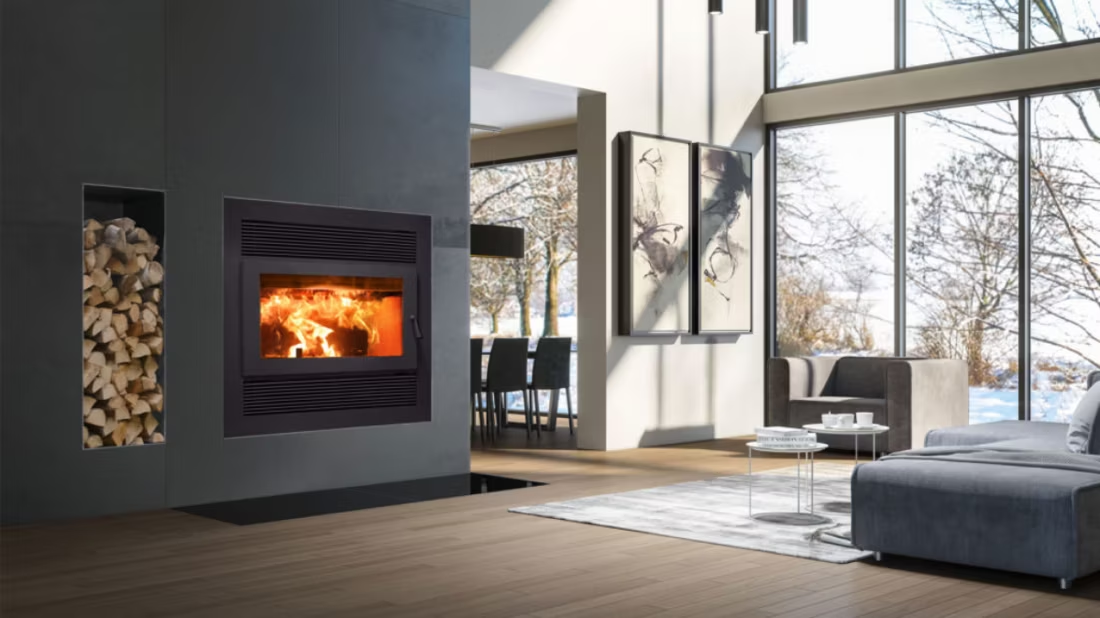
Firewood Cutting Permits Near Bradley County
Three steps. No salesperson until you're ready.
Tell us about your project
Your zip code, your situation, and the fuel you're leaning toward—or let the answers point you to one.
See what's actually available
The brands dealers within 100 miles genuinely carry—real options, never a catalog mirage.
Get your dealer & Project Guide
A trusted local dealer, plus the free Project Guide & Parts List that names every component of the job.
Frequently Asked Questions
How much does a wood stove installation cost in Bradley County?
Costs vary with the stove model, whether you're installing into an existing masonry fireplace or starting from scratch, and how much chimney or hearth work is involved. A straightforward insert into an existing fireplace with a usable chimney tends to run on the lower end of typical wood-heat pricing; a freestanding stove in a home with no existing chimney—requiring Class A pipe and a through-roof or through-wall chase—costs more once venting and hearth-pad work are added. A local dealer can give you a firm number after seeing your home, but expect the total to land somewhere between roughly $2,500 and $7,000 for most Bradley County jobs, with rural installs sometimes running a bit higher due to travel time out toward McDonald or the county's edges.
What size wood stove do I need for a Bradley County home?
Because Bradley County's winters are relatively mild compared to colder parts of the country—average lows in the high 20s rather than the sub-zero nights you'd see in a place like Duluth, MN—most homes here don't need the biggest catalytic stoves on the market. A small to medium non-catalytic stove is often plenty for supplemental heat in a single room or open living area, while a medium unit can cover a larger main floor if you're relying on it more heavily during outages. Older farmhouses with less insulation, common in the county's rural pockets, may want to size up slightly. A local dealer will factor in your square footage, ceiling height, and insulation during an in-home visit.
Where can I find certified wood stove installers near me?
Look for installers with NFI (National Fireplace Institute) or CSIA (Chimney Safety Institute of America) certification—both indicate real training in wood-burning appliance venting and clearances, not just general contracting experience. Certified local dealers serving Bradley County typically cover Cleveland and the surrounding towns, with a modest travel charge for jobs further out toward Charleston or McDonald. Because wood stove installs involve chimney venting and fire clearances, it's worth avoiding a general handyman install—improper venting is the leading cause of residential chimney fires, and a certified installer will also handle your local permit paperwork.
What's the difference between a wood stove and a wood insert?
A wood stove is a freestanding unit that sits on a hearth pad and can go almost anywhere in a home with the right clearances and venting. A wood insert is built to slide into an existing masonry fireplace, turning a drafty open hearth into a sealed, much more efficient heat source using the chimney you already have. If your Bradley County home has an older brick fireplace that barely puts out heat, an insert is usually the better upgrade. If you're heating a space with no existing fireplace—a den addition, a workshop, a rural cabin—a freestanding stove is the more practical route.
Do I need a permit to install a wood stove in Bradley County?
New wood stove and insert installations generally require a building permit, and the unit itself needs to meet current EPA emissions standards. Most certified local dealers handle the permitting as part of the installation, so you're not typically filing paperwork yourself. Because Bradley County has no air quality non-attainment designation, there are no seasonal burn curtailment periods to work around here the way there are in some western states—once the stove is installed and inspected, you're free to burn as conditions call for it.
What's the best wood stove for Bradley County's climate?
With a relatively mild average winter low of 29°F and a short, mild heating season overall, most Bradley County homes do well with a mid-size non-catalytic stove from a brand like Pacific Energy or Lopi—good heat output without the extended 20-plus-hour burn times that colder-climate homes need from a catalytic Blaze King. That said, if your main goal is outage backup rather than daily heating, a catalytic model's longer burn cycle can still be worth it so you're not reloading in the middle of the night during an ice storm. A local dealer can walk through both options based on how you actually plan to use the stove.
How often should my chimney be inspected and cleaned?
The CSIA recommends an annual inspection for any wood-burning appliance, and that holds true in Bradley County even with a shorter burn season than colder regions—creosote builds up based on how the stove is run, not just how many months it's used. Plan on a sweep and inspection each late summer or early fall, before the first cold snap. If you're burning primarily for outage backup and only firing the stove occasionally, an annual check is still worth it since infrequent use can actually contribute to creosote buildup from cooler, less complete burns.
Where can I get firewood in Bradley County?
Local sellers around Cleveland and the surrounding county typically sell seasoned oak, hickory, and maple by the cord, with pine available for quicker-burning kindling. For self-cutting, the Cherokee National Forest issues cutting permits for about $20 per cord during the May-through-October season—timing that works well since freshly cut hardwood needs several months to season before it burns cleanly. Oak and hickory are the better choices for long, hot overnight burns; pine is fine for shoulder-season fires but burns faster and leaves more creosote if used as your primary fuel.
Wood stove vs. pellet stove—which is right for me?
Wood stoves burn cordwood, work without electricity, and pair naturally with the low-cost cutting permits available through the Cherokee National Forest—a real advantage if your main goal is having heat when an ice storm knocks the power out. Pellet stoves, fed by regional brands like Lignetics, Hamer Pellet Fuel, or Greenway Renewable Energy, are easier to run day-to-day and produce less ash, but they need electricity for the auger and blower, so they won't help during an outage unless paired with a battery backup. For Bradley County homes where outage resilience is the priority, wood usually makes more sense; for households that just want convenient supplemental heat and have reliable power, pellet is worth a look too.
What's the difference between an insert and a zero-clearance fireplace?
An insert is a fireplace that slides into a pre-existing wood-burning fireplace—if you don't have one, there's nothing to insert it into. A zero-clearance fireplace is built into a framed wall, which makes it the answer for remodels and new construction. Simple test: existing masonry fireplace means insert; blank or framed wall means zero-clearance.
Why is a fireplace insert so efficient?
An insert does two things: it seals the chimney completely, so you stop losing air you already paid to heat, and it radiates warmth into the room through the firebox and glass. Most add a heat-exchange fan that pulls cool room air underneath, wraps it around the hot firebox, and pushes it back out warm. Your home is more efficient before you've even lit the first fire.
What is an in-home preview and do I need one?
It's a visit where a hearth professional measures your space, confirms the model you picked actually works in your home, and walks the specs—framing, gas line, venting, finish work—before anything is ordered. Some details you just can't know until you see the house. Never make a down payment without one; it's the single most-skipped step that burns buyers.
Can a fireplace actually lower my heating bill?
Yes—by creating a comfort zone. A furnace heats every square foot of the house just to warm the one room you're in; a gas fireplace on low burns roughly a sixth of the gas a typical furnace does. Set the furnace around 55–60 degrees as a baseline, then heat the rooms your family actually uses. Families who heat this way commonly save $20–$60 a month.
Stove and Fireplace Dealers in Bradley County
Listings include WhyFire partner dealers, dealers we have verified as authorized for the brands we recommend, and established local businesses that carry hearth products. Every listing shows which one it is. The ones marked Preferred run on WhyFire's software, so they can show you real pricing and book your appointment right here. No manufacturer pays for placement. How we verify dealers →
Hearthside Fireplace Patio & Barbeque Center
Therm-Con, Llc
America's Hearth & Patio Warehouse
Middle Tn Natural Gas - Dayton
Find your wood stove in Bradley County.
Tell us a bit about your home and we'll match you with a trusted local dealer, plus a free Project Guide & Parts List—your exact wood stove or insert setup, including the vent kit, sized right for your Bradley County home.
Find Your Fireplace →