
Warm up a room in Apison without the mess of wood or a gas line.
Zone heat and real ambiance for Hamilton County homes—plug it in or wire it in, no chimney or venting required. Find the right unit and connect with a trusted local dealer.
Every Project Starts From One of These Five Situations
Mild winters, no chimney required.
Apison sits at 935 feet in Hamilton County, just southeast of Chattanooga, where winters average a low around 32°F and the region logs roughly 3,000 heating degree days a year—mild compared to a place like Duluth, MN, and mild enough that most homes here don't need a full-time primary heat source running all winter. That's exactly the climate where electric fireplaces earn their keep: supplemental warmth in a bonus room, ambiance in a living room that already has central HVAC, or heat for a sunroom addition that the ductwork doesn't reach.
Electric service in Apison runs through the City of Chattanooga's utility (EPB), with a residential rate around 12.3 cents per kWh—inexpensive enough that running a 1,500-watt insert for a few hours a night costs pocket change. Because there's no combustion, no chimney, and no venting to plan for, installation is far simpler than a wood or gas project: a plug-in unit needs nothing more than an outlet, and a built-in model typically needs a dedicated 120V or 240V circuit run by a licensed electrician. Local dealers serving Hamilton County carry both styles and can walk you through which fits your room.
Three steps. No salesperson until you're ready.
Tell us about your project
Your zip code, your situation, and the fuel you're leaning toward—or let the answers point you to one.
See what's actually available
The brands dealers within 100 miles genuinely carry—real options, never a catalog mirage.
Get your dealer & Project Guide
A trusted local dealer, plus the free Project Guide & Parts List that names every component of the job.
Frequently Asked Questions
How much does an electric fireplace installation cost in Apison?
A plug-in electric insert or freestanding unit runs $300 to $800 installed, since it just needs an existing outlet and a mantel or surround to sit in. A built-in wall unit or a full mantel-and-insert package with a dedicated 240V circuit typically runs $1,500 to $3,500, depending on the size of the firebox and how much electrical work is needed to get power to the wall. Recessed or linear models built into new construction or a remodel sit at the higher end of that range once framing and finish work are added.
Do I need a permit to install an electric fireplace in Apison?
A simple plug-in unit that uses an existing outlet doesn't require a permit. If you're adding a dedicated circuit for a built-in or wall-mounted unit, that electrical work falls under the Hamilton County Building Department's jurisdiction and does require an electrical permit pulled by a licensed electrician. Most local dealers either employ a licensed electrician or coordinate with one as part of the installation, so this is typically handled for you rather than something you manage yourself.
Does an electric fireplace need venting or a chimney?
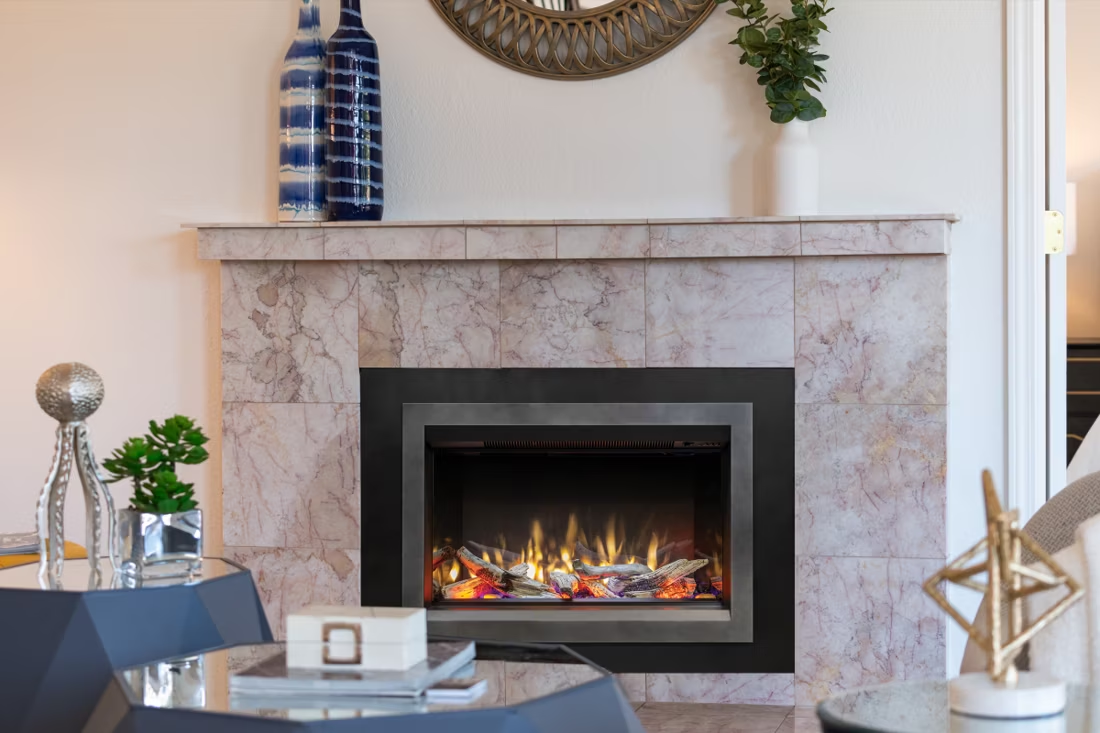
No. This is the biggest practical difference from wood or gas: electric fireplaces produce heat with resistance coils or infrared elements and simulate flame with LED lighting, so there's no combustion byproduct to exhaust. That means no chimney, no flue, no clearance-to-combustibles calculations for venting, and no annual chimney sweep. It also means an electric unit can go on an interior wall where a wood or gas fireplace physically couldn't be vented at all.
What size electric fireplace do I need?
Most residential electric fireplaces are rated around 1,500 watts, which translates to roughly 5,000 BTUs—enough to noticeably warm a single room in the 300 to 1,000 square foot range as supplemental heat, not whole-home heat. For a larger open-concept living area, some homeowners install two zoned units or step up to a larger linear model. Because Apison's winters are mild relative to much of the country, a single well-placed unit is usually enough to take the chill off a room on the coldest nights without leaning on it as your main heat source.
Electric vs. gas fireplace—which is right for my home?
Gas is available and common in this part of Hamilton County, and it delivers more heat output and a more authentic flame, but it requires venting, a gas line, and higher upfront installation cost. Electric skips all of that—plug it in or wire a simple circuit, and you're done, with none of the combustion byproducts or annual gas appliance servicing. For a primary heat source in a larger space, gas usually wins. For a bonus room, bedroom, or accent piece where installation simplicity matters more than raw BTUs, electric is the easier and cheaper path.
Why not a wood stove instead of electric?
Wood heat isn't part of the local building stock the way it is in colder, more rural parts of Tennessee—Apison's mild winters and suburban Chattanooga setting mean very few homes here are set up for cordwood storage, chimney maintenance, or daily fire-tending, and it shows up rarely in local installs. Electric fireplaces give you the visual and ambiance benefit of a fire without any of that upkeep, which is a big part of why they're a common choice for homeowners here who want the look without the lifestyle commitment.
How much maintenance does an electric fireplace need?
Very little. Wipe the glass front occasionally, keep the vent openings free of dust (the unit pulls in room air and blows it back out warmed), and expect the LED flame elements to last many years before needing replacement—most manufacturers rate them for 20,000+ hours of use. There's no annual chimney sweep, no gas line inspection, and no ash to clean up. This low-maintenance profile is one of the main reasons homeowners choose electric for secondary rooms.
What does it cost to run an electric fireplace in Apison?
At the City of Chattanooga's residential rate of about 12.3 cents per kWh, a typical 1,500-watt unit costs roughly 18 cents per hour to run on high heat, or under $2 for a full evening. Most owners run the heater setting only when they want supplemental warmth and use the flame-only mode (which draws only a few watts) the rest of the time for ambiance—keeping the actual heating cost minimal even with regular use through the mild Apison winter.
Are there rebates available for installing an electric fireplace?
Electric fireplaces themselves generally don't qualify for TVA's Energy Right program rebates, which are targeted at heat pumps, insulation, and whole-home efficiency upgrades rather than supplemental or decorative heating appliances. If you're adding a dedicated circuit as part of a larger electrical panel upgrade, it's worth asking your electrician whether any portion of that work overlaps with an eligible efficiency project, but don't count on a direct incentive for the fireplace unit itself.
Can I put a TV above my fireplace?
Yes—with an asterisk. Fireplaces are hot and TVs don't like heat. Either put a mantel between them to deflect rising warmth, or choose a fireplace with heat-management technology that creates a cool zone on the wall above—the wall stays around 125 degrees, barely warm, while the room still gets full heat. If you like clean lines and don't want a mantel, heat management is the answer.
Does an electric fireplace need a vent or chimney?
No—that's its superpower. An electric fireplace needs a wall and an outlet, period. No vent pipe, no gas line, no clearances to design around, which is why it works in bedrooms, offices, apartments, and walls where venting a gas or wood unit would be impractical or impossible. Installation is typically the simplest and least expensive of any fireplace type.
Can a fireplace actually lower my heating bill?
Yes—by creating a comfort zone. A furnace heats every square foot of the house just to warm the one room you're in; a gas fireplace on low burns roughly a sixth of the gas a typical furnace does. Set the furnace around 55–60 degrees as a baseline, then heat the rooms your family actually uses. Families who heat this way commonly save $20–$60 a month.
Does a fireplace add value to my home?
On average, a fireplace adds back to the home about the same amount you spent installing it. Add the monthly savings from heating the rooms you actually use instead of the whole house—often hundreds of dollars a year—and the value case is strong before you even count what a fire does for how your family uses the room.
Nearby Dealers
Hearth shops serving Apison and the surrounding area. Every listing shows whether it is a WhyFire partner, a dealer we have verified as authorized for the brands we recommend, or a local business carrying hearth products. No manufacturer pays for placement. How we verify dealers →
Hearthside Fireplace Patio & Barbeque Center
Therm-Con, Llc
America's Hearth & Patio Warehouse
Blossman Gas And Appliance
Electric Service in Apison
An electric fireplace's heater draws about 1,500 watts—pennies per hour at local rates.
City Of Chattanooga - (Tn)
Find your electric fireplace in Apison.
Tell us a bit about your room and we'll match you with the right electric fireplace or insert—plus a free Project Guide & Parts List and a trusted local dealer to install it.
Find Your Fireplace →