
Add real warmth to a Sully County home without a chimney or gas line.
For the 757 residents spread across Onida, Agar, and the ranchland around Lake Oahe, an electric fireplace plugs into existing wiring and adds zone heat the same week you order it. Find the right unit and get matched with a local dealer who installs in this part of central South Dakota.
Every Project Starts From One of These Five Situations
Simple power, real warmth, no venting required.
Sully County is one of the smallest counties in South Dakota by population—Onida, the county seat, and Agar are the only incorporated towns, and much of the county borders Lake Oahe, the Missouri River reservoir formed by the Oahe Dam just south of the county line. Zone 6A winters here run long and cold, closer to Bismarck, ND than to anywhere warmer, and most ranch houses and farmsteads rely on propane or fuel oil furnaces as primary heat since natural gas mains don't reach this far from Pierre. Wood heat, despite native cottonwood, oak, and ponderosa pine along the river bottoms, sees almost no dealer support out here—there simply isn't the population base to sustain it. Electric fireplaces fill a different, more practical niche: supplemental warmth and ambiance that doesn't require a flue, a fuel tank, or a permit fight.
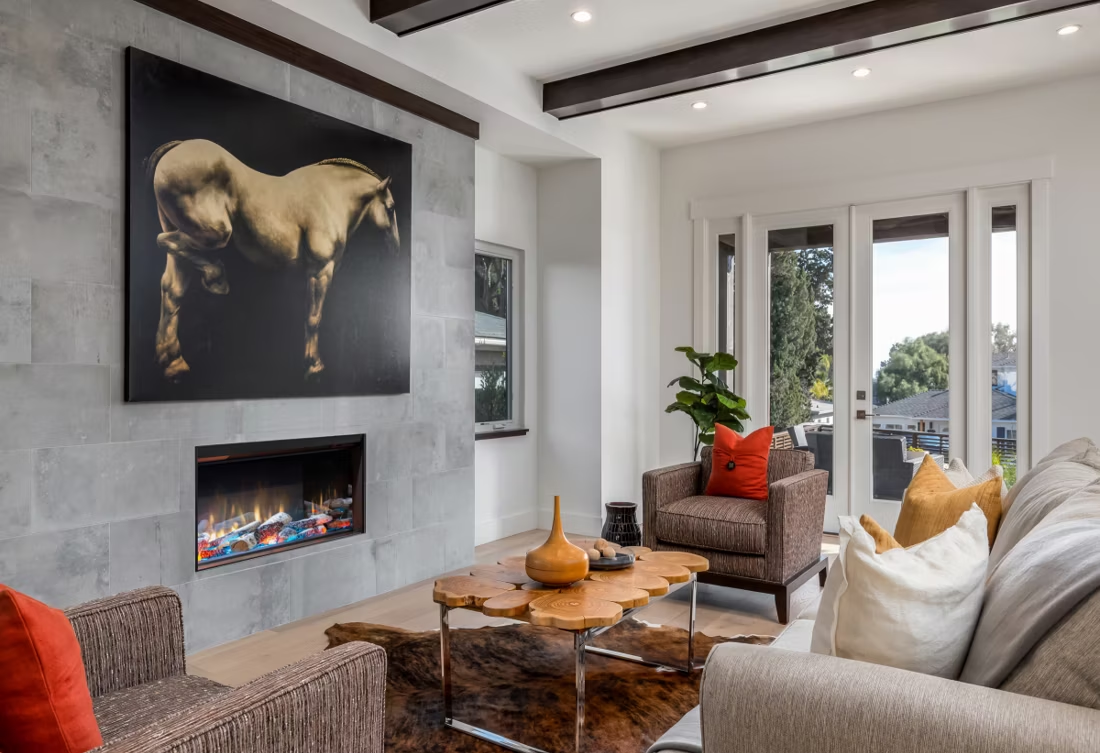
An electric fireplace insert or wall unit runs off the same rural electric cooperative service that already powers the house, drawing on the grid fed in part by Missouri River hydropower out of the Oahe Dam. That means no combustion, no venting, and—outside of a new dedicated circuit for a larger built-in—often no inspection beyond a standard electrical permit. For a manufactured home outside Onida, a converted farmhouse fireplace opening, or a finished basement room, an electric unit adds real, thermostatically controlled heat to a single space without touching the home's main heating system. The tradeoff worth knowing: unlike a wood stove, an electric fireplace goes dark the moment the co-op line does, so it's a zone-heat and ambiance solution here, not a blizzard-day backup.
Three steps. No salesperson until you're ready.
Tell us about your project
Your zip code, your situation, and the fuel you're leaning toward—or let the answers point you to one.
See what's actually available
The brands dealers within 100 miles genuinely carry—real options, never a catalog mirage.
Get your dealer & Project Guide
A trusted local dealer, plus the free Project Guide & Parts List that names every component of the job.
Frequently Asked Questions
How much does an electric fireplace installation cost in Sully County?
Most installations in Sully County run $300 to $1,500. A plug-in insert or wall-mounted unit that uses an existing outlet is on the low end—often a DIY-friendly project. A built-in linear electric fireplace that requires a dedicated 240-volt circuit, new framing, or a mantel surround runs higher once an electrician is involved. Because Sully County is so sparsely populated, expect a modest trip charge if your installer or electrician is coming from Pierre or Onida to a rural address—factor that into quotes for properties well outside town.
Will an electric fireplace actually heat a house in a Sully County winter?
Not as a whole-home solution—zone 6A winters here are genuinely cold, and most electric fireplace inserts top out around 5,000 BTU (roughly 1,500 watts), enough to comfortably warm one room but not a farmhouse or a ranch home during a January cold snap. In practice, Sully County homeowners run an electric fireplace as supplemental heat in a specific room—a den, a finished basement, a sunroom—while a propane furnace or forced-air system handles the rest of the house. Think of it as targeted comfort and ambiance, not a furnace replacement.
Can an electric fireplace be installed in a manufactured or mobile home?
Yes, and it's one of the more common installs in a county like Sully, where manufactured and modular homes make up a real share of the housing stock. Wall-mounted electric units have minimal clearance requirements and no venting to route through a roof or wall cavity, which sidesteps a lot of the structural concerns that come with wood or gas installs in manufactured housing. A local dealer can confirm the electrical panel has capacity before recommending a larger built-in model.
Do I need a permit to install an electric fireplace in Sully County?
Usually not for a plug-in unit using an existing outlet. If your installation calls for a new dedicated circuit—common with larger built-in linear fireplaces—an electrical permit is the standard requirement, handled through the county. There's no chimney, flue, or gas-line permitting involved, which is one of the reasons electric is often the fastest fuel type to get installed in a rural county where the nearest building inspector may be a drive away.
What happens to my electric fireplace during a power outage?
It shuts off, the same as any other appliance in the house. Sully County sees its share of winter storms and line outages tied to ice and wind on the open plains around Lake Oahe, and an electric fireplace offers no heat during those events. Most homeowners here treat it strictly as zone heat and ambiance, keeping a propane furnace, wood stove, or generator as the actual outage backup—a distinction worth being clear-eyed about before you buy.
Can I put an electric insert into an existing wood fireplace opening?
Yes—this is a common retrofit in older Sully County farmhouses that have a masonry fireplace opening but no interest in maintaining a wood-burning setup. An electric insert slides into the existing opening, plugs into a nearby outlet or a new circuit if needed, and gives you flame visuals and real heat without cutting or capping the chimney. It's usually the simplest and least expensive way to reuse an existing fireplace footprint.
What's the best type of electric fireplace for a cold rural South Dakota home?
For supplemental heat in a specific room, a wall-mounted or built-in linear unit from a brand like Dimplex or Napoleon—commonly carried by regional dealers—gives you both a heater and a clean, modern fire display. Look for a model with a real infrared or fan-forced heating element rather than a purely decorative flame effect if warmth is the priority. Since most Sully County homes lean on propane as primary heat, the electric unit's job is comfort and ambiance in one room, so sizing it to that room rather than the whole house is the right approach.
Electric vs. propane—which fuel is right for my Sully County home?
Propane remains the standard primary heat source for most homes in Sully County, since there's no natural gas main service this far from Pierre and propane delivery infrastructure is already well established across the ranchland. Electric fireplaces aren't a competitor to that—they're a complement, adding instant, thermostat-controlled zone heat and visual warmth to a specific room without touching the propane system. Homeowners who want whole-home reliability keep propane as the backbone and add electric where they want extra comfort or don't want to run ductwork to a new addition.
Where do I find a dealer who installs electric fireplaces near Sully County?
Given the county's population of under 800 spread across Onida, Agar, and the surrounding ranchland, most installers serving Sully County are based out of Pierre or the broader central South Dakota region and travel in for the job. A trusted dealer will confirm your electrical panel capacity, recommend a unit sized to the room rather than the whole house, and handle any permit work if a new circuit is required—which matters more out here than in a bigger market, since there isn't a second installer down the block if the first one falls through.
Can I put a TV above my fireplace?
Yes—with an asterisk. Fireplaces are hot and TVs don't like heat. Either put a mantel between them to deflect rising warmth, or choose a fireplace with heat-management technology that creates a cool zone on the wall above—the wall stays around 125 degrees, barely warm, while the room still gets full heat. If you like clean lines and don't want a mantel, heat management is the answer.
Do electric fireplaces actually produce heat?
Yes—most put out around 4,800–5,000 BTUs from a standard outlet, which comfortably warms a bedroom, office, or den as a comfort-zone heater. What they won't do is carry a whole house the way wood, gas, or pellet can. Think of electric as ambiance-first with honest supplemental heat: flames on with no heat in July, flames plus warmth in January.
Can a fireplace actually lower my heating bill?
Yes—by creating a comfort zone. A furnace heats every square foot of the house just to warm the one room you're in; a gas fireplace on low burns roughly a sixth of the gas a typical furnace does. Set the furnace around 55–60 degrees as a baseline, then heat the rooms your family actually uses. Families who heat this way commonly save $20–$60 a month.
How much should I budget for a fireplace?
For an average home—covering the fireplace, the vent pipe, and basic installation—a budget between $3,900 and $5,500 gives you a lot of options across wood, gas, and pellet. By the time you add finish work, gas line, and electrical, the average complete installation lands between $5,000 and $12,000 all-in. In a remodel or new build, a good rule is to put about 2.5% of the total project cost toward the fireplace.
Stove and Fireplace Dealers in Sully County
Listings include WhyFire partner dealers, dealers we have verified as authorized for the brands we recommend, and established local businesses that carry hearth products. Every listing shows which one it is. The ones marked Preferred run on WhyFire's software, so they can show you real pricing and book your appointment right here. No manufacturer pays for placement. How we verify dealers →
Builders Solutions
Find your electric fireplace in Sully County.
Tell us about your home near Onida or out along Lake Oahe, and we'll send a free Project Guide & Parts List—sized to your room, matched with the right unit, and paired with a trusted local dealer who can actually get out to your property.
Find Your Fireplace →