
Find the Right Fireplace for Sully County's Prairie Winters.
Propane and fireplace resources for Onida, Agar, and the ranches spread across Sully County—plus straight answers on stoves in a county too small for a dedicated hearth showroom of its own.
Every Project Starts From One of These Five Situations
Rural heat in South Dakota's least populated county.
Sully County sits along the Missouri River and Lake Oahe in central South Dakota, with the Sully Buttes rising out of the prairie north of Onida. It's a Climate Zone 6A county—winters here run long and exposed, with the kind of open-prairie wind chill and Canadian cold fronts familiar to Bismarck, ND, just up the river. With only 757 residents spread across roughly 800 square miles, Sully County has never supported a full-time hearth retailer of its own; the nearest showroom floor is about 30 miles south in Pierre.
What you'll find on this hub: propane and gas fireplace dealers, electric fireplace options for supplemental heat, and the technicians and fuel suppliers who travel into the county from Pierre to serve Onida, Agar, and the farms and ranches between them. Ponderosa pine, oak, and cottonwood grow in the river bottoms, and a handful of households still burn wood as backup heat during ice storms or power outages—but wood and pellet stoves aren't sold locally, so we've included honest guidance on what it takes to get either fuel here rather than pretending there's a local dealer network that doesn't exist.
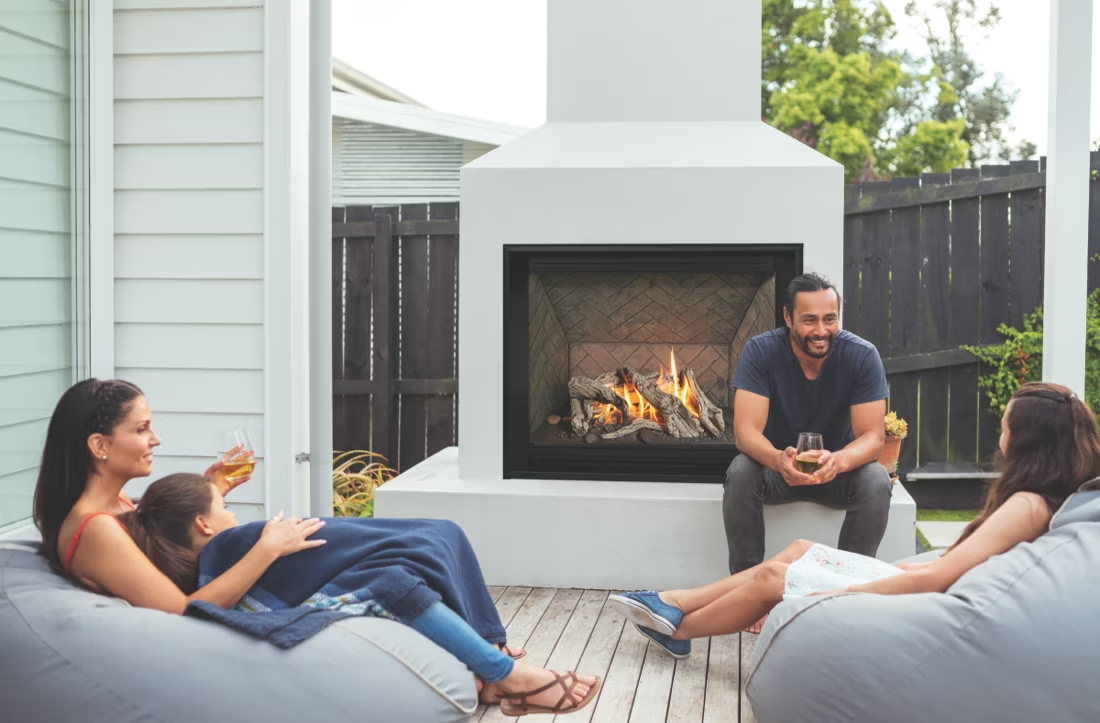
Four fuels. One honest answer for Sully County.
Three steps. No salesperson until you're ready.
Tell us about your project
Your zip code, your situation, and the fuel you're leaning toward—or let the answers point you to one.
See what's actually available
The brands dealers within 100 miles genuinely carry—real options, never a catalog mirage.
Get your dealer & Project Guide
A trusted local dealer, plus the free Project Guide & Parts List that names every component of the job.
Frequently Asked Questions
Which fuel makes the most sense for a home in Sully County?
For most Sully County homes, it's propane or electric. Natural gas mains don't reach this far into the county, so propane fireplaces and inserts fill the role gas plays in bigger towns—reliable, thermostat-controlled heat with tank delivery from a Pierre-area supplier. Electric fireplaces are a solid supplemental option, especially in newer construction, since they run off the local rural electric cooperative's lines without any venting or fuel storage. Wood and pellet stoves are technically possible, but neither has real local retail infrastructure here—if either interests you, plan to work with a Pierre dealer rather than expect a showroom in Onida or Agar.
Are wood stoves realistic in a county this small?
They're used, just not through any local dealer. Cottonwood and oak grow along the Missouri River and Lake Oahe bottoms, and a small number of ranch households cut and burn their own wood as backup heat when winter storms knock out power. But with only 757 people in the county, there's no full-service hearth shop stocking wood stoves or handling installations—the closest place to see a floor model and get it installed to code is Pierre, about 30 minutes south. If you want a wood stove as your primary heat source, it's doable, but expect to coordinate the whole project with an out-of-county retailer.
What about pellet stoves—does anyone use those here?
Not commonly, and for a practical reason: there's no local dealer selling pellet stoves and no in-county fuel supplier stocking bags by the pallet. Brands like Lignetics and Indeck Energy Services are available through regional co-ops and retailers based in Pierre, so a pellet stove is achievable—you'd just be ordering the unit through a Pierre dealer and arranging pellet delivery in bulk rather than picking up a few bags at a local hardware store. Given propane and electric already cover most heating needs here, pellet stoves remain a niche choice in Sully County.
Do I need a permit for a gas or electric fireplace install in Sully County?
Generally yes. New propane fireplace, insert, or stove installations require a building permit through the Sully County zoning office, and any gas line work needs a licensed LP gas fitter. Electric fireplaces don't usually need a permit for plug-in units, but built-in or hardwired installations that involve new electrical circuits do require an electrical permit and inspection. Most Pierre-based dealers who service Sully County handle the permitting as part of the installation, so you're not left tracking down paperwork yourself.
How does installation and service work when you live in such a small, rural county?
Almost every technician working in Sully County is based out of Pierre and drives in for the job—whether that's Onida (about 30 miles), Agar (a bit farther), or a ranch off a gravel road in between. Expect a modest trip charge on top of labor, and plan ahead: pre-season service calls in late summer or early fall are far easier to schedule than an emergency mid-January visit during a blizzard. Propane suppliers typically work off a delivery schedule rather than same-day fills, so keeping tabs on your tank level matters more here than in a town with multiple competing suppliers.
What's the typical cost range for a fireplace project in Sully County?
Propane fireplace, insert, or stove installation typically runs $4,000–$9,500, with the higher end reflecting new gas line runs on rural properties where the supplier has to travel farther. Electric fireplaces are the most budget-friendly option—$200–$3,000 for the unit itself, plus $400–$1,200 in labor if you're going beyond a simple plug-in wall unit. Wood or pellet stove installs, when someone does pursue them, tend to run higher than in towns with local competition, since the dealer and installer are both driving in from Pierre. Exact numbers depend on your specific property and how much venting or electrical work is involved.
How much should I budget for a fireplace?
For an average home—covering the fireplace, the vent pipe, and basic installation—a budget between $3,900 and $5,500 gives you a lot of options across wood, gas, and pellet. By the time you add finish work, gas line, and electrical, the average complete installation lands between $5,000 and $12,000 all-in. In a remodel or new build, a good rule is to put about 2.5% of the total project cost toward the fireplace.
Can a fireplace actually lower my heating bill?
Yes—by creating a comfort zone. A furnace heats every square foot of the house just to warm the one room you're in; a gas fireplace on low burns roughly a sixth of the gas a typical furnace does. Set the furnace around 55–60 degrees as a baseline, then heat the rooms your family actually uses. Families who heat this way commonly save $20–$60 a month.
Does a fireplace add value to my home?
On average, a fireplace adds back to the home about the same amount you spent installing it. Add the monthly savings from heating the rooms you actually use instead of the whole house—often hundreds of dollars a year—and the value case is strong before you even count what a fire does for how your family uses the room.
Wood, gas, pellet, or electric—how do I choose?
Match the fuel to your life, not the other way around. Wood: lowest fuel cost and total power-outage independence, but you're hauling and stacking. Gas: press a button, set a thermostat, no maintenance to speak of. Pellet: wood economics with automatic feeding, in exchange for weekly cleaning and a need for electricity. Electric: plugs in anywhere with honest supplemental heat. Nobody regrets the fuel that fits how they actually live.
Stove and Fireplace Dealers in Sully County
Listings include WhyFire partner dealers, dealers we have verified as authorized for the brands we recommend, and established local businesses that carry hearth products. Every listing shows which one it is. The ones marked Preferred run on WhyFire's software, so they can show you real pricing and book your appointment right here. No manufacturer pays for placement. How we verify dealers →
Builders Solutions
Find your fireplace project match in Sully County.
Tell us about your home in Onida, Agar, or wherever you are in the county, and we'll match you with a trusted Pierre-area dealer and send a free Project Guide & Parts List—the exact parts, including the vent kit, for your specific propane or electric fireplace project.
Find Your Fireplace →