
Reliable warmth for Sanborn County's long, cold winters.
Steady, thermostat-controlled heat for the county's roughly 1,089 residents, from Woonsocket to Artesian and Forestburg. Find the right pellet stove or insert and connect with a trusted local dealer.
Every Project Starts From One of These Five Situations
Low-maintenance heat built for hard Plains winters.
Sanborn County sits in the James River valley of south-central South Dakota, a Zone 6A climate where open-plains wind and stretches of below-zero cold aren't unusual—the kind of winter that would feel familiar in Bismarck or Fargo, ND. With a population just over 1,000 spread thin across Woonsocket, Artesian, and Forestburg, most homes here are older farmhouses or acreages where keeping heat running through a blizzard matters more than curb appeal. Ponderosa pine, oak, and cottonwood grow along the river bottoms and provide firewood for some households, but splitting and stacking cordwood on a working farm schedule isn't for everyone.
That's where pellet heat fits. A hopper-fed stove burns cleaner and more consistently than cordwood, and with no local air quality non-attainment issues or burn restrictions in Sanborn County, there's nothing standing in the way of running one daily through the coldest months. Regional pellet brands like Lignetics and Indeck Energy Services distribute through farm-supply and co-op channels across the Dakotas, so fuel sourcing isn't the challenge—matching the right stove, hopper capacity, and venting setup to a rural property is. That's the part a local, trusted installer handles.
Three steps. No salesperson until you're ready.
Tell us about your project
Your zip code, your situation, and the fuel you're leaning toward—or let the answers point you to one.
See what's actually available
The brands dealers within 100 miles genuinely carry—real options, never a catalog mirage.
Get your dealer & Project Guide
A trusted local dealer, plus the free Project Guide & Parts List that names every component of the job.
Frequently Asked Questions
How much does a pellet stove installation cost in Sanborn County?
A typical pellet stove or insert installation runs in the $3,500 to $6,500 range, depending on the unit, whether you're venting through an exterior wall (the standard, simpler route for pellet appliances) or converting an existing masonry fireplace, and whether an electrical circuit needs to be added for the hopper motor and blower. Because Sanborn County has no full-service hearth showroom of its own, most homeowners work with an installer based out of Mitchell or another regional hub who travels into the county—factor a modest trip charge into your estimate.
What size pellet stove do I need for my home?
Sizing depends on square footage, ceiling height, and how drafty the house is—and older farmhouses common throughout Sanborn County often run leakier than newer construction, which pushes the recommended size up a notch. For a property where nobody's home to babysit the hopper every few hours, it's also worth sizing toward a larger hopper capacity (40+ lb) so the stove can run longer between refills during a multi-day cold stretch. A local dealer will factor in your home's insulation and layout during an in-home visit rather than sizing off square footage alone.
Where can I find certified pellet stove installers near Sanborn County?
With a county population of just over 1,000, there's no dedicated hearth retailer inside Sanborn County itself—most residents work with an NFI-certified installer based in Mitchell or another nearby South Dakota trade hub who services the surrounding rural counties. Look for certification through the National Fireplace Institute, and ask specifically whether the installer has experience venting appliances on exposed, wind-heavy farmsteads, since exterior vent placement matters more here than in a sheltered subdivision.
What's the difference between a pellet stove and a pellet insert?
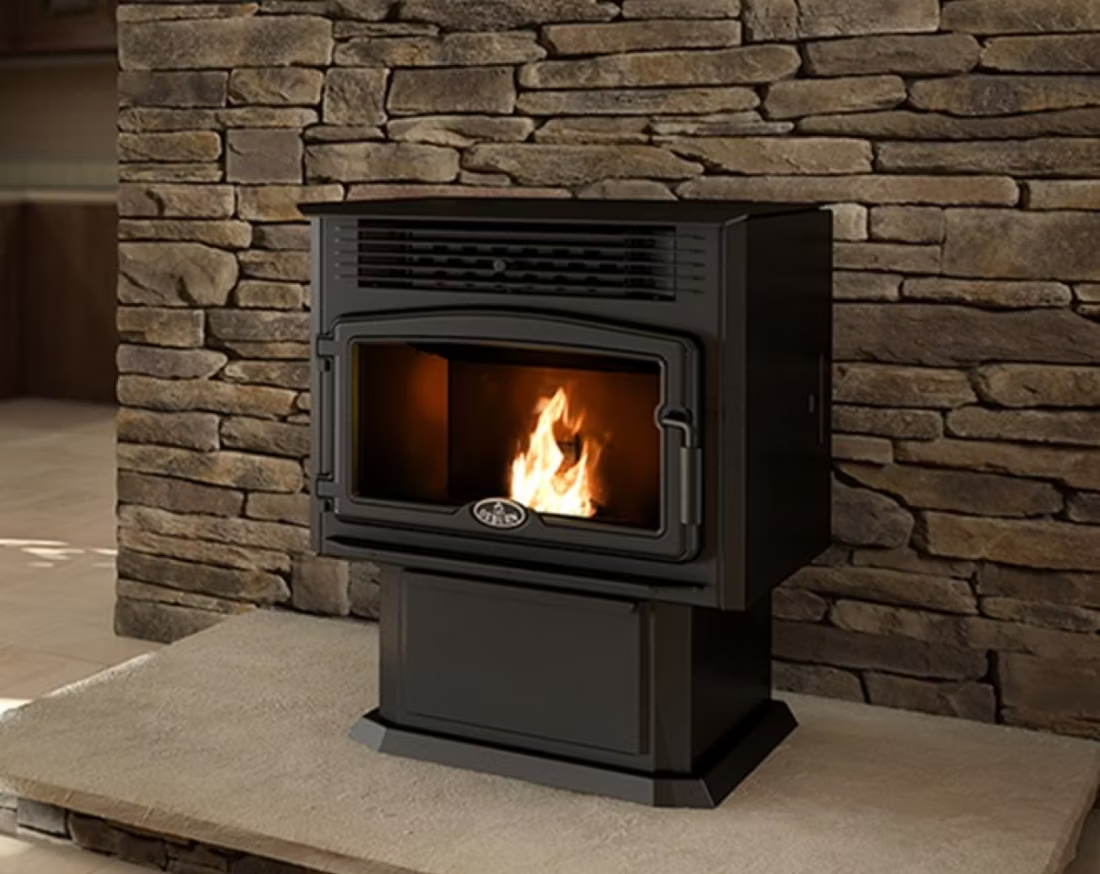
A pellet stove is a freestanding unit that sits on its own hearth pad and vents through a nearby wall—it can go almost anywhere with the right clearances, which makes it a common choice for farmhouses without an existing fireplace. A pellet insert slides into an existing masonry fireplace opening, using the existing chimney chase (with a properly sized liner) as part of the vent path. For the handful of older Sanborn County homes with a legacy wood fireplace, an insert converts that opening into efficient, thermostat-controlled heat without any structural changes.
Do I need a permit to install a pellet stove in Sanborn County?
Sanborn County handles permitting through its planning and zoning office rather than a large dedicated building department—typical for a rural South Dakota county this size. A permit is still generally required for a new pellet appliance installation, and most installers coordinate that paperwork as part of the job. Since Sanborn County has no air quality non-attainment designation, there are no seasonal burn curtailment periods to plan around, unlike some Western counties.
What's the best pellet stove for Sanborn County's climate?
Look for a stove with a large hopper (40 lb or more) and a solid reputation for running unattended through multi-day cold snaps—a real consideration on open Plains properties where a February blizzard can keep roads closed for a day or two. One thing to plan around: pellet stoves need electricity to run the auger and blower, so unlike a wood stove, they go dark in a power outage. Given how exposed Sanborn County is to ice storms and high wind, pairing a pellet stove with a small backup battery system or generator—or keeping a wood-burning backup on hand—is worth discussing with your installer.
Where do I buy pellets in or near Sanborn County?
Lignetics and Indeck Energy Services are the two regional brands most commonly stocked through farm-supply stores and ag co-ops across this part of South Dakota, and either burns well in most modern stoves. Because Sanborn County is rural, it's worth buying a season's supply (typically delivered or picked up by the pallet, at 50 lb bags per ton) early rather than waiting until a cold front hits and local stock runs thin. Your installer can point you toward the nearest supplier carrying a brand compatible with your stove.
How much maintenance does a pellet stove need?
Pellet stoves need more routine attention than a gas unit but far less than cordwood: emptying the ash pan every few days during heavy use, wiping down the burn pot weekly to keep the auger feeding cleanly, and a full professional cleaning and inspection once a year, ideally before the season's first cold stretch. For a farm property where the stove may run unattended for stretches, staying ahead of ash buildup matters more—a clogged burn pot is the most common reason a pellet stove starts smoking or shutting down mid-winter.
Pellet stove vs. wood stove—which is right for my Sanborn County home?
Wood is the traditional choice where ponderosa pine, oak, and cottonwood grow along the James River bottoms, and it keeps working with no electricity—a real advantage during a Plains ice storm. But there's no national forest or large public timber tract in Sanborn County the way there is out West, so most wood here comes from private land or purchased cordwood rather than a cutting permit system. Pellet stoves trade that off-grid resilience for cleaner burning, thermostat-set convenience, and fuel that shows up by the pallet instead of by the truckload of rounds that need splitting. For a household that wants low-maintenance, consistent heat and has reliable power, pellet is usually the more practical everyday choice; for a property that needs heat guaranteed through an outage, wood—or a pellet stove paired with backup power—makes more sense.
Why is a fireplace insert so efficient?
An insert does two things: it seals the chimney completely, so you stop losing air you already paid to heat, and it radiates warmth into the room through the firebox and glass. Most add a heat-exchange fan that pulls cool room air underneath, wraps it around the hot firebox, and pushes it back out warm. Your home is more efficient before you've even lit the first fire.
What's the difference between an insert and a zero-clearance fireplace?
An insert is a fireplace that slides into a pre-existing wood-burning fireplace—if you don't have one, there's nothing to insert it into. A zero-clearance fireplace is built into a framed wall, which makes it the answer for remodels and new construction. Simple test: existing masonry fireplace means insert; blank or framed wall means zero-clearance.
Can a fireplace actually lower my heating bill?
Yes—by creating a comfort zone. A furnace heats every square foot of the house just to warm the one room you're in; a gas fireplace on low burns roughly a sixth of the gas a typical furnace does. Set the furnace around 55–60 degrees as a baseline, then heat the rooms your family actually uses. Families who heat this way commonly save $20–$60 a month.
What is an in-home preview and do I need one?
It's a visit where a hearth professional measures your space, confirms the model you picked actually works in your home, and walks the specs—framing, gas line, venting, finish work—before anything is ordered. Some details you just can't know until you see the house. Never make a down payment without one; it's the single most-skipped step that burns buyers.
Stove and Fireplace Dealers in Sanborn County
Listings include WhyFire partner dealers, dealers we have verified as authorized for the brands we recommend, and established local businesses that carry hearth products. Every listing shows which one it is. The ones marked Preferred run on WhyFire's software, so they can show you real pricing and book your appointment right here. No manufacturer pays for placement. How we verify dealers →
Builders FirstSource Huron
Pellet Brands Stocked Around Sanborn County
Manufacturers will point you to the nearest stocking dealer.
Find your pellet stove in Sanborn County.
Tell us a bit about your home and we'll match you with the right pellet stove or insert, plus a free Project Guide & Parts List covering the exact parts—including the vent kit—and a recommended local dealer for your Sanborn County project.
Find Your Fireplace →