
A thermostat-set fire for Rapid City's long winters.
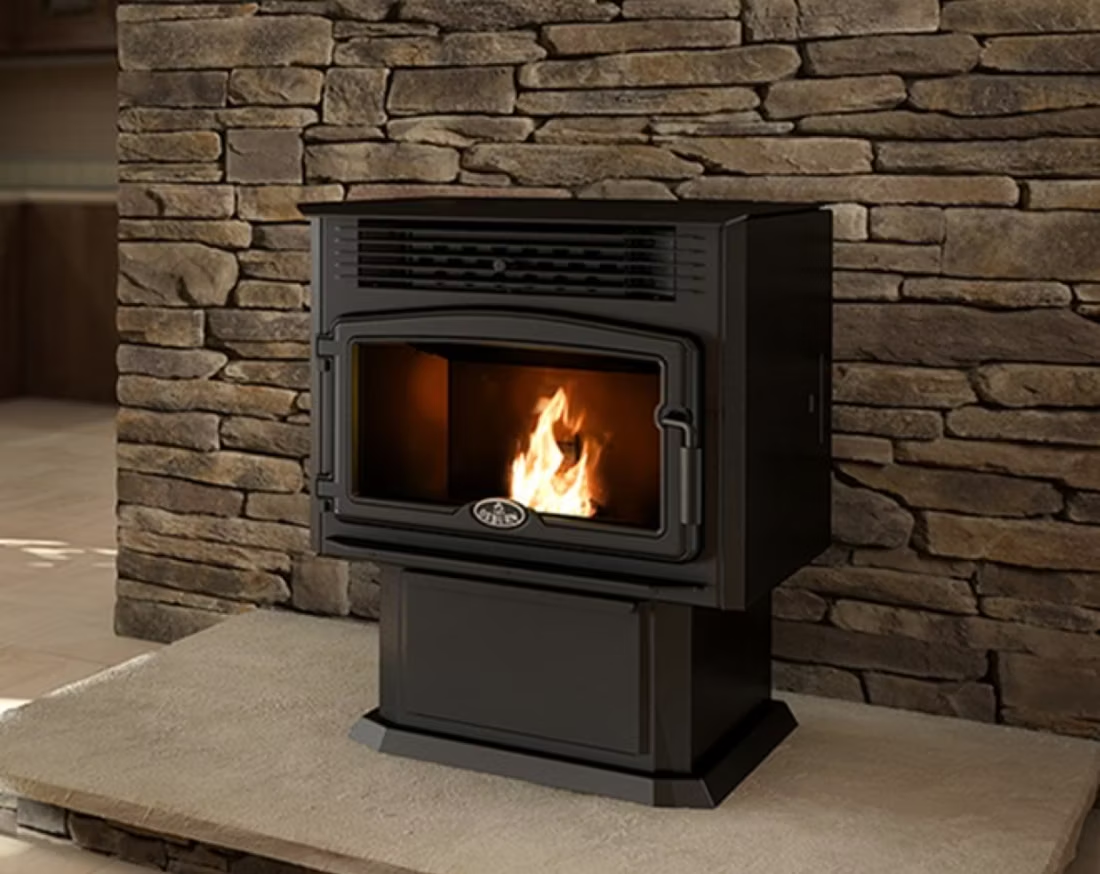
Rapid City sees a long, cold winter with lows near 16°F—a pellet stove holds a steady temperature all night without hand-feeding a firebox. Find the right unit and connect with a trusted local dealer.
Every Project Starts From One of These Five Situations
Convenience heat in a cordwood town.
Rapid City sits at 3,376 feet on the eastern flank of the Black Hills, where winter lows average 16°F and the heating season runs long—comparable to Bismarck, ND, a couple hundred miles east. Ponderosa pine, oak, and cottonwood are abundant across Pennington County and the nearby Black Hills National Forest, and plenty of local homes still burn cordwood cut under a Forest Service permit. But a growing number of homeowners are choosing pellet stoves instead, for the thermostat control and not having to reload a firebox every few hours through a Dakota winter.
Regional pellet brands like Lignetics and Indeck Energy Services keep hearth shops and farm-supply stores stocked throughout western South Dakota, and Rapid City isn't a non-attainment area or subject to winter burn curtailment, so there's no regulatory push toward pellet the way there is in some Western valley towns with inversion problems. The real driver here is even, low-maintenance heat output—a hopper-fed stove holds a set temperature overnight without tending, which matters when Black Hills Power and West River Electric Association customers are already paying roughly 14 to 15 cents per kWh and looking for a lower-cost way to offset electric or forced-air heating bills.
Three steps. No salesperson until you're ready.
Tell us about your project
Your zip code, your situation, and the fuel you're leaning toward—or let the answers point you to one.
See what's actually available
The brands dealers within 100 miles genuinely carry—real options, never a catalog mirage.
Get your dealer & Project Guide
A trusted local dealer, plus the free Project Guide & Parts List that names every component of the job.
Frequently Asked Questions
How much does a pellet stove installation cost in Rapid City?
Most pellet stove installations in Rapid City run $3,000 to $6,500 all-in, including the appliance, the PL vent kit, and a code-compliant hearth pad. Pellet stoves vent through 3-inch or 4-inch stainless PL pipe rather than a full masonry chimney, which keeps costs well below a comparable wood stove install—you're mainly paying for the unit, the through-wall vent kit, and an electrician if a dedicated outlet is needed for the auger and blower. A pellet insert going into an existing masonry fireplace usually lands toward the lower end since the old flue can often serve as a chase for the vent liner.
What size pellet stove do I need for a Rapid City home?
With Rapid City's long, cold winters and winter lows around 16°F, most homes in the 1,500 to 2,200 square foot range do well with a mid-size pellet stove rated for 40,000 to 55,000 BTUs. Smaller units around 25,000 BTUs work fine for supplemental heat in a great room or finished basement, while larger homes using the stove as primary heat often need something closer to 60,000 BTUs with a bigger hopper for longer unattended burns on the coldest nights. A local dealer will factor in your insulation, ceiling height, and layout during an in-home walkthrough—that step is worth not skipping.
Why choose a pellet stove over a wood stove when firewood is so easy to get here?
Ponderosa pine, oak, and cottonwood are all easy to come by around Pennington County and the Black Hills National Forest, and plenty of Rapid City homes still burn cordwood for exactly that reason. Pellet stoves make sense for homeowners who want the heat without the splitting, stacking, and hourly reloading—you fill a hopper every day or two instead of feeding a firebox constantly, and the thermostat holds a set temperature on its own. The tradeoff is that pellet stoves need electricity to run the auger and blower, so they're not a power-outage backup the way a wood stove is. Some households end up running both: wood for outages and ambiance, pellet for everyday convenience.
Where can I buy wood pellets in Rapid City?
Lignetics and Indeck Energy Services are the two regional brands most commonly stocked at hearth shops and farm-and-ranch supply stores across western South Dakota, sold either in 40-pound bags or by the ton on pallets. Expect to pay somewhere in the $230 to $300 per ton range depending on brand and whether you buy by the bag or the pallet—stocking up on a season's supply (roughly 2 to 3 tons for an average home) by the pallet in late summer usually beats per-bag pricing once winter demand picks up. Softwood pellets tend to burn hotter with a bit more ash; hardwood blends burn slightly cooler and cleaner. Ask your dealer which brand runs best in the specific stove you buy.
Do I need a permit to install a pellet stove in Rapid City?
Most pellet stove installations require a building permit through the City of Rapid City or Pennington County, depending on where you're located, along with an electrical permit if a new dedicated circuit is being run for the auger and blower. Because pellet stoves vent through a smaller PL pipe rather than a masonry chimney, the permitting and inspection process tends to move faster than a wood stove install. Most local dealers who sell and install pellet stoves handle the permit paperwork as part of the job—worth confirming upfront whether that's included in your quote.
Will my pellet stove work if the power goes out?
Not on its own. Pellet stoves rely on an electric auger to feed fuel and a blower to circulate heat, so a Black Hills Power or West River Electric Association outage will shut the stove down even with a full hopper. Some homeowners pair a pellet stove with a small battery backup unit or a portable generator sized to cover the stove's low draw, since most pellet stoves pull under 100 to 500 watts while running. If reliable heat during outages is the priority, a wood stove or a vented gas unit is the more dependable choice for that specific job.
What's the best pellet stove for Rapid City's winters?
Look for a unit with a large hopper—60 to 80 pounds—so it can run through a cold overnight without a refill during stretches well below the 16°F winter average. Brands like Harman, Lopi, and Enviro are common at hearth shops throughout the Black Hills region and offer models rated for whole-home heating in the 50,000+ BTU range. If you're burning pellets sourced locally from Lignetics or Indeck Energy Services, ask your dealer which stove burns that specific pellet cleanest—ash content and pellet density vary enough between brands that it affects how often you'll need to scrape out the burn pot.
How much maintenance does a pellet stove need?
Pellet stoves need the burn pot cleaned every few days during regular use and the ash pan emptied roughly weekly, plus a deeper cleaning of the hopper, auger, and exhaust fan a couple times each season. The PL vent pipe should still get an annual inspection, though it builds up far less residue than a wood-burning chimney since pellet combustion is more complete. Most Rapid City dealers offer an annual service visit for $100 to $175 that covers a full teardown, gasket check, and vent inspection—worth scheduling before the season starts each fall.
Pellet stove vs. electric heat—which costs less to run in Rapid City?
At Black Hills Power and West River Electric Association's residential rates, roughly 14 to 15 cents per kWh, straight electric resistance heat is generally the more expensive way to get through Rapid City's long, cold winter. A pellet stove burning fuel in the $230 to $300 per ton range typically delivers heat for less per BTU, especially used as a zone heater for the main living area while you turn the thermostat down elsewhere. The tradeoff is convenience: electric heat needs no fuel handling, while a pellet stove asks you to buy, store, and load fuel—just far less often than cordwood.
What's the difference between an insert and a zero-clearance fireplace?
An insert is a fireplace that slides into a pre-existing wood-burning fireplace—if you don't have one, there's nothing to insert it into. A zero-clearance fireplace is built into a framed wall, which makes it the answer for remodels and new construction. Simple test: existing masonry fireplace means insert; blank or framed wall means zero-clearance.
Why is my open fireplace making my house colder?
Open fireplaces suck—literally. As the fire burns, it consumes air your furnace already paid to heat and pulls it out through the chimney, so the house is actually colder after the fire goes out than before you lit it. An insert fixes this: it seals the chimney, puts fixed glass across the front, and turns that hole in your house into a real heat source.
What is an in-home preview and do I need one?
It's a visit where a hearth professional measures your space, confirms the model you picked actually works in your home, and walks the specs—framing, gas line, venting, finish work—before anything is ordered. Some details you just can't know until you see the house. Never make a down payment without one; it's the single most-skipped step that burns buyers.
Can I install a fireplace myself?
If you're putting a fire in your house on purpose, it's best to work with an expert. Unless you're genuinely experienced in framing, gas line, vent pipe, and the national code on clearances to combustibles, have a professional do it—and ideally the same company that sells you the fireplace, so warranty, service, and liability all live under one roof.
Nearby Dealers
Hearth shops serving Rapid City and the surrounding area. Every listing shows whether it is a WhyFire partner, a dealer we have verified as authorized for the brands we recommend, or a local business carrying hearth products. No manufacturer pays for placement. How we verify dealers →
Repair My Flame
Knecht Home Center - Rapid City
Builders First Source - Rapid City
Hebron Brick
Pellet Brands Stocked Around Rapid City
Manufacturers will point you to the nearest stocking dealer.
Find your pellet stove in Rapid City.
Tell us about your home and heating goals and we'll match you with a trusted local dealer, plus a free Project Guide & Parts List—sized for Rapid City's winters, with the vent kit and parts spelled out.
Find Your Fireplace →