
Find a gas fireplace built for Pine Ridge winters.
Reliable, on-demand propane heat for a county where towns sit far apart and winter holds on for months. Find the right unit and get matched with a trusted local dealer.
Every Project Starts From One of These Five Situations
Propane heat for a reservation that runs wide and rural.
Oglala Lakota County spans roughly 2,100 square miles of southwestern South Dakota and is coextensive with the Pine Ridge Indian Reservation, home to the Oglala Sioux Tribe. With just under 8,000 residents spread across Pine Ridge, Kyle, Wanblee, Manderson, Porcupine, Batesland, and Allen, homes here are often set far apart with long driveways and older or manufactured construction. Winters are long and serious—Climate Zone 6A, roughly 7,012 heating degree days a year, and an average winter low near 12°F, a heat load in the same range as Bismarck, ND. A dependable secondary or primary heat source isn't optional in most of these homes; it's a practical necessity for the four or five months a year when temperatures stay low.
There's no natural gas pipeline network serving this rural reservation county, so nearly every gas fireplace, insert, or stove installed here runs on propane delivered and stored on-site rather than piped in. That changes a few things compared to a natural-gas town: tank placement and sizing become part of the install conversation, and your local dealer will coordinate with a regional propane supplier as part of the project. Wood remains a strong tradition in the county too—ponderosa pine, oak, and cottonwood cut under Black Hills National Forest permits during the May–October season—but for households that want instant, thermostat-controlled heat without tending a fire, a well-vented propane fireplace or insert is the standard choice.
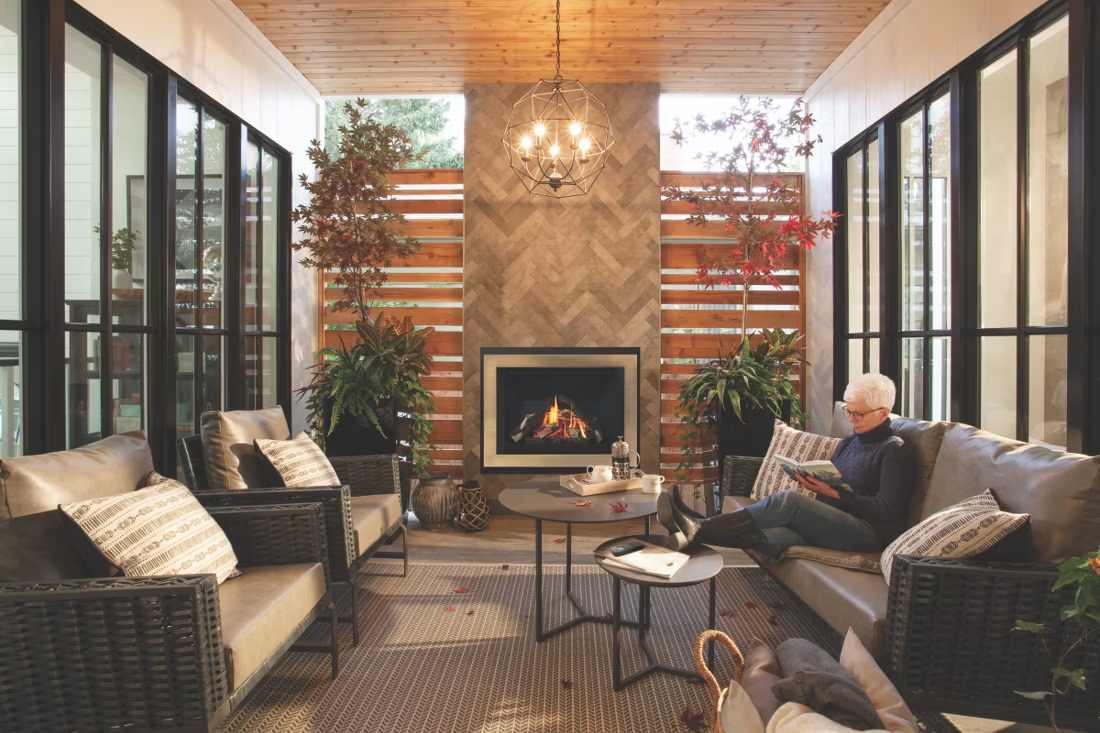
Three steps. No salesperson until you're ready.
Tell us about your project
Your zip code, your situation, and the fuel you're leaning toward—or let the answers point you to one.
See what's actually available
The brands dealers within 100 miles genuinely carry—real options, never a catalog mirage.
Get your dealer & Project Guide
A trusted local dealer, plus the free Project Guide & Parts List that names every component of the job.
Frequently Asked Questions
How much does a gas (propane) fireplace installation cost in Oglala Lakota County?
Because every gas fireplace in the county runs on propane rather than piped natural gas, installers typically quote in the $4,000 to $9,000 range for a direct-vent fireplace or insert, with the spread driven by whether you already have a propane tank on the property, how much venting and framing work is needed, and travel distance given how spread out communities like Wanblee, Kyle, and Batesland are from each other. If a new propane tank needs to be set and connected, add that as a separate line item from your propane supplier. A local dealer will give you a firm number after seeing the home in person.
Can I convert my existing wood fireplace to gas?
Yes—a propane insert can usually be fitted into an existing masonry fireplace using your current chimney (relined with a stainless liner) as the vent path. This is a common upgrade for older homes around Pine Ridge and Manderson that were built with a wood-burning hearth decades ago. Expect the project cost to land toward the middle of a typical propane insert install, since the chimney already exists—the main added cost is confirming or running a line to a propane tank if one isn't already in place at the house.
Do I need natural gas, or is propane the only option here?
Propane is effectively the only option for gas fireplaces in Oglala Lakota County—there's no natural gas utility infrastructure reaching this part of the reservation. That's normal for rural South Dakota, and it's not a limitation on what you can install: nearly every gas fireplace, insert, and stove sold today is available in a propane configuration, and a local dealer will size the orifice and regulator for propane as a matter of course. What it does mean is planning for a propane tank (above-ground or buried) and a delivery relationship with a regional supplier, which your installer can typically help you set up.
Will my gas fireplace still work if the power goes out?
Most modern propane fireplaces will, which matters in a county where winter storms can knock out rural power lines for hours or longer. Units with IPI (intermittent pilot ignition) run on a battery backup—typically a few AA batteries inside the unit—that takes over automatically when the power drops, so the fireplace still lights on demand. Valor fireplaces go a step further: their pilot assembly generates its own electricity through the thermocouple, so there's no battery to remember to replace. For homes out toward Wanblee or Allen where a service call can take a while to arrive, that kind of self-powered ignition is worth asking about.
What's the difference between a gas fireplace, gas insert, and gas stove?
A gas fireplace is a fully built-in unit framed into a wall—the right call for new construction or a remodel with no existing hearth. A gas insert drops into an existing masonry fireplace opening and uses the existing chimney as its vent path, which fits a lot of the older homes around Pine Ridge and Kyle that already have a wood fireplace they want to modernize. A gas stove is freestanding, sits on its own hearth pad, and can go almost anywhere with the right clearances—a good option for a manufactured home or an addition without an existing chimney.
Do I need a permit to install a gas fireplace in Oglala Lakota County?
Generally yes, and the exact process depends on whether the property sits on tribal trust land or fee land—trust-land projects often route through the Oglala Sioux Tribe's building and housing authorities, while fee-land properties typically go through Oglala Lakota County's building office. Either way, the propane line work should be done by a qualified installer, since a leak in an unpressure-tested line is the most common cause of gas appliance problems. A local hearth dealer who's worked on both sides of that line will know which office to file with for your specific property.
What's the difference between vented and vent-free gas fireplaces?
Vented (direct-vent) propane fireplaces draw combustion air from outside and exhaust it back outside through a sealed pipe—they're the cleanest and most universally code-compliant option, and the ones most local dealers recommend for full-time heating. Vent-free units burn propane directly into the room without outside venting; they're legal in South Dakota but come with strict room-sizing rules and require an oxygen depletion sensor, and they add moisture and combustion byproducts to indoor air—a real consideration in a tightly built manufactured home. For a primary or near-primary heat source through an Oglala Lakota County winter, a direct-vent unit is almost always the better long-term choice.
How often should my gas fireplace be serviced?
Plan on an annual inspection, ideally before the coldest stretch of winter sets in. A technician checks the burner, pilot assembly, propane connections, and venting, and cleans the glass and firebox interior. This matters more in propane systems than natural gas ones, since a tank refill or regulator issue can affect burner performance—a yearly check catches that before it becomes a no-heat call in January. Given how spread out service providers are across the county, scheduling ahead of the season (rather than waiting for a cold snap) is worth doing.
Gas vs. wood—which is right for my home?
Wood—split from ponderosa pine, oak, or cottonwood cut under a Black Hills National Forest permit for $5 to $20 a cord between May and October—remains the lowest-cost heat source in the county and keeps working with no power or propane delivery at all, which matters when a winter storm closes roads for days. Propane gas offers instant, thermostat-controlled heat with no wood handling, ash, or chimney upkeep, but it depends on a filled tank and, for most models, working electricity. Many households in Pine Ridge, Kyle, and the surrounding communities run both: wood as the primary or backup heat source, and a propane fireplace or insert in the main living space for everyday convenience.
Why is my open fireplace making my house colder?
Open fireplaces suck—literally. As the fire burns, it consumes air your furnace already paid to heat and pulls it out through the chimney, so the house is actually colder after the fire goes out than before you lit it. An insert fixes this: it seals the chimney, puts fixed glass across the front, and turns that hole in your house into a real heat source.
What does it take to replace an existing fireplace?
Fireplaces are like icebergs—bigger behind the wall than in front of it. Replacement means removing the surrounding tile or stone (the finish material laps onto the fireplace face), pulling the old unit, setting the new one in the same enclosure, and re-finishing the wall. A hearth professional can determine what's behind your wall without demolition during an in-home preview.
What is an in-home preview and do I need one?
It's a visit where a hearth professional measures your space, confirms the model you picked actually works in your home, and walks the specs—framing, gas line, venting, finish work—before anything is ordered. Some details you just can't know until you see the house. Never make a down payment without one; it's the single most-skipped step that burns buyers.
Does a fireplace add value to my home?
On average, a fireplace adds back to the home about the same amount you spent installing it. Add the monthly savings from heating the rooms you actually use instead of the whole house—often hundreds of dollars a year—and the value case is strong before you even count what a fire does for how your family uses the room.
Stove and Fireplace Dealers in Oglala Lakota County
Listings include WhyFire partner dealers, dealers we have verified as authorized for the brands we recommend, and established local businesses that carry hearth products. Every listing shows which one it is. The ones marked Preferred run on WhyFire's software, so they can show you real pricing and book your appointment right here. No manufacturer pays for placement. How we verify dealers →
Metal Products
Builders First Source - Hot Springs
Flannel Brothers
Repair My Flame
Knecht Home Center - Rapid City
Builders First Source - Rapid City
Hebron Brick
Find your gas fireplace in Oglala Lakota County.
Tell us a bit about your home and we'll match you with a trusted local dealer and send over a free Project Guide & Parts List—the exact parts, including the vent kit, for a propane fireplace or insert built for Oglala Lakota County winters.
Find Your Fireplace →