
Warmth and ambiance, no chimney or gas line required.
For the roughly 8,000 households spread across Pine Ridge and the rest of Oglala Lakota County, an electric fireplace or insert adds real warmth to a room without venting, gas lines, or chimney work. Find the right unit and connect with a local installer who knows the reservation's homes.
Every Project Starts From One of These Five Situations
The easiest heat upgrade for manufactured and reservation homes.
Oglala Lakota County covers most of the Pine Ridge Indian Reservation in southwestern South Dakota—roughly 2 million acres and just under 8,000 people, with communities spread out across long distances of open plains. Climate Zone 6A and 7,012 heating degree days put winters here on par with Bismarck or Fargo, ND—average lows sit around 12°F, with stretches well below zero. A large share of the county's housing stock is manufactured or mobile homes, which is where electric fireplaces do their best work: a plug-in insert or wall unit can go into a rented or manufactured home with no structural changes, no combustion venting, and no gas line to run.
Wood is still the backbone of home heating for a lot of families here—ponderosa pine, oak, and cottonwood are the common local species, and Black Hills National Forest cutting permits run $5 to $20 per cord during the May-to-October season. Propane fills in where wood isn't practical. Electric fireplaces aren't trying to replace either of those as primary heat at 7,012 HDD—a typical 1,500-watt unit tops out around 5,000 to 9,000 BTU, which isn't enough on its own through a Pine Ridge January. What it does well is add supplemental warmth and a real fire look to a living room, add-on, or bedroom without construction, permitting headaches, or a second fuel delivery to manage.
Three steps. No salesperson until you're ready.
Tell us about your project
Your zip code, your situation, and the fuel you're leaning toward—or let the answers point you to one.
See what's actually available
The brands dealers within 100 miles genuinely carry—real options, never a catalog mirage.
Get your dealer & Project Guide
A trusted local dealer, plus the free Project Guide & Parts List that names every component of the job.
Frequently Asked Questions
How much does an electric fireplace installation cost in Oglala Lakota County?
Electric is by far the least expensive hearth option to get into. A small plug-in insert or freestanding unit that runs on a standard 120V outlet can run a few hundred dollars installed—often just setting it in place and plugging it in. A built-in wall unit or one requiring a dedicated 240V circuit for a larger heater core typically runs $800 to $2,500 once electrician labor is factored in, especially in manufactured homes where panel capacity needs to be checked first. There's no chimney, no gas line, and no masonry work, which is exactly why electric is the go-to for renters and manufactured-home owners across the reservation.
What size electric fireplace or insert do I need?
Size is really about the room, not the whole house, since electric units in this county are supplemental heat rather than a home's main source against 7,012 heating degree days. A small unit heats a single bedroom or den (roughly 400 sq ft); a 1,500-watt insert or built-in can take the edge off a living room in the 400-1,000 sq ft range as long as the rest of the home has a primary heat source—wood stove, propane furnace, or baseboard. In older or leakier manufactured homes common around Pine Ridge, Kyle, and Wanblee, don't count on an electric unit to keep up on its own during a hard cold snap; pair it with your existing furnace or wood stove rather than trying to replace it.
Who installs electric fireplaces near me in Oglala Lakota County?
Most electric fireplace installs are simple enough that a licensed electrician handles the whole job—running a dedicated circuit if needed and mounting the unit. Given the size of the county, expect installers to be based out of Rapid City or Pine Ridge and to travel to outlying communities like Kyle, Wanblee, or Oglala, which can mean scheduling a bit further out than in a denser county. For a straightforward plug-in unit, no professional install may be needed at all. For anything requiring new wiring in a manufactured home, get a licensed electrician who's worked on mobile home panels specifically—the wiring and clearances aren't always the same as a site-built house.
What's the difference between an electric fireplace, insert, and log set?
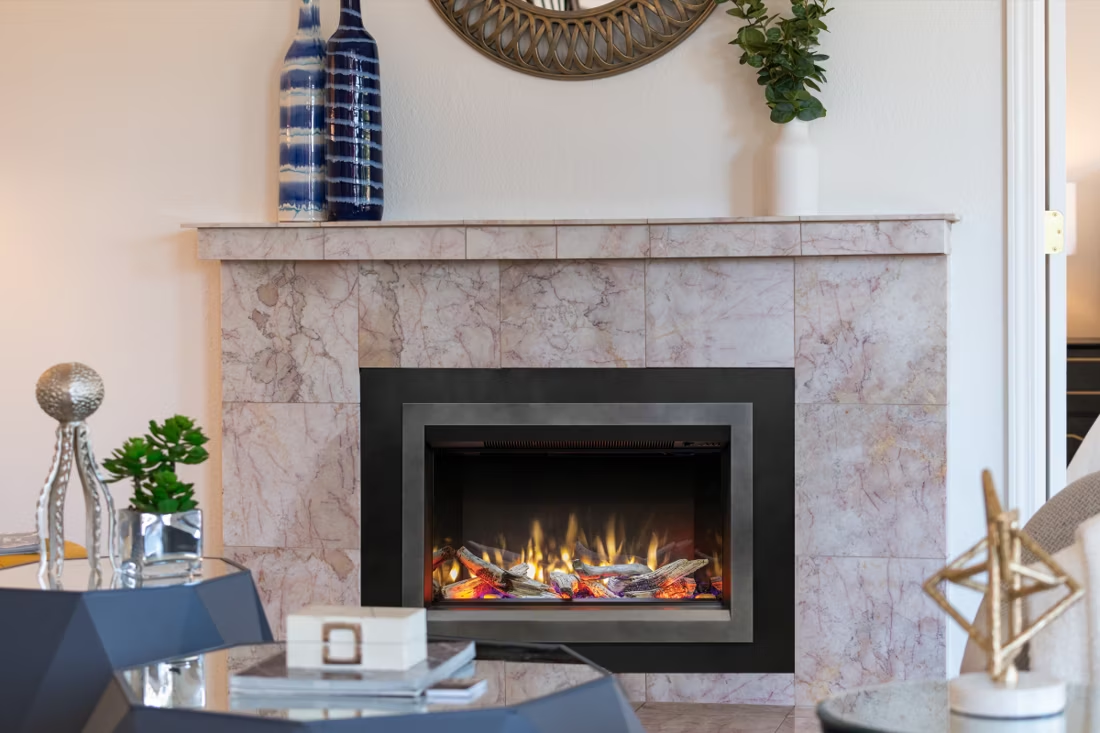
An electric fireplace is a self-contained unit—freestanding, wall-mounted, or built into a mantel surround—that plugs in and heats and lights up on its own. An electric insert is sized to slide into an existing masonry or wood-burning firebox, letting you convert an old fireplace you no longer want to burn wood in into something you flip on with a remote. An electric log set is the simplest option: a small heater and light unit that sits in an existing firebox in place of real logs, mostly for looks with modest supplemental heat. For Oglala Lakota County homes with an old masonry fireplace that's expensive or impractical to keep burning wood in, an insert is usually the better upgrade than a log set.
Do I need a permit for an electric fireplace in Oglala Lakota County?
A basic plug-in electric fireplace generally doesn't require a permit since there's no venting, gas line, or structural change involved. If your installation requires new electrical wiring—a dedicated circuit, a new outlet, or work inside a manufactured home's panel—that work should be done to code by a licensed electrician, and some jurisdictions require an electrical permit for that portion of the job even when the fireplace itself doesn't. If you're on tribal trust land or working through Oglala Sioux Housing, check with the relevant housing authority before any wiring modifications, since manufactured home wiring standards and ownership status can affect what work is allowed.
Is an electric fireplace enough heat for winters here?
On its own, no—not at 7,012 heating degree days and average winter lows around 12°F, which puts Oglala Lakota County in the same range as Bismarck or Fargo, ND. A standard 1,500-watt electric unit produces roughly 5,000 BTU, which is fine for taking the chill off one room but won't carry a whole home through a stretch of sub-zero nights. The realistic use case here is as a supplement to wood heat, propane, or your existing furnace—or as the sole heat source for a small addition, converted garage, or single room where running a chimney or gas line isn't practical.
How much does it cost to run an electric fireplace here?
A typical 1,500-watt electric fireplace running on high draws about 1.5 kWh per hour. What that costs you depends on your rural electric cooperative's current rate, which is worth checking directly since co-op rates vary and rural distribution costs in a county this sparsely populated can run higher than city utility rates elsewhere in South Dakota. Most owners run these units a few hours a day for ambiance and supplemental warmth rather than continuously, which keeps the actual monthly cost modest compared to heating a whole home electrically.
Will my electric fireplace work during a power outage?
No—electric fireplaces require power to run the heater and, in most models, the flame-effect lighting too. That matters here: winter storms across Pine Ridge and the rest of the county can knock out rural electric co-op lines for extended stretches, sometimes longer than in denser areas given the distances crews have to cover to restore service. If you're relying on an electric unit for meaningful heat, it's worth having a wood stove, propane heater, or other non-electric backup in the house for when the power actually goes out—which is a real consideration in a county this rural.
Electric vs. wood—which makes more sense for my home?
Wood remains the practical primary heat choice for a lot of homes in Oglala Lakota County—ponderosa pine, oak, and cottonwood are all available locally, and Black Hills National Forest cutting permits run just $5 to $20 per cord during the May-to-October season, which keeps fuel costs low for anyone willing to cut and haul. Wood also keeps working when the power doesn't. Electric makes the most sense where running a chimney isn't realistic—a manufactured home, a rental, an add-on room, or a household that just wants supplemental warmth and ambiance without dealing with firewood, ash, or venting. A lot of households here end up with both: wood or propane as the real heat source, electric for the room where convenience matters more.
Can I put a TV above my fireplace?
Yes—with an asterisk. Fireplaces are hot and TVs don't like heat. Either put a mantel between them to deflect rising warmth, or choose a fireplace with heat-management technology that creates a cool zone on the wall above—the wall stays around 125 degrees, barely warm, while the room still gets full heat. If you like clean lines and don't want a mantel, heat management is the answer.
Do electric fireplaces actually produce heat?
Yes—most put out around 4,800–5,000 BTUs from a standard outlet, which comfortably warms a bedroom, office, or den as a comfort-zone heater. What they won't do is carry a whole house the way wood, gas, or pellet can. Think of electric as ambiance-first with honest supplemental heat: flames on with no heat in July, flames plus warmth in January.
What is an in-home preview and do I need one?
It's a visit where a hearth professional measures your space, confirms the model you picked actually works in your home, and walks the specs—framing, gas line, venting, finish work—before anything is ordered. Some details you just can't know until you see the house. Never make a down payment without one; it's the single most-skipped step that burns buyers.
How much should I budget for a fireplace?
For an average home—covering the fireplace, the vent pipe, and basic installation—a budget between $3,900 and $5,500 gives you a lot of options across wood, gas, and pellet. By the time you add finish work, gas line, and electrical, the average complete installation lands between $5,000 and $12,000 all-in. In a remodel or new build, a good rule is to put about 2.5% of the total project cost toward the fireplace.
Stove and Fireplace Dealers in Oglala Lakota County
Listings include WhyFire partner dealers, dealers we have verified as authorized for the brands we recommend, and established local businesses that carry hearth products. Every listing shows which one it is. The ones marked Preferred run on WhyFire's software, so they can show you real pricing and book your appointment right here. No manufacturer pays for placement. How we verify dealers →
Metal Products
Builders First Source - Hot Springs
Flannel Brothers
Repair My Flame
Knecht Home Center - Rapid City
Builders First Source - Rapid City
Hebron Brick
Find your electric fireplace in Oglala Lakota County.
Tell us a bit about your home—manufactured, site-built, or an add-on room—and we'll match you with a local installer and send over a free Project Guide & Parts List with the exact parts for your electric fireplace project in Oglala Lakota County.
Find Your Fireplace →