
Reliable gas heat for Hutchinson County's coldest nights.
From Freeman to Menno to Parkston, Hutchinson County winters push well below freezing for months at a stretch. A properly sized gas fireplace or insert gives farmhouses and in-town homes alike instant, dependable heat—and we'll connect you with the local dealer who can actually install it.
Every Project Starts From One of These Five Situations
Instant heat for farm country winters.
Hutchinson County is quiet, agricultural, and cold—climate zone 5A, with winters as demanding as a long, hard season that keeps the furnace running for months, and an average winter low near 10°F. That's in the same range as Fargo, ND, and it means the heating season here runs long, from October well into April. With just over 5,300 residents spread across Freeman, Menno, Olivet, Parkston, and the farmsteads between them, most homes are older, spread out, and often heated with a combination of a central furnace and supplemental zone heat in the rooms people actually live in.
Natural gas service tends to be limited to the cores of the county's small towns, while propane remains the standard fuel across the surrounding farmland—most rural Hutchinson County homes already have a propane tank on the property for the furnace, water heater, or grain drying equipment, which makes adding a propane fireplace or insert a straightforward extension of existing service. Either fuel gets you the same result: heat at the flip of a switch, no wood to split or haul, and—with the right ignition system—a fireplace that keeps running when a winter storm knocks out the power, which happens more than once most seasons out here.
Three steps. No salesperson until you're ready.
Tell us about your project
Your zip code, your situation, and the fuel you're leaning toward—or let the answers point you to one.
See what's actually available
The brands dealers within 100 miles genuinely carry—real options, never a catalog mirage.
Get your dealer & Project Guide
A trusted local dealer, plus the free Project Guide & Parts List that names every component of the job.
Frequently Asked Questions
How much does a gas fireplace installation cost in Hutchinson County?
Most gas fireplace and insert installations in this part of South Dakota run somewhere between $4,000 and $10,000, with the total driven mainly by whether you already have gas service to the room, what kind of venting is required, and whether you're installing a built-in unit versus converting an existing masonry fireplace. Homes in Freeman or Parkston with in-town natural gas lines already run to the house tend to land on the lower end. Rural farmsteads that need a new propane tank set or a longer line run from an existing tank should expect to be closer to the top of that range. A local dealer will give you a firm number after seeing the space in person.
Should I use propane or natural gas for my fireplace?
It depends on where you're located. Inside Freeman, Menno, Olivet, or Parkston, you may already have natural gas service to the house, in which case tying a fireplace into it is the simplest path. Outside town limits—which describes most of Hutchinson County—propane is the standard, and most farms already run a tank for the furnace or other appliances. Nearly every gas fireplace, insert, or stove on the market can be set up for either fuel; your installer simply configures the correct orifice and regulator. If you don't already have a tank, your dealer can point you to a regional propane supplier to get one set.
Can I convert an existing wood fireplace to gas?
Yes, and it's a common project in older Hutchinson County farmhouses that still have a functioning masonry chimney but haven't burned wood in years. A gas insert slides into the existing firebox and uses a stainless liner run up your current chimney for venting, so you keep the look of the original fireplace while gaining real, consistent heat output. Costs typically run $4,500 to $9,000 depending on whether the home is on propane or natural gas and whether new gas line work is needed to reach the fireplace.
Will a gas fireplace still work if the power goes out?
Most will, which matters here—Hutchinson County sees its share of winter storms and rural power outages that can stretch for hours or longer. Units with intermittent pilot ignition (IPI) run on a set of internal AA batteries as backup, so the fireplace lights normally even with the grid down; just remember to swap the batteries each fall. Valor fireplaces take a different approach: the pilot's thermocouple generates its own electricity, so there's no battery to remember at all. For a farmstead that loses power during a January blizzard, either option beats a furnace that won't run without electricity for the blower.
What's the difference between a gas fireplace, insert, and stove?
A gas fireplace is a fully built-in unit, framed into a wall—the right choice for new construction or a remodel. A gas insert is built to drop into an existing masonry firebox, converting an old wood-burning fireplace into a sealed, efficient gas unit that vents through the same chimney. A gas stove is a freestanding cabinet-style unit that sits on the floor, similar in footprint to a wood stove, and works well in a room without any existing fireplace. For the many older homes around Hutchinson County with an unused brick fireplace, an insert is usually the most cost-effective upgrade.
Do I need a permit for a gas fireplace in Hutchinson County?
Yes—new gas fireplace and insert installations require a building permit, and any new gas line work needs to be done by a licensed gas-fitter and inspected. Whether you're in Freeman, Olivet, or unincorporated county land, your local hearth dealer will typically pull the permit and coordinate the gas line and venting inspections as part of the installation, so you're not left managing separate trades yourself.
Vented vs. vent-free gas fireplaces—which is better for a Hutchinson County home?
Vented (direct-vent) units draw combustion air from outside and exhaust all combustion byproducts back outside through sealed pipe—they're the safer, more universally recommended choice and work well in the tightly-built, well-insulated farmhouses common in this area. Vent-free units burn directly into the room and release some moisture and combustion byproducts indoors; they're legal in South Dakota but come with strict room-sizing and ventilation rules, and can add excess humidity to an already tightly sealed home in winter. For most Hutchinson County installations, direct-vent is the standard recommendation—ask your local dealer to walk through both if you're weighing the tradeoff.
How often does a gas fireplace need to be serviced?
Plan on an annual inspection, ideally before the heating season starts in early fall. A technician checks the burner, pilot assembly, gas connections, and venting, and cleans the glass and interior. It's a lighter lift than chimney sweeping on a wood system, but skipping it is how pilot and ignition problems go undiagnosed until the coldest week of the year. Most local service providers charge in the $150–$250 range for a standard annual check.
Gas or wood—which makes more sense for my home?
Wood is still common in Hutchinson County, where ponderosa pine, oak, and cottonwood are all burned locally, and it keeps working with zero electricity or gas service—a real advantage on an isolated farmstead during an extended outage. Gas trades that self-sufficiency for convenience: no splitting, hauling, or ash cleanup, consistent heat at the flip of a switch, and (with the right ignition system) backup capability of its own. Many households here end up with both—a furnace and gas fireplace for daily use, with a wood stove or fireplace kept in reserve for the deepest cold or a multi-day outage.
Why is a fireplace insert so efficient?
An insert does two things: it seals the chimney completely, so you stop losing air you already paid to heat, and it radiates warmth into the room through the firebox and glass. Most add a heat-exchange fan that pulls cool room air underneath, wraps it around the hot firebox, and pushes it back out warm. Your home is more efficient before you've even lit the first fire.
Can I put a TV above my fireplace?
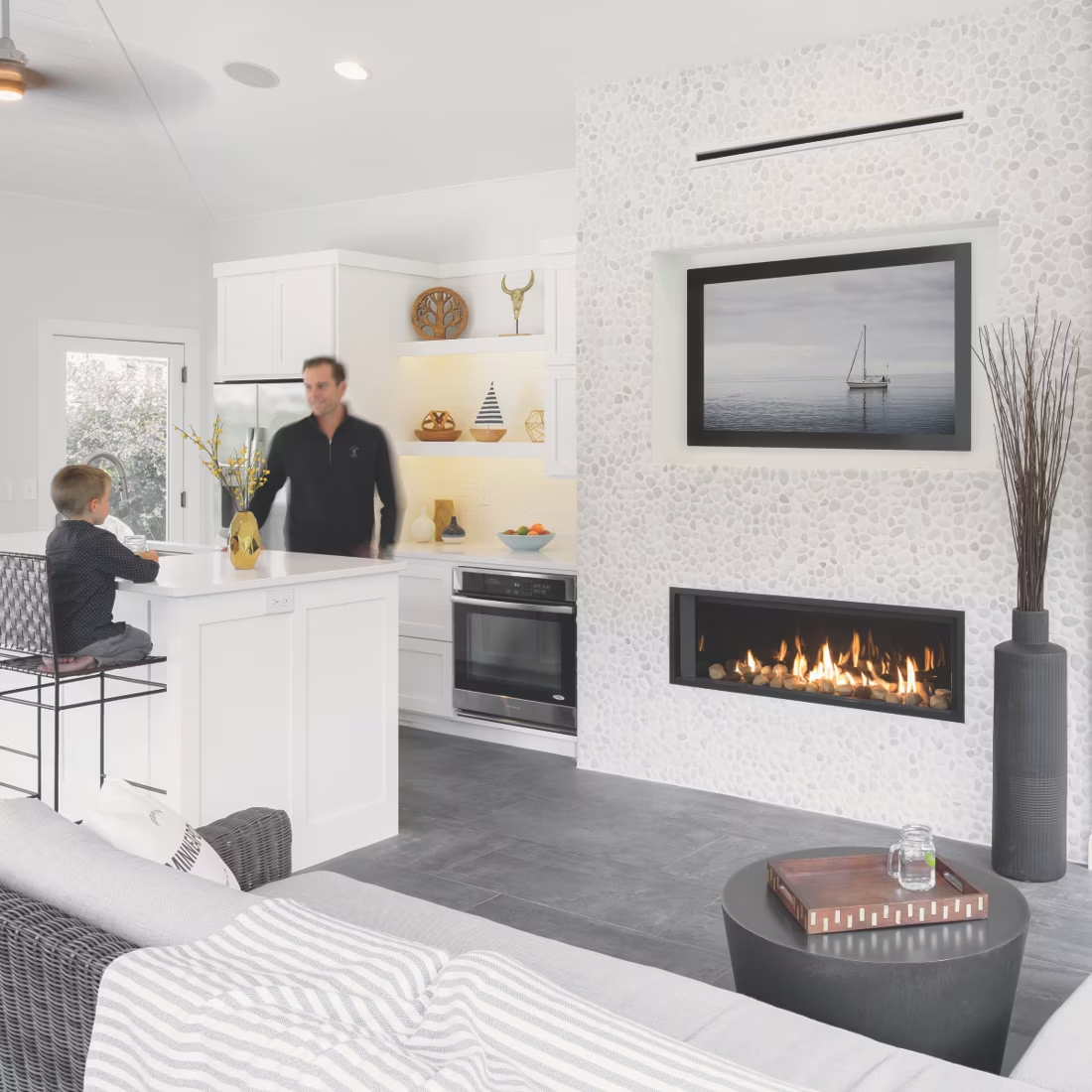
Yes—with an asterisk. Fireplaces are hot and TVs don't like heat. Either put a mantel between them to deflect rising warmth, or choose a fireplace with heat-management technology that creates a cool zone on the wall above—the wall stays around 125 degrees, barely warm, while the room still gets full heat. If you like clean lines and don't want a mantel, heat management is the answer.
Can I install a fireplace myself?
If you're putting a fire in your house on purpose, it's best to work with an expert. Unless you're genuinely experienced in framing, gas line, vent pipe, and the national code on clearances to combustibles, have a professional do it—and ideally the same company that sells you the fireplace, so warranty, service, and liability all live under one roof.
Does a fireplace add value to my home?
On average, a fireplace adds back to the home about the same amount you spent installing it. Add the monthly savings from heating the rooms you actually use instead of the whole house—often hundreds of dollars a year—and the value case is strong before you even count what a fire does for how your family uses the room.
Stove and Fireplace Dealers in Hutchinson County
Listings include WhyFire partner dealers, dealers we have verified as authorized for the brands we recommend, and established local businesses that carry hearth products. Every listing shows which one it is. The ones marked Preferred run on WhyFire's software, so they can show you real pricing and book your appointment right here. No manufacturer pays for placement. How we verify dealers →
Kaiser Heating & Cooling
Larry's Heating & Cooling
Get matched with a Hutchinson County gas dealer.
Tell us about your home and heating goals, and we'll send you a free Project Guide & Parts List—a plan for your gas fireplace or insert project, including the vent kit you'll need and our recommended local dealer to install it.
Find Your Fireplace →