
Heating a farmhouse or a Main Street building in Hutchinson County.
Wood, gas, pellet, and electric fireplace resources for every town and rural section in Hutchinson County—from Olivet to Freeman to Parkston. Find the right unit and get matched with a trusted local hearth retailer.
Every Project Starts From One of These Five Situations
Prairie winters and long heating seasons across Hutchinson County, South Dakota.
Hutchinson County sits in the James River lowlands of southeastern South Dakota, flat farm country with open exposure to winter wind out of the northwest. With a heating season comparable to what homeowners in Fargo, ND deal with, and average winter lows near 10°F, the cold stretches here run long—from November into March, punctuated by hard cold snaps that can drop well below zero. There's no smoke-management district or non-attainment designation here, which means fewer burn-day restrictions than you'd find in a mountain basin, but wind-driven heat loss on older farmhouses and ag buildings makes appliance sizing and venting placement matter more than in sheltered towns.
On this hub you'll find hearth retailers, service technicians, and fuel suppliers covering the whole county—Olivet, Menno, Parkston, Freeman, Tripp, Bridgewater, and the unincorporated farm sections between them. Pick your fuel below to see local dealers, typical installed cost ranges, and recommended units for this climate. Whether you're replacing an old wood stove in a century farmhouse or adding a gas insert to a Main Street storefront apartment, this page is the starting point.
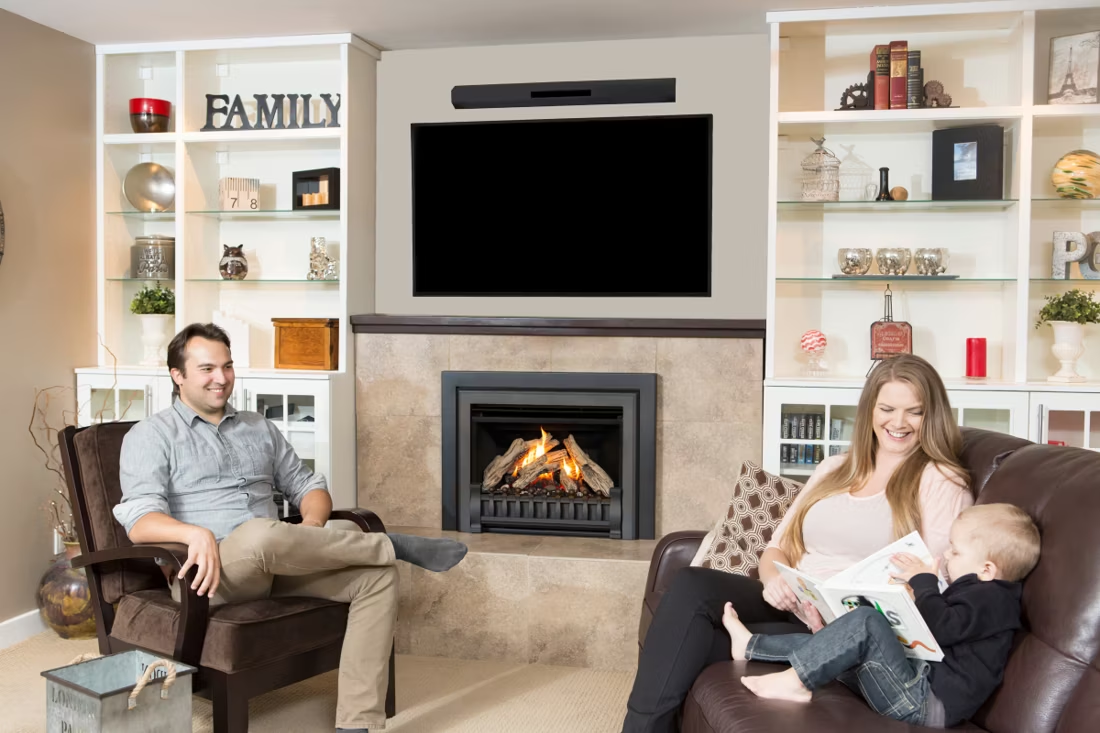
Four fuels. One honest answer for Hutchinson County.
Wood
69 models available near Hutchinson County.
Find your wood stove →Gas
111 models available near Hutchinson County.
Find your gas fireplace →Pellet
See what's available near Hutchinson County.
Find your pellet stove →Electric
See what's available near Hutchinson County.
Find your electric fireplace →Three steps. No salesperson until you're ready.
Tell us about your project
Your zip code, your situation, and the fuel you're leaning toward—or let the answers point you to one.
See what's actually available
The brands dealers within 100 miles genuinely carry—real options, never a catalog mirage.
Get your dealer & Project Guide
A trusted local dealer, plus the free Project Guide & Parts List that names every component of the job.
Frequently Asked Questions
Which fuel makes the most sense for a home in Hutchinson County?
It comes down to how your home is built and how you use it. Wood remains a practical primary or backup heat source on the county's farms—oak and cottonwood from shelterbelts and windbreaks are common, low-cost fuel, and a wood stove keeps working through the ice storms that occasionally knock out rural power lines. Gas (mostly propane in this county, since natural gas mains are limited outside the larger towns) is the low-labor choice for anyone who doesn't want to handle firewood—instant heat with a thermostat, though you're dependent on propane delivery scheduling in winter. Pellet stoves split the difference: less mess than cordwood, and Lignetics product is available regionally, but they need electricity to run the auger and fans, so they're not a great sole heat source if you lose power often. Electric fireplaces are supplemental almost everywhere in the county—fine for a bedroom or a den, but at 10°F average winter lows they won't carry a whole house on their own.
Do I need a permit to install a fireplace or stove in Hutchinson County?
Within incorporated towns like Olivet, Menno, Parkston, and Freeman, building permits are typically required for wood stoves, wood inserts, gas fireplaces, gas inserts, gas stoves, and pellet stoves—check with your town's municipal office before starting work. Propane appliances also need a licensed gas-fitter for the tank hookup and line work. Out in the unincorporated farm sections, Hutchinson County doesn't run a formal building permit program the way larger counties do, but any structural chimney or venting work should still meet current building code and manufacturer specs to keep your homeowner's insurance valid. Electric fireplaces generally don't need a permit unless you're hardwiring a built-in unit into a new circuit. Most local retailers handle the paperwork as part of a full installation.
Does Hutchinson County have wood-burning restrictions like some Western states do?
No. Hutchinson County has no non-attainment designation, no winter inversion issues, and no smoke-management program—this is open prairie country, not a mountain basin that traps air. That means no mandatory or voluntary burn curtailment days like you'd find in parts of Oregon or California. That said, EPA 2020 NSPS certification is still the standard for any new wood stove sold and installed, and a certified stove will burn oak and cottonwood more cleanly and efficiently than an old uncertified unit regardless of local air quality rules.
Can one hearth retailer near Hutchinson County handle all four fuel types?
Some regional dealers based in Mitchell or Yankton carry wood, gas, pellet, and electric under one roof, which is convenient if you want to compare options side by side before deciding. Smaller retailers closer to the county—if any operate directly out of Parkston or Freeman—tend to specialize in one or two fuels, often wood and propane gas, since those are the two most common heating setups on area farms. If you're not sure which fuel fits your house, a multi-fuel dealer can walk you through working displays and talk through what venting and clearances your specific home allows.
How does fireplace service work for the smaller towns and farms in Hutchinson County?
Most chimney sweeps and gas techs serving Hutchinson County are based out of Mitchell, Yankton, or other regional hubs and drive out to Olivet, Menno, Parkston, Freeman, Tripp, and the rural sections between them. Expect a modest trip fee for farm and acreage calls, and expect scheduling to tighten up fast once the first real cold snap hits—booking your annual chimney sweep or gas inspection in September or October, before the season starts, is much easier than trying to get someone out during a January cold spell. If you're relying on wood heat as backup during winter power outages, keep it serviced and ready before the ice storms start, not after.
What does fireplace installation typically cost across fuel types in Hutchinson County?
Costs here track fairly close to regional Midwest norms. Wood stove or insert : roughly $3,800–$8,500 installed, depending on chimney condition and whether you're relining an existing masonry flue or running new class-A pipe. Gas fireplace, insert, or stove (propane, in most of this county) : roughly $4,200–$10,000, with propane tank setup and line work adding cost versus a home that already has service. Pellet stove or insert : roughly $4,000–$7,000 for a typical install. Electric fireplace : $200–$2,800 for the unit itself, plus $300–$1,000 in labor for anything beyond a simple plug-in placement, such as a built-in wall unit. The county + fuel pages above break these down further with local retailer detail.
How much should I budget for a fireplace?
For an average home—covering the fireplace, the vent pipe, and basic installation—a budget between $3,900 and $5,500 gives you a lot of options across wood, gas, and pellet. By the time you add finish work, gas line, and electrical, the average complete installation lands between $5,000 and $12,000 all-in. In a remodel or new build, a good rule is to put about 2.5% of the total project cost toward the fireplace.
Wood, gas, pellet, or electric—how do I choose?
Match the fuel to your life, not the other way around. Wood: lowest fuel cost and total power-outage independence, but you're hauling and stacking. Gas: press a button, set a thermostat, no maintenance to speak of. Pellet: wood economics with automatic feeding, in exchange for weekly cleaning and a need for electricity. Electric: plugs in anywhere with honest supplemental heat. Nobody regrets the fuel that fits how they actually live.
Does a fireplace add value to my home?
On average, a fireplace adds back to the home about the same amount you spent installing it. Add the monthly savings from heating the rooms you actually use instead of the whole house—often hundreds of dollars a year—and the value case is strong before you even count what a fire does for how your family uses the room.
I know I want a fireplace—where do I actually start?
Do two things today: snap a photo of the wall or fireplace you want to transform, and take a tape measure to the space—width, height, depth. Those two artifacts answer most of a hearth professional's first questions. Then settle fuel (wood, gas, pellet, or electric) and set a realistic budget: $3,900–$5,500 covers fireplace, vent, and basic install for most homes.
Stove and Fireplace Dealers in Hutchinson County
Listings include WhyFire partner dealers, dealers we have verified as authorized for the brands we recommend, and established local businesses that carry hearth products. Every listing shows which one it is. The ones marked Preferred run on WhyFire's software, so they can show you real pricing and book your appointment right here. No manufacturer pays for placement. How we verify dealers →
Kaiser Heating & Cooling
Larry's Heating & Cooling
Find your fireplace in Hutchinson County.
Pick your fuel below and we'll match you with a trusted local dealer and send a free Project Guide & Parts List—the parts, the vent kit, and the recommended installer for your home.
Find Your Fireplace →