
A Clear-Eyed Look at Pellet Heat in Huron.
Pellet stoves aren't the norm on the Beadle County prairie, but for the right home they still make sense. We'll help you weigh it honestly and connect you with a real local dealer if it fits.
Every Project Starts From One of These Five Situations
Pellet heat is uncommon here, and for good reason.
Huron sits on the flat farmland of east-central South Dakota, where winters bring an average low around 6°F and a cold-climate heating season closer to Fargo, ND than to most of the Midwest. But unlike forested cold-climate regions, Beadle County is prairie: the ponderosa pine, oak, and cottonwood you do find here grow in scattered shelterbelts and river bottoms, not the kind of standing timber that supports a wood-pellet or cordwood culture. That's the main reason both wood and pellet appliances are unusual installs in Huron—the fuel supply chain for both was never built out locally the way it has been in the Rockies or the Northeast.
Instead, Huron homes lean almost entirely on natural gas and electric heat, backed by NorthWestern Energy and Dakota Energy Coop. That said, a small number of Huron homeowners still install pellet stoves—usually for supplemental zone heat in a garage or basement, for the appeal of a real flame without chimney maintenance, or because they used one before moving from a more wood-centric state. If that's you, pellet fuel itself isn't hard to source: regional producers like Lignetics and Indeck Energy Services supply the upper Midwest, and a dealer can special-order bags even if none are on the shelf locally.
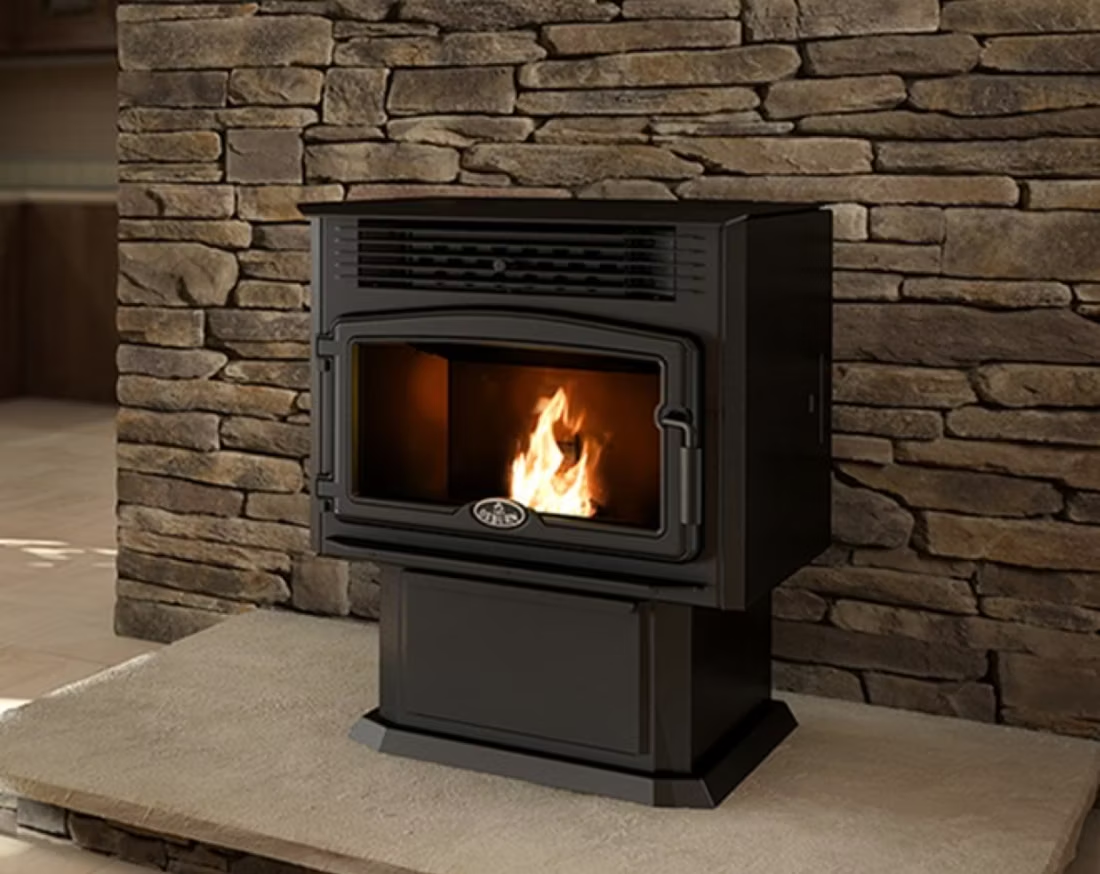
Three steps. No salesperson until you're ready.
Tell us about your project
Your zip code, your situation, and the fuel you're leaning toward—or let the answers point you to one.
See what's actually available
The brands dealers within 100 miles genuinely carry—real options, never a catalog mirage.
Get your dealer & Project Guide
A trusted local dealer, plus the free Project Guide & Parts List that names every component of the job.
Frequently Asked Questions
Are pellet stoves actually common in Huron?
No—pellet stoves are a niche choice here. There's no air-quality non-attainment status in Beadle County stopping you from installing one, but the local market simply isn't built around it the way natural gas and electric heat are. Most Huron homes that burn something solid do it for atmosphere or backup, not primary heat. If you want one, expect to work with a dealer who serves a wider trade area—likely out of Sioux Falls, Aberdeen, or Watertown—rather than a shop with a pellet stove showroom inside city limits.
How much does a pellet stove installation cost in Huron?
Because there's no dense local market for pellet appliances, Huron pricing tends to track national averages rather than a tight regional range: expect roughly $3,000 to $6,500 installed for a freestanding stove, and $3,500 to $7,000 for an insert into an existing fireplace, depending on the unit and venting work. Delivery and setup from an out-of-town dealer can add a bit to the bottom line compared to cities where pellet stoves are common—budget for that when comparing quotes.
Where can I buy pellet fuel in Huron?
Pellet fuel supply is thin on the ground in Huron itself. Regional producers like Lignetics and Indeck Energy Services distribute bagged pellets throughout the upper Midwest, and farm supply stores or co-ops in the area can often special-order pallets even if they don't stock them year-round. If you're seriously considering a pellet stove, ask your dealer about setting up a standing seasonal order before your first winter—running out mid-January on the prairie is not a position you want to be in.
Will a pellet stove keep working if the power goes out?
Not on its own, and that's a real consideration in Beadle County, where ice storms and high prairie winds occasionally knock out NorthWestern Energy and Dakota Energy Coop service for hours at a time. Pellet stoves rely on an electric auger to feed fuel and a blower to push heat into the room—no power, no fire. Homeowners who want solid-fuel backup heat for outages typically pair a pellet stove with a small battery backup unit or a portable generator, rather than counting on the stove alone.
What's the difference between a pellet stove and a pellet insert?
A pellet stove is a freestanding, self-contained unit that vents through a wall or existing chimney and can go almost anywhere with proper clearances. A pellet insert is built to slide into an existing masonry fireplace opening, using your existing chimney—usually with a liner—as part of the venting path. Since most homes with fireplaces at all in Huron have older wood-burning masonry fireplaces, an insert is the more common of the two pellet options here—it repurposes a fireplace that otherwise sits unused most winters.
Do I need a permit to install a pellet stove in Huron?
Yes—a solid-fuel appliance install still requires a building permit through the City of Huron or Beadle County, covering hearth clearance, venting, and structural work, even though pellet stoves burn cleaner than cordwood and there's no air-quality non-attainment status here to worry about. A local dealer or installer will typically pull the permit as part of the job. Because this isn't a routine request for every building department in the region, it's worth confirming with your installer that they've handled a pellet install locally before, not just gas or electric.
Why do so few homes in Huron use wood or pellet heat?
It comes down to infrastructure and geography. Beadle County is prairie—the oak, cottonwood, and ponderosa pine here grow in shelterbelts and along the James River, not in the kind of forest that supports a firewood or pellet-mill economy the way timber country does. Combined with reliable natural gas service and two established electric utilities, NorthWestern Energy and Dakota Energy Coop, most Huron homes were built and heated around gas furnaces and electric systems from the start. Wood and pellet appliances didn't get phased out here so much as they never became the default.
What size pellet stove do I need for a Huron home?
Huron's climate zone (6A) and its long, cold winter heating season mean you need more heat output than a similar-sized home would in a milder zone, even if you're using the pellet stove for supplemental heat rather than primary. As a rough guide, a small stove (under 40,000 BTU) suits a single room or basement, while a mid-size stove (40,000–60,000 BTU) can supplement a larger area. Since pellet stoves are typically installed here as a second heat source rather than the home's main furnace, most Huron installs skew toward the smaller end—sized for one zone, not the whole house.
Pellet vs. gas—which makes more sense in Huron?
For most Huron homes, gas wins by a wide margin—natural gas is the standard, established heating fuel here, service is reliable, and installation and repair support is easy to find locally. Pellet stoves make sense in narrower cases: if you want the visual and ambiance of a real flame in a specific room, if you're looking for supplemental heat for a detached garage or shop, or if you simply prefer solid fuel. If backup heat during power outages is your goal, gas fireplaces with a standing pilot and battery ignition are generally the more dependable choice in Beadle County, since pellet stoves require continuous electricity to run.
How often does a pellet stove need cleaning?
A clean pellet stove is a happy pellet stove. Plan on cleaning the burn pot about once a week when you're burning regularly—ash and clinkers gum up the air holes just like a pellet barbecue. Most pellet stove problems trace back to skipped cleaning that nobody explained up front. Some designs make it easy with a trapdoor burn pot: pull a lever and the gunk drops into the ash pan.
Why is my open fireplace making my house colder?
Open fireplaces suck—literally. As the fire burns, it consumes air your furnace already paid to heat and pulls it out through the chimney, so the house is actually colder after the fire goes out than before you lit it. An insert fixes this: it seals the chimney, puts fixed glass across the front, and turns that hole in your house into a real heat source.
How much should I budget for a fireplace?
For an average home—covering the fireplace, the vent pipe, and basic installation—a budget between $3,900 and $5,500 gives you a lot of options across wood, gas, and pellet. By the time you add finish work, gas line, and electrical, the average complete installation lands between $5,000 and $12,000 all-in. In a remodel or new build, a good rule is to put about 2.5% of the total project cost toward the fireplace.
Does a fireplace add value to my home?
On average, a fireplace adds back to the home about the same amount you spent installing it. Add the monthly savings from heating the rooms you actually use instead of the whole house—often hundreds of dollars a year—and the value case is strong before you even count what a fire does for how your family uses the room.
Nearby Dealers
Hearth shops serving Huron and the surrounding area. Every listing shows whether it is a WhyFire partner, a dealer we have verified as authorized for the brands we recommend, or a local business carrying hearth products. No manufacturer pays for placement. How we verify dealers →
Builders FirstSource Huron
Builders Solutions
Cozy Home & Lighting, LLC
Pellet Brands Stocked Around Huron
Manufacturers will point you to the nearest stocking dealer.
Find your pellet stove in Huron.
Tell us about your home and your goals, and we'll match you with a trusted local dealer who actually installs pellet stoves in this area—plus a free Project Guide & Parts List with the exact parts, including the vent kit, for your project.
Find Your Fireplace →