
Propane heat built for Clark County's long, hard winters.
Clark sits at 1,808 feet with an average winter low of 3°F and no natural gas mains running through town. We'll help you find a trusted local dealer who installs direct-vent propane units that fire the moment the temperature drops, and send a free planning packet sized for your home.
Every Project Starts From One of These Five Situations
Heat that starts instantly, with no mains gas line to tap into.
Clark is a small town of around 1,159 people in a climate zone (6A) that doesn't get much forgiveness in winter—an average low of 3°F and a long, harsh heating season put it in company with Fargo, ND and International Falls, MN rather than the milder parts of the Midwest. There's no winter inversion or wildfire-smoke pattern here the way there is out West, so there's no air-quality curtailment to plan around. The challenge in Clark County is simpler and more basic: keeping a house warm through a long, hard winter when help can be a long drive away.
There's no natural gas utility serving Clark, so when people here say "gas fireplace," they mean a propane-fired unit fed by a tank—buried, leased, or owned—rather than a line tied into a municipal main. The upside is real: a direct-vent propane fireplace or insert keeps running during the ice storms and high-wind events that periodically knock out power from NorthWestern Energy, Otter Tail Power, or Watertown Municipal Utilities, as long as the unit's ignition doesn't depend entirely on household current. For a county this rural, that kind of fuel independence from the electric grid is as big a selling point as the heat itself.
Three steps. No salesperson until you're ready.
Tell us about your project
Your zip code, your situation, and the fuel you're leaning toward—or let the answers point you to one.
See what's actually available
The brands dealers within 100 miles genuinely carry—real options, never a catalog mirage.
Get your dealer & Project Guide
A trusted local dealer, plus the free Project Guide & Parts List that names every component of the job.
Frequently Asked Questions
How much does a propane fireplace installation cost in Clark?
Most direct-vent propane fireplace and insert installations in a rural South Dakota market like Clark run in the $4,000 to $9,000 range. The low end covers an insert dropping into an existing masonry firebox with a propane line already run to that side of the house; the high end covers a new built-in unit with fresh gas piping and venting, plus any tank work if you don't already have a propane tank set on the property. Homes without an existing tank should budget for that separately—your installer or propane supplier can tell you whether a lease or purchase makes more sense for a fireplace-only load.
Is natural gas available in Clark, or do I need propane?
Propane. Clark doesn't have a natural gas utility running mains through town, which is common for small communities in this part of South Dakota. That means any "gas fireplace" installed here runs on propane from a tank rather than a metered gas line. It's a routine setup for local installers—propane-fired units perform identically to natural gas models in terms of heat output and flame appearance—but it does mean budgeting for tank placement and periodic propane deliveries as an ongoing cost, not just the install itself.
Will a propane fireplace still work if the power goes out?
It depends on the ignition system, and in Clark County that's worth asking about directly. Units with a standing pilot or a battery-backed intermittent pilot ignition (IPI) keep working through outages caused by the ice storms and high-wind events that periodically hit NorthWestern Energy, Otter Tail Power, and Watertown Municipal Utilities service areas. Fully electronic ignition models that rely on house current will go dark along with everything else. If outage resilience matters to you—and in a county this rural, it usually does—ask your dealer for a standing-pilot or battery-backup model specifically.
What's the difference between a gas fireplace, insert, and stove for my house?
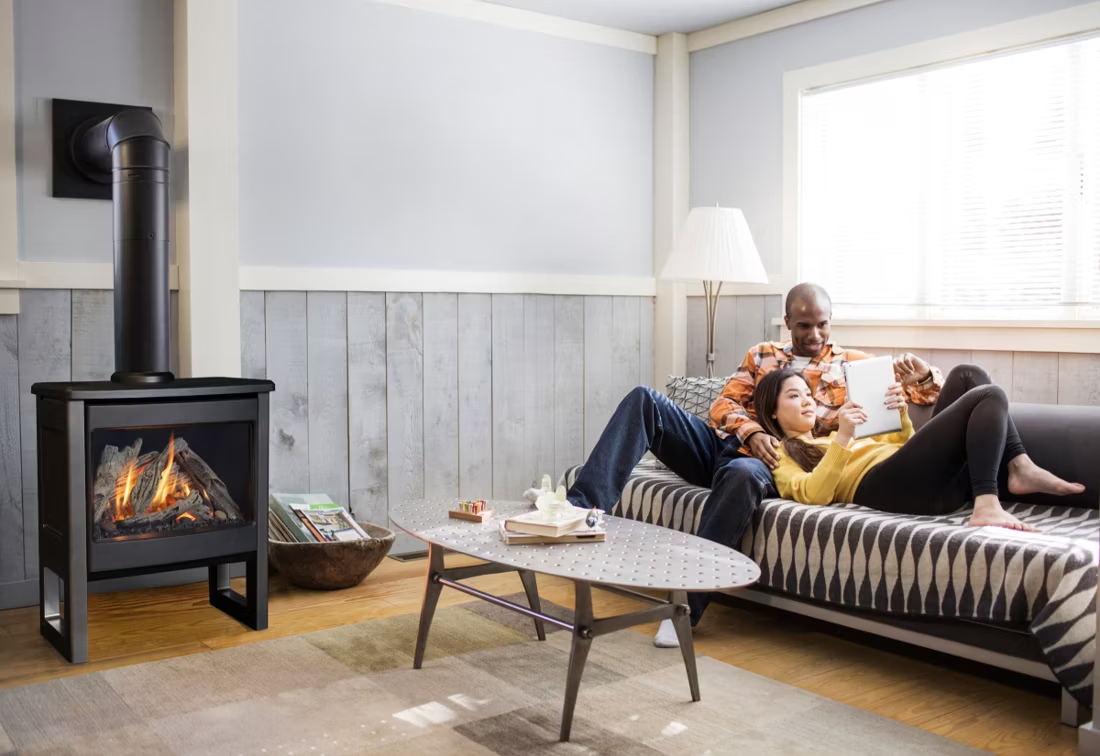
A gas fireplace is a built-in unit framed into a wall, the typical choice for new construction or a full remodel. A gas insert slides into an existing masonry firebox and reuses the chimney chase, which works well for the older farmhouses and in-town homes around Clark that still have a traditional fireplace opening. A gas stove is freestanding on a hearth pad and connects to a propane line or tank, similar in footprint to a wood stove but without the woodpile. For most existing Clark homes, an insert is the least disruptive upgrade since it doesn't require new framing.
Do I need a permit to install a propane fireplace in Clark?
Most rural South Dakota counties, including Clark County, handle building permits and inspections through the county zoning or planning office rather than a dedicated city building department—it's worth a call before your installer shows up to confirm what's required for your specific address, since rules can differ slightly between in-town and unincorporated properties. Separately, propane line work should be done or inspected by a licensed propane technician; most hearth dealers who install in this area coordinate both the permit and the propane hookup as part of the job.
Vented vs. vent-free propane fireplaces—which should I choose in Clark?
Direct-vent units pull combustion air from outside and exhaust it back outside through sealed venting, which makes them the safer, code-preferred choice for a primary heat source running through a long winter. Vent-free units burn into the room and are legal in many jurisdictions but carry strict room-size and ventilation requirements. Clark doesn't have the air-quality restrictions that push some western towns toward one option or the other, but for a unit you'll likely run daily for months at a time given how long and cold winters run here, direct-vent is still what most local installers recommend.
What size propane fireplace do I need for a Clark County home?
With winter lows averaging 3°F and routine drops well below zero during Dakota cold fronts, undersizing is the bigger risk here. A fireplace or insert rated for supplemental warmth in a single room is fine if you're keeping your furnace as primary heat, but if you want the unit to meaningfully offset heating load—or serve as backup heat during an outage—plan for a larger BTU output sized to your actual square footage and insulation level, not just the room it sits in. A local dealer can size it properly against your home's construction rather than a generic chart.
How often does a propane fireplace need to be serviced in Clark?
An annual check before the cold sets in—ideally in September or early October, ahead of the first hard freeze—is the standard recommendation, and it matters more in a place like Clark where the unit may run daily for six months or longer. A technician checks the burner, pilot or ignition system, gas connections, and propane line fittings, and cleans the glass. Given how far a service call can be in rural Clark County, scheduling ahead of the season rather than waiting for a cold-snap breakdown is the practical move.
Propane vs. wood or pellet—why does gas make more sense in Clark?
Wood stoves and pellet stoves are both uncommon installs in Clark despite the area's oak, cottonwood, and ponderosa pine being familiar firewood species regionally—local dealer support and parts supply for both are thin in a town this size, and pellet brands like Lignetics or Indeck Energy Services are typically sourced from larger markets rather than stocked locally. Propane fireplaces, by contrast, are a well-established, easily serviced option here, don't require cutting or hauling fuel, and—with the right ignition system—keep running through the power outages that come with Dakota winter storms. For most Clark households, that combination of local support and outage resilience is what tips the decision toward propane.
What's the difference between an insert and a zero-clearance fireplace?
An insert is a fireplace that slides into a pre-existing wood-burning fireplace—if you don't have one, there's nothing to insert it into. A zero-clearance fireplace is built into a framed wall, which makes it the answer for remodels and new construction. Simple test: existing masonry fireplace means insert; blank or framed wall means zero-clearance.
What does it take to replace an existing fireplace?
Fireplaces are like icebergs—bigger behind the wall than in front of it. Replacement means removing the surrounding tile or stone (the finish material laps onto the fireplace face), pulling the old unit, setting the new one in the same enclosure, and re-finishing the wall. A hearth professional can determine what's behind your wall without demolition during an in-home preview.
What is an in-home preview and do I need one?
It's a visit where a hearth professional measures your space, confirms the model you picked actually works in your home, and walks the specs—framing, gas line, venting, finish work—before anything is ordered. Some details you just can't know until you see the house. Never make a down payment without one; it's the single most-skipped step that burns buyers.
Can a fireplace actually lower my heating bill?
Yes—by creating a comfort zone. A furnace heats every square foot of the house just to warm the one room you're in; a gas fireplace on low burns roughly a sixth of the gas a typical furnace does. Set the furnace around 55–60 degrees as a baseline, then heat the rooms your family actually uses. Families who heat this way commonly save $20–$60 a month.
Nearby Dealers
Hearth shops serving Clark and the surrounding area. Every listing shows whether it is a WhyFire partner, a dealer we have verified as authorized for the brands we recommend, or a local business carrying hearth products. No manufacturer pays for placement. How we verify dealers →
We’ve paused dealer listings for this connection today. Enter your zip or postal code above to find dealers near you, or come back tomorrow.
Popular Gas Brands
Where each brand came from, what's inside it today, and every current model. No brand pays to be here. Not every dealer carries every brand, so enter your zip code to see what's sold near Clark.
Kozy Heat
Kozy Heat was founded in 1976 by Dudley Hussong in Lakefield, Minnesota, and incorporated as Hussong Manufacturing Co., Inc. in 1978.
28 gas models →Fireplace Xtrordinair
Fireplace Xtrordinair, now often called FireplaceX, is the fireplace brand of Travis Industries, Inc., of Mukilteo, Washington.
25 gas models →Town & Country
Town & Country Fireplaces is the luxury gas fireplace brand of Pacific Energy Fireplace Products Ltd., of Duncan, British Columbia.
14 gas models →Lopi
Lopi is a wood, pellet, and gas stove brand founded by Kurt Rumens in Bellevue, Washington, in 1979.
7 gas models →Forge & Flame
Forge & Flame is the stove brand Hearth & Home Technologies introduced in August 2023 to bring Vermont Castings, Harman, and Quadra-Fire under one name.
6 gas models →Vermont Castings
Vermont Castings was founded in 1975 by Duncan Syme, the designer, and his brother-in-law Murray Howell, the business partner, in Randolph, Vermont.
6 gas models →Get your free Project Guide & Parts List for a Clark propane fireplace.
Tell us about your home and your current propane setup, and we'll help you find a trusted local dealer and send a free Project Guide & Parts List with the exact vent kit and parts your project needs—sized for Clark County's long, cold winters.
Find Your Fireplace →