
Heating solutions built for Clark County winters.
Wood, gas, pellet, and electric fireplace resources for Clark, Garden City, Vienna, Naples, Raymond, and the farms and small towns in between. Find the right unit and connect with a trusted local hearth retailer.
Every Project Starts From One of These Five Situations
Prairie heating for a small, spread-out county.
Clark County sits on the open prairie of northeastern South Dakota, in a Zone 6A climate comparable to Fargo or Bismarck in the depth of its winters. With just over 2,000 residents spread across roughly 950 square miles, most homes here are on farmsteads or in small towns, and heating reliability matters more than curb appeal—a hard January cold snap with wind off open fields can drop wind chills well below zero for days at a time. Cottonwood and oak from shelterbelts and river bottoms, along with locally available ponderosa pine, have long supplemented propane and electric heat in area homes, and wood or pellet backup heat is common given how far some properties sit from town.
There's no major air quality restriction on wood burning here—this is farm country, not a smoke-sensitive basin—so the limiting factors are really about what a local installer can actually get, size correctly for your square footage, and service afterward. What you'll find on this hub: hearth retailers, service technicians, and fuel suppliers covering the whole county. Pick your fuel below for local dealers, installation costs, and recommended units—whether you're heating a farmhouse outside Raymond or a home in the town of Clark itself.
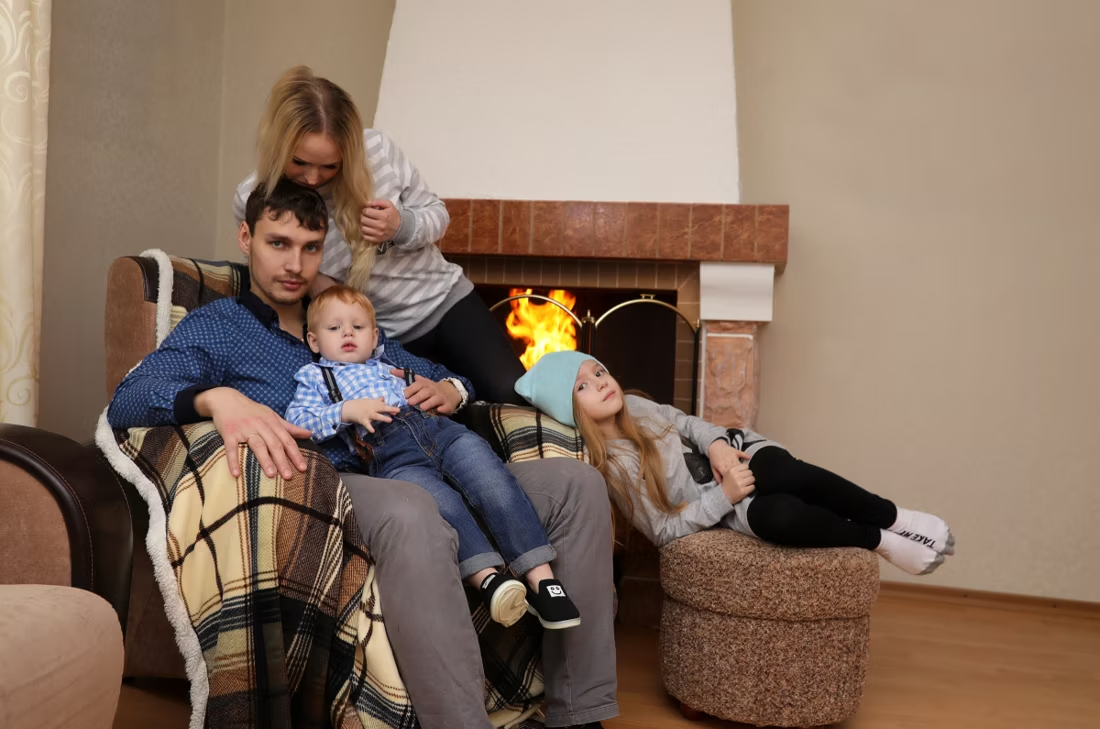
Four fuels. One honest answer for Clark County.
Three steps. No salesperson until you're ready.
Tell us about your project
Your zip code, your situation, and the fuel you're leaning toward—or let the answers point you to one.
See what's actually available
The brands dealers within 100 miles genuinely carry—real options, never a catalog mirage.
Get your dealer & Project Guide
A trusted local dealer, plus the free Project Guide & Parts List that names every component of the job.
Frequently Asked Questions
Which fuel makes the most sense for a Clark County home?
It comes down to how far you are from town and what you're already set up with. Propane is the dominant fuel in rural Clark County—most farmsteads already have a tank and it handles the deep-cold stretches this Zone 6A climate throws at you. Wood is the traditional backup and primary heat for many properties with access to cottonwood, oak, or ponderosa pine from shelterbelts and windbreaks—it also keeps a home warm during the ice-storm power outages that occasionally hit this part of the state. Pellet stoves are a solid middle option if you want wood-style heat without cutting and splitting; Lignetics and Indeck Energy Services both supply pellets to the region. Electric fireplaces work well as supplemental heat in a den or bedroom but aren't practical as a sole heat source given how cold Clark County gets—think Fargo-style winters, not a mild-climate supplement situation.
Do I need a permit to install a fireplace or stove in Clark County?
Most wood stove, insert, gas appliance, and pellet stove installations require a building permit, and gas work needs a licensed installer for the gas line connection regardless of whether you're running propane or, in town, natural gas. Because Clark County is largely rural, permitting and inspection often runs through the county building office rather than a city department—check with your installer, since many local hearth retailers handle the permit paperwork as part of the installation rather than leaving it to the homeowner. Electric fireplaces generally skip the permit process unless you're doing a built-in with new wiring.
Are there any wood-burning restrictions in Clark County?
No—Clark County doesn't have the winter inversion or non-attainment issues you'd see in a mountain basin town. This is open prairie country with good air dispersion, so there are no local burn bans or curtailment periods tied to wood smoke. The practical consideration here isn't air quality, it's efficiency and safety: an EPA-certified stove burning local cottonwood or oak will get more heat per cord and produce less chimney buildup than an old uncertified unit, which matters when you're relying on wood as backup heat during a prairie blizzard.
Can I find one dealer in Clark County that handles all four fuel types?
Given the county's population of just over 2,000, there isn't a large in-town retail base—most hearth retailers serving Clark County are based in nearby regional hubs like Watertown or Huron and travel out to install and service. Multi-fuel dealers covering wood, gas, pellet, and electric are more common at that regional level than within Clark County itself. If you're cross-shopping fuels, expect to work with a retailer who serves a wide rural territory rather than a storefront in the town of Clark—they'll still come out for a site visit and can usually show you options across two or three fuel types even if their physical showroom is 40-50 miles away.
How does installation and service work for such a rural county?
Expect technicians and installers to travel from Watertown, Huron, or similar regional centers, since Clark County itself doesn't support a large year-round service base. Travel fees for rural calls are common, and scheduling ahead—especially for pre-winter chimney sweeps or gas appliance inspections—matters more here than in a denser county, since techs are covering a lot of ground between farmsteads. If you're heating with wood or pellet as backup for a propane-primary home, plan your annual service for late summer or early fall before the first hard freeze, not mid-January when everyone else with a propane furnace issue is also calling.
What does fireplace installation typically cost in Clark County?
Wood stove or insert installation: roughly $4,000–$8,500 for a typical farmhouse install, more if a full masonry chimney is needed. Gas fireplace, insert, or stove: $4,500–$10,000, with propane conversions or new tank setup adding to the lower end of that range for homes without existing service. Pellet stove or insert: $4,000–$7,000 for most installs. Electric fireplace: $200–$3,000 for the unit itself, plus $400–$1,000 in labor for anything beyond a simple plug-in unit. Rural travel distance from Watertown or Huron-based installers can add modestly to labor costs versus a denser county—ask your dealer for a travel-adjusted quote up front.
Can I install a fireplace myself?
If you're putting a fire in your house on purpose, it's best to work with an expert. Unless you're genuinely experienced in framing, gas line, vent pipe, and the national code on clearances to combustibles, have a professional do it—and ideally the same company that sells you the fireplace, so warranty, service, and liability all live under one roof.
Wood, gas, pellet, or electric—how do I choose?
Match the fuel to your life, not the other way around. Wood: lowest fuel cost and total power-outage independence, but you're hauling and stacking. Gas: press a button, set a thermostat, no maintenance to speak of. Pellet: wood economics with automatic feeding, in exchange for weekly cleaning and a need for electricity. Electric: plugs in anywhere with honest supplemental heat. Nobody regrets the fuel that fits how they actually live.
Does a fireplace add value to my home?
On average, a fireplace adds back to the home about the same amount you spent installing it. Add the monthly savings from heating the rooms you actually use instead of the whole house—often hundreds of dollars a year—and the value case is strong before you even count what a fire does for how your family uses the room.
How much should I budget for a fireplace?
For an average home—covering the fireplace, the vent pipe, and basic installation—a budget between $3,900 and $5,500 gives you a lot of options across wood, gas, and pellet. By the time you add finish work, gas line, and electrical, the average complete installation lands between $5,000 and $12,000 all-in. In a remodel or new build, a good rule is to put about 2.5% of the total project cost toward the fireplace.
Stove and Fireplace Dealers in Clark County
Listings include WhyFire partner dealers, dealers we have verified as authorized for the brands we recommend, and established local businesses that carry hearth products. Every listing shows which one it is. The ones marked Preferred run on WhyFire's software, so they can show you real pricing and book your appointment right here. No manufacturer pays for placement. How we verify dealers →
Hometown Building Center
Andor Inc.
Larry's Lumber
Find your fireplace project in Clark County.
Pick your fuel below and I'll match you with a trusted local dealer and a free Project Guide & Parts List—the exact parts, vent kit included, and the local pro who can install it right.'
Find Your Fireplace →