
Electric warmth, built for Buffalo County's coldest nights.
No chimney, no gas line, no venting—just plug-in or hardwired warmth for homes across Fort Thompson, Gannvalley, and the rest of the Crow Creek Reservation. Find the right unit and connect with a trusted local dealer.
Every Project Starts From One of These Five Situations
Reliable heat without the wood pile or gas line.
Buffalo County is South Dakota's smallest county by population—just 1,169 people spread across land coextensive with the Crow Creek Indian Reservation along the Missouri River. Zone 6A winters here run long and hard, with stretches of sub-zero cold that rival anything in Bismarck or Fargo, and homes are spaced far enough apart that a service call for gas line work or chimney installation often means a long drive for the installer before the work even starts.
That's where electric fireplaces earn their place. A plug-in insert or a hardwired unit on its own circuit needs no venting, no chimney, and no fuel delivery—which matters in a county with no natural gas infrastructure and where propane and firewood deliveries can be delayed by weather. Electric units won't replace a wood stove as primary heat during an outage, but for daily zone heat in a living room, a manufactured home, or a rental unit around Fort Thompson or Gannvalley, they're often the simplest, lowest-cost option available.
Three steps. No salesperson until you're ready.
Tell us about your project
Your zip code, your situation, and the fuel you're leaning toward—or let the answers point you to one.
See what's actually available
The brands dealers within 100 miles genuinely carry—real options, never a catalog mirage.
Get your dealer & Project Guide
A trusted local dealer, plus the free Project Guide & Parts List that names every component of the job.
Frequently Asked Questions
How much does an electric fireplace cost to install in Buffalo County?
A plug-in electric fireplace insert or wall-mount unit typically runs $300 to $1,500 for the unit itself, with no professional installation required beyond mounting it and plugging it into a standard outlet. A built-in electric fireplace that needs a dedicated 240-volt circuit runs closer to $1,500 to $3,500 once you factor in an electrician's time—and in a county this rural, expect the electrician's travel time from Chamberlain, Pierre, or Mitchell to be part of that quote. Either way, costs run well below a wood stove installation or a propane line run, which is part of why electric units are common as secondary heat in Buffalo County homes.
Will my electric fireplace still work if the power goes out?
No, and this is worth planning around in Buffalo County specifically. The rural power lines serving Fort Thompson, Gannvalley, and the rest of the Crow Creek Reservation run through some of the most wind-exposed, ice-prone terrain in central South Dakota, and winter outages happen. An electric fireplace has no function at all without grid power—no pilot light, no battery backup, nothing. Most homeowners here who use electric fireplaces for daily zone heat or ambiance keep a wood stove, pellet stove, or propane heater as their actual cold-weather backup for when the lines go down.
Do I need a permit to install an electric fireplace in Buffalo County?
A plug-in unit that runs off an existing outlet generally doesn't need a permit. A built-in electric fireplace wired to a new dedicated circuit does require an electrical permit and inspection. Because Buffalo County is coextensive with the Crow Creek Indian Reservation, permitting can vary by parcel: work on tribal trust land often runs through Crow Creek tribal building authorities, while fee land is typically permitted through the county in line with South Dakota's adopted electrical code. A local installer who's done work in both jurisdictions can tell you which applies to your address before work starts.
What size electric fireplace do I need for my home?
Since electric fireplaces in Buffalo County are almost always supplemental heat rather than a home's primary source given the Zone 6A climate, sizing is more about the room than the whole house. A 1,500-watt insert or wall-mount unit comfortably heats a single living room or bedroom of up to about 400 square feet. Larger open-concept spaces, common in some of the newer homes around Fort Thompson, may need a larger unit or two smaller ones zoned to different areas. A local dealer can size the unit to your room rather than guessing off a box-store chart.
Are electric fireplaces a good fit for manufactured homes?
Yes, and they're a common choice given how many manufactured and modular homes are in use across Buffalo County. Zero-clearance electric inserts and slim wall-mount units don't require the wall cavity depth or floor bracing that a wood stove or gas insert needs, and they skip the roof penetration for venting that manufactured home construction makes difficult. The main thing to check is that the home's electrical panel has capacity for a dedicated circuit if you're going with a built-in unit rather than a simple plug-in model.
Electric fireplace vs. pellet stove—which makes more sense here?
Pellet stoves burn bagged pellets from brands like Lignetics or Indeck Energy Services and put out real heat, but they need a steady pellet supply delivered or hauled in—a real consideration in a county where the nearest full-service dealer may be an hour's drive away. They also need electricity to run the auger and blower, so like electric fireplaces, they go dark in an outage. Electric fireplaces skip the fuel logistics entirely: no bags to store, no ash to manage, just a switch. For a Buffalo County home that wants heat without managing fuel deliveries, electric is simpler; for a home that wants more BTU output and doesn't mind stocking pellets, that's where a pellet stove wins.
Electric fireplace vs. wood stove—which is right for my home?
Wood stoves burn cordwood—ponderosa pine, oak, and cottonwood are the species most commonly available around Buffalo County—and they keep working with zero electricity, which matters given how exposed the local grid is to winter storms. Electric fireplaces can't touch that kind of resilience, but they also don't require a chimney, a wood supply, or ash cleanup, and they cost a fraction to install. Many households in the county end up with both: a wood stove as the real cold-weather workhorse, and an electric unit in a second room for everyday convenience and ambiance without hauling wood twice a day.
Where can I find electric fireplace dealers serving Buffalo County?
Buffalo County itself has no dedicated hearth showroom given its population of just over 1,100—most residents in Fort Thompson and Gannvalley end up working with dealers based out of Chamberlain, Pierre, or Mitchell who cover the surrounding rural counties. That distance is exactly why matching with a dealer who already knows the drive, the local grid quirks, and manufactured-home wiring in this part of central South Dakota is worth more here than in a county with retail on every corner.
How much does it cost to run an electric fireplace in Buffalo County?
Most electric fireplaces draw around 1,500 watts on high heat. At typical rural cooperative rates from providers like West Central Electric Cooperative, which serves much of this part of central South Dakota, running a unit on high for eight hours costs roughly $1 to $1.50 depending on current rates—inexpensive for supplemental heat in one room, but not efficient as a whole-home solution through a full Zone 6A winter. That's the tradeoff: cheap to run for zone heat, but not a substitute for a properly sized primary heat source when temperatures stay below zero for days at a time.
Can I put a TV above my fireplace?
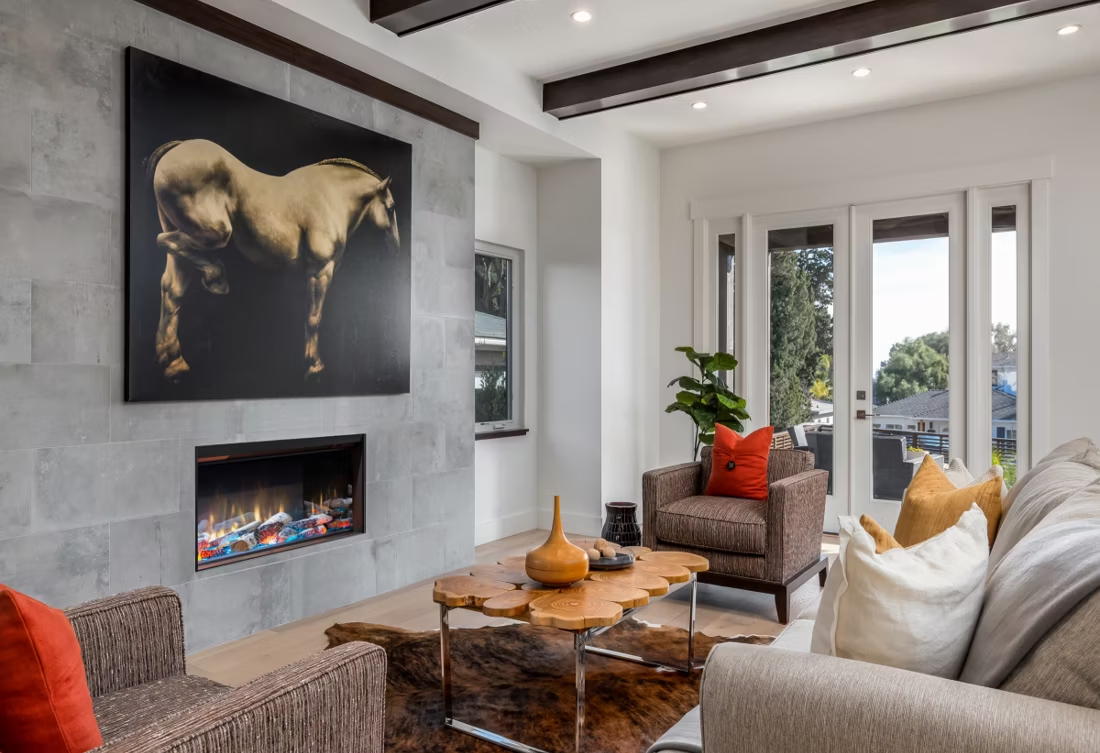
Yes—with an asterisk. Fireplaces are hot and TVs don't like heat. Either put a mantel between them to deflect rising warmth, or choose a fireplace with heat-management technology that creates a cool zone on the wall above—the wall stays around 125 degrees, barely warm, while the room still gets full heat. If you like clean lines and don't want a mantel, heat management is the answer.
Does an electric fireplace need a vent or chimney?
No—that's its superpower. An electric fireplace needs a wall and an outlet, period. No vent pipe, no gas line, no clearances to design around, which is why it works in bedrooms, offices, apartments, and walls where venting a gas or wood unit would be impractical or impossible. Installation is typically the simplest and least expensive of any fireplace type.
Can I install a fireplace myself?
If you're putting a fire in your house on purpose, it's best to work with an expert. Unless you're genuinely experienced in framing, gas line, vent pipe, and the national code on clearances to combustibles, have a professional do it—and ideally the same company that sells you the fireplace, so warranty, service, and liability all live under one roof.
What is an in-home preview and do I need one?
It's a visit where a hearth professional measures your space, confirms the model you picked actually works in your home, and walks the specs—framing, gas line, venting, finish work—before anything is ordered. Some details you just can't know until you see the house. Never make a down payment without one; it's the single most-skipped step that burns buyers.
Stove and Fireplace Dealers in Buffalo County
Listings include WhyFire partner dealers, dealers we have verified as authorized for the brands we recommend, and established local businesses that carry hearth products. Every listing shows which one it is. The ones marked Preferred run on WhyFire's software, so they can show you real pricing and book your appointment right here. No manufacturer pays for placement. How we verify dealers →
Builders Solutions
Builders FirstSource Huron
Find your electric fireplace in Buffalo County.
Tell us a bit about your home in Buffalo County and we'll put together a free Project Guide & Parts List—the right electric fireplace or insert for your space, matched with a local dealer who can get it installed correctly.
Find Your Fireplace →