
Heat Your Home Through a Dakota Winter.
Wood, gas, pellet, and electric fireplace resources for every corner of Buffalo County—from Gann Valley to Fort Thompson and the ranch country along the Missouri and Crow Creek. Find the right unit and get matched with a real, trusted local dealer.
Every Project Starts From One of These Five Situations
Prairie winters demand serious heat in Buffalo County, South Dakota.
Buffalo County is the least populous county in South Dakota—about 1,169 people spread across open prairie, cattle ranches, and the river-bottom country along the Missouri and Crow Creek, much of it within the Crow Creek Reservation. Gann Valley, the county seat, is famously one of the smallest incorporated county seats in the country. Climate zone 6A means real cold—winters here run comparable to Bismarck, ND, with stretches well below zero and wind that makes it feel colder still. Cottonwood and ponderosa pine grow along the river bottoms, and oak shows up on the older homesteads; all three get burned locally, split and stacked ahead of the first hard freeze.
Because the county's population is so small and spread out, most hearth retailers and service techs who reach Buffalo County are actually based outside it—commonly in Chamberlain or Pierre, the nearest towns with enough customer density to support a storefront. This hub rolls up what's available across all four fuel types for the whole county, whether you're heating a place near Fort Thompson or a ranch house out toward the Brule County line. Pick your fuel below for local dealer matches, install costs, and recommended units for a Zone 6A winter.
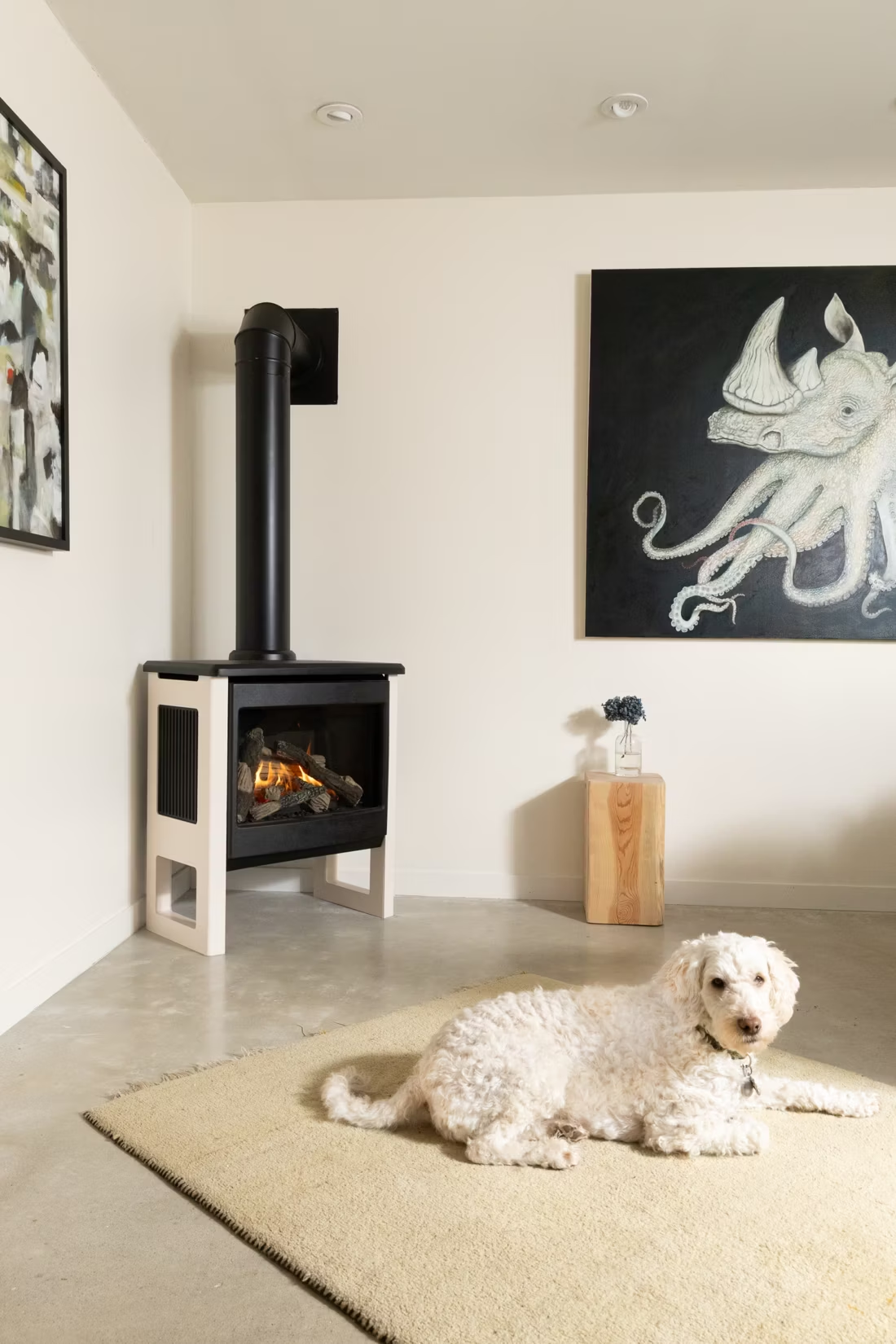
Four fuels. One honest answer for Buffalo County.
Three steps. No salesperson until you're ready.
Tell us about your project
Your zip code, your situation, and the fuel you're leaning toward—or let the answers point you to one.
See what's actually available
The brands dealers within 100 miles genuinely carry—real options, never a catalog mirage.
Get your dealer & Project Guide
A trusted local dealer, plus the free Project Guide & Parts List that names every component of the job.
Frequently Asked Questions
Which fireplace fuel makes sense in Buffalo County?
All four fuels see real use here, but the mix leans toward what's practical on the prairie. Wood is common on the older ranch places along the Missouri and Crow Creek bottoms—cottonwood and ponderosa pine are locally available, and a good catalytic stove will hold a fire through a sub-zero night the way it needs to at this latitude. Gas in Buffalo County almost always means propane, since piped natural gas isn't a given out here—propane fireplaces and inserts give you instant, thermostat-controlled heat without a woodpile. Pellet stoves are a solid option if you'd rather not split wood; Lignetics and Indeck Energy Services bags are both distributed through the region. Electric fireplaces work fine for supplemental heat in a bedroom or a rec room, but with winters this cold, they're not standing in as anyone's primary heat source. Plenty of homes here run two fuels—wood or pellet as the workhorse, propane or electric for backup and convenience.
Do I need a permit to install a wood stove or fireplace in Buffalo County?
Buffalo County's rural, low-density character means building code enforcement is lighter than in a city, but that doesn't remove the requirements that matter most: propane installations still need a licensed gas-fitter for the tank hookup and line work, and any wood-burning appliance should meet current EPA emissions standards to install cleanly and safely. If you're unsure what applies to your specific parcel, the county's register of deeds office or county commission office is the right first call—Buffalo County doesn't maintain the kind of dedicated building department you'd find in a larger county. Most dealers coming out from Chamberlain or Pierre handle the permitting conversation for you as part of the install, which is one less thing to chase down yourself.
Are there any wood-burning restrictions in Buffalo County?
No—Buffalo County has no listed air quality concerns, and there's nothing like the winter inversions that trigger burn advisories in basin or valley towns further west. The open prairie geography here doesn't trap smoke the way a bowl-shaped valley does. That said, a modern EPA-certified stove still burns cleaner and uses less wood per BTU than an old pre-2020 unit, which matters when you're the one splitting and hauling the cottonwood.
Is there a local dealer who carries all four fuel types?
Given Buffalo County's population, there isn't a multi-fuel showroom inside the county—the nearest dealers with wood, gas, pellet, and electric displays under one roof are typically based in Chamberlain or Pierre, both within reasonable driving distance for most Buffalo County addresses. Find My Fireplace matches you with whichever trusted dealer actually covers your specific location and carries the fuel type you're after, rather than sending you to a storefront that isn't set up to install it correctly out here.
How does service work if I'm way out on a ranch, not near a town?
Distance is the main factor. Techs covering Buffalo County are driving in from Chamberlain, Pierre, or occasionally Huron, so a service call out to a place near Fort Thompson or further into the county may carry a trip fee and a longer lead time than you'd see in a denser county. The practical move is to book your annual chimney sweep, propane tank check, or pellet stove cleaning in late summer or early fall, before the first cold front pushes everyone's service requests into the same three-week window. If you're on propane, keeping an eye on your tank level matters more out here too—a delivery delay in a blizzard is a real possibility.
What does a fireplace installation typically cost in Buffalo County, across fuel types?
Wood stove or insert: roughly $4,000–$8,500 installed, depending on chimney work and whether you're retrofitting an older farmhouse flue. Propane fireplace, insert, or stove: $4,500–$10,000, with tank setup and line run adding cost if you don't already have propane service to the house. Pellet stove or insert: $4,000–$7,000 for a typical install. Electric fireplace: $200–$3,000 for the unit itself, plus $400–$1,000 in labor if it's more than a plug-in unit. Because most dealers are traveling in from Chamberlain or Pierre, ask up front whether travel is built into the quote—it usually is, but it's worth confirming before you commit.
How much should I budget for a fireplace?
For an average home—covering the fireplace, the vent pipe, and basic installation—a budget between $3,900 and $5,500 gives you a lot of options across wood, gas, and pellet. By the time you add finish work, gas line, and electrical, the average complete installation lands between $5,000 and $12,000 all-in. In a remodel or new build, a good rule is to put about 2.5% of the total project cost toward the fireplace.
What is an in-home preview and do I need one?
It's a visit where a hearth professional measures your space, confirms the model you picked actually works in your home, and walks the specs—framing, gas line, venting, finish work—before anything is ordered. Some details you just can't know until you see the house. Never make a down payment without one; it's the single most-skipped step that burns buyers.
Can I install a fireplace myself?
If you're putting a fire in your house on purpose, it's best to work with an expert. Unless you're genuinely experienced in framing, gas line, vent pipe, and the national code on clearances to combustibles, have a professional do it—and ideally the same company that sells you the fireplace, so warranty, service, and liability all live under one roof.
Should the dealer who sells my fireplace also install it?
Ideally, yes. A fireplace project involves vent pipe, gas line, electrical, and often tile or stone. Hire three or four separate trades and you own the liability and the game of telephone between them. One company selling and installing means one accountable party, start to finish—ask about factory training, on-time completion records, and what happens if an inspection fails.
Stove and Fireplace Dealers in Buffalo County
Listings include WhyFire partner dealers, dealers we have verified as authorized for the brands we recommend, and established local businesses that carry hearth products. Every listing shows which one it is. The ones marked Preferred run on WhyFire's software, so they can show you real pricing and book your appointment right here. No manufacturer pays for placement. How we verify dealers →
Builders Solutions
Builders FirstSource Huron
Find your fireplace in Buffalo County.
Tell us your fuel and your location, and we'll match you with a trusted dealer who actually covers your part of Buffalo County—plus a free Project Guide & Parts List with the exact parts, vent kit, and recommended local dealer for your project.
Find Your Fireplace →