
Pellet Heat That Keeps Up With a Brule County Winter.
With roughly 6,983 heating degree days and average winter lows near 11°F along the Missouri River bluffs, Brule County homes need heat that doesn't quit. A pellet stove delivers steady, thermostat-controlled warmth without the daily wood-hauling—find the right unit and get matched with a trusted local dealer.
Every Project Starts From One of These Five Situations
Steady heat for the Missouri River bluffs and open prairie.
Brule County sits in south-central South Dakota along the Missouri River and Lake Francis Case, anchored by Chamberlain and a scattering of small farming communities across roughly 3,400 residents. It's classified as Climate Zone 6A, with 6,983 heating degree days—a heating load in the same range as Bismarck, ND—and average winter lows around 11°F before wind chill from open prairie gusts pushes the felt temperature much lower. Cattle and grain operations dominate the landscape, and many homes here are older farmhouses or ranch-style builds where supplemental heat in the coldest stretches of January and February isn't optional.
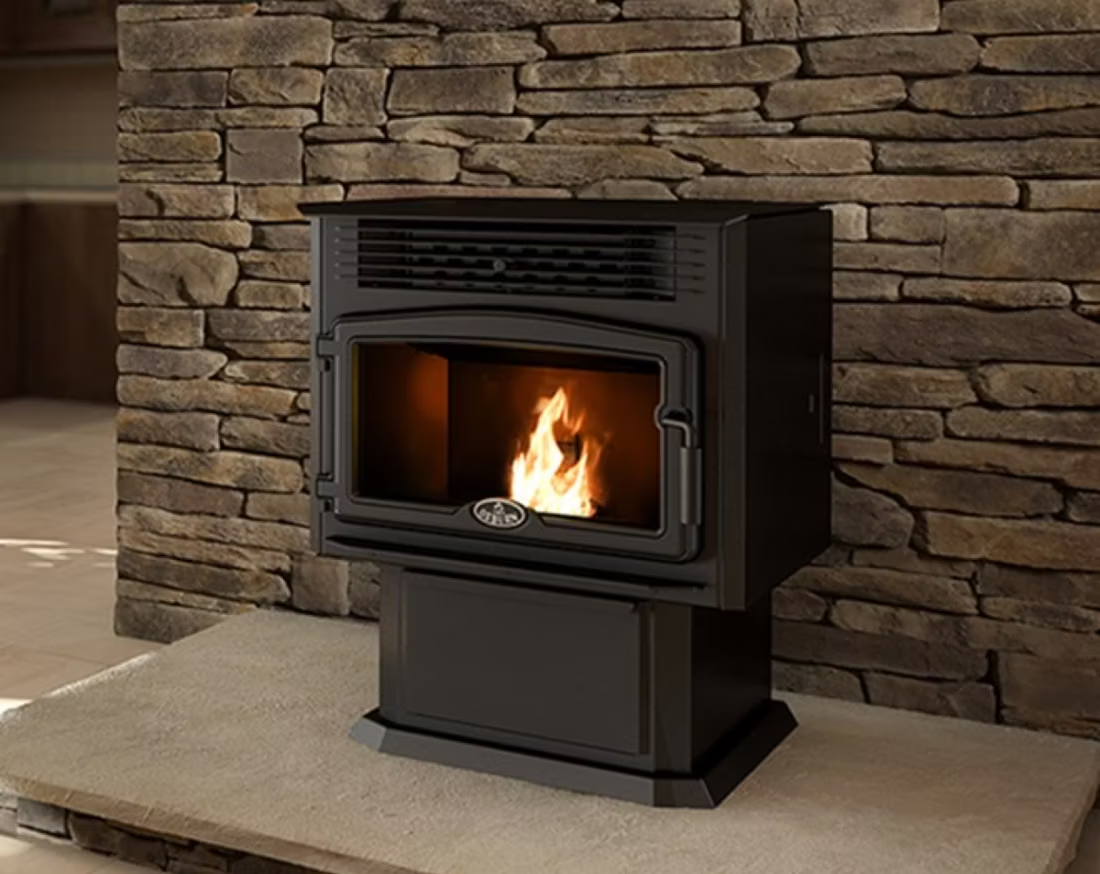
Pellet stoves fit this county well for a few practical reasons. Regional suppliers including Lignetics and Indeck Energy Services keep pellet bags moving through the upper Midwest, so fuel availability isn't the concern it can be in more remote regions. Brule County also has no listed air quality restrictions or non-attainment issues, which means pellet appliances here aren't competing with burn bans the way they might in parts of the Mountain West—though pellet stoves are attractive on their own merits: automated feed, consistent output, and far less ash than a wood stove burning the local ponderosa pine, oak, or cottonwood. The one thing to plan for is electricity—pellet stoves need a dedicated outlet to run the auger and blower, worth factoring in given how exposed this stretch of prairie is to winter wind events.
Three steps. No salesperson until you're ready.
Tell us about your project
Your zip code, your situation, and the fuel you're leaning toward—or let the answers point you to one.
See what's actually available
The brands dealers within 100 miles genuinely carry—real options, never a catalog mirage.
Get your dealer & Project Guide
A trusted local dealer, plus the free Project Guide & Parts List that names every component of the job.
Frequently Asked Questions
How much does a pellet stove installation cost in Brule County?
A typical pellet stove installation runs in the range of $3,000 to $6,000 in most rural South Dakota counties, including Brule, depending on the unit, whether you're venting through an exterior wall (the standard, lower-cost route for pellet appliances) or adapting an existing masonry chimney, and whether a dedicated 120V electrical circuit needs to be run for the auger and blower motor. Because pellet stoves don't require the same Class A chimney work as a wood stove, installs are generally on the lower end of hearth-appliance costs—a meaningful factor for older farmhouses around Chamberlain, Kimball, and Pukwana where retrofitting a full masonry chimney isn't practical.
What size pellet stove do I need for a Brule County home?
With 6,983 heating degree days and winter lows regularly near or below 11°F, most Brule County homes need a stove sized for real heating load, not just ambiance. Small units (under 1,000 sq ft) suit a single farmhouse room or shop, medium units (1,000–1,800 sq ft) cover most main living areas, and larger units can handle a well-insulated whole home when used as a primary heat source. Older, drafty farmhouses common throughout the county typically need to size up a notch compared to a newer, tightly built home of the same square footage. A local dealer will size this correctly during an in-home visit—sizing wrong in either direction either leaves rooms cold or causes the stove to short-cycle constantly on the coldest nights.
Where can I find certified pellet stove installers near Brule County?
Because Brule County's population is under 3,500, dealer density is thin compared to larger South Dakota counties, and it's common for certified installers to travel in from Chamberlain, Mitchell, or the Pierre area to serve the county. Look for NFI (National Fireplace Institute) certification specifically in pellet appliances—the installation requirements (electrical, venting clearance, hearth pad) differ enough from wood stoves that general handyman experience isn't a substitute. Most dealers serving this stretch of the Missouri River valley bundle the sale and install together, which simplifies warranty coverage if something needs service later.
What's the difference between a pellet stove and a pellet insert?
A pellet stove is a freestanding unit that sits on a hearth pad and vents through a nearby exterior wall—it can go almost anywhere in a room with the right clearances, which makes it a common choice for farmhouses and outbuildings around Brule County that don't have an existing fireplace. A pellet insert is built to slide into an existing masonry fireplace opening, using the chimney chase (with a proper liner) as part of the venting path. If your Chamberlain-area home already has an old wood fireplace you rarely use, an insert converts it into an efficient, thermostat-controlled heat source without losing the mantel and surround you already have.
Do I need a permit to install a pellet stove in Brule County?
Yes—new pellet stove installations typically require a building permit, and it's worth checking with the Brule County zoning office based in Chamberlain before work begins, since permit requirements are handled at the county level for most unincorporated areas. Unlike wood-burning installs in some non-attainment regions of the country, Brule County has no listed air quality restrictions, so there's no curtailment period or burn-ban complication to plan around—permitting here is mainly about verifying clearances, venting, and the electrical circuit rather than emissions compliance.
What's the best pellet stove for Brule County's climate?
For a heating load in the 6,983 HDD range, look for a stove rated for continuous use rather than an entry-level occasional-use model—brands like Harman and Englander build units designed to run for weeks at a time through a genuine Northern Plains winter. Fuel-wise, this region is served by Lignetics and Indeck Energy Services, both of which supply softwood pellets widely available at farm and feed stores in the Chamberlain area—check that whatever stove you choose is rated for the pellet blends actually stocked locally, since some premium hardwood blends aren't distributed this far west in South Dakota. Your local dealer can match a specific model to your home's square footage and the pellet supply realistically available near you.
How often does a pellet stove need to be cleaned and serviced?
Plan on a full cleaning and inspection once a year, ideally before the start of heating season in early fall—this covers the burn pot, hopper, auger mechanism, exhaust motor, and venting. For a Brule County home running a pellet stove as a primary heat source through a full winter, a mid-season ash removal and burn-pot check is common as well, since heavy daily use through January and February builds up ash faster than occasional supplemental burning. Unlike a wood chimney, there's no creosote risk, but the mechanical components (auger motor, igniter, blower) do wear and benefit from routine attention.
Where can I buy wood pellets in Brule County?
Farm and feed supply stores around Chamberlain and nearby Mitchell commonly stock bagged pellets, often from Lignetics or regional distributors carrying Indeck Energy Services product, with typical pricing in the $220–$300-per-ton range depending on the season and how far the load traveled to reach south-central South Dakota. Buying by the ton (roughly 50 forty-pound bags) ahead of the coldest months is standard practice here, since demand tightens up once temperatures drop and rural delivery routes get longer. Some dealers who sell pellet stoves also carry fuel directly, which is worth asking about when you're getting matched with an installer.
Pellet stove vs. wood stove—which is right for my Brule County home?
Wood stoves burn cordwood—locally, that's typically ponderosa pine, oak, or cottonwood—and keep working without electricity, which matters in a county exposed to the kind of prairie wind and ice events that can knock out rural power for hours or days. Pellet stoves are more convenient day-to-day (load the hopper, set the thermostat, less ash) and burn cleaner, but they depend on electricity to run the auger and blower, so they're not a fallback during an outage unless you pair one with a battery backup or small generator. For many Brule County households, a pellet stove works well as the primary daily-use heat source, with a wood stove or fireplace elsewhere in the house—or a generator on hand—as the outage backup.
What's the difference between an insert and a zero-clearance fireplace?
An insert is a fireplace that slides into a pre-existing wood-burning fireplace—if you don't have one, there's nothing to insert it into. A zero-clearance fireplace is built into a framed wall, which makes it the answer for remodels and new construction. Simple test: existing masonry fireplace means insert; blank or framed wall means zero-clearance.
Why is a fireplace insert so efficient?
An insert does two things: it seals the chimney completely, so you stop losing air you already paid to heat, and it radiates warmth into the room through the firebox and glass. Most add a heat-exchange fan that pulls cool room air underneath, wraps it around the hot firebox, and pushes it back out warm. Your home is more efficient before you've even lit the first fire.
Can I install a fireplace myself?
If you're putting a fire in your house on purpose, it's best to work with an expert. Unless you're genuinely experienced in framing, gas line, vent pipe, and the national code on clearances to combustibles, have a professional do it—and ideally the same company that sells you the fireplace, so warranty, service, and liability all live under one roof.
Does a fireplace add value to my home?
On average, a fireplace adds back to the home about the same amount you spent installing it. Add the monthly savings from heating the rooms you actually use instead of the whole house—often hundreds of dollars a year—and the value case is strong before you even count what a fire does for how your family uses the room.
Stove and Fireplace Dealers in Brule County
Listings include WhyFire partner dealers, dealers we have verified as authorized for the brands we recommend, and established local businesses that carry hearth products. Every listing shows which one it is. The ones marked Preferred run on WhyFire's software, so they can show you real pricing and book your appointment right here. No manufacturer pays for placement. How we verify dealers →
Builders Solutions
Builders FirstSource Huron
Pellet Brands Stocked Around Brule County
Manufacturers will point you to the nearest stocking dealer.
Find your pellet stove in Brule County.
Tell us a bit about your home and heating goals, and we'll match you with a trusted local dealer serving Brule County—plus a free Project Guide & Parts List laying out the exact parts, including the vent kit, for your pellet stove project.
Find Your Fireplace →