
Warm up your Brookings County home in minutes, not months.
With 8,378 heating degree days and winter lows averaging 4°F, Brookings County homes need heat that shows up fast—no chimney, no gas line, no waiting on a contractor's schedule. Find the right electric unit and connect with a trusted local dealer.
Every Project Starts From One of These Five Situations
Simple heat for one of the coldest stretches of the Great Plains.
Brookings County sits in South Dakota's flat eastern farm country, home to South Dakota State University and a population of roughly 28,773 spread across Brookings, Volga, Elkton, Aurora, and White. At Climate Zone 6A with 8,378 heating degree days a year—more than Fargo, North Dakota, and well above most of the Midwest—winter here is long, flat-out cold, and made worse by open-prairie wind with nothing to break it. Winter lows average 4°F, and stretches well below zero are routine from December through February.
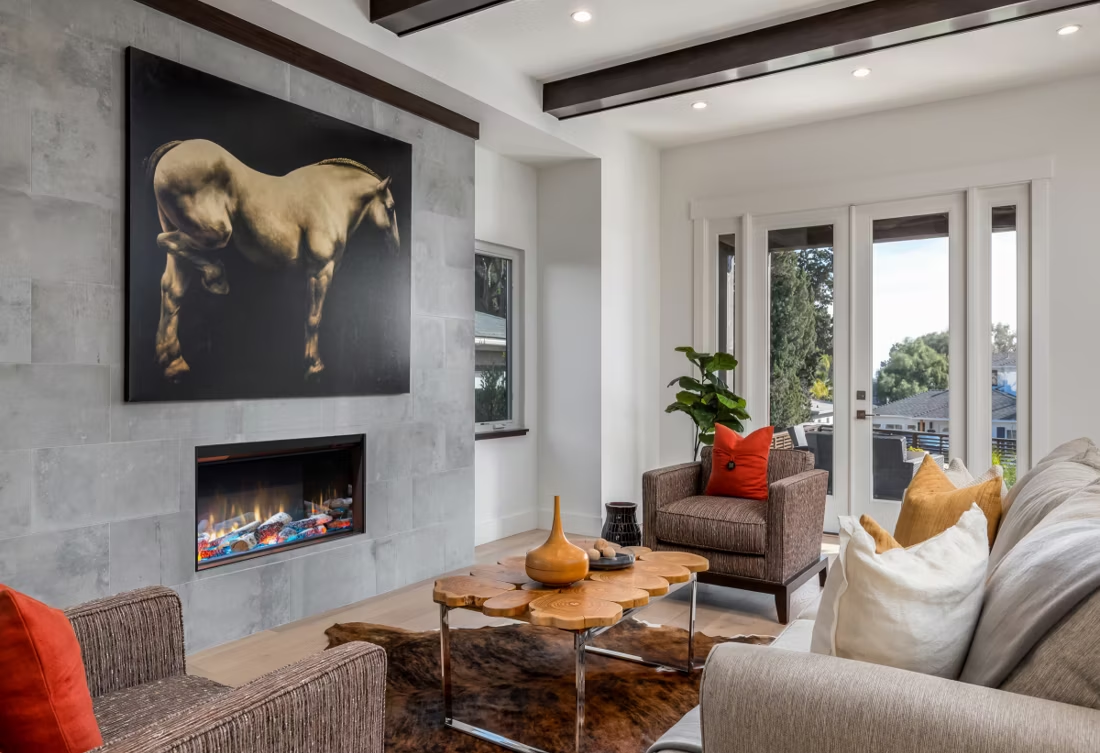
Unlike counties with real forest cover, Brookings County's wood supply is limited mostly to scattered cottonwood along the Big Sioux River and the occasional oak windbreak planted around a farmstead—not the kind of accessible woodlot that supports regular wood heat. That's part of why wood and pellet stoves are essentially not a factor here, and why homeowners lean on gas and electric instead. Electric fireplaces fit that gap well: no venting, no chimney, no fuel deliveries, and—for plug-in units—no permit process at all. They're a fast way to add real, visible heat to a bedroom, basement, sunroom, or SDSU-area rental without touching your home's main heating system.
Three steps. No salesperson until you're ready.
Tell us about your project
Your zip code, your situation, and the fuel you're leaning toward—or let the answers point you to one.
See what's actually available
The brands dealers within 100 miles genuinely carry—real options, never a catalog mirage.
Get your dealer & Project Guide
A trusted local dealer, plus the free Project Guide & Parts List that names every component of the job.
Frequently Asked Questions
How much does an electric fireplace installation cost in Brookings County?
Plug-in electric fireplaces and inserts that run on a standard 120V outlet typically cost $300 to $1,200 installed, since there's no venting or gas line work involved—often just mounting the unit and, for wall units, a bit of framing or trim work. Larger built-in electric fireplaces that require a dedicated 240V circuit run higher, generally $1,200 to $2,500, with most of that cost tied to the electrician's time rather than the unit itself. Because Brookings County homes range from older farmhouses to newer construction near the SDSU campus, the biggest cost variable is usually whether your home's electrical panel already has capacity for a new circuit.
Will an electric fireplace heat my whole house in a Brookings County winter?
No—and with 8,378 heating degree days and winter lows averaging 4°F, that's an important thing to be honest about. Electric fireplace inserts are built for zone heating: warming the room they're in, not replacing your furnace, propane system, or electric heat pump as primary heat. Most Brookings County homeowners install one to take the edge off a chilly addition, finished basement, or bedroom that the main system struggles to reach, or simply for the visual warmth of a fire without wood mess or gas venting. If you're trying to cut whole-home heating costs during a Great Plains winter, gas is usually the better-suited option—electric is for comfort and convenience in a specific space.
Do I need a permit to install an electric fireplace in Brookings County?
In most cases, no. A plug-in electric fireplace or insert that runs off an existing 120V outlet doesn't require a permit anywhere in Brookings County—it's treated like any other appliance. If you're installing a larger built-in unit that needs a new dedicated circuit, that electrical work typically does require a permit through your local building department, and it's work that should be done by a licensed electrician regardless. Local hearth dealers who sell electric fireplaces can usually tell you upfront whether your specific model needs new wiring.
What size or type of electric fireplace makes sense for a Brookings County home?
For older farmhouses and homes on the edge of town, a wall-mounted or recessed electric insert in the main living area does the most good—it adds visible warmth exactly where the family spends time on the coldest nights. For SDSU-area rentals and apartments, a freestanding or mantel-style plug-in unit is popular because it requires zero modification to the unit and can move with a tenant. For finished basements, which run cold in a Zone 6A climate even with good insulation, a built-in electric insert with a higher wattage heater (1,500W is standard) makes the most noticeable difference. A local dealer can match wattage and room size correctly—oversizing wastes money, undersizing won't take the chill off.
Will my electric fireplace still work if the power goes out?
No—electric fireplaces require power to run both the heater and the flame effect, so they go dark in an outage just like any other electric appliance. That matters in Brookings County, where ice storms and heavy prairie winds occasionally knock out power for hours at a time during the coldest months. If backup heat during an outage is a priority, a gas fireplace with a battery-backup or millivolt ignition system, or a small backup generator paired with your electric unit, is worth discussing with a local dealer. Most homeowners here treat electric as a comfort and zone-heat solution rather than an emergency heat source.
Electric vs. gas fireplace—which is right for my Brookings County home?
Gas fireplaces put out real heat output and can serve as legitimate supplemental or even primary heat during a Zone 6A winter, and many models keep running during a power outage with battery backup ignition—a genuine advantage given how far apart help can be in rural parts of the county. Electric fireplaces cost less to install, need no gas line or venting, and can go almost anywhere in the house, but they're strictly zone heat and won't help if the power's out. For a main living room where real heat matters, gas is often the better call in this climate. For a bedroom, basement, or rental unit where ambiance and easy installation matter more, electric usually wins.
What will an electric fireplace cost to run in Brookings County?
Most electric fireplace inserts draw around 1,500 watts on the heater setting, which works out to roughly $0.15 to $0.25 per hour of heater use depending on your local electric cooperative or municipal utility rate. Running one for a few hours a night to take the chill off a room costs a fraction of what it takes to raise the whole house's thermostat a few degrees during a stretch of sub-zero prairie weather. The flame-only setting with the heater off uses only a few watts, so leaving it on for ambiance costs next to nothing.
Is an electric fireplace safer than a space heater?
Electric fireplaces and quality electric space heaters use similar heating technology, but built-in and wall-mounted electric fireplaces typically include tip-over shutoff, overheat protection, and a cool-touch exterior as standard features—details that vary a lot on cheap portable space heaters. For Brookings County renters and homeowners running supplemental heat through a long, cold winter, a UL-listed electric fireplace insert from a hearth dealer is generally a more consistent and durable choice than rotating through box-store space heaters season after season.
Are electric fireplaces a good fit for SDSU-area rentals in Brookings?
Yes—plug-in electric fireplaces are one of the most landlord-friendly upgrades available for rental housing near South Dakota State University. They need no venting, no gas line, no permit, and no permanent modification to the unit, which makes them easy to install in an apartment or rental home and just as easy to take with you or leave behind at move-out. For a college-town rental market where turnover is frequent and property owners want low-hassle upgrades, electric is usually the simplest option—and it adds real appeal for tenants dealing with a Brookings County winter.
Can I put a TV above my fireplace?
Yes—with an asterisk. Fireplaces are hot and TVs don't like heat. Either put a mantel between them to deflect rising warmth, or choose a fireplace with heat-management technology that creates a cool zone on the wall above—the wall stays around 125 degrees, barely warm, while the room still gets full heat. If you like clean lines and don't want a mantel, heat management is the answer.
Does an electric fireplace need a vent or chimney?
No—that's its superpower. An electric fireplace needs a wall and an outlet, period. No vent pipe, no gas line, no clearances to design around, which is why it works in bedrooms, offices, apartments, and walls where venting a gas or wood unit would be impractical or impossible. Installation is typically the simplest and least expensive of any fireplace type.
What is an in-home preview and do I need one?
It's a visit where a hearth professional measures your space, confirms the model you picked actually works in your home, and walks the specs—framing, gas line, venting, finish work—before anything is ordered. Some details you just can't know until you see the house. Never make a down payment without one; it's the single most-skipped step that burns buyers.
Can a fireplace actually lower my heating bill?
Yes—by creating a comfort zone. A furnace heats every square foot of the house just to warm the one room you're in; a gas fireplace on low burns roughly a sixth of the gas a typical furnace does. Set the furnace around 55–60 degrees as a baseline, then heat the rooms your family actually uses. Families who heat this way commonly save $20–$60 a month.
Stove and Fireplace Dealers in Brookings County
Listings include WhyFire partner dealers, dealers we have verified as authorized for the brands we recommend, and established local businesses that carry hearth products. Every listing shows which one it is. The ones marked Preferred run on WhyFire's software, so they can show you real pricing and book your appointment right here. No manufacturer pays for placement. How we verify dealers →
Ramsdell F&M Ltd.
Cozy Home & Lighting, LLC
Hometown Building Center
Andor Inc.
Larry's Lumber
Today's Fireplace & Spa
Fireplace Professionals, Inc
Hjellming Construction
Find your electric fireplace in Brookings County.
Tell us a bit about your home and we'll put together a free Project Guide & Parts List—the right electric fireplace or insert for your space, the parts needed, and a trusted local dealer to install it.
Find Your Fireplace →