
Heat That Holds Up Through Brookings County Winters.
Fireplace resources for every town in Brookings County—from Brookings and Volga to Elkton, Aurora, and White. Connect with a trusted local dealer who knows what actually holds heat when the prairie wind drops temperatures below zero.
Every Project Starts From One of These Five Situations
Flat prairie, brutal cold, and a heating market built around gas and electric.
Brookings County sits in the eastern South Dakota prairie, in climate zone 6A with a long, cold winter and an average winter low around 4°F—cold on par with Fargo, North Dakota, and cold enough that a heating system failure in January is not a minor inconvenience. But unlike forested mountain counties, this is farm country: flat, treeless in most places outside river bottoms and windbreak rows. There's no national forest to pull a firewood permit from, and the county's cottonwood, oak, and ponderosa pine mostly grow along the Big Sioux River or in planted shelterbelts on private land, not on accessible public timberland.
That geography shapes what people actually install. Gas fireplaces and gas inserts are the dominant choice here, often served by Brookings Municipal Utilities' city natural gas service or propane in the unincorporated townships. Electric fireplaces are common as supplemental heat in bedrooms, additions, and finished basements. Wood stoves and pellet stoves show up occasionally—usually as backup heat for ice-storm power outages—but they're a minority choice, not because the cold doesn't call for a serious heater, but because the supply chain and installer base here are built around gas and electric. Pick your fuel below to see local dealers, install costs, and what's actually realistic for your address.
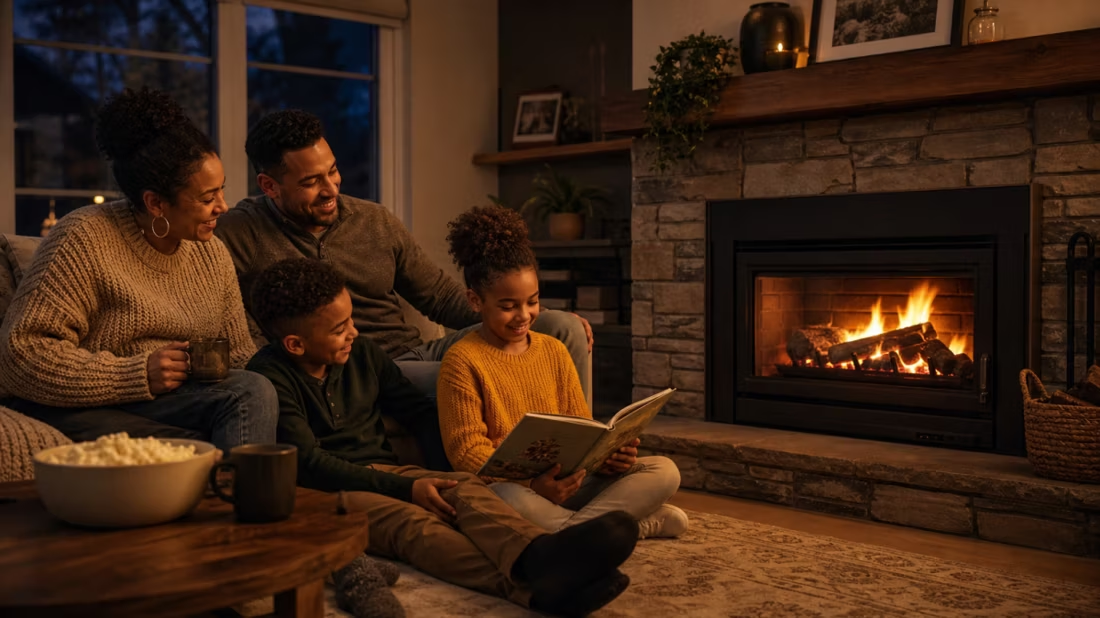
Four fuels. One honest answer for Brookings County.
Three steps. No salesperson until you're ready.
Tell us about your project
Your zip code, your situation, and the fuel you're leaning toward—or let the answers point you to one.
See what's actually available
The brands dealers within 100 miles genuinely carry—real options, never a catalog mirage.
Get your dealer & Project Guide
A trusted local dealer, plus the free Project Guide & Parts List that names every component of the job.
Frequently Asked Questions
Which fuel works best in Brookings County?
For most homes here, gas or electric. Brookings County sees average winter lows near 4°F and a winter heating season as long and demanding as they come—brutal by any measure—but the county's flat farmland geography means gas fireplaces and inserts (fed by Brookings Municipal Utilities' natural gas lines in town, or propane out in the townships) are the practical primary choice: instant heat, no fuel storage, reliable through a hard winter. Electric fireplaces fill the supplemental role well—finished basements, additions, bedrooms. Wood and pellet stoves exist but are uncommon; without national forest land nearby for cutting permits, firewood has to be purchased rather than self-cut, and pellet retail infrastructure is thin. A handful of rural homeowners keep a wood stove specifically as power-outage backup, which is a reasonable use case even if it's not the primary heat source for most.
Given how cold it gets, why aren't wood stoves more common in Brookings County?
It's a fair question—winters here are serious cold, comparable to Duluth, Minnesota. But the limiting factor isn't climate, it's supply. Brookings County is prairie farmland: cottonwood grows along the Big Sioux River bottoms, and oak and ponderosa pine show up in planted windbreaks on private land, but there's no national forest here where a homeowner can pull a firewood-cutting permit the way you could in a mountain county. That means anyone burning wood is buying cut, split, seasoned firewood rather than harvesting it, which changes the cost math. Wood stoves still get installed here—mostly as backup heat for ice-storm outages, or in older farmhouses that already had a chimney—but it's genuinely a minority choice against gas and electric.
Are pellet stoves an option in Brookings County?
They're uncommon, and it's worth being upfront about why. Lignetics and Indeck Energy Services both distribute pellets into the region, but that supply is oriented toward agricultural and industrial biomass use, not a dense network of consumer hearth retailers stocking bagged pellets and pellet stoves on showroom floors. Homeowners who specifically want a pellet stove in Brookings County typically special-order the unit or drive toward the Sioux Falls market for a dealer who carries and services them. If you want wood-style ambiance with less labor than splitting firewood, a gas insert with a log-set aesthetic is usually the more readily available local alternative.
Do I need a permit to install a gas or electric fireplace in Brookings County?
Yes, in most cases. Gas fireplace, insert, and stove installations require a building permit plus a separate gas line permit, and the gas connection itself needs to be done by a licensed gas fitter—this applies whether you're on Brookings Municipal Utilities' natural gas service in town or running propane in the unincorporated county. Electric fireplaces are usually permit-free for plug-in units, but built-in electric fireplaces that require new wiring or a dedicated circuit need an electrical permit. Whether you're inside city limits or in the surrounding townships determines which office issues the permit—your local hearth retailer typically handles this paperwork as part of the installation rather than leaving it to you.
How does the local utility affect fireplace choice in Brookings County?
Brookings Municipal Utilities, the city-owned utility, supplies natural gas and electric within Brookings city limits, which is a big part of why gas fireplaces and inserts are the practical default for in-town homeowners—no propane tank, no delivery schedule. Outside the city, in townships like those around Volga, Elkton, Aurora, and White, homes typically run on propane for gas appliances and cooperative electric service. That split matters when you're pricing a project: an in-town gas insert conversion is often simpler and cheaper than a rural install that needs a new propane line run, and it's worth confirming your address's exact service before comparing quotes.
What's the typical cost range for a fireplace project across fuel types in Brookings County?
Gas fireplace, insert, or stove: roughly $4,000–$10,000 depending on whether you're converting an existing gas line or running new gas service, plus venting work. Electric fireplace: $200–$3,000 for the unit itself, with $400–$1,200 in labor for anything beyond a plug-in install—built-ins with new wiring run toward the higher end. Wood stove installs, where they do happen, run $4,500–$9,000 given the need for a full chimney and hearth setup on a home that likely didn't have one. Pellet stove installs are similar but less common locally, so freight and installer availability can push costs up. These are county-wide ranges—the gas and electric fuel pages above break down specifics tied to actual local retailer pricing.
Can I install a fireplace myself?
If you're putting a fire in your house on purpose, it's best to work with an expert. Unless you're genuinely experienced in framing, gas line, vent pipe, and the national code on clearances to combustibles, have a professional do it—and ideally the same company that sells you the fireplace, so warranty, service, and liability all live under one roof.
Wood, gas, pellet, or electric—how do I choose?
Match the fuel to your life, not the other way around. Wood: lowest fuel cost and total power-outage independence, but you're hauling and stacking. Gas: press a button, set a thermostat, no maintenance to speak of. Pellet: wood economics with automatic feeding, in exchange for weekly cleaning and a need for electricity. Electric: plugs in anywhere with honest supplemental heat. Nobody regrets the fuel that fits how they actually live.
Does a fireplace add value to my home?
On average, a fireplace adds back to the home about the same amount you spent installing it. Add the monthly savings from heating the rooms you actually use instead of the whole house—often hundreds of dollars a year—and the value case is strong before you even count what a fire does for how your family uses the room.
Can a fireplace actually lower my heating bill?
Yes—by creating a comfort zone. A furnace heats every square foot of the house just to warm the one room you're in; a gas fireplace on low burns roughly a sixth of the gas a typical furnace does. Set the furnace around 55–60 degrees as a baseline, then heat the rooms your family actually uses. Families who heat this way commonly save $20–$60 a month.
Stove and Fireplace Dealers in Brookings County
Listings include WhyFire partner dealers, dealers we have verified as authorized for the brands we recommend, and established local businesses that carry hearth products. Every listing shows which one it is. The ones marked Preferred run on WhyFire's software, so they can show you real pricing and book your appointment right here. No manufacturer pays for placement. How we verify dealers →
Ramsdell F&m Ltd.
Cozy Home & Lighting, LLC
Hometown Building Center
Andor Inc.
Larry's Lumber
Today's Fireplace & Spa
Fireplace Professionals, Inc
Hjellming Construction
Get matched with a Brookings County dealer.
Tell us about your home and we'll match you with a trusted local dealer and send a free Project Guide & Parts List—the exact parts, including the vent kit, for a gas or electric fireplace project built for Brookings County winters.
Find Your Fireplace →