
Steady heat for the wide-open winters of Bennett County.
From Martin out to the ranches along the Nebraska line, Bennett County winters call for heat you don't have to babysit. We match you with a local dealer who can size, install, and vent a pellet stove or insert correctly—no big-box guesswork.
Every Project Starts From One of These Five Situations
Consistent heat without the wood pile.
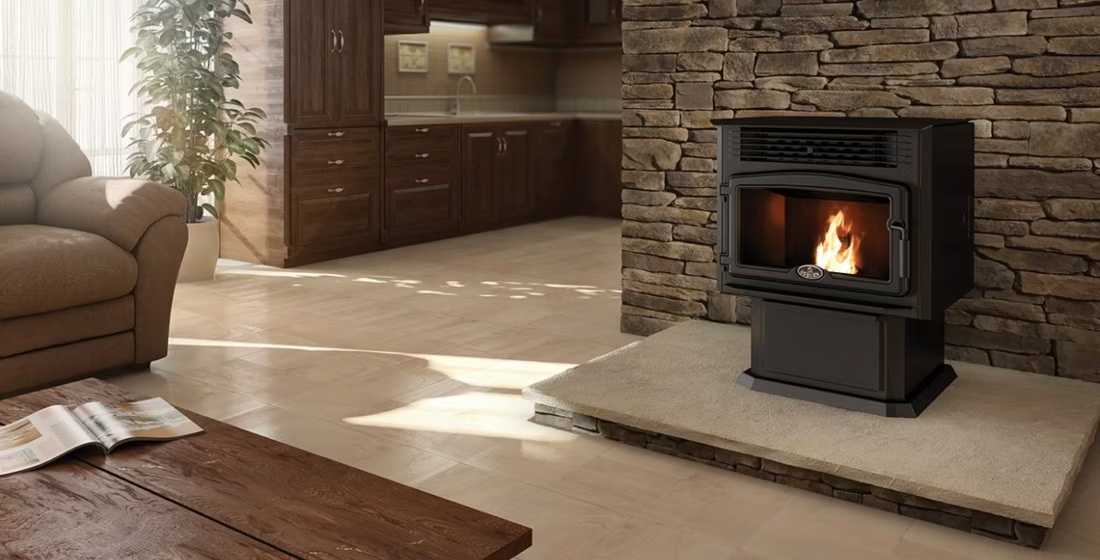
Bennett County sits in the High Plains of southwestern South Dakota, county seat Martin, population under 2,000 spread across open ranch and grassland country. The region falls in climate zone 5A—cold, wind-driven winters closer in feel to Bismarck, ND than to anything on the coasts, with stretches of single-digit lows and enough wind to make any heat source with a stable fire matter. For a lot of longtime residents, that's meant burning ponderosa pine, oak, or cottonwood cut from the draws and creek bottoms. Pellet stoves offer many of the same households a way to get comparable heat without tending a woodpile or splitting rounds every fall.
Bennett County has no air quality non-attainment issues and no burn curtailment periods to work around, so a pellet stove or insert here runs on your schedule, not a Yellow or Red air advisory. Regional pellet brands like Lignetics and Indeck Energy Services are the ones local dealers stock and recommend, and because Bennett County is rural and distances to town are real, most households plan ahead—buying pellets by the ton rather than the bag, and keeping enough on hand to ride out a stretch of bad roads. The one tradeoff worth knowing: pellet stoves need electricity to run the auger and blower, so ranches and rural residences that lose power during Plains winter storms should plan a battery backup or generator alongside the stove.
Three steps. No salesperson until you're ready.
Tell us about your project
Your zip code, your situation, and the fuel you're leaning toward—or let the answers point you to one.
See what's actually available
The brands dealers within 100 miles genuinely carry—real options, never a catalog mirage.
Get your dealer & Project Guide
A trusted local dealer, plus the free Project Guide & Parts List that names every component of the job.
Frequently Asked Questions
How much does a pellet stove installation cost in Bennett County?
Installed cost depends on whether you're putting a freestanding stove on a new hearth pad, converting an existing wood fireplace to a pellet insert, and how far the vent run needs to go through an exterior wall. Because Bennett County is sparsely populated, travel time from the nearest certified installer can also factor into a quote more than it would in a denser county. Rather than guess at a number that doesn't fit your house, your matched local dealer will walk your home and give you a firm quote—and it's part of the free Project Guide & Parts List we put together once you're matched.
What size pellet stove do I need for my home?
Sizing depends on square footage, ceiling height, and how well-insulated the house is—older ranch houses and farmhouses in Bennett County often run leakier than newer construction, which pushes sizing up a notch. As a rough starting point: a smaller pellet stove works for a single large room or a well-insulated cabin, while a mid-size unit is more typical for a full ranch-style home. Given the wind exposure common across the county's open ground, it's worth erring toward the larger end of a size range rather than the smaller one. A local dealer will size your specific home for free.
Where can I find a certified pellet stove dealer near Bennett County?
Because Bennett County's population is small and spread out, the nearest hearth dealers with certified installers are often based outside the county—commonly serving Martin and the surrounding ranch communities as part of a wider service radius that stretches toward Rapid City or the Pine Ridge area. That's exactly the gap Find My Fireplace closes: rather than guessing which retailer actually covers your address, we match you directly with a trusted dealer who installs in Bennett County and knows the drive.
What's the difference between a pellet stove and a pellet insert?
A pellet stove is a freestanding unit that sits on its own hearth pad and vents through a wall or ceiling—it can go almost anywhere in a house, including a spot where you never had a fireplace before. A pellet insert is built to slide into an existing masonry fireplace opening, which is a common upgrade for older Bennett County farmhouses that already have a wood fireplace but want the lower-maintenance heat of pellets. If you've got an existing fireplace, an insert usually makes more sense; if you're starting from scratch, a freestanding stove gives you more placement flexibility.
Do I need a permit to install a pellet stove in Bennett County?
Most pellet stove and insert installations require a building permit, typically handled through the Bennett County courthouse in Martin, since the county covers permitting for the unincorporated areas where most residents live. Your installer will generally pull this as part of the job rather than leaving it to you. Unlike some Western counties with wood-burning curtailment programs, Bennett County has no air quality non-attainment designation, so there's no seasonal burn restriction to navigate on top of the permit.
What's the best pellet stove for Bennett County's winters?
Look for a stove rated for continuous, high-heat output rather than a light-duty model built for occasional use—Bennett County's zone 5A winters, with sustained cold and open-plains wind, put real demands on a heating appliance. Local dealers commonly work with Lignetics and Indeck Energy Services pellets, both regionally available, and a stove that burns efficiently on either brand gives you flexibility if one is easier to source in a given month. For homes that lean on the stove as a primary heat source rather than a supplement, a larger-hopper unit reduces how often you're reloading during multi-day cold stretches.
How much maintenance does a pellet stove need?
Pellet stoves need more frequent attention than a wood stove, but each task is lighter. Plan to empty the ash pan every few days during heavy use, clean the burn pot weekly, and have the exhaust venting professionally cleaned at least once a season—more often if you're running the stove as your primary heat through a full Bennett County winter. Because pellet stoves rely on an auger, blower, and control board to keep running, a look-over from a certified technician before the cold sets in each fall catches small mechanical issues before they become a no-heat call in January.
Where can I buy pellets in Bennett County?
Lignetics and Indeck Energy Services are the two regional brands most local dealers stock, and given how rural Bennett County is, most households buy by the ton rather than picking up a few bags at a time. Planning ahead matters here—roads can close during Plains storms, and running low on pellets mid-blizzard isn't a position you want to be in. A ton typically covers a full season of use for supplemental heat, or less for a home running the stove as primary heat; your dealer can help estimate how much to have on hand before the first hard freeze.
Pellet stove vs. wood stove—which is right for my Bennett County home?
Wood—cut locally from ponderosa pine, oak, or cottonwood—works without electricity, which matters on a ranch where the power can go out for a day or more during a winter storm. Pellet stoves need power to run the auger and blower, so they're not a stand-alone backup heat source unless paired with a battery backup or generator. In exchange, pellet stoves are far less physical labor: no splitting, stacking, or hauling rounds, and a more even, thermostatically controlled heat. For many Bennett County households the answer is both—wood as the storm-proof backup, pellet for day-to-day convenience.
What's the difference between an insert and a zero-clearance fireplace?
An insert is a fireplace that slides into a pre-existing wood-burning fireplace—if you don't have one, there's nothing to insert it into. A zero-clearance fireplace is built into a framed wall, which makes it the answer for remodels and new construction. Simple test: existing masonry fireplace means insert; blank or framed wall means zero-clearance.
Can a pellet stove heat a whole house?
It genuinely can. I burned a pellet stove as my only heat source for years after a furnace died, and it kept the entire house warm. Pellets feed automatically from a hopper, so you get wood-heat economics with thermostat-style control. Two honest caveats: it needs weekly cleaning during the season, and most models need electricity to run—ask about battery backup if outages are a concern.
Does a fireplace add value to my home?
On average, a fireplace adds back to the home about the same amount you spent installing it. Add the monthly savings from heating the rooms you actually use instead of the whole house—often hundreds of dollars a year—and the value case is strong before you even count what a fire does for how your family uses the room.
How much should I budget for a fireplace?
For an average home—covering the fireplace, the vent pipe, and basic installation—a budget between $3,900 and $5,500 gives you a lot of options across wood, gas, and pellet. By the time you add finish work, gas line, and electrical, the average complete installation lands between $5,000 and $12,000 all-in. In a remodel or new build, a good rule is to put about 2.5% of the total project cost toward the fireplace.
Stove and Fireplace Dealers in Bennett County
Listings include WhyFire partner dealers, dealers we have verified as authorized for the brands we recommend, and established local businesses that carry hearth products. Every listing shows which one it is. The ones marked Preferred run on WhyFire's software, so they can show you real pricing and book your appointment right here. No manufacturer pays for placement. How we verify dealers →
Metal Products
Pellet Brands Stocked Around Bennett County
Manufacturers will point you to the nearest stocking dealer.
Find your pellet stove in Bennett County.
Tell us about your home and we'll match you with a trusted local dealer serving Bennett County, plus a free Project Guide & Parts List—the exact parts, including the vent kit, for your pellet stove or insert project.
Find Your Fireplace →