
Keep Your Family Warm and Safe—No Matter What
With winter lows averaging 29°F and most Oconee County homes running on heat pumps, a wood stove here is usually a backup plan for ice storms or a fire for its own sake—not a climate necessity.
Every Project Starts From One of These Five Situations
Mild winters make wood the exception here.
Walhalla sits at just over 1,000 feet in the foothills of the Blue Ridge Mountains, in a 3A mixed-humid climate zone with a short, mild heating season. That's a fraction of what a true cold-climate town like Burlington, VT or Bozeman, MT logs each winter, and it's why wood was never adopted here as the default way to heat a home. Most Walhalla and Oconee County residents heat with electric heat pumps served by Duke Energy Carolinas or Blue Ridge Electric Cooperative, supplemented by gas where it's available.
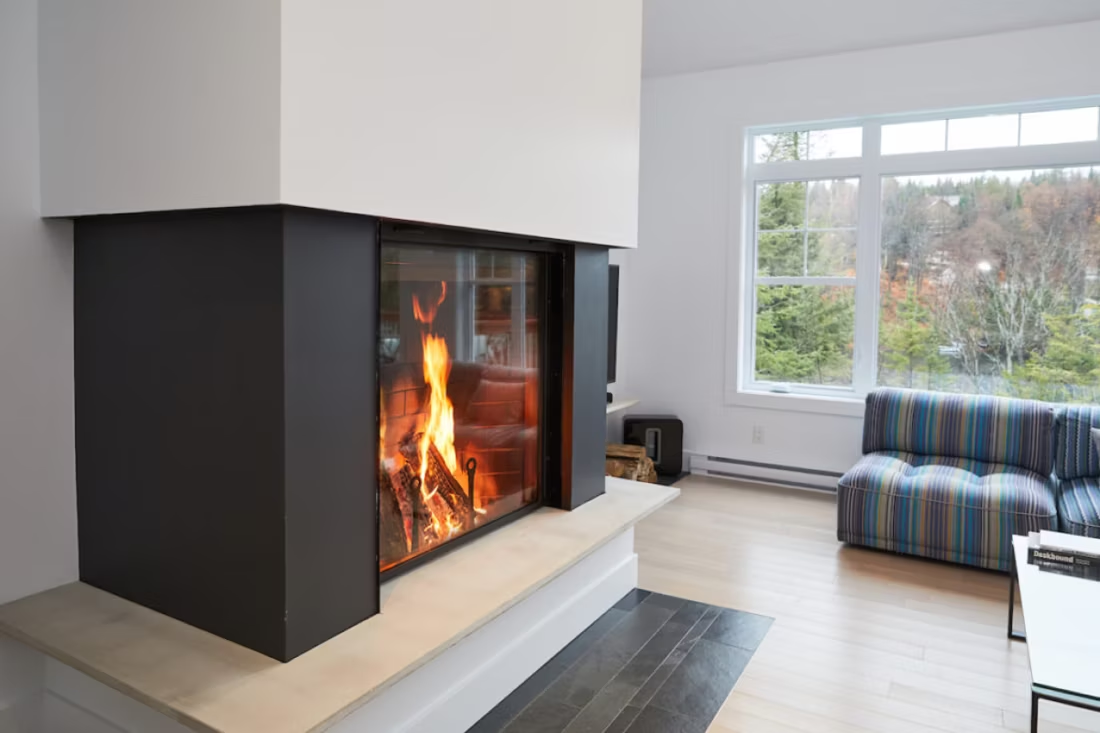
That said, wood hasn't disappeared from the picture. Oak, hickory, and pine grow throughout Oconee County, the Nantahala-Pisgah National Forest issues personal-use cutting permits for $20 a cord from May through October, and the Blue Ridge foothills see enough ice storms and multi-day power outages that some homeowners keep a wood stove as insurance—heat that works with no electricity at all. Others simply want the look and feel of a real fire in a farmhouse or cabin. If that's you, a local dealer can tell you honestly whether a stove or insert makes sense for your specific property, rather than assuming it's the right fit by default.
Firewood Cutting Permits Near Walhalla
Three steps. No salesperson until you're ready.
Tell us about your project
Your zip code, your situation, and the fuel you're leaning toward—or let the answers point you to one.
See what's actually available
The brands dealers within 100 miles genuinely carry—real options, never a catalog mirage.
Get your dealer & Project Guide
A trusted local dealer, plus the free Project Guide & Parts List that names every component of the job.
Frequently Asked Questions
Is a wood stove even a good fit for a home in Walhalla, SC?
For most Walhalla homes, no—not as primary heat. Winter lows here average around 29°F and the region has a short, mild heating season, mild enough that a heat pump from Duke Energy Carolinas or Blue Ridge Electric Cooperative handles the season without strain. Where wood does make sense is as backup heat for the ice storms that periodically knock out power in the Blue Ridge foothills, or for a rural property or cabin where the ambiance and self-sufficiency of a real fire matter more than raw efficiency. A local dealer can walk through your specific situation before you commit to anything.
How much does a wood stove installation cost in Walhalla?
Because wood stoves are a niche request here rather than a routine one, pricing isn't as standardized as it is in colder markets where every hearth shop installs several a week. As a general range, expect somewhere around $3,500 to $8,000 depending on whether the unit goes into an existing masonry fireplace or requires new hearth, wall protection, and Class A chimney pipe from scratch. A trusted local dealer will give you a firm number after seeing the room and the existing chimney, if any.
Do I need a permit to install a wood stove in Oconee County?
Yes, a building permit is required for a new wood-burning appliance installation, and the stove itself needs to meet current EPA emissions standards. The good news is that Oconee County has no non-attainment designation and no listed air quality concerns, so unlike wood-heavy basins out West, there are no winter burn curtailment days to track once the stove is installed and inspected. You're free to burn on your own schedule.
Where can I get firewood near Walhalla?
Oak and hickory are the dominant hardwoods in Oconee County woodlots, with pine common as well—all three burn well in a modern stove once seasoned. If you'd rather cut your own, the Nantahala-Pisgah National Forest sells personal-use cutting permits for $20 per cord during the May-through-October season. Otherwise, local sellers around Walhalla and Seneca typically sell seasoned oak and hickory by the cord, with pine often priced lower as a mixed or supplemental load.
What size wood stove do I need if it's mainly for backup heat?
Since most Walhalla installs are supplementing a heat pump rather than replacing one, a small to medium stove rated for roughly 1,000 to 1,800 square feet is usually plenty for a main living area during a cold snap or outage. If you're heating a detached cabin, workshop, or a property with no other heat source at all, size the stove to that structure's actual square footage the same way you would anywhere else—a local retailer can size it for free during a walkthrough.
Should I get a freestanding wood stove or an insert for my Walhalla home?
If you have an older farmhouse or brick fireplace already in place, an insert is usually the simpler and more efficient route—it slides into your existing masonry opening and uses your existing chimney with a stainless liner, converting a drafty open hearth into a real heat source for the nights you actually want it. A freestanding stove makes more sense if you're heating a workshop, cabin, or a room with no existing fireplace, since it can be placed almost anywhere with the right clearances and floor protection.
Are there any air quality restrictions on wood burning in Walhalla?
No. Oconee County has no non-attainment designation and no winter inversion or wildfire smoke concerns of the kind that trigger burn bans in parts of the West and Pacific Northwest. Beyond the initial building permit for installing the appliance, there's no ongoing restriction on when you can burn—you're not checking an air quality advisory before lighting a fire the way homeowners in some other climates have to.
Wood vs. gas vs. electric heat pump—what actually makes sense in Walhalla?
For year-round, whole-home heating, a heat pump running on Duke Energy Carolinas or Blue Ridge Electric Cooperative power (residential rates in the area run roughly 13.9¢ to 18.9¢ per kWh) is what most Oconee County homes already use, and gas is the common upgrade where it's available for instant, even heat. Wood earns its place as the option that keeps working when the power doesn't—during an ice storm outage, a wood stove is the only one of the three that still puts out heat. Most Walhalla households that add a wood stove do it for that resilience, or simply because they want a real fire, not because it's replacing the primary system.
How do I even find someone to install a wood stove in a town where it's not that common?
That's exactly the gap Find My Fireplace is built to close. We're not a manufacturer or a retailer—we're a neutral matchmaker that connects you with a trusted local dealer who actually installs wood stoves in the Upstate and can tell you honestly whether it's worth doing on your property, rather than upselling you into something oversized for a mild climate. Because wood is a smaller share of the business here compared to a mountain town, working with someone who's trusted for real installation experience matters even more.
Why won't my new wood stove get going like my old one?
New wood stoves are 70%+ efficient, so far less heat goes up the flue—which also means less draft to get a fire established. The rule: build a genuinely hot fire for about 45 minutes before you choke it down. Skip that and you get smoke in the room, creosote in the chimney, and a fire that never takes off. Most performance complaints trace straight back to this.
Why is my open fireplace making my house colder?
Open fireplaces suck—literally. As the fire burns, it consumes air your furnace already paid to heat and pulls it out through the chimney, so the house is actually colder after the fire goes out than before you lit it. An insert fixes this: it seals the chimney, puts fixed glass across the front, and turns that hole in your house into a real heat source.
What is an in-home preview and do I need one?
It's a visit where a hearth professional measures your space, confirms the model you picked actually works in your home, and walks the specs—framing, gas line, venting, finish work—before anything is ordered. Some details you just can't know until you see the house. Never make a down payment without one; it's the single most-skipped step that burns buyers.
How much should I budget for a fireplace?
For an average home—covering the fireplace, the vent pipe, and basic installation—a budget between $3,900 and $5,500 gives you a lot of options across wood, gas, and pellet. By the time you add finish work, gas line, and electrical, the average complete installation lands between $5,000 and $12,000 all-in. In a remodel or new build, a good rule is to put about 2.5% of the total project cost toward the fireplace.
Nearby Dealers
Hearth shops serving Walhalla and the surrounding area. Every listing shows whether it is a WhyFire partner, a dealer we have verified as authorized for the brands we recommend, or a local business carrying hearth products. No manufacturer pays for placement. How we verify dealers →
Blossman Gas And Appliance
Tugalo Gas Company Inc.
Yoder Building Supply
Toccoa Service Gas Company Inc.
Southern Chimney Sweep
The Fire Place - Clayton
Tugalo Gas Company Inc.
Wilson Gas Service
Find out if wood heat fits your Walhalla home.
Tell us about your home and whether you're after backup heat, ambiance, or both, and we'll match you with a trusted local dealer and send over a free Project Guide & Parts List—sized correctly for your space, permits included, no big-box guesswork.
Find Your Fireplace →