
Instant warmth for your Tega Cay home on Lake Wylie.
Mild Piedmont winters don't mean you skip the fireplace. Find the right gas unit for your Tega Cay home and get matched with a trusted local dealer.
Every Project Starts From One of These Five Situations
Mild winters, but real demand for gas ambiance and warmth.
Tega Cay sits on the shores of Lake Wylie in York County, at 625 feet elevation in climate zone 3A. Winters here average a low of just 31°F, and the overall winter heating load is roughly a third of what a place like Burlington VT or Duluth MN racks up in a single hard winter. Nobody in Tega Cay is heating a home with wood as a survival strategy. But the occasional 20-degree snap, plus the simple appeal of a fireplace on a January evening by the lake, keeps demand for gas steady across both established neighborhoods and newer lakefront construction.
Wood stoves and pellet stoves are essentially a non-factor here—not because they don't function, but because Tega Cay's climate, HOA-governed planned communities, and modern housing stock simply don't call for a dedicated wood-heat setup. Gas fits the local building style far better: direct-vent units install cleanly into new construction or existing masonry fireplaces, delivering real flame and real heat at the flip of a switch. Natural gas line access varies by neighborhood in Tega Cay, so a meaningful share of homes—particularly newer lakefront properties—run on propane tanks instead of piped gas. A local dealer will know exactly which fuel option serves your street.
Three steps. No salesperson until you're ready.
Tell us about your project
Your zip code, your situation, and the fuel you're leaning toward—or let the answers point you to one.
See what's actually available
The brands dealers within 100 miles genuinely carry—real options, never a catalog mirage.
Get your dealer & Project Guide
A trusted local dealer, plus the free Project Guide & Parts List that names every component of the job.
Frequently Asked Questions
How much does a gas fireplace installation cost in Tega Cay?
In the Tega Cay area, a direct-vent gas fireplace or insert installation typically runs $3,500 to $9,000, depending on the unit, whether you're converting an existing wood-burning fireplace, and whether a new gas line or propane tank setup is required. Homes already plumbed for gas or with an existing propane tank land on the lower end; installations that need a new propane tank set, a long gas line run, or built-in framing for new construction push toward the higher end. A local dealer will give you a firm number after seeing the space in person.
Can I convert an older wood-burning fireplace to gas?
Yes, and it's a common project among Tega Cay's older lake-area homes that were originally built with a masonry wood-burning fireplace. A gas insert typically drops into the existing firebox, using a stainless liner run through your current chimney for venting. Cost usually falls in the $4,000 to $8,000 range locally, depending on whether the home is already served by natural gas or needs a propane hookup. The result keeps the look of your original fireplace while giving you push-button heat instead of ash and creosote to manage.
Is my home on natural gas or propane in Tega Cay?
It depends on the neighborhood. Natural gas line coverage is inconsistent across Tega Cay, and a number of homes—especially in newer developments closer to Lake Wylie—run on propane tanks rather than piped gas. Either fuel works fine for a gas fireplace or insert; your installer sets the unit up with the correct orifice and regulator for whichever you have. If you're not sure which service reaches your address, that's one of the first things a local dealer will confirm before recommending equipment.
Will my gas fireplace still work if the power goes out?
Most modern gas fireplaces will, which matters in a York County winter storm or ice event that knocks out Duke Energy Carolinas or York Electric Cooperative service for a day or more. Units with intermittent pilot ignition (IPI) run on AA battery backup that kicks in automatically when grid power drops, so the fireplace still lights on demand. Valor fireplaces go a step further—their pilot assembly generates its own electricity through the thermocouple, so there's no battery to remember at all. Ask your local dealer about the ignition system on any unit you're considering if outage backup matters to you.
What's the difference between a gas fireplace, insert, and stove?
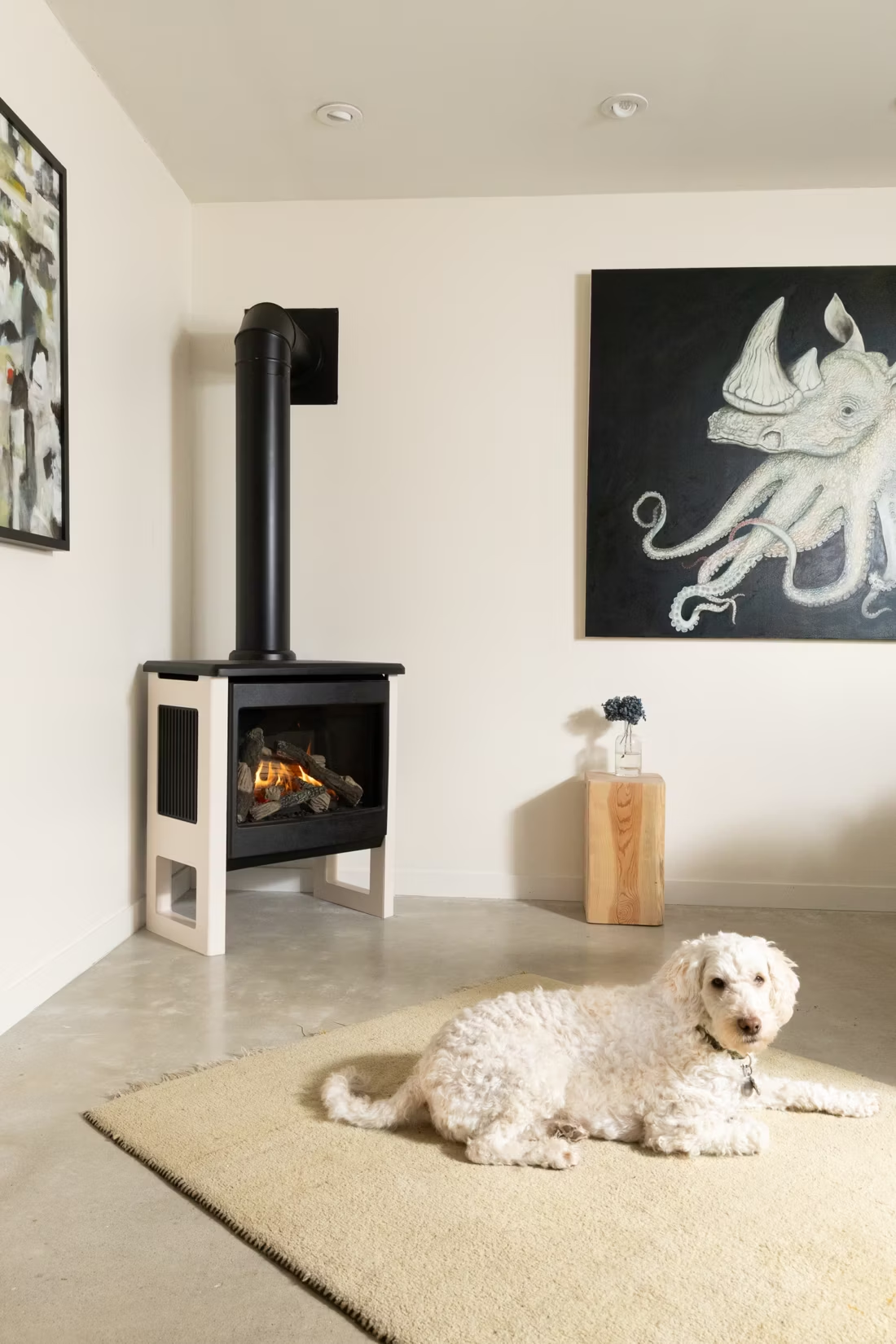
A gas fireplace is a fully built-in unit framed into a wall—the right call for new construction or a remodel without an existing hearth. A gas insert slides into an existing masonry firebox, which is the common upgrade path for Tega Cay's older wood-fireplace homes. A gas stove is a freestanding cabinet-style unit that sits on the floor, useful in rooms without any existing fireplace opening, like a converted sunroom or lake-view addition. Most Tega Cay projects lean toward inserts or built-in fireplaces, since freestanding stoves are less common in the area's newer housing stock.
Do I need a permit to install a gas fireplace in Tega Cay?
Generally yes—new gas fireplace installations require both a building permit and gas line work signed off through the local building department, and propane tank installations are typically permitted separately by the propane supplier. A licensed gas-fitter has to handle the actual gas connection regardless of which fuel you use. Most established hearth dealers in the Tega Cay and Fort Mill area coordinate all of this—the permit, the gas line, and the final inspection—as part of the installation, so it's rarely something the homeowner has to manage directly.
Are vent-free gas fireplaces allowed in South Carolina?
Yes—South Carolina permits vent-free gas fireplaces, unlike states such as California or Washington that restrict or ban them outright. Vent-free units burn fuel directly into the room and rely on oxygen depletion sensors and correct room sizing rather than exterior venting. Vented (direct-vent) units, by contrast, pull combustion air from outside and exhaust gases back outside through a sealed pipe. Given the Carolina Piedmont's humid summers, many local homeowners prefer direct-vent models anyway, since they don't add extra moisture to the living space. Either option is worth discussing with a local dealer based on your room and how the fireplace will be used.
How often should a gas fireplace be serviced in Tega Cay?
Once a year is the standard recommendation for any gas appliance, gas fireplace or insert included. A technician checks the burner, pilot assembly, gas connections, and venting, and cleans the glass and interior components. It's a lighter lift than annual wood-stove chimney sweeping, but skipping it is how pilot and ignition problems go unnoticed until the fireplace won't light on the first cold night of the season. Local hearth service providers typically charge $150 to $250 for this inspection.
Gas vs. electric fireplace—which makes more sense in Tega Cay?
Gas delivers real flame, real radiant heat, and enough output to take the edge off a cold snap in a living room or lake-view sunroom—a meaningful advantage during the handful of nights each winter when Tega Cay actually dips into the 20s. Electric fireplaces cost far less to install, need no gas line or venting at all, and run on power from Duke Energy Carolinas or York Electric Cooperative at roughly 13 to 14 cents per kWh, but they produce far less actual heat and are better suited to ambiance or zone warmth in a bedroom or office than to offsetting a furnace. For a primary living space where you actually want to feel the heat, gas tends to be the better investment here; for a quick, low-cost ambiance upgrade, electric is hard to beat.
Why is my open fireplace making my house colder?
Open fireplaces suck—literally. As the fire burns, it consumes air your furnace already paid to heat and pulls it out through the chimney, so the house is actually colder after the fire goes out than before you lit it. An insert fixes this: it seals the chimney, puts fixed glass across the front, and turns that hole in your house into a real heat source.
What does it take to replace an existing fireplace?
Fireplaces are like icebergs—bigger behind the wall than in front of it. Replacement means removing the surrounding tile or stone (the finish material laps onto the fireplace face), pulling the old unit, setting the new one in the same enclosure, and re-finishing the wall. A hearth professional can determine what's behind your wall without demolition during an in-home preview.
Does a fireplace add value to my home?
On average, a fireplace adds back to the home about the same amount you spent installing it. Add the monthly savings from heating the rooms you actually use instead of the whole house—often hundreds of dollars a year—and the value case is strong before you even count what a fire does for how your family uses the room.
Should the dealer who sells my fireplace also install it?
Ideally, yes. A fireplace project involves vent pipe, gas line, electrical, and often tile or stone. Hire three or four separate trades and you own the liability and the game of telephone between them. One company selling and installing means one accountable party, start to finish—ask about factory training, on-time completion records, and what happens if an inspection fails.
Nearby Dealers
Hearth shops serving Tega Cay and the surrounding area. Every listing shows whether it is a WhyFire partner, a dealer we have verified as authorized for the brands we recommend, or a local business carrying hearth products. No manufacturer pays for placement. How we verify dealers →
Home Flame
York County Natural Gas
Viridien Patio + Fireplace
High Country Fireplaces
Charlotte Grill Co.
Ron Steel Plumbing
EarthCore Industries
Owens Chimney Systems, Inc
Carolinas Stone Marble And Granite
Viridien Patio + Fireplace
Edisto Gas- Chester
Find your gas fireplace in Tega Cay.
Tell us a bit about your home and we'll put together a free Project Guide & Parts List—the right gas fireplace or insert, the vent kit it needs, and a trusted local dealer near Lake Wylie to install it.
Find Your Fireplace →