
Keep Your Family Warm and Safe—No Matter What
Wood isn't the default heating fuel in the Lowcountry, but it still has a place for ambiance and hurricane-season backup. See where it fits your home and connect with a trusted local dealer.
Every Project Starts From One of These Five Situations
Wood is the exception here, not the rule.
Summerville sits at just 53 feet of elevation in the South Carolina Lowcountry, with an average winter low around 34°F and only about 2,385 heating degree days a year. Compare that to a true wood-heat market like Buffalo, NY, which logs nearly three times as many heating degree days, and the picture is clear: most Summerville winters bring only a handful of nights anywhere near freezing. That's why wood—and pellet fuel, for that matter—are flagged as not-applicable in this climate zone. Electric heat pumps and gas are the two systems that actually carry the heating load here, and local building stock, insulation levels, and duct systems are designed around that assumption.
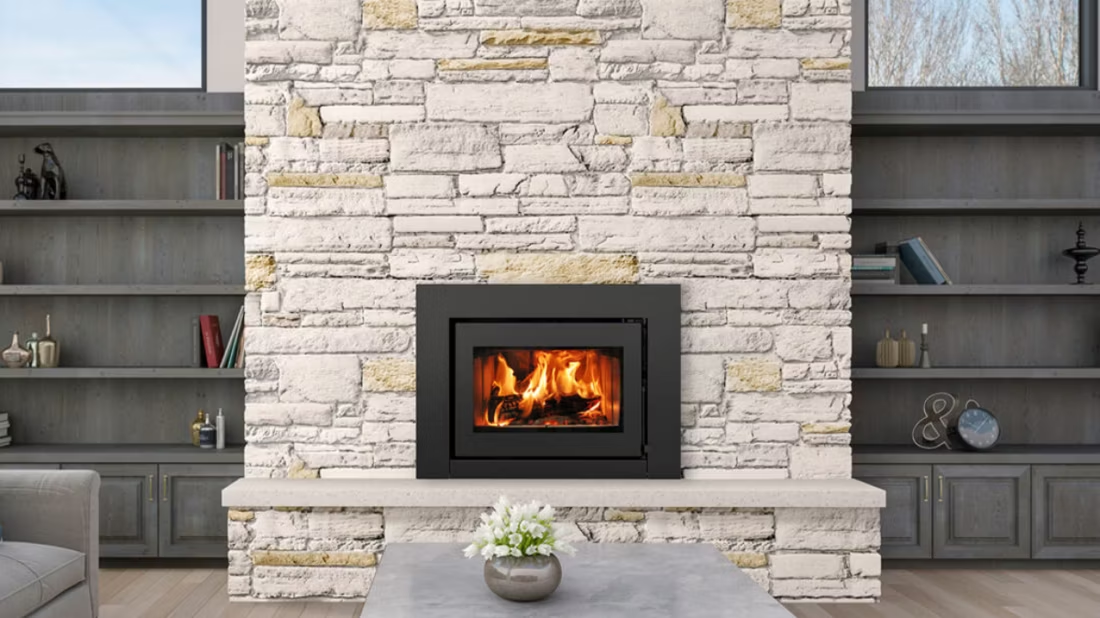
That doesn't mean wood heat has zero place in town. Summerville earned its nickname 'Flowertown in the Pines' from the longleaf pine forests that once supported a turpentine and lumber economy, and oak, pine, and hickory are still the woods you'll find from local tree services and small firewood sellers. Homeowners in Summerville's historic district with existing masonry fireplaces sometimes install a wood insert for the look and feel of a real fire on the rare cold snap, and a small number of rural Dorchester County homeowners keep a wood stove as backup heat for the ice storms that occasionally knock out power along with hurricane season outages. If that's you, a wood stove or insert can still be the right call—just go in knowing you're outside the mainstream, not following it.
Three steps. No salesperson until you're ready.
Tell us about your project
Your zip code, your situation, and the fuel you're leaning toward—or let the answers point you to one.
See what's actually available
The brands dealers within 100 miles genuinely carry—real options, never a catalog mirage.
Get your dealer & Project Guide
A trusted local dealer, plus the free Project Guide & Parts List that names every component of the job.
Frequently Asked Questions
Does a wood stove or fireplace actually make sense for a home in Summerville?
For most homes here, no—not as a primary heat source. With an average winter low around 34°F and roughly 2,385 heating degree days a year, Summerville's heating load is a fraction of what a wood-heat region like Duluth, MN sees. Where wood does make sense locally is as a secondary or ambiance install: a fireplace insert in an existing historic-district hearth, or a stove kept specifically as backup heat for the occasional ice storm power outage. If you're weighing wood purely to lower a heating bill, gas or an electric heat pump will almost always be the more practical call in this climate.
What does a wood stove installation cost in Summerville?
Because wood heat isn't a mainstream install here, pricing tends to run a bit wider than in cold-climate markets where installers do this work every week. Expect somewhere in the $3,500–$8,500 range for a freestanding stove with new Class A chimney venting, or less if you're inserting a unit into an existing masonry fireplace and reusing the flue with a stainless liner. Because there are fewer dedicated wood-hearth specialists in the Charleston-Summerville area than in a place like Buffalo or Duluth, it's worth getting more than one quote and confirming the installer has real wood-burning experience, not just gas or electric.
Do I need a permit to install a wood stove in Summerville or Dorchester County?
Yes. Whether your address falls under the Town of Summerville Building Services or Dorchester County Building Services, a new wood-burning appliance requires a building permit, and the stove itself needs to meet current EPA emissions standards. Inspectors will check hearth pad clearances, chimney height, and wall clearances just as they would anywhere else in the country—the fact that wood heat is uncommon here doesn't relax the code. A local installer familiar with the area will typically pull the permit as part of the job.
Why don't more homes in Summerville have wood stoves, compared to colder states?
It comes down to heating degree days. Summerville logs about 2,385 HDD per year; a genuine wood-heat market like Buffalo, NY logs closer to 7,000. In practical terms, a Summerville winter might deliver a few dozen nights where supplemental heat is welcome, while a Buffalo or Duluth winter delivers months of sustained cold where a wood stove can run daily for real fuel savings. That gap is why wood and pellet fuel are marked not-applicable for this climate zone, while gas and electric heat pumps carry the standard designation—they're simply better matched to how mild Lowcountry winters actually behave.
If the power goes out during a hurricane, would a wood stove actually help?
It can, but the scenario is narrower than it sounds. Lowcountry hurricanes typically knock out power during warm-to-mild weather, not deep cold, so a wood stove's main value during a tropical storm outage is cooking and hot water rather than warmth. Where a wood stove earns its keep is the occasional winter ice storm that takes down power lines along with a real cold snap—that combination is rare in Summerville, but not unheard of. If backup heat during outages is your main driver, weigh a wood stove against a standby generator paired with your existing gas or electric system, which covers more of the year's outage scenarios.
What firewood is actually available locally in Summerville?
Oak, pine, and hickory are the three species you'll most commonly find from local tree services, land-clearing operations, and small firewood sellers around Dorchester County. Oak and hickory season well and burn hot and long, making them the better choice for a stove used regularly. Pine is abundant given the area's longleaf pine heritage, but it burns faster and leaves more creosote, so it's better suited to kindling or occasional use than a primary fuel supply. Because there isn't the dense network of dedicated firewood suppliers you'd find in a true wood-heat state, expect to source from a rotating handful of local sellers rather than a year-round dedicated firewood market.
Can I install a wood insert into my home's existing fireplace in the historic district?
In many cases, yes—a number of older homes in Summerville's historic district have existing masonry fireplaces that are good candidates for a wood-burning insert, which reuses the existing chimney with a stainless liner rather than requiring new venting. Because the historic district has its own design review guidelines on top of standard Town of Summerville building permits, it's worth confirming with the building department whether any exterior work (like a new chimney cap or liner termination) needs additional sign-off before your installer starts. A local hearth dealer who's done historic-district work before can usually walk you through both approval steps at once.
How does a wood stove compare to gas or electric heat in Summerville?
Gas and electric are both standard, mainstream choices here, while wood is the outlier. Dominion Energy South Carolina serves electric customers at around 14.6 cents per kWh, and a heat pump sized for a Summerville home handles the area's modest 2,385 heating degree days efficiently without any fuel storage or ash cleanup. Gas fireplaces offer the same instant, thermostat-controlled convenience with the ambiance of a real flame. Wood, by comparison, requires fuel storage, regular loading, and chimney maintenance—a real commitment for a climate that only asks for supplemental heat a few dozen nights a year. Most homeowners here choose wood for the experience or for backup capability, not for the heating bill.
How often should a wood stove chimney be inspected in Summerville's humid climate?
Plan on an annual inspection regardless of how lightly the stove gets used—the Lowcountry's humidity actually creates its own set of chimney concerns beyond creosote, including moisture-related mortar deterioration and a higher chance of birds, wasps, or other pests nesting in an infrequently used flue. Because wood stoves here often see light, seasonal use rather than daily winter burns, it's worth having a chimney sweep confirm the flue is clear and the cap is intact before each cool season, even if the stove barely got used the year before.
Why won't my new wood stove get going like my old one?
New wood stoves are 70%+ efficient, so far less heat goes up the flue—which also means less draft to get a fire established. The rule: build a genuinely hot fire for about 45 minutes before you choke it down. Skip that and you get smoke in the room, creosote in the chimney, and a fire that never takes off. Most performance complaints trace straight back to this.
Why is my open fireplace making my house colder?
Open fireplaces suck—literally. As the fire burns, it consumes air your furnace already paid to heat and pulls it out through the chimney, so the house is actually colder after the fire goes out than before you lit it. An insert fixes this: it seals the chimney, puts fixed glass across the front, and turns that hole in your house into a real heat source.
How much should I budget for a fireplace?
For an average home—covering the fireplace, the vent pipe, and basic installation—a budget between $3,900 and $5,500 gives you a lot of options across wood, gas, and pellet. By the time you add finish work, gas line, and electrical, the average complete installation lands between $5,000 and $12,000 all-in. In a remodel or new build, a good rule is to put about 2.5% of the total project cost toward the fireplace.
Does a fireplace add value to my home?
On average, a fireplace adds back to the home about the same amount you spent installing it. Add the monthly savings from heating the rooms you actually use instead of the whole house—often hundreds of dollars a year—and the value case is strong before you even count what a fire does for how your family uses the room.
Nearby Dealers
Hearth shops serving Summerville and the surrounding area.
Find your wood fireplace in Summerville.
Tell us about your home and how you plan to use a wood stove or insert—ambiance, backup heat, or both—and we'll match you with a trusted local dealer and a free Project Guide & Parts List for your specific setup.
Find Your Fireplace →