
Ambiance and Warmth, No Chimney Required.
Simpsonville's mild Piedmont winters make electric fireplaces an easy, code-light way to add real warmth and glow to a room—no venting, no gas line, no masonry chimney needed.
Every Project Starts From One of These Five Situations
A mild climate built for electric heat.
Simpsonville sits in climate zone 3A at 872 feet of elevation, where winter lows average a mild 30°F and the whole season adds up to about 3,210 heating degree days—roughly a third of what a place like Burlington, VT logs in a typical winter. That mild profile is exactly why wood stoves and pellet stoves see so little demand here: almost no Simpsonville home needs a heat source that can run around the clock through a hard freeze. What most households actually want is something that takes the chill off a family room on a 35-degree January morning, and that's the job an electric fireplace does well.
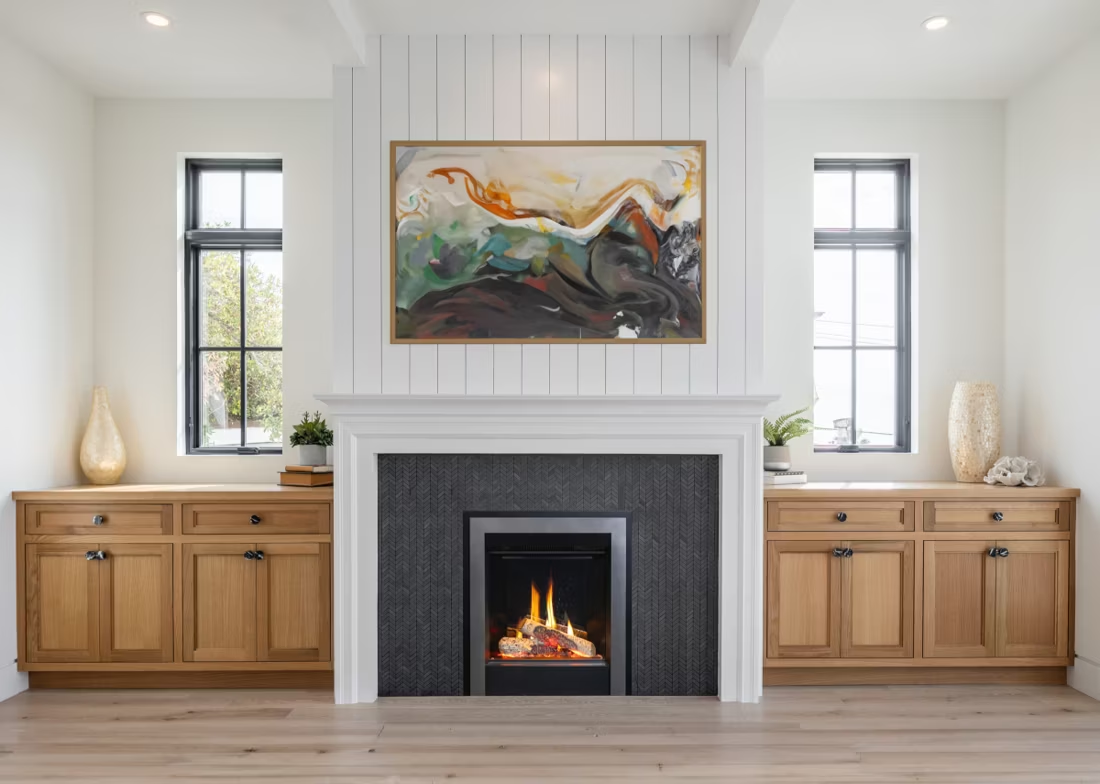
Much of the newer construction around Fairview Road, Five Forks, and the rest of fast-growing Simpsonville went up with drywall interior walls and no masonry chimney, which makes electric the simplest retrofit into an existing wall, mantel, or built-in cabinet. Duke Energy Carolinas serves the area at a residential rate of about 13.9 cents per kWh, so a typical 1,500-watt unit running on a cool evening costs roughly 20 cents an hour—cheap supplemental heat that pairs naturally with a home already running efficient central HVAC most of the winter. No flue, no gas line, and in most cases no building permit at all unless an electrician needs to add a dedicated circuit.
Three steps. No salesperson until you're ready.
Tell us about your project
Your zip code, your situation, and the fuel you're leaning toward—or let the answers point you to one.
See what's actually available
The brands dealers within 100 miles genuinely carry—real options, never a catalog mirage.
Get your dealer & Project Guide
A trusted local dealer, plus the free Project Guide & Parts List that names every component of the job.
Frequently Asked Questions
How much does it cost to install an electric fireplace in Simpsonville?
Costs vary a lot by unit type. A freestanding plug-in electric fireplace or stove runs $150 to $600 and needs no installation labor at all—just an outlet. A wall-mounted or insert-style unit set into an existing opening or new framed wall typically runs $800 to $2,500 once you factor in a licensed electrician for a dedicated 20-amp circuit, which most manufacturers require for full-size heater units. Custom built-ins with a mantel, surround, and cabinetry from a local finish carpenter can run $3,000 to $6,000 or more. Because there's no venting or gas line involved, electric remains the least expensive fireplace category to install in Simpsonville by a wide margin.
Do I need a permit to install an electric fireplace in Simpsonville?
In most cases, no. Because electric fireplaces don't require venting, a chimney, or a gas line, a simple plug-in or existing-outlet installation typically falls outside building permit requirements. Where a permit does come into play is the electrical work itself: if your unit needs a new dedicated circuit, a licensed electrician will pull an electrical permit through the City of Simpsonville or Greenville County Building Codes, depending on your address. Your dealer or electrician handles that paperwork as part of the job—it's not something you need to manage yourself.
How big of an electric fireplace do I need for my room?
Electric fireplaces are built as supplemental heat, not whole-home heating, so sizing is really about the room, not the square footage of the house. A standard 1,500-watt insert or wall unit comfortably takes the edge off a 300 to 400 square foot room in Simpsonville's mild winters. Larger great rooms or open-concept living areas common in newer Five Forks and Fairview construction may call for a wider unit with a higher BTU rating, or simply using the fireplace for ambiance while central HVAC carries the actual heat load. A local dealer can walk you through wattage and room size during a quick consultation.
Electric vs. gas fireplace—which is right for my Simpsonville home?
Gas fireplaces put out more real heat and work well in homes already plumbed for natural gas or with propane service, which makes sense for a primary living space or a home that genuinely needs backup heat during a cold snap. Electric wins on install simplicity and upfront cost—there's no gas line, no venting, and no combustion byproducts, which makes it the practical choice for condos, apartments near Woodruff Road, rental properties, or any interior wall without existing gas service. Given Simpsonville's short, mild heating season, plenty of homeowners here choose electric purely for the ambiance and light supplemental warmth rather than as a serious heat source.
Why don't more Simpsonville homes use wood or pellet stoves?
Wood and pellet heating is essentially a non-factor here. With only about 3,210 heating degree days a year and winter lows averaging 30°F, Simpsonville's climate doesn't create the sustained cold that makes cutting, hauling, and burning cordwood worth the effort for most households—unlike a genuinely cold-climate city where a wood stove might run daily for months. A handful of rural properties toward Fountain Inn or Woodside keep a wood stove for backup heat during ice storms, but for the vast majority of homeowners in Greenville County's Simpsonville area, electric or gas covers the need without the maintenance.
How much does it cost to run an electric fireplace here?
At Duke Energy Carolinas' residential rate of roughly 13.9 cents per kWh, a standard 1,500-watt electric fireplace on its heat setting costs about 21 cents per hour to run, or a little over $5 for an 8-hour evening cycle. Run it on flame-only mode with the heater off and the draw drops to just a few watts—essentially free ambiance. Because Simpsonville's heating season is short, most homeowners find the electric bill impact of a fireplace used a few evenings a week through winter is minor compared to central heating costs.
Are electric fireplaces safe around kids and pets?
Yes, and it's one of the main reasons families choose them. There's no open flame, no combustion gases, and no hot glass on most models—many units use LED flame effects behind a cool-touch panel, so curious hands or a cat walking across the mantel isn't a burn risk the way it would be with a wood or gas unit. Most also include a thermostat and auto shut-off timer. For a playroom, bedroom, or basement rec room in a Simpsonville home, electric is generally the lowest-risk fireplace option available.
Will my electric fireplace still work during a power outage?
No—since it runs entirely on Duke Energy's grid power, an electric fireplace goes dark the moment the power does, which does happen periodically along the I-385 corridor during summer thunderstorms or the occasional winter ice event. If backup heat during outages is a real concern for your household, a vented gas fireplace or a small propane heater is worth considering as a second appliance. Most Simpsonville homeowners treat electric as their everyday convenience unit and, if they want outage-proof heat, add gas or a generator setup separately.
What's the difference between an electric insert, mantel package, and wall-mounted unit?
An electric insert is built to slide into an existing fireplace opening—a good fit if you have an old masonry firebox you want to modernize without venting work. A mantel package pairs an electric firebox with a surrounding cabinet or mantel shelf, often used to create a fireplace feature in a room that never had one. A wall-mounted or built-in linear unit sits flush in a framed wall, popular in newer Simpsonville great rooms for a sleek, modern look. All three run on the same basic electric components; the choice mostly comes down to your existing layout and the look you want. A local dealer can show you real units in each category rather than guessing from photos online.
Can I put a TV above my fireplace?
Yes—with an asterisk. Fireplaces are hot and TVs don't like heat. Either put a mantel between them to deflect rising warmth, or choose a fireplace with heat-management technology that creates a cool zone on the wall above—the wall stays around 125 degrees, barely warm, while the room still gets full heat. If you like clean lines and don't want a mantel, heat management is the answer.
Do electric fireplaces actually produce heat?
Yes—most put out around 4,800–5,000 BTUs from a standard outlet, which comfortably warms a bedroom, office, or den as a comfort-zone heater. What they won't do is carry a whole house the way wood, gas, or pellet can. Think of electric as ambiance-first with honest supplemental heat: flames on with no heat in July, flames plus warmth in January.
How much should I budget for a fireplace?
For an average home—covering the fireplace, the vent pipe, and basic installation—a budget between $3,900 and $5,500 gives you a lot of options across wood, gas, and pellet. By the time you add finish work, gas line, and electrical, the average complete installation lands between $5,000 and $12,000 all-in. In a remodel or new build, a good rule is to put about 2.5% of the total project cost toward the fireplace.
Can a fireplace actually lower my heating bill?
Yes—by creating a comfort zone. A furnace heats every square foot of the house just to warm the one room you're in; a gas fireplace on low burns roughly a sixth of the gas a typical furnace does. Set the furnace around 55–60 degrees as a baseline, then heat the rooms your family actually uses. Families who heat this way commonly save $20–$60 a month.
Nearby Dealers
Hearth shops serving Simpsonville and the surrounding area.
Electric Service in Simpsonville
An electric fireplace's heater draws about 1,500 watts—pennies per hour at local rates.
Duke Energy Carolinas, LLC
Find your electric fireplace in Simpsonville.
Tell us about your room and budget, and we'll match you with a trusted local dealer who can show you what's actually available for your home—plus a free Project Guide & Parts List built for your Simpsonville project.
Find Your Fireplace →