
Electric warmth for Greenville County's mild winters—without the chimney.
With winter lows averaging around 30°F and no wood or gas venting required, electric fireplaces fit easily into Greenville County's booming mix of new-construction homes, condos, and townhomes. Find the right unit and connect with a trusted local dealer.
Every Project Starts From One of These Five Situations
A fast-growing Upstate embraces low-maintenance heat.
Greenville County sits in climate zone 3A with a mild winter heating season compared to much of the country, with winter lows averaging around 30°F. That's not a climate that demands a full wood-burning heating system; it's a climate where a fireplace is often about ambiance and supplemental warmth on the coldest nights, and electric units deliver both without a flue, a gas line, or a masonry chimney. With the county's population now over 787,000 and still climbing, the building boom in Five Forks, Verdae, downtown Greenville, Greer, and Simpsonville has produced no shortage of townhomes, condos, and new single-family builds where electric is the easiest fit.
There are no air quality restrictions on burning in Greenville County, so the pull toward electric here isn't regulatory—it's practical. Electric fireplaces plug into a standard outlet or a dedicated circuit, install in a fraction of the time of a vented unit, and work in spaces where a chimney simply isn't an option: high-rise condos downtown, HOA-restricted townhomes in Mauldin, finished basements, primary bedrooms, and sunrooms across Travelers Rest and Fountain Inn. A trusted local dealer can size the right unit for the room and handle any electrical work correctly—no big-box guesswork on circuit load or clearances.
Three steps. No salesperson until you're ready.
Tell us about your project
Your zip code, your situation, and the fuel you're leaning toward—or let the answers point you to one.
See what's actually available
The brands dealers within 100 miles genuinely carry—real options, never a catalog mirage.
Get your dealer & Project Guide
A trusted local dealer, plus the free Project Guide & Parts List that names every component of the job.
Frequently Asked Questions
How much does an electric fireplace installation cost in Greenville County?
Electric fireplaces are the most affordable fireplace type to install because there's no venting, chimney, or gas line involved. A basic plug-in insert or freestanding unit can be running the same day for a few hundred dollars in equipment. Built-in wall units or larger mantel-style electric fireplaces that need a dedicated 20-amp circuit typically run $1,500 to $2,500 once an electrician's labor is included—still well below the cost of a wood or gas installation in Greenville County. Local dealers can quote a firm number after seeing the room and the existing electrical panel capacity.
Do I need a permit to install an electric fireplace in Greenville County?
In most cases, no—because there's no venting, gas line, or structural chimney work, a plug-in or built-in electric fireplace generally doesn't trigger a building permit the way a wood or gas installation does. The exception is when new electrical work is required, such as running a dedicated circuit for a larger built-in unit; that work should be pulled and inspected by a licensed electrician per Greenville County code, even though the fireplace itself doesn't need a separate permit. A local dealer can tell you up front whether your chosen unit needs new wiring.
What size electric fireplace do I need for my home?
With Greenville County's relatively mild winter heating season and winter lows around 30°F, most homeowners are sizing for supplemental heat and visual impact rather than whole-home warmth. A 1,500-watt unit will comfortably heat a bedroom or den in the 300–400 square foot range; larger built-in electric fireplaces are often chosen for the look and ambiance in open-concept living rooms in newer Five Forks or Verdae builds, with the heating function used only on the coldest nights of the year. A local dealer can walk you through wattage and room size together.
Electric vs. wood—which is right for my Greenville County home?
Wood remains a strong option here—the region has plenty of oak, pine, and hickory, and Forest Service cutting permits through the Nantahala-Pisgah National Forests run about $20 per cord during the May-to-October season for homeowners willing to cut their own. Wood also keeps working during a power outage, which electric cannot do. But for condos, townhomes, HOA-governed communities, and homes where a chimney isn't feasible or desired, electric wins on convenience: no ash, no creosote, no annual chimney sweep, and instant on-off operation. Many Greenville County homeowners choose electric specifically because they want the look of a fireplace without taking on wood handling or venting.
Electric vs. gas—which should I choose?
Gas fireplaces in Greenville County deliver real, substantial heat output and can often run during a power outage with battery-backup ignition—a genuine advantage if you're relying on the fireplace for backup heat. Electric units can't produce that level of heat and require power to run, but they cost far less to install, need no gas line or venting, and can go anywhere in the house, including interior walls, upper-floor bedrooms, or rental units where gas work isn't an option. For a primary heat source, gas or wood typically makes more sense here; for ambiance, a focal point in a den or bedroom, or a rental/condo situation, electric is usually the practical choice.
What features matter most in an electric fireplace?
Flame realism varies a lot between brands—look for models with LED flame technology and adjustable brightness/speed settings rather than the flatter, older-style flame effects. Also check the heater's wattage and coverage rating against your actual room size, and whether the unit can run the flame effect with the heater off (useful in Greenville County's milder months when you want the look without added warmth). Brands commonly stocked by local dealers include Dimplex and Napoleon, both of which offer built-in, insert, and freestanding configurations.
Will my electric fireplace still work during a power outage?
No—electric fireplaces require power to run both the flame effect and the heater, so they go dark along with everything else during an outage. This is worth factoring in if you're in a part of Greenville County prone to storm-related outages and want a heat source you can rely on when the grid goes down; a wood stove or a gas unit with battery-backup ignition is a better fit for that specific need. Electric works well as a secondary or ambiance unit, not as an emergency heat plan.
Can I install an electric fireplace in a condo or rental in downtown Greenville?
Yes—this is one of the most common reasons homeowners and renters in downtown Greenville, Mauldin, and Simpsonville condos choose electric. Because there's no venting or gas line, most HOAs and landlords have no objection to a plug-in or wall-mounted electric fireplace, and many units can be installed without any permanent modification to the unit at all. Built-in models that require cutting into a wall for a recessed look do involve more commitment and should be cleared with the HOA or property manager first, but freestanding and mantel-style units are essentially move-in ready.
How much does it cost to run an electric fireplace in Greenville County?
Most electric fireplaces run on 1,500 watts on the heat setting, which costs roughly 15 to 25 cents an hour to operate at typical Duke Energy residential rates—a few dollars for an evening's use. Run with just the flame effect and no heat, the cost drops to a fraction of a cent per hour since only the LED lighting draws power. That low operating cost is part of why electric units are popular here as everyday ambiance pieces rather than something reserved for the coldest nights.
Can I put a TV above my fireplace?
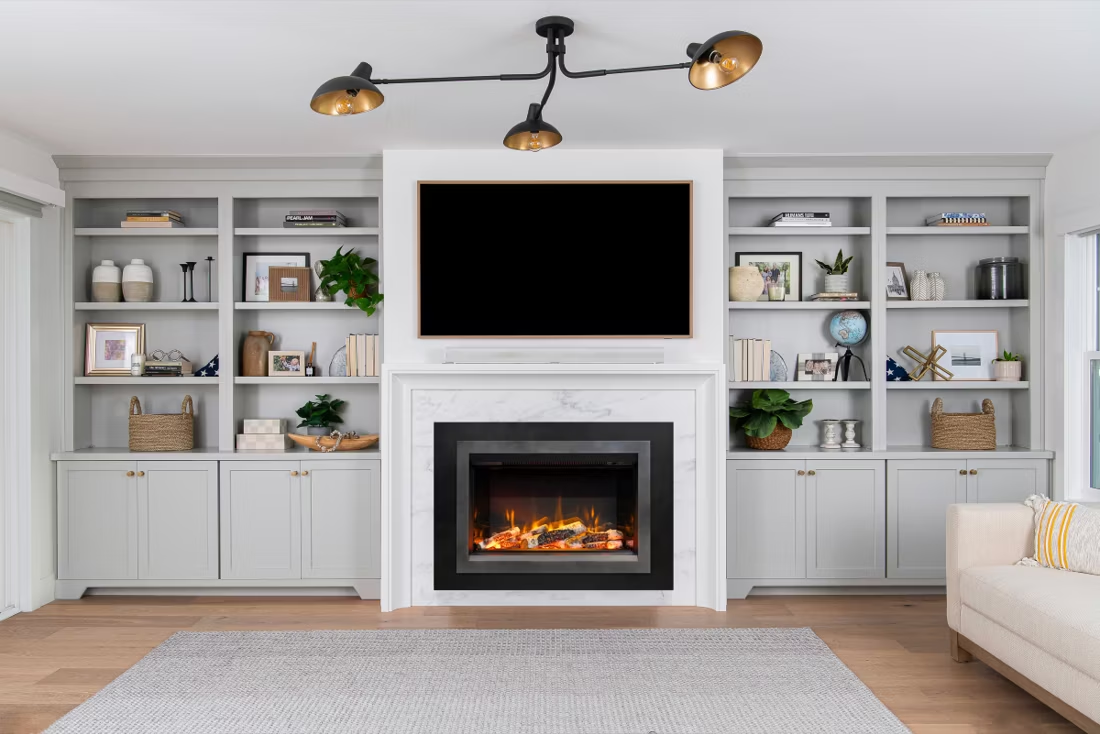
Yes—with an asterisk. Fireplaces are hot and TVs don't like heat. Either put a mantel between them to deflect rising warmth, or choose a fireplace with heat-management technology that creates a cool zone on the wall above—the wall stays around 125 degrees, barely warm, while the room still gets full heat. If you like clean lines and don't want a mantel, heat management is the answer.
Do electric fireplaces actually produce heat?
Yes—most put out around 4,800–5,000 BTUs from a standard outlet, which comfortably warms a bedroom, office, or den as a comfort-zone heater. What they won't do is carry a whole house the way wood, gas, or pellet can. Think of electric as ambiance-first with honest supplemental heat: flames on with no heat in July, flames plus warmth in January.
Can a fireplace actually lower my heating bill?
Yes—by creating a comfort zone. A furnace heats every square foot of the house just to warm the one room you're in; a gas fireplace on low burns roughly a sixth of the gas a typical furnace does. Set the furnace around 55–60 degrees as a baseline, then heat the rooms your family actually uses. Families who heat this way commonly save $20–$60 a month.
Does a fireplace add value to my home?
On average, a fireplace adds back to the home about the same amount you spent installing it. Add the monthly savings from heating the rooms you actually use instead of the whole house—often hundreds of dollars a year—and the value case is strong before you even count what a fire does for how your family uses the room.
Stove and Fireplace Dealers in Greenville County
Listings include WhyFire partner dealers, dealers we have verified as authorized for the brands we recommend, and established local businesses that carry hearth products. Every listing shows which one it is. The ones marked Preferred run on WhyFire's software, so they can show you real pricing and book your appointment right here. No manufacturer pays for placement. How we verify dealers →
Viridien Patio + Fireplace
Craft Stove Store And Patio
Buchanan Fire And Outdoor
Chim Cheree Chimney Sweep
Foothills Propane
Superior Plus Propane D/b/a Freeman Gas - Spartanburg
Find your electric fireplace in Greenville County.
Tell us a bit about your home and we'll match you with a trusted local dealer and send over a free Project Guide & Parts List—the exact unit, any electrical work needed, and a recommended installer for your Greenville County project.
Find Your Fireplace →