
Keep Your Family Warm and Safe—No Matter What
Wood heat is uncommon in Greenville County's mild winters, but it still shows up in mountain cabins, backup-heat setups, and homes chasing real fireside ambiance. Find out if it fits your situation, and connect with a local dealer who actually installs it.
Every Project Starts From One of These Five Situations
A mild Upstate climate where wood is more accent than necessity.
Mauldin sits in Greenville County's Upstate region at just over 900 feet elevation, in climate zone 3A. Winter lows average around 30°F, and the city logs roughly 3,337 heating degree days a year—a fraction of what a place like Duluth, Minnesota racks up in a single season. Most Mauldin homes are built and heated around that reality: a heat pump or gas system carries the load, and a fire in December is more often a Saturday-night choice than a survival necessity.
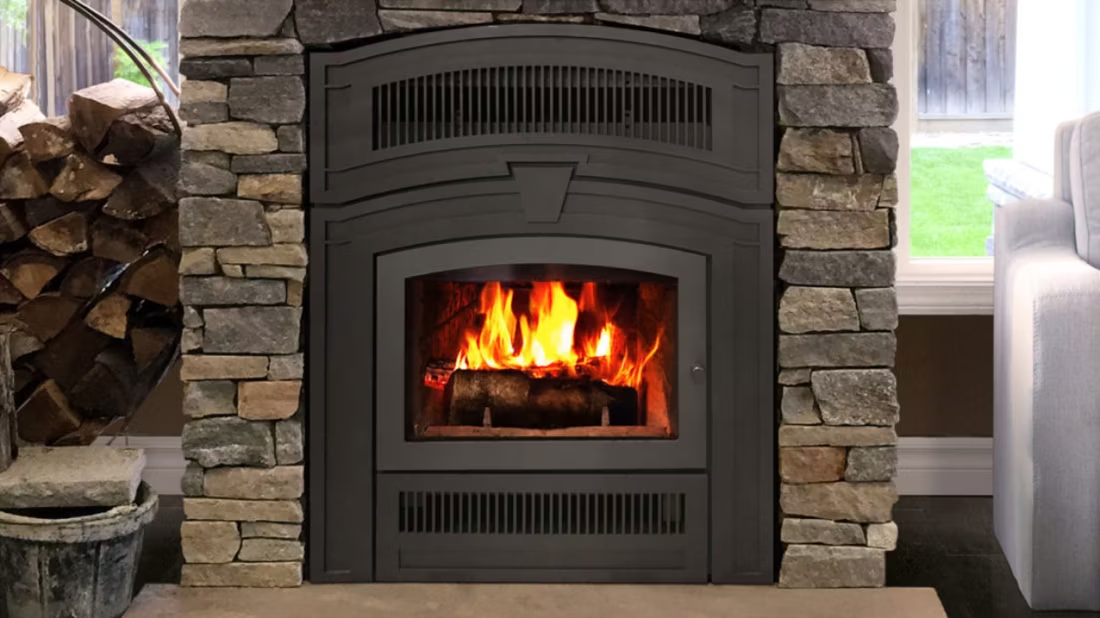
That doesn't mean wood heat is absent—it's just a smaller, more deliberate category here. Homeowners who install a wood-burning stove or insert in Mauldin usually fall into a handful of groups: people who want the radiant heat and ambiance of a real fire on the coldest nights of the year, families who want power-independent backup for the ice storms that occasionally knock out Duke Energy Carolinas service in the Upstate, and second-home owners with a cabin up toward the Blue Ridge foothills or the Nantahala-Pisgah National Forests, where wood heat is far more standard. Local firewood runs mostly oak, hickory, and pine—hardwoods that split and season well through South Carolina's humid summers.
Firewood Cutting Permits Near Mauldin
Three steps. No salesperson until you're ready.
Tell us about your project
Your zip code, your situation, and the fuel you're leaning toward—or let the answers point you to one.
See what's actually available
The brands dealers within 100 miles genuinely carry—real options, never a catalog mirage.
Get your dealer & Project Guide
A trusted local dealer, plus the free Project Guide & Parts List that names every component of the job.
Frequently Asked Questions
Does a wood stove even make sense in Mauldin's climate?
For most Mauldin homes, no—not as a primary heat source. With winter lows averaging around 30°F and only about 3,337 heating degree days a year, a heat pump or gas system easily handles the season without help. Where wood does make sense is as a secondary or occasional-use setup: a stove or insert for the handful of nights each winter that dip into the 20s, for backup heat when an ice storm takes down power lines, or simply for the experience of a real fire. If you're weighing wood purely on heating economics for a Mauldin home, gas or electric will usually pencil out better.
How much does a wood stove installation cost in Mauldin?
Because wood-burning installs are relatively rare in Greenville County compared to gas conversions, there isn't a large enough local sample to quote a Mauldin-specific range with confidence—but nationally, a freestanding wood stove with new Class A chimney venting typically runs $3,500 to $8,000, and an insert into an existing masonry fireplace runs a bit less if the chimney is already sound. A hearth dealer serving the Greenville/Mauldin area can give you a firm number once they've seen your chimney or lack of one—new construction without an existing flue tends to land on the higher end.
Who actually installs wood stoves around Mauldin?
Since wood heat isn't the default fuel in the Upstate, not every hearth shop in the Greenville metro handles it regularly—many local retailers lean heavily toward gas and electric because that's what the climate and customer demand support. Look specifically for a dealer who lists wood stoves and inserts in their product line and can speak to NFI (National Fireplace Institute) certified installation. A shop that installs wood systems a few times a month, not a few times a year, will know clearance rules and chimney sizing cold.
What firewood is available locally in Mauldin?
Oak, hickory, and pine are the common species around Greenville County. Oak and hickory are the better choice for a stove—they're dense, burn long, and produce solid coal beds for overnight heat. Pine is plentiful and cheap but burns faster and leaves more resin-based creosote, so it needs more frequent chimney cleaning if it's your main fuel. Most Mauldin wood-stove owners buy seasoned oak or hickory by the rick or cord from local sellers rather than cutting their own, since there's no national forest land immediately inside Greenville County.
Can I cut my own firewood near Mauldin?
Not within the immediate Mauldin area—there's no national forest land in Greenville County itself. The nearest public-land cutting permits are through the Nantahala-Pisgah National Forests, roughly two hours northwest into the North Carolina mountains, where personal-use permits run about $20 per cord during the May-to-October cutting season. For most Mauldin homeowners, buying seasoned oak or hickory locally is simpler than making that drive, though it's a common option for anyone who also owns a cabin near the Blue Ridge.
Do I need a permit to install a wood stove in Mauldin?
Yes—new wood-burning stove and insert installations require a building permit, handled through Greenville County or City of Mauldin building codes depending on your address. The permit process covers hearth clearance, chimney specs, and confirming the unit meets current EPA emissions standards. A dealer who installs wood systems regularly will typically pull this permit for you as part of the job, which is one more reason to work with someone who does wood installs routinely rather than occasionally.
Wood stove or gas fireplace—which fits a Mauldin home better?
For most Mauldin homeowners, gas wins on convenience and fits the climate better: instant on-off heat, no wood handling, and no chimney sweeping, which matters in a market where gas fireplaces are the standard hearth product. Wood wins in one specific scenario—you want heat that keeps working when the power is out. Duke Energy Carolinas service in the Upstate is generally reliable, but ice storms do occasionally cause multi-day outages, and a wood stove is the one common hearth appliance that doesn't need electricity to produce heat. If backup capability matters to you more than daily convenience, wood is worth the extra chimney maintenance.
Is a wood stove a good backup-heat option during Upstate ice storms?
Yes, and it's one of the more practical reasons Mauldin homeowners choose wood over gas or electric. Ice storms in the Upstate can down power lines and knock out Duke Energy Carolinas service for a day or more, and a heat pump or electric-ignition gas unit won't run without power. A wood stove or insert keeps producing heat regardless of grid status, which is why some homeowners install one specifically as an emergency-heat plan even if they rarely burn it during a normal winter.
I have a cabin near the mountains—does that change the wood stove decision?
It often does. A number of Mauldin and Greenville-area residents also own a second property up toward the Blue Ridge foothills or closer to the Nantahala-Pisgah National Forests, where winters are colder and wood heat is far more standard than it is in Mauldin proper. If that's your situation, sizing and installing a wood stove for the mountain property is a much more straightforward call than installing one at your primary Mauldin residence—the colder elevation and higher heating degree days there actually justify wood as a real heat source, not just a backup or ambiance choice.
What's the difference between an insert and a zero-clearance fireplace?
An insert is a fireplace that slides into a pre-existing wood-burning fireplace—if you don't have one, there's nothing to insert it into. A zero-clearance fireplace is built into a framed wall, which makes it the answer for remodels and new construction. Simple test: existing masonry fireplace means insert; blank or framed wall means zero-clearance.
Why is a fireplace insert so efficient?
An insert does two things: it seals the chimney completely, so you stop losing air you already paid to heat, and it radiates warmth into the room through the firebox and glass. Most add a heat-exchange fan that pulls cool room air underneath, wraps it around the hot firebox, and pushes it back out warm. Your home is more efficient before you've even lit the first fire.
Can a fireplace actually lower my heating bill?
Yes—by creating a comfort zone. A furnace heats every square foot of the house just to warm the one room you're in; a gas fireplace on low burns roughly a sixth of the gas a typical furnace does. Set the furnace around 55–60 degrees as a baseline, then heat the rooms your family actually uses. Families who heat this way commonly save $20–$60 a month.
How much should I budget for a fireplace?
For an average home—covering the fireplace, the vent pipe, and basic installation—a budget between $3,900 and $5,500 gives you a lot of options across wood, gas, and pellet. By the time you add finish work, gas line, and electrical, the average complete installation lands between $5,000 and $12,000 all-in. In a remodel or new build, a good rule is to put about 2.5% of the total project cost toward the fireplace.
Nearby Dealers
Hearth shops serving Mauldin and the surrounding area. Every listing shows whether it is a WhyFire partner, a dealer we have verified as authorized for the brands we recommend, or a local business carrying hearth products. No manufacturer pays for placement. How we verify dealers →
Viridien Patio + Fireplace
Craft Stove Store And Patio
Buchanan Fire And Outdoor
Chim Cheree Chimney Sweep
Foothills Propane
Superior Plus Propane D/b/a Freeman Gas - Spartanburg
Find your wood stove in Mauldin, SC.
Tell us about your home—or your cabin up in the mountains—and we'll match you with a local dealer who actually installs wood-burning stoves and inserts, plus a free Project Guide & Parts List with the exact venting and parts your install needs.
Find Your Fireplace →