
Keep Your Family Warm and Safe—No Matter What
With an average winter low of 35°F and a winter heating season that's short and mild, Lexington doesn't demand a wood-burning primary heat source the way a place like Duluth or Burlington does. That doesn't mean a stove or fireplace insert is a bad idea here—it means the reasons for wanting one are different, and I'll help you match with a local dealer who understands that.
Every Project Starts From One of These Five Situations
Here, wood stoves are the exception, not the rule.
Lexington sits at just 311 feet of elevation in South Carolina's Midlands, in climate zone 3A, where winters are short and mild compared to almost anywhere wood heat is considered essential. Lexington's winter heating load is a fraction of what a colder-climate town like Bismarck ND or Minneapolis MN racks up, and most Lexington homes are built and heated around that reality—central heat pumps and gas do the heavy lifting through what's usually a handful of genuinely cold weeks in January and February. A wood stove is rarely anyone's only heat source here.
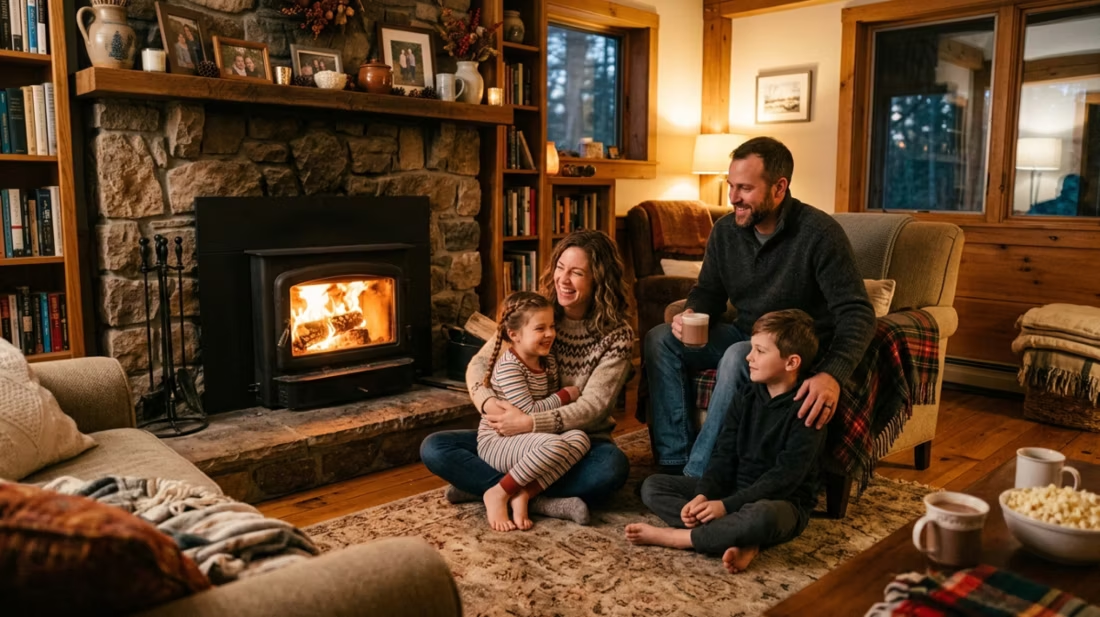
That said, wood heat isn't absent from Lexington—it's just purposeful. Oak, pine, and hickory grow throughout the Midlands and are the species most commonly split for backyard fire pits and the occasional stove, usually sourced from local tree services and land-clearing crews rather than a forest permit system, since there's no significant public timberland with cutting permits near the city the way there is out west. The homeowners who do install a wood stove or fireplace insert here tend to have one of two reasons: they want a real backup heat source for the ice storms that occasionally knock out power across Lexington County, or they simply want the ambiance of a real fire in a den or living room alongside their existing Dominion Energy South Carolina-powered heat pump. Either reason is legitimate—it's just a smaller, more deliberate market than in a heating-dominant climate.
Three steps. No salesperson until you're ready.
Tell us about your project
Your zip code, your situation, and the fuel you're leaning toward—or let the answers point you to one.
See what's actually available
The brands dealers within 100 miles genuinely carry—real options, never a catalog mirage.
Get your dealer & Project Guide
A trusted local dealer, plus the free Project Guide & Parts List that names every component of the job.
Frequently Asked Questions
Does a wood stove even make sense for a home in Lexington?
For most Lexington homes, a heat pump handles the winter without much trouble, since the average low here is only 35°F and the truly cold stretches are short. So a wood stove isn't a necessity the way it would be in a colder-winter market. Where it does make sense is as a backup heat source for ice-storm power outages, which do happen in the Midlands most winters, or as an ambiance feature for a den or great room. If either of those matches what you want, a stove or insert is a reasonable, if less common, choice here.
How much does it cost to install a wood stove in Lexington?
Because wood heat is a smaller niche in this market than in colder climates, installers here don't quote it as routinely as they do heat pumps or gas logs, but the underlying cost drivers are the same everywhere: a stove or insert going into an existing masonry chimney costs meaningfully less than a freestanding stove that needs a new Class A chimney run through a wall or roof. Expect a wide range depending on that distinction, plus the cost of the stove itself—get a firm number from a local dealer who can look at your specific chimney situation or lack of one.
What kind of firewood is available locally in Lexington?
Oak and hickory are the two hardwoods most Midlands burners look for, since they season well and put out solid heat for the occasional cold snap or outage. Pine is also common and dries faster, but it burns hotter and faster with more resin, so it's often used as a starter wood or mixed in rather than relied on alone. Because there's no large public forest land near Lexington with a cutting-permit system, most homeowners buy split, seasoned wood from local tree services or firewood dealers rather than cutting their own.
Do I need a permit to install a wood stove in Lexington?
Yes—any new wood stove or insert installation in Lexington or unincorporated Lexington County requires a building permit through your local municipal or county building department, and the unit itself needs to meet current EPA emissions standards. A reputable local hearth dealer typically handles that permit as part of the install, which is worth confirming up front since wood installs are less routine here than gas or electric work.
Why don't more homes in Lexington use wood as a heat source?
It comes down to the climate math: with a mild winter heating load and a 35°F average winter low, Lexington simply doesn't have enough cold-weather demand to make wood a practical primary heat source for most households. Heat pumps handle the mild swings efficiently, and most new construction in the area is built around central HVAC rather than a hearth. Wood heat here tends to be a deliberate secondary choice—for backup during outages or for the atmosphere of a real fire—rather than the default.
Is a wood stove a good backup heat source during a power outage?
Yes, and this is one of the strongest practical arguments for wood heat in Lexington. Ice storms periodically knock out power across Lexington County for extended stretches in winter, and a wood stove keeps working when your heat pump and Dominion Energy South Carolina service don't. If outage resilience is your main reason for considering wood heat, a freestanding stove with no electronic components tends to be the simplest, most dependable option—no auger, no blower, no battery to worry about.
How often should a wood stove or chimney be inspected in Lexington?
Even with light, occasional use, an annual inspection before the first cold snap—typically sometime in October or November here—is still the right call, per Chimney Safety Institute of America guidance. Infrequent burning doesn't eliminate creosote buildup, and a stove that mostly sits idle between ice storms and cool evenings needs the same pre-season check as one that runs daily in a colder climate, if not more attention given how rarely it's exercised.
Should I get a wood stove or a gas or electric fireplace instead?
For most Lexington homeowners who just want supplemental ambiance and convenient heat on a mild winter evening, a gas or electric fireplace is simpler—no wood storage, no ash cleanup, and instant on-off operation. Wood only pulls ahead if you specifically want a heat source that works without electricity during an ice-storm outage, since gas fireplaces with standard ignition and all electric units depend on grid power. If outage backup isn't a priority for you, a gas or electric option is usually the better fit for this climate.
Where do people in Lexington get firewood if there's no nearby national forest?
Unlike parts of the country where a national forest issues cheap cutting permits, the Midlands around Lexington doesn't have that kind of accessible public timberland, so most local wood comes from tree removal companies, land-clearing operations, and dedicated firewood dealers selling seasoned oak, pine, and hickory by the truckload or rick. It's a more retail-driven supply chain than the permit-based systems you'd find out west, so pricing and availability are worth checking seasonally with a couple of local suppliers before you commit to a stove that size.
Why is my open fireplace making my house colder?
Open fireplaces suck—literally. As the fire burns, it consumes air your furnace already paid to heat and pulls it out through the chimney, so the house is actually colder after the fire goes out than before you lit it. An insert fixes this: it seals the chimney, puts fixed glass across the front, and turns that hole in your house into a real heat source.
What's the difference between an insert and a zero-clearance fireplace?
An insert is a fireplace that slides into a pre-existing wood-burning fireplace—if you don't have one, there's nothing to insert it into. A zero-clearance fireplace is built into a framed wall, which makes it the answer for remodels and new construction. Simple test: existing masonry fireplace means insert; blank or framed wall means zero-clearance.
Can a fireplace actually lower my heating bill?
Yes—by creating a comfort zone. A furnace heats every square foot of the house just to warm the one room you're in; a gas fireplace on low burns roughly a sixth of the gas a typical furnace does. Set the furnace around 55–60 degrees as a baseline, then heat the rooms your family actually uses. Families who heat this way commonly save $20–$60 a month.
How much should I budget for a fireplace?
For an average home—covering the fireplace, the vent pipe, and basic installation—a budget between $3,900 and $5,500 gives you a lot of options across wood, gas, and pellet. By the time you add finish work, gas line, and electrical, the average complete installation lands between $5,000 and $12,000 all-in. In a remodel or new build, a good rule is to put about 2.5% of the total project cost toward the fireplace.
Nearby Dealers
Hearth shops serving Lexington and the surrounding area.
Get your free Project Guide & Parts List for a wood stove in Lexington.
Tell me about your home, whether you already have a working chimney, and what you're hoping the stove will do—ambiance, outage backup, or both—and I'll match you with a trusted local dealer and send a free Project Guide & Parts List with the right vent kit and parts specified for your project.
Find Your Fireplace →