
Gas Fireplace Warmth for Lancaster's Mild Winters.
Instant, clean-burning heat and year-round ambiance for Piedmont South Carolina homes. Get matched with a trusted local dealer who knows what actually installs well here.
Every Project Starts From One of These Five Situations
Ambiance-first heat for a mild Piedmont climate.
Lancaster sits in climate zone 3A at just 456 feet of elevation, with an average winter low around 33 degrees and only about 2,872 heating degree days a year. That's a fraction of what a place like Burlington, VT sees each winter, which means home heating here is rarely a survival issue—it's about comfort, ambiance, and taking the chill off a January evening in the living room. Gas fireplaces fit that role well: instant flame, no wood to split or stack, and the kind of steady radiant warmth that makes a family room feel finished.
There's no natural gas utility serving Lancaster in the data we track, so most gas fireplace installs in town run on propane rather than piped natural gas. Duke Energy Carolinas and Lynches River Electric Cooperative cover electric service, and a fair number of Lancaster homeowners pair a propane fireplace with electric baseboard or heat pump systems—the propane unit becomes the go-to during ice storms or the occasional tropical remnant that knocks out power for a day or two. A local dealer will know which propane suppliers serve your specific zip code and whether a tank is already in place.
Three steps. No salesperson until you're ready.
Tell us about your project
Your zip code, your situation, and the fuel you're leaning toward—or let the answers point you to one.
See what's actually available
The brands dealers within 100 miles genuinely carry—real options, never a catalog mirage.
Get your dealer & Project Guide
A trusted local dealer, plus the free Project Guide & Parts List that names every component of the job.
Frequently Asked Questions
How much does a gas fireplace installation cost in Lancaster?
Most propane fireplace and insert installations in the Lancaster area run somewhere between roughly $3,000 and $7,500, depending on the unit, whether a propane tank is already on the property, and how much venting or framing work is involved. A propane insert going into an existing masonry firebox with a tank already installed tends to land on the lower end. New construction, a fresh tank setup, or a built-in fireplace requiring framing and venting from scratch pushes toward the higher end. A local dealer can give you a firm number after seeing your fireplace or the space you're building into.
Does Lancaster have natural gas, or do I need propane?
Lancaster doesn't have a natural gas utility serving the area the way larger nearby markets like Charlotte do, so propane is the standard fuel for gas fireplaces here. That means either an existing propane tank on your property or a new tank installed by a local propane supplier—above-ground tanks are common for residential fireplace use and don't require the excavation work a buried tank does. Nearly every gas fireplace and insert on the market can be configured to run on propane; your installer sets the correct orifice and regulator for the fuel you're using.
Can I convert my existing wood-burning fireplace to gas?
Yes, and it's a common project on the many older homes around Lancaster built with traditional masonry fireplaces originally meant for oak, pine, or hickory. A propane insert typically slides into that existing firebox with a stainless liner run up the chimney, so you keep the look of your existing hearth while gaining instant on-off heat and losing the ash and creosote upkeep. Expect the conversion itself to run in a similar $3,000-$6,500 range, with the total depending on whether a propane tank needs to be added to the property.
Will my gas fireplace still work if the power goes out?
Most gas fireplaces with a standing pilot or IPI (intermittent pilot ignition) system will still light and run during a Duke Energy or Lynches River outage, since the flame itself doesn't depend on grid power—units with IPI use a small battery backup that kicks in automatically. Given that this part of South Carolina occasionally sees ice storms and tropical-system remnants knock out power for a day or more, that battery backup is worth confirming on any unit you're considering. Some manufacturers, like Valor, generate their own power off the pilot's thermocouple and skip batteries entirely—ask your local dealer which ignition system a given model uses.
What's the difference between a gas fireplace, gas insert, and gas stove?
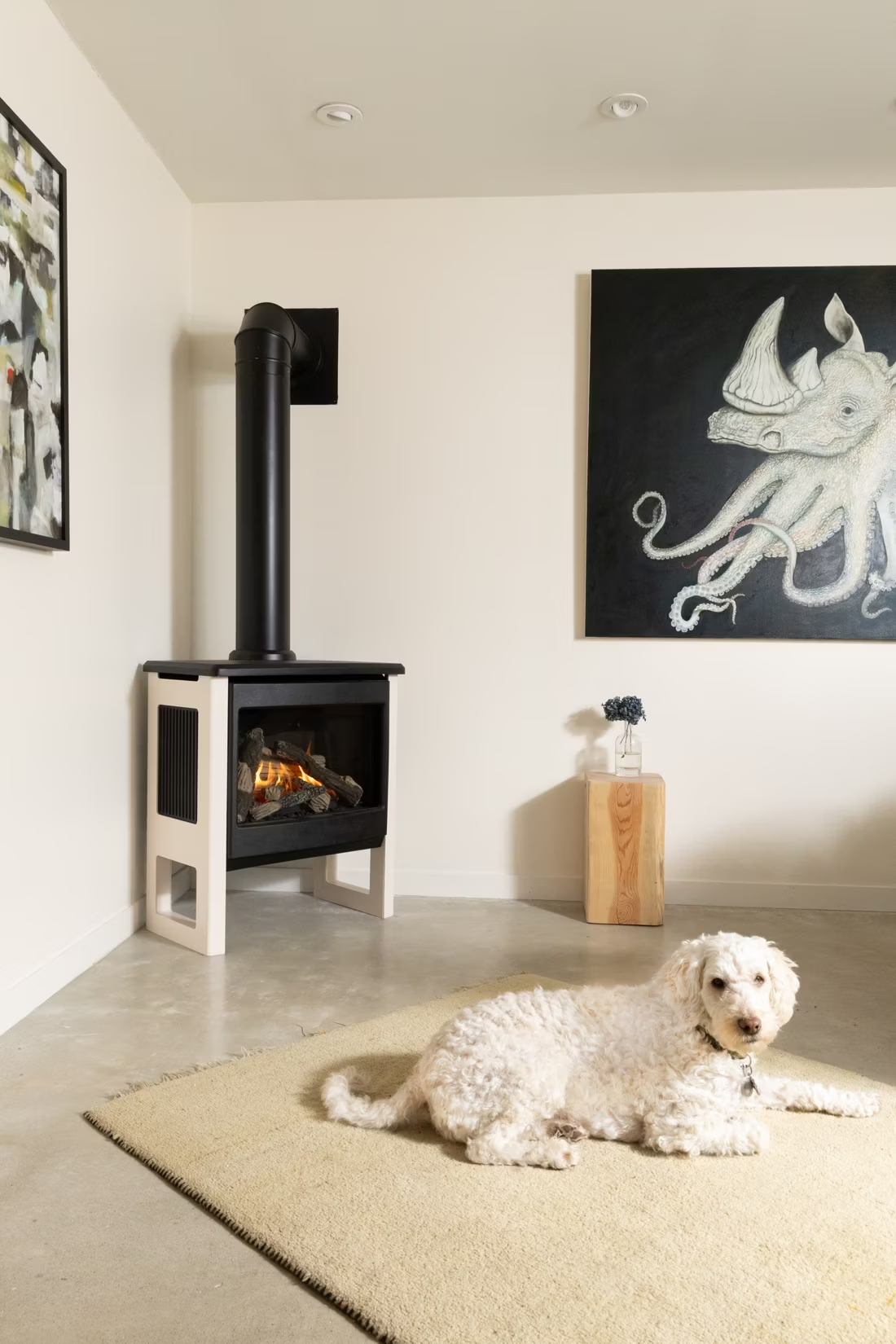
A gas fireplace is a fully built-in unit framed into a wall—the right choice for new construction or a remodel where there's no existing fireplace. A gas insert is sized to slide into an existing masonry firebox, sealing it up and venting through the existing chimney with a liner, which is the common route for Lancaster's older homes with traditional wood fireplaces. A gas stove is a freestanding cast-iron or steel unit that sits out in the room like a wood stove but runs on propane. For most Lancaster homeowners upgrading an existing fireplace, an insert is the simplest and most cost-effective path.
Do I need a permit to install a gas fireplace in Lancaster?
Generally yes—Lancaster County's building codes department requires a permit for gas appliance installations, and any propane line or tank connection has to be run by a licensed gas fitter or propane technician. Most established local hearth dealers fold this into the installation quote and pull the permit for you, coordinating the propane supplier, the gas line, and the final inspection so you're not managing multiple contractors yourself.
Should I get a vented or vent-free gas fireplace?
Vented (direct-vent) gas fireplaces pull combustion air from outside and exhaust it back outside through sealed venting, which keeps combustion byproducts out of the house entirely. Vent-free units burn directly into the room and are legal in South Carolina with the right room-sizing and oxygen-depletion safety features, and some Lancaster homeowners like them for supplemental rooms since there's no venting to install. Still, for a primary living space, direct-vent units are the more universally recommended option—they deliver real heat output without any tradeoff on indoor air quality. A local dealer can walk you through both for your specific room.
How often does a gas fireplace need servicing?
An annual inspection is the standard recommendation for any gas fireplace or insert—checking the burner, pilot assembly, venting, and gas connections, plus cleaning the glass and interior. This runs considerably less involved than wood chimney sweeping and typically costs $125 to $200 in the Lancaster area. Given the mild climate here, many units see lighter seasonal use than they would farther north, but the annual check still matters for safety, especially on propane systems.
Is wood or gas the better choice for a Lancaster home?
Wood-burning fireplaces exist around Lancaster—oak, pine, and hickory are all common firewood in this part of the Piedmont—but with only about 2,872 heating degree days a year and mild winter lows in the low 30s, wood heat here tends to be occasional and ambiance-driven rather than a primary heat source the way it is in colder climates. Gas, particularly propane, fits Lancaster's climate better for most households: instant on-off operation, no wood storage or ash cleanup, and reliable warmth for the handful of genuinely cold nights each winter. Homeowners who specifically want the crackle and smell of a real wood fire for occasional use should still talk to a local dealer about wood options, but gas is the more practical everyday choice here.
Why is a fireplace insert so efficient?
An insert does two things: it seals the chimney completely, so you stop losing air you already paid to heat, and it radiates warmth into the room through the firebox and glass. Most add a heat-exchange fan that pulls cool room air underneath, wraps it around the hot firebox, and pushes it back out warm. Your home is more efficient before you've even lit the first fire.
What does it take to replace an existing fireplace?
Fireplaces are like icebergs—bigger behind the wall than in front of it. Replacement means removing the surrounding tile or stone (the finish material laps onto the fireplace face), pulling the old unit, setting the new one in the same enclosure, and re-finishing the wall. A hearth professional can determine what's behind your wall without demolition during an in-home preview.
Can a fireplace actually lower my heating bill?
Yes—by creating a comfort zone. A furnace heats every square foot of the house just to warm the one room you're in; a gas fireplace on low burns roughly a sixth of the gas a typical furnace does. Set the furnace around 55–60 degrees as a baseline, then heat the rooms your family actually uses. Families who heat this way commonly save $20–$60 a month.
Can I install a fireplace myself?
If you're putting a fire in your house on purpose, it's best to work with an expert. Unless you're genuinely experienced in framing, gas line, vent pipe, and the national code on clearances to combustibles, have a professional do it—and ideally the same company that sells you the fireplace, so warranty, service, and liability all live under one roof.
Nearby Dealers
Hearth shops serving Lancaster and the surrounding area. Every listing shows whether it is a WhyFire partner, a dealer we have verified as authorized for the brands we recommend, or a local business carrying hearth products. No manufacturer pays for placement. How we verify dealers →
Fireplace Systems
Tnt Propane
Lancaster County Natural Gas Authority
York County Natural Gas
Home Flame
Emberstone Chimney Solutions
Contractors Building Supply
Edisto Gas- Chester
Carolinas Stone Marble And Granite
Find your gas fireplace in Lancaster.
Tell us about your home and we'll match you with a trusted local Lancaster dealer and send over a free Project Guide & Parts List—the exact parts, including the vent kit, for your gas fireplace project.
Find Your Fireplace →