
Find your fireplace in Lancaster County.
Wood, gas, pellet, and electric fireplace resources for every city and rural community in Lancaster County—from the county seat to the fast-growing Indian Land corridor near Charlotte. Find the right unit and connect with a trusted local hearth retailer.
Every Project Starts From One of These Five Situations
Mild-winter heating in South Carolina's northern Piedmont.
Lancaster County sits in Climate Zone 3A, where winters are short and mild by national standards—an average winter low near 33°F and a heating season only about a quarter as long and intense as a place like Duluth, Minnesota typically sees. That doesn't mean hearth heat is an afterthought here. Oak and hickory from the county's hardwood stands split well for long, steady burns, and pine is the go-to for quick kindling and shoulder-season fires. In the older farmhouses around Kershaw and Heath Springs, a wood stove or insert is still a working part of the heating plan on the coldest nights; in newer construction around Indian Land, gas and electric units are more often chosen for convenience and ambiance rather than necessity.
What you'll find on this hub: hearth retailers, service technicians, and fuel suppliers covering every community in the county—the city of Lancaster, the rapidly growing Indian Land area along the North Carolina line, and the smaller towns of Kershaw, Heath Springs, and Van Wyck. Pick your fuel below to drill into specifics—local dealers, installation costs, recommended units, and the resources that match your project. Whether you're heating a brick ranch in town or a newer build off US-521, this is the starting point.
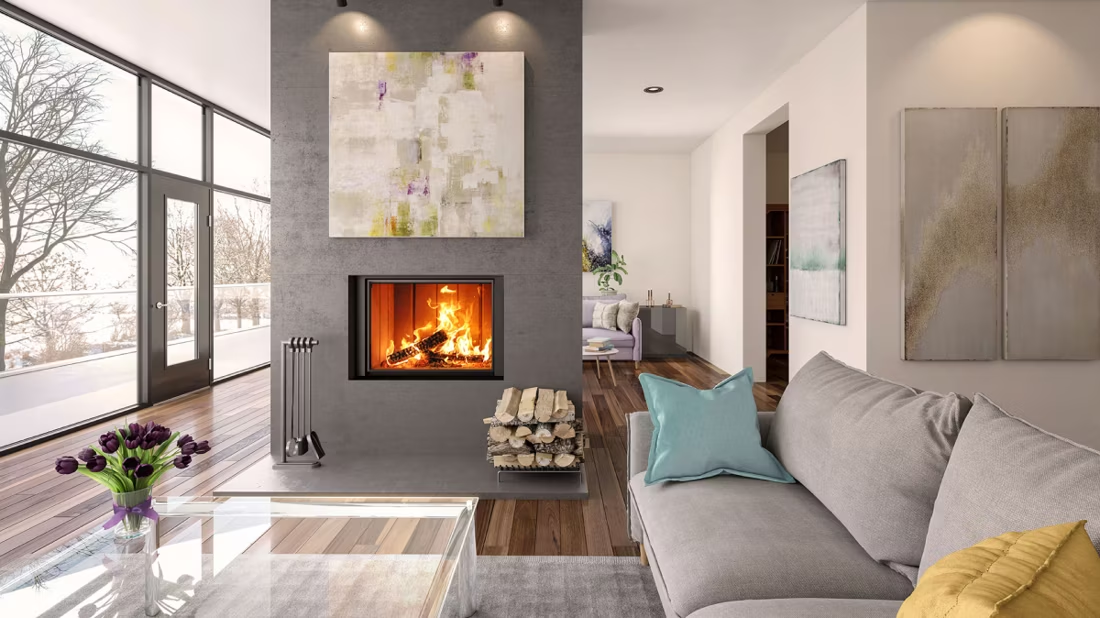
Four fuels. One honest answer for Lancaster County.
Three steps. No salesperson until you're ready.
Tell us about your project
Your zip code, your situation, and the fuel you're leaning toward—or let the answers point you to one.
See what's actually available
The brands dealers within 100 miles genuinely carry—real options, never a catalog mirage.
Get your dealer & Project Guide
A trusted local dealer, plus the free Project Guide & Parts List that names every component of the job.
Frequently Asked Questions
Which fuel works best in Lancaster County?
It depends more on your home and preferences here than on surviving the cold—with a heating season only about a quarter as long and intense as somewhere in the upper Midwest, no fuel type is doing brutal-winter duty like it might there. Wood remains popular in the older, more rural parts of the county around Kershaw and Heath Springs, where oak and hickory are locally abundant and a stove or insert can genuinely offset a heating bill on the coldest nights. Gas is the convenience pick for many Indian Land and in-town Lancaster homes—instant on/off, no wood to split or stack, and a clean look for newer construction. Pellet splits the difference, giving wood-style ambiance without the woodpile, and it's well supported locally by brands like Lignetics and Hamer Pellet Fuel. Electric is the lowest-commitment option—strong for supplemental warmth in a bedroom or den, or for renters and newer builds where venting a solid-fuel or gas unit isn't practical.
Do I need a permit to install a fireplace in Lancaster County?
In most cases, yes. New wood stoves, wood inserts, gas fireplaces, gas inserts, gas stoves, and pellet stoves typically require a building permit through the county building codes office, and any gas connection work needs to be handled by a licensed gas contractor as part of that permit. Electric fireplaces generally don't require a permit for plug-in units, though built-in electric fireplaces that need new wiring or a dedicated circuit usually do. If you're inside the city of Lancaster, permitting runs through the city; in unincorporated areas—including most of the Indian Land and Van Wyck communities—it runs through Lancaster County. Most local hearth retailers pull the permit as part of a full installation, so you typically aren't handling the paperwork yourself.
Are there air quality restrictions on wood burning in Lancaster County?
No—Lancaster County doesn't have the winter inversion or nonattainment issues that trigger burn advisories in some Western states. There's no county-wide curtailment program telling residents to hold off on wood fires during high-pollution days. That said, EPA 2020 NSPS certification still applies to any new wood stove or insert you install, since that's a federal emissions standard, not a local air-quality restriction. Beyond that, the main local rule to check is any county or municipal ordinance on open burning of yard debris—which is a separate issue from an EPA-certified stove or insert burning inside a home.
Can one local hearth retailer handle all four fuel types?
Some can, but it's worth confirming before you shop. In a county this size, the fuller-service dealers in the Lancaster and Indian Land area tend to carry wood, gas, and pellet units with working showroom displays, while electric fireplaces are increasingly stocked as a lower-cost add-on line even by dealers whose main business is solid-fuel or gas installs. Smaller shops closer to Kershaw and Heath Springs may focus mainly on wood and pellet, reflecting the more rural heating habits in that part of the county. If you're cross-shopping fuels, ask a dealer directly which types they install and service—not just which they sell—since installation and follow-up service is where fuel specialization tends to show up.
How does service work in the rural parts of Lancaster County?
Most chimney sweeps, gas techs, and pellet service technicians are based near the city of Lancaster or the Indian Land growth corridor and travel out to Kershaw, Heath Springs, and Van Wyck for calls. Because the county's mild winters mean less continuous run-time on wood and pellet appliances, service intervals are often a little more forgiving than in colder climates—but annual sweeps and inspections still matter, especially for chimneys running a steady mix of oak, hickory, and pine. Scheduling in late summer or early fall, before the first cold snap, is easier than trying to book a technician once temperatures drop and everyone else's stove suddenly needs attention too.
What's the typical cost range for fireplace installation across all fuel types in Lancaster County?
Costs run a bit lower here than in harsher climates, mainly because venting and structural work tend to be simpler without heavy snow or ice loads to design around. Wood stove or insert installation: roughly $3,500–$8,000 for a typical install, more for new construction with full masonry chimney work. Gas fireplace, insert, or stove: roughly $4,000–$9,500 depending on whether new gas line work is needed. Pellet stove or insert: roughly $4,000–$6,500 for a typical install. Electric fireplace: $200–$3,000 for the unit itself, plus $400–$1,000 in labor for anything beyond a simple plug-and-play setup. For fuel-specific pricing tied to local retailer quotes, see the county + fuel pages above.
How much should I budget for a fireplace?
For an average home—covering the fireplace, the vent pipe, and basic installation—a budget between $3,900 and $5,500 gives you a lot of options across wood, gas, and pellet. By the time you add finish work, gas line, and electrical, the average complete installation lands between $5,000 and $12,000 all-in. In a remodel or new build, a good rule is to put about 2.5% of the total project cost toward the fireplace.
Wood, gas, pellet, or electric—how do I choose?
Match the fuel to your life, not the other way around. Wood: lowest fuel cost and total power-outage independence, but you're hauling and stacking. Gas: press a button, set a thermostat, no maintenance to speak of. Pellet: wood economics with automatic feeding, in exchange for weekly cleaning and a need for electricity. Electric: plugs in anywhere with honest supplemental heat. Nobody regrets the fuel that fits how they actually live.
Can a fireplace actually lower my heating bill?
Yes—by creating a comfort zone. A furnace heats every square foot of the house just to warm the one room you're in; a gas fireplace on low burns roughly a sixth of the gas a typical furnace does. Set the furnace around 55–60 degrees as a baseline, then heat the rooms your family actually uses. Families who heat this way commonly save $20–$60 a month.
What is an in-home preview and do I need one?
It's a visit where a hearth professional measures your space, confirms the model you picked actually works in your home, and walks the specs—framing, gas line, venting, finish work—before anything is ordered. Some details you just can't know until you see the house. Never make a down payment without one; it's the single most-skipped step that burns buyers.
Stove and Fireplace Dealers in Lancaster County
Listings include WhyFire partner dealers, dealers we have verified as authorized for the brands we recommend, and established local businesses that carry hearth products. Every listing shows which one it is. The ones marked Preferred run on WhyFire's software, so they can show you real pricing and book your appointment right here. No manufacturer pays for placement. How we verify dealers →
Lancaster County Natural Gas Authority
Tnt Propane
Fireplace Systems
Find your fireplace in Lancaster County.
Pick your fuel below and we'll match you with a trusted local dealer and send you a free Project Guide & Parts List—the exact parts, vent kit included, and the dealer we recommend for your Lancaster County project.
Find Your Fireplace →