
Instant Warmth for Cool Coastal Evenings on Kiawah Island.
A gas fireplace fits Kiawah Island living—ambiance on breezy Atlantic evenings, reliable heat during hurricane-season outages, and none of the upkeep wood demands in salt air. Find the right unit and a local dealer who knows barrier-island construction.
Every Project Starts From One of These Five Situations
Comfort heat built for a barrier island climate.
Kiawah Island sits at just 6 feet of elevation off the Charleston coast, where winter lows average a mild 44°F and the overall heating season is light—just a fraction of the heating a place like Burlington, VT or Duluth, MN sees in a single hard winter. Nobody on Kiawah is heating a home through a January cold snap the way homeowners inland have to. But evenings here still get cool and damp off the Atlantic, and the island's elevated, open-plan homes—many built on pilings with high ceilings and expansive glass—lose warmth quickly once the sun drops.
There's no natural gas main running to Kiawah Island; homes here run on propane, delivered and stored on-site, paired with Berkeley Electric Cooperative for electric service. A direct-vent propane fireplace or insert gives homeowners instant, thermostat-controlled warmth for evening entertaining, plus something more practical: battery-backed ignition that keeps working when hurricane-season outages knock out grid power for days. For a resort and residential community built around outdoor living and gracious interiors, gas is less about survival heat and more about comfort, resale value, and reliability when storms roll through.
Three steps. No salesperson until you're ready.
Tell us about your project
Your zip code, your situation, and the fuel you're leaning toward—or let the answers point you to one.
See what's actually available
The brands dealers within 100 miles genuinely carry—real options, never a catalog mirage.
Get your dealer & Project Guide
A trusted local dealer, plus the free Project Guide & Parts List that names every component of the job.
Frequently Asked Questions
How much does a gas fireplace installation cost on Kiawah Island?
Most gas fireplace and insert installations on Kiawah Island run $6,000 to $13,000, with the range driven by propane tank sizing or trenching, the length of gas line run to elevated pilings-style homes, and any custom masonry or millwork surround typical of the island's higher-end builds. Because most homes here sit up on pilings, venting often has to route through raised foundations or exterior chases rather than a straightforward wall penetration, which adds labor. Homeowners without an existing propane tank should budget for tank installation as a separate line item from a regional propane supplier.
Can I convert an existing masonry fireplace to gas?
It's possible but less common here than in older inland housing stock, since much of Kiawah's construction is newer and coastal-code elevated rather than traditional masonry-and-basement building. Where a masonry fireplace does exist, a direct-vent gas insert with a stainless steel liner works well—stainless is worth insisting on given the salt air, which accelerates corrosion in standard galvanized components. Expect $5,500 to $10,000 for a conversion, depending on chimney condition and propane line routing.
Is Kiawah Island served by natural gas, or is it propane only?
Propane only—there's no natural gas utility infrastructure on the island. Homes run on propane delivered and stored in above-ground or buried tanks, sized to the home's total gas load if a range, water heater, or generator also run on propane. Nearly every gas fireplace installed on Kiawah is configured for propane rather than natural gas, so make sure any unit you're considering is either propane-rated from the factory or field-convertible with the correct orifice kit.
Will my gas fireplace work if the power goes out during a storm?
Yes, if you choose the right ignition system—and on a barrier island where hurricane-season outages can stretch for days, this matters more than it does inland. Units with IPI (intermittent pilot ignition) include a battery backup that keeps the fireplace lighting on demand once grid power drops. Valor fireplaces take a different approach: their pilot assembly generates its own electricity through the thermocouple, so there's no battery to remember or replace. Either option keeps a heat source running in your living room when the grid is down and the generator is reserved for essentials.
Gas fireplace, insert, or stove—which fits a Kiawah home?
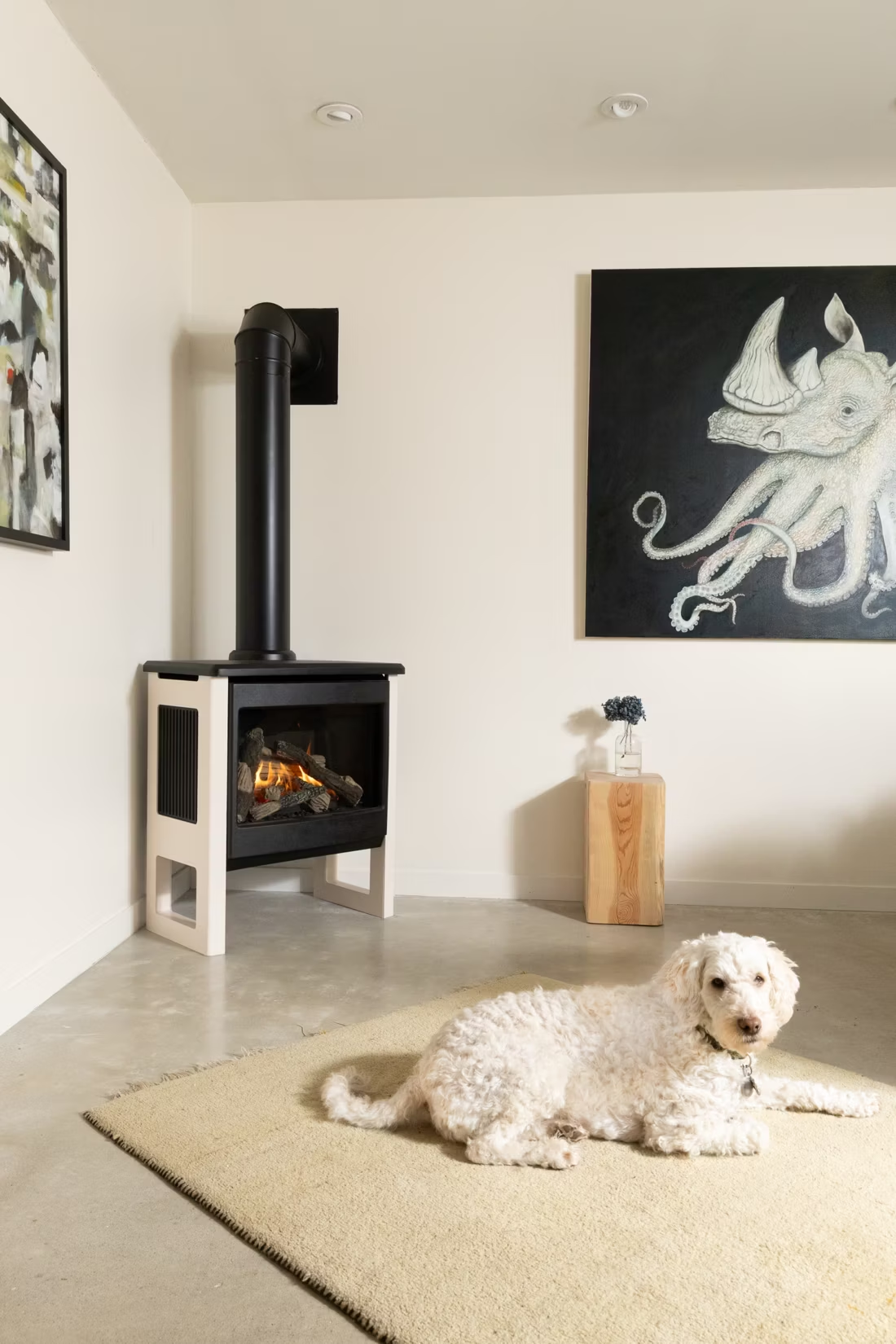
A built-in gas fireplace suits new construction or a remodel where you're framing a feature wall—common in Kiawah's open-concept great rooms with high ceilings and ocean or marsh views. A gas insert fits into an existing masonry opening, which is less common here given the newer housing stock. A freestanding gas stove works well in a den, screened porch, or secondary living space where a full built-in isn't practical. Most Kiawah installations lean toward a linear or traditional built-in unit sized to the room's scale, since these homes tend to have generous, light-filled living areas.
What permits or approvals do I need to install a gas fireplace on Kiawah Island?
You'll need a building permit and gas permit through the Town of Kiawah Island's building codes office, and—because Kiawah is a deed-restricted community—most exterior modifications, including visible venting terminations, also require sign-off from the Kiawah Island Community Association's Architectural Review Board. This is one area where working with a local dealer who's installed on the island before pays off: they know what vent cap placement and screening the ARB will approve without a resubmission delay.
Should I choose a vented or vent-free gas fireplace here?
Vented direct-vent units are the strong recommendation for Kiawah Island. They draw combustion air from outside and exhaust it back outside through a sealed system, which matters in a humid coastal environment where indoor moisture and air quality are already a concern. Vent-free units are technically legal in South Carolina but release combustion byproducts into the room, and in a marine climate with salt-laden air, the added moisture load isn't worth the tradeoff. Ask your installer for stainless steel venting components specifically—standard galvanized venting corrodes faster this close to the Atlantic.
How often should a gas fireplace be serviced on Kiawah Island?
Plan on an annual inspection, same as anywhere, but pay particular attention to venting hardware and exterior terminations—salt air accelerates corrosion on fasteners, caps, and screens faster than it would inland. A technician should check the burner, pilot assembly, gas connections, and venting integrity each year, typically $150 to $250 per visit. Homes left vacant for stretches, common with second homes and vacation properties on the island, should have the system checked before each season of heavier use rather than assuming everything's fine after months of sitting idle.
Why isn't wood or pellet heat common on Kiawah Island?
With winter lows averaging 44°F and only a light amount of heating needed all year, there's no real heat-load reason to burn wood or pellets here—this is a mild, humid subtropical climate, not a place tending a stove through a hard freeze. Firewood storage is also a genuine headache on a barrier island: humidity, termites, and the general absence of basements or covered woodsheds in elevated coastal homes make cordwood or pellet storage impractical. A small number of homeowners still install a wood-burning fireplace purely for ambiance in a den or guest cottage, but it's the exception rather than the norm. Gas and electric fireplaces cover the ambiance-and-occasional-warmth role that most Kiawah homeowners are actually after.
Is my gas fireplace wasting gas?
If it was installed more than 15 years ago, probably. Older gas fireplaces keep a standing pilot light burning all the time, and that little flame can cost a couple hundred dollars a year. Newer models use pilot-on-demand ignition—the pilot lights only when you use the fireplace and goes out when you turn it off.
Why is a fireplace insert so efficient?
An insert does two things: it seals the chimney completely, so you stop losing air you already paid to heat, and it radiates warmth into the room through the firebox and glass. Most add a heat-exchange fan that pulls cool room air underneath, wraps it around the hot firebox, and pushes it back out warm. Your home is more efficient before you've even lit the first fire.
Can I install a fireplace myself?
If you're putting a fire in your house on purpose, it's best to work with an expert. Unless you're genuinely experienced in framing, gas line, vent pipe, and the national code on clearances to combustibles, have a professional do it—and ideally the same company that sells you the fireplace, so warranty, service, and liability all live under one roof.
How much should I budget for a fireplace?
For an average home—covering the fireplace, the vent pipe, and basic installation—a budget between $3,900 and $5,500 gives you a lot of options across wood, gas, and pellet. By the time you add finish work, gas line, and electrical, the average complete installation lands between $5,000 and $12,000 all-in. In a remodel or new build, a good rule is to put about 2.5% of the total project cost toward the fireplace.
Nearby Dealers
Hearth shops serving Kiawah Island and the surrounding area. Every listing shows whether it is a WhyFire partner, a dealer we have verified as authorized for the brands we recommend, or a local business carrying hearth products. No manufacturer pays for placement. How we verify dealers →
We’ve paused dealer listings for this connection today. Enter your zip or postal code above to find dealers near you, or come back tomorrow.
Popular Gas Brands
Where each brand came from, what's inside it today, and every current model. No brand pays to be here. Not every dealer carries every brand, so enter your zip code to see what's sold near Kiawah Island.
Kozy Heat
Kozy Heat was founded in 1976 by Dudley Hussong in Lakefield, Minnesota, and incorporated as Hussong Manufacturing Co., Inc. in 1978.
28 gas models →Fireplace Xtrordinair
Fireplace Xtrordinair, now often called FireplaceX, is the fireplace brand of Travis Industries, Inc., of Mukilteo, Washington.
25 gas models →Town & Country
Town & Country Fireplaces is the luxury gas fireplace brand of Pacific Energy Fireplace Products Ltd., of Duncan, British Columbia.
14 gas models →Lopi
Lopi is a wood, pellet, and gas stove brand founded by Kurt Rumens in Bellevue, Washington, in 1979.
7 gas models →Forge & Flame
Forge & Flame is the stove brand Hearth & Home Technologies introduced in August 2023 to bring Vermont Castings, Harman, and Quadra-Fire under one name.
6 gas models →Vermont Castings
Vermont Castings was founded in 1975 by Duncan Syme, the designer, and his brother-in-law Murray Howell, the business partner, in Randolph, Vermont.
6 gas models →Find your gas fireplace on Kiawah Island.
Tell us a bit about your home and we'll put together a free Project Guide & Parts List—the right propane fireplace or insert, the exact venting parts for an elevated coastal build, and a trusted local dealer who knows the ARB process.
Find Your Fireplace →