
A pellet stove that actually makes sense in Greer's mild Piedmont winters.
Pellet heat isn't the norm in Greenville County, but for backup warmth during an ice storm outage or a supplemental unit in a sunroom, the right setup still works. We'll match you with a local dealer who actually stocks and installs them.
Every Project Starts From One of These Five Situations
In the Upstate, pellet stoves are the exception—not the default.
Greer sits in the South Carolina Piedmont at just under 1,000 feet, with an average winter low around 32°F and roughly 3,000 heating degree days a year—a fraction of what a place like Duluth, MN or Burlington, VT racks up in a single season. Most Greer winters bring a handful of frosty mornings and the occasional ice storm rather than months of sustained cold, which is exactly why solid-fuel heating never took hold here the way it did further north or out west. Heat pumps and gas logs, both handled by Duke Energy Carolinas and Greer Commission of Public Works service territory, do the heavy lifting for most homes.
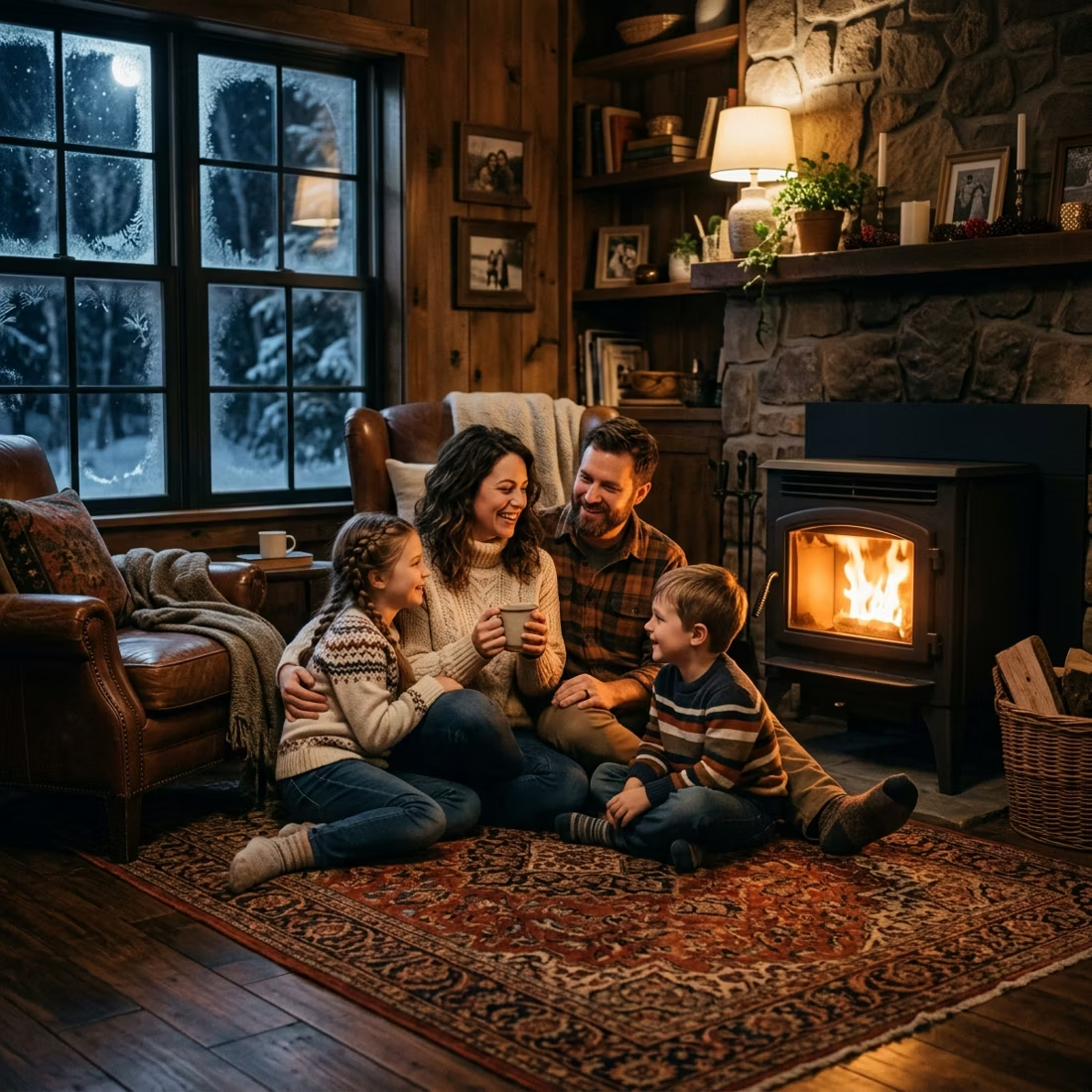
That doesn't mean a pellet stove is a bad idea in Greer—it means the reasons for wanting one are different. Homeowners here typically install a pellet insert or freestanding unit for supplemental heat in a sunroom or finished basement, for the ambiance of a real flame without the mess of cordwood, or as backup warmth during a winter ice event when the Duke Energy grid goes down for a day or two. Regional pellet supply runs through brands like Lignetics, Hamer Pellet Fuel, and Greenway Renewable Energy, though you'll find a thinner selection of dealers and a smaller pellet-buying customer base than you would in a colder market—which is exactly why matching with the right local installer matters more here, not less.
Three steps. No salesperson until you're ready.
Tell us about your project
Your zip code, your situation, and the fuel you're leaning toward—or let the answers point you to one.
See what's actually available
The brands dealers within 100 miles genuinely carry—real options, never a catalog mirage.
Get your dealer & Project Guide
A trusted local dealer, plus the free Project Guide & Parts List that names every component of the job.
Frequently Asked Questions
How much does a pellet stove installation cost in Greer?
Expect somewhere in the $3,500 to $6,000 range for a typical freestanding pellet stove or insert installation in Greer, depending on the unit, whether venting runs through an existing masonry chimney or requires a new through-wall pellet vent kit, and any electrical work needed for the auger and blower circuit. Because pellet demand is lower here than in colder regions, fewer installers specialize in it—a trusted local dealer will give you a firm number after seeing your space rather than a phone-quote guess.
Does a pellet stove actually make sense for Greer's climate?
For most Greer homes, no—not as a primary heat source. With an average winter low around freezing and roughly 3,000 heating degree days, a heat pump or gas log set handles day-to-day heating more efficiently and with less maintenance than a pellet appliance. Where pellet stoves do make sense here is supplemental heat for a sunroom, garage conversion, or detached space, or as a hedge against multi-day power outages during Upstate ice storms. We'll tell you honestly if your project fits that use case or if a gas insert is the better call.
Pellet stove vs. gas fireplace—which is right for a Greer home?
Gas is the more common choice in Greer, and for good reason: natural gas and propane fireplaces run on Duke Energy Carolinas or Greer CPW-adjacent utility infrastructure, light instantly, need no fuel storage, and pair naturally with the mild winters here. Pellet stoves require a hopper refill every day or two during use, produce more maintenance (ash removal, auger cleaning), and depend on electricity to run—meaning they won't function in the exact power-outage scenario many people install them for, unless paired with a battery backup or generator. Pellet still wins on ambiance and off-grid fuel storage (a stacked pallet of bagged pellets versus a buried propane tank), which is why some homeowners choose it anyway.
Where can I buy pellet fuel near Greer?
Bagged pellets from Lignetics and Hamer Pellet Fuel show up seasonally at farm-supply and home-improvement stores around Greenville County, and Greenway Renewable Energy serves the broader Upstate market. Because pellet-stove ownership is uncommon in this climate, don't expect the pallet-stacked inventory you'd see in a place like Bozeman, MT—plan to buy a season's supply in the fall before demand (and shelf space) thins out, or ask your installer about standing delivery arrangements.
Will a pellet stove keep my house warm during a Duke Energy power outage?
Only if you plan for it. Pellet stoves need electricity to run the auger and combustion blower, so a standard unit goes dark the moment the power does—which matters in Greer, where ice storms occasionally knock out Duke Energy Carolinas or Greer CPW service for a day or more. If backup heat during an outage is your main goal, pair the stove with a small battery backup or portable generator, or talk to your local dealer about a wood-burning alternative that doesn't need power at all.
Do I need a permit to install a pellet stove in Greer?
Yes—new pellet stove and insert installations require a building permit through Greenville County Building Codes Enforcement (or the City of Greer's building department if your property falls within city limits). The permit process checks vent-kit clearances and hearth pad requirements. Most local hearth dealers pull the permit as part of the installation, so it typically isn't something you handle yourself.
What size pellet stove do I need for a sunroom or basement?
Most Greer pellet installs are sized for a single room or addition rather than a whole house, since the climate rarely demands whole-home biomass heat. A small pellet stove (rated for 500–1,000 sq ft) is typically plenty for a sunroom, finished basement, or bonus room addition. Oversizing is the more common mistake locally—a unit sized for a Midwest whole-house install will run too hot and cycle constantly in a mild Upstate space. A local dealer can size it correctly during an in-home visit.
Are there certified pellet stove installers near Greer?
Yes, though the pool is smaller than for gas or electric work, since pellet installations are less common in the Upstate. Look for NFI-certified technicians through Greenville-Spartanburg area hearth dealers rather than a general contractor—proper vent-kit sizing and clearance-to-combustible work is specialized, and the installers who handle it regularly also know how to navigate the Greenville County permit process. We match you with one of these trusted local pros rather than a big-box installer unfamiliar with pellet venting.
Pellet vs. wood-burning stove—which fits Greer better?
Neither is common in Greer, honestly. Local hardwoods like oak, hickory, and pine are available if you go the wood route, but wood-heat culture never took hold here the way it has in colder regions, and most Upstate homes don't have a cutting-permit habit or a woodpile tradition. Between the two, pellet stoves are generally the lower-maintenance, cleaner-burning choice for the occasional supplemental-heat or ambiance use case that actually drives demand in Greer—wood tends to appeal more to homeowners who specifically want the ritual of a real cordwood fire.
Why is a fireplace insert so efficient?
An insert does two things: it seals the chimney completely, so you stop losing air you already paid to heat, and it radiates warmth into the room through the firebox and glass. Most add a heat-exchange fan that pulls cool room air underneath, wraps it around the hot firebox, and pushes it back out warm. Your home is more efficient before you've even lit the first fire.
Why is my open fireplace making my house colder?
Open fireplaces suck—literally. As the fire burns, it consumes air your furnace already paid to heat and pulls it out through the chimney, so the house is actually colder after the fire goes out than before you lit it. An insert fixes this: it seals the chimney, puts fixed glass across the front, and turns that hole in your house into a real heat source.
Does a fireplace add value to my home?
On average, a fireplace adds back to the home about the same amount you spent installing it. Add the monthly savings from heating the rooms you actually use instead of the whole house—often hundreds of dollars a year—and the value case is strong before you even count what a fire does for how your family uses the room.
How much should I budget for a fireplace?
For an average home—covering the fireplace, the vent pipe, and basic installation—a budget between $3,900 and $5,500 gives you a lot of options across wood, gas, and pellet. By the time you add finish work, gas line, and electrical, the average complete installation lands between $5,000 and $12,000 all-in. In a remodel or new build, a good rule is to put about 2.5% of the total project cost toward the fireplace.
Nearby Dealers
Hearth shops serving Greer and the surrounding area.
Pellet Brands Stocked Around Greer
Manufacturers will point you to the nearest stocking dealer.
Get your free Project Guide & Parts List for a pellet stove in Greer.
Tell us about your space and how you plan to use it—supplemental heat, backup power protection, or just ambiance—and we'll match you with a trusted local Greer-area dealer plus a free Project Guide & Parts List, including the exact vent kit your installation needs.
Find Your Fireplace →