
A rare fit for Georgetown County's mild coastal winters.
With winter lows averaging 37°F and barely any real heating season to speak of, most Georgetown County homes near Winyah Bay, Pawleys Island, and the Sampit River simply don't carry a heating load a pellet stove is built for. For the homeowners who still want one, we'll connect you with a real local dealer who can tell you honestly whether it makes sense.
Every Project Starts From One of These Five Situations
Georgetown County's climate rarely calls for pellet heat.
Georgetown County sits in climate zone 3A along the South Carolina coast, from the historic rice plantations around the Sampit and Black Rivers out to Pawleys Island and Litchfield Beach. Winters here are short and mild—the average winter low is 37°F, and the county's heating season is light, a fraction of what a place like Duluth, MN or Burlington, VT sees in a single winter. Most homes are built and sized around cooling load, not heating, and central HVAC or a small gas or electric unit typically covers what little supplemental heat a January cold snap requires.
Pellet stoves also run into a practical problem on the coast: they depend on an electric auger and blower to feed fuel and move heat, so they go dark in the same power outages that hurricane season regularly brings to Georgetown, Andrews, and the Waccamaw Neck. And because pellets are hygroscopic, storing them through the Lowcountry's humidity requires more care than most owners expect—bags left in a garage or shed can swell and degrade before they're ever burned. None of that makes pellet heat impossible here. Regional suppliers like Lignetics, Hamer Pellet Fuel, and Greenway Renewable Energy still move product into coastal South Carolina for hunting camps, inland farmhouses toward Andrews, and homeowners who simply like the look and convenience of a thermostatically controlled stove. It's just a smaller, more deliberate purchase than it would be in a colder climate—which is exactly why matching with the right local dealer matters.
Three steps. No salesperson until you're ready.
Tell us about your project
Your zip code, your situation, and the fuel you're leaning toward—or let the answers point you to one.
See what's actually available
The brands dealers within 100 miles genuinely carry—real options, never a catalog mirage.
Get your dealer & Project Guide
A trusted local dealer, plus the free Project Guide & Parts List that names every component of the job.
Frequently Asked Questions
Are pellet stoves actually common in Georgetown County?
No—and it's worth saying plainly. With an average winter low of 37°F and one of the lightest heating seasons around, Georgetown County has one of the mildest heating climates in the country. Most homes near Georgetown, Pawleys Island, and Murrells Inlet don't need a dedicated heating appliance at all, let alone a pellet-fed one. The handful of installs we see tend to be supplemental units in older, drafty homes inland toward Andrews, or a stove installed for ambiance and occasional use rather than as a primary heat source. If you're set on pellet heat, it's absolutely available—it's just a niche choice here, not the default.
Will a pellet stove keep my house warm during a hurricane-season power outage?
No, and this is the single most important thing to understand before buying one on the coast. Pellet stoves rely on an electric auger to feed fuel and an electric blower to circulate heat—no power, no fire, regardless of how many bags of pellets you have stacked in the garage. Given how often Georgetown County loses power during tropical storms and hurricanes, homeowners who want heat during an outage are almost always better served by a vented gas unit with battery-backup ignition or, in a smaller number of cases, a wood-burning appliance. If backup heat during storms is the goal, say so when you're matched with a local dealer—they'll steer you toward a fuel that actually delivers on it.
What does a pellet stove installation cost in Georgetown County?
Because pellet installs are uncommon here, local dealers don't run them off a standard price sheet the way they would in a colder market—pricing tends to be quoted project-by-project. As a general range, expect somewhere in the neighborhood of $3,000 to $6,000 for a stove or insert including venting, though the final number depends heavily on whether you're venting through an existing masonry chimney, running new pipe through an exterior wall, and what unit you choose. Given how few installers in the county handle these regularly, getting a firm, in-home quote from a trusted local dealer matters more here than in markets where pellet heat is routine.
Is it hard to store pellets in Georgetown County's humidity?
It takes more care than it would inland or up north. Wood pellets are hygroscopic—they absorb moisture from humid air, swell, and can turn to sawdust or clog an auger if they're not kept dry. Georgetown County's coastal humidity, especially in summer, makes garage or shed storage riskier than it would be in a drier climate. Owners who do run pellet stoves here generally store bags on pallets, off the ground, in a fully enclosed, low-humidity space, and buy pellets closer to when they'll actually burn them rather than stockpiling a season's supply in June.
Why would someone choose pellet heat over gas or electric here?
Given that both gas and electric heat are standard, practical options throughout Georgetown County, pellet is rarely the default recommendation. Where it still makes sense: homeowners who want a real, visible flame and the ambiance of a wood-style fire but don't want to deal with cutting, hauling, or storing cordwood; or owners of older farmhouses inland toward Andrews with drafty rooms that benefit from a self-feeding, thermostatically controlled supplemental heater. If your priority is emergency backup heat during storm season or simple year-round convenience, gas or electric will almost always serve you better than pellet in this climate.
What pellet brands are actually available near Georgetown County?
Regional suppliers including Lignetics, Hamer Pellet Fuel, and Greenway Renewable Energy distribute into coastal South Carolina, so fuel supply isn't the barrier—it's demand. Because pellet stoves are a smaller category here than in colder states, expect fewer stocking dealers and a smaller in-store selection of stove models than you'd find in, say, the upper Midwest. A local dealer can tell you which pellet brands they actually keep in stock versus which they'd need to special-order for your install.
Are there any air quality restrictions on pellet stoves in Georgetown County?
No—Georgetown County has no wood-smoke non-attainment designation, winter inversion advisories, or local burning curtailment periods to worry about. Any EPA-certified pellet stove or insert can be installed and operated without the kind of seasonal burn restrictions you'd see in a smoke-prone western valley. Standard EPA certification and your local building permit are still required, but there's no added air-quality layer on top of that here.
What's the difference between a pellet stove and a pellet insert?
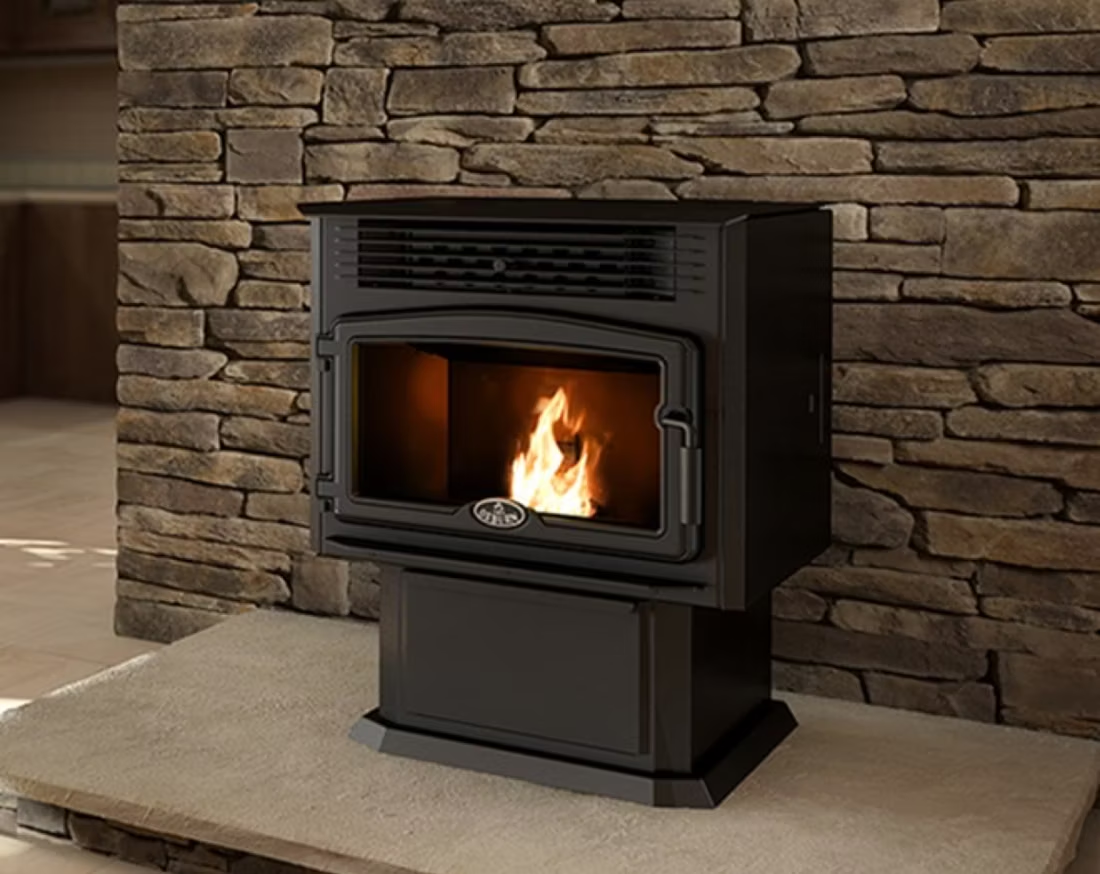
A pellet stove is a freestanding, self-contained unit that sits on its own hearth pad and vents through a wall or existing chimney—it works in homes with or without a fireplace already in place. A pellet insert is built to slide into an existing masonry fireplace opening, using a stainless liner run up the existing chimney. Since many newer homes in Georgetown County and along the Waccamaw Neck were built on slab without a masonry fireplace to begin with, a freestanding stove is often the simpler installation; older homes near historic Georgetown with an existing hearth are better candidates for an insert.
Pellet vs. wood—does either make sense in Georgetown County?
Both are genuinely uncommon choices here, and for similar reasons—the mild climate (37°F average winter low, with barely any real heating season to speak of) just doesn't generate the heating demand that makes either fuel a practical primary heat source the way it would in a colder state. Between the two: wood at least works without power, which matters given how often storms knock out electricity on the coast, and local oak, pine, and hickory are readily available. Pellet offers cleaner, more convenient operation but goes dark in an outage since it depends on an electric auger and blower. For most Georgetown County homes, gas or electric heat covers the practical need, and pellet or wood gets chosen for ambiance, a supplemental room, or a specific property—like an inland cabin—where the math works differently.
What's the difference between an insert and a zero-clearance fireplace?
An insert is a fireplace that slides into a pre-existing wood-burning fireplace—if you don't have one, there's nothing to insert it into. A zero-clearance fireplace is built into a framed wall, which makes it the answer for remodels and new construction. Simple test: existing masonry fireplace means insert; blank or framed wall means zero-clearance.
How often does a pellet stove need cleaning?
A clean pellet stove is a happy pellet stove. Plan on cleaning the burn pot about once a week when you're burning regularly—ash and clinkers gum up the air holes just like a pellet barbecue. Most pellet stove problems trace back to skipped cleaning that nobody explained up front. Some designs make it easy with a trapdoor burn pot: pull a lever and the gunk drops into the ash pan.
What is an in-home preview and do I need one?
It's a visit where a hearth professional measures your space, confirms the model you picked actually works in your home, and walks the specs—framing, gas line, venting, finish work—before anything is ordered. Some details you just can't know until you see the house. Never make a down payment without one; it's the single most-skipped step that burns buyers.
Can a fireplace actually lower my heating bill?
Yes—by creating a comfort zone. A furnace heats every square foot of the house just to warm the one room you're in; a gas fireplace on low burns roughly a sixth of the gas a typical furnace does. Set the furnace around 55–60 degrees as a baseline, then heat the rooms your family actually uses. Families who heat this way commonly save $20–$60 a month.
Stove and Fireplace Dealers in Georgetown County
Listings include WhyFire partner dealers, dealers we have verified as authorized for the brands we recommend, and established local businesses that carry hearth products. Every listing shows which one it is. The ones marked Preferred run on WhyFire's software, so they can show you real pricing and book your appointment right here. No manufacturer pays for placement. How we verify dealers →
Coastal Energy Inc.
H&S Oil Company
Paramount Contractors
Pellet Brands Stocked Around Georgetown County
Manufacturers will point you to the nearest stocking dealer.
Find your pellet stove in Georgetown County.
Pellet heat is a niche choice on this stretch of coast, so getting matched with a dealer who installs it regularly—and will tell you honestly if it's the right call for your home—matters. Tell us about your project and we'll send your free Project Guide & Parts List, including the exact parts and vent kit, plus our recommended local dealer in Georgetown County.
Find Your Fireplace →