
Efficient Heat, Without the Woodpile.
A clean, thermostat-easy way to heat an Edgefield County home through the region's short, mild winters—no splitting, stacking, or hauling cordwood. Find the right pellet stove or insert and get matched with a trusted local dealer.
Every Project Starts From One of These Five Situations
Mild winters, real convenience.
Edgefield County is small and rural—about 6,665 residents spread across farmland, pine and hardwood timber tracts, and the historic town of Edgefield itself, known locally as the birthplace of ten South Carolina governors and a long pottery-making tradition. Sitting in climate zone 3A with an average winter low near 35°F and roughly 2,474 heating degree days a year, this is a mild-winter county compared to the mountains or the Midwest—nothing like the sustained cold of a place such as Bozeman or Burlington. But the CSRA still sees cold snaps, the occasional ice storm off the Savannah River corridor, and enough chilly nights each January to make a standalone heat source worth having.
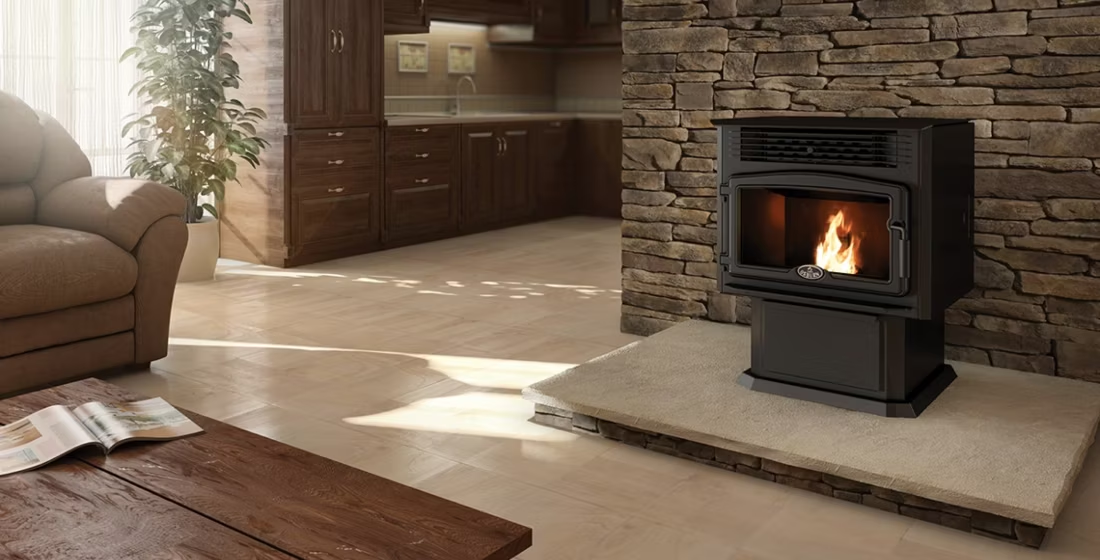
That's where pellet stoves fit. For a county with oak, pine, and hickory as the dominant local timber, wood heat has deep roots—but not everyone wants to cut, split, and season cordwood for a heating season this short. A pellet stove gives you thermostat-controlled, hopper-fed heat that runs for a day or more on a single load, with none of the ash volume or chimney creosote of a wood stove. Pellet supply here isn't an afterthought either—regional producers like Lignetics, Hamer Pellet Fuel, and Greenway Renewable Energy mill pellets from the same Southeast pine forests that surround Edgefield County, so bags are generally easy to find at local farm and hardware stores rather than something you're special-ordering online.
Three steps. No salesperson until you're ready.
Tell us about your project
Your zip code, your situation, and the fuel you're leaning toward—or let the answers point you to one.
See what's actually available
The brands dealers within 100 miles genuinely carry—real options, never a catalog mirage.
Get your dealer & Project Guide
A trusted local dealer, plus the free Project Guide & Parts List that names every component of the job.
Frequently Asked Questions
How much does a pellet stove installation cost in Edgefield County?
Most freestanding pellet stove installations run in the $3,500 to $6,500 range once you include the unit, wall-vent kit, and hearth pad, while a pellet insert going into an existing masonry fireplace typically lands a bit higher due to the liner and surround work. Because Edgefield County is small and rural, exact quotes vary more by which dealer is closest and whether your home already has a suitable exterior wall for direct venting versus needing a longer vent run. A local dealer will give you a firm number after seeing your fireplace or install location in person.
Is a pellet stove worth it in a mild climate like Edgefield County's?
Yes, though the case is different than it would be in a colder region. With around 2,474 heating degree days and average winter lows in the mid-30s, most Edgefield County homes don't need a pellet stove to survive winter the way a home in Fargo or Duluth might. The value here is supplemental: a pellet stove can heat the main living area efficiently on the coldest nights, take pressure off a propane or electric furnace during a January cold front, and give you a consistent, hands-off heat source that's a lot less work than tending a wood fire in a hearth that only gets real use a few weeks a year.
What size pellet stove do I need for my home?
Given Edgefield County's mild climate, most homes do fine with a small to medium pellet stove rated for 1,000 to 1,800 square feet, sized for supplemental or zone heat rather than whole-house primary heat. An older farmhouse with drafty single-pane windows near Trenton or out toward Johnston will want a slightly larger unit than a newer, well-insulated home of the same square footage. A local dealer will factor in ceiling height, room layout, and insulation during an in-home visit rather than sizing off square footage alone—oversizing a pellet stove wastes fuel and leads to short-cycling.
Where do pellets come from, and will I be able to find fuel locally?
Yes—pellet supply is one of the easier parts of owning a stove in this region. Lignetics, Hamer Pellet Fuel, and Greenway Renewable Energy all mill pellets from Southeast pine and hardwood byproducts, and their bags show up regularly at farm supply and hardware stores across the CSRA. Because Edgefield County sits in the middle of active pine timber country, you're not relying on pellets shipped in from the Northeast or Midwest—the supply chain is regional, which tends to keep pricing and availability more stable than in areas farther from pellet-producing mills.
Do I need a permit to install a pellet stove in Edgefield County?
Generally yes for a permanently installed unit—a building permit covering the appliance and its wall or roof venting is typically required through the county building department, and most established local dealers handle that paperwork as part of the installation rather than leaving it to the homeowner. Because Edgefield County has no listed air quality non-attainment concerns, there aren't the winter burning curtailment rules you'll find in some Western counties—the permit process here is mainly about verifying clearances and venting, not emissions restrictions.
Will my pellet stove still work if the power goes out?
Not on its own—pellet stoves rely on an electric auger to feed fuel and a blower to distribute heat, so a power outage shuts the stove down even with a full hopper. This matters in a rural county like Edgefield, where ice storms and summer thunderstorms occasionally knock out power for hours or longer. Homeowners who want backup heat during outages often pair a pellet stove with a small battery backup unit or generator, or keep a wood-burning option in reserve. If uninterrupted operation during outages is a priority, ask your local dealer about battery-backup-compatible models before you buy.
How is a pellet stove vented, and can it go anywhere in my house?
Most pellet stoves use a small-diameter PL vent pipe that runs horizontally through an exterior wall rather than requiring a full masonry chimney—which is one reason they're often cheaper and faster to install than a wood stove. That flexibility means a pellet stove can usually go in rooms without an existing fireplace, as long as there's a nearby exterior wall and adequate clearance to combustibles. A pellet insert, by contrast, is built to slide into an existing fireplace opening and vent up through the current chimney with a liner. A local dealer can walk your specific room to confirm which setup makes sense.
Pellet stove vs. wood stove—which makes more sense in Edgefield County?
With oak, pine, and hickory all common on local land, plenty of Edgefield County residents have easy access to cordwood, and a wood stove offers the advantage of working without electricity—useful during rural power outages. A pellet stove trades that off for convenience: no cutting, splitting, or stacking, more even heat output, and a thermostat you can set and walk away from. Given how mild the winters are here, many homeowners lean pellet for everyday comfort and treat firewood as a backup plan rather than the primary fuel.
Pellet stove vs. gas fireplace—which is the better fit?
Gas offers instant on-off convenience with no fuel storage at all, which appeals to homeowners who want zero maintenance. A pellet stove asks a little more—loading a hopper every day or two during cold stretches, cleaning the burn pot periodically—but delivers a more substantial, visible fire and taps into the region's pine-pellet supply chain rather than depending on propane delivery or a natural gas line, which isn't universally available across rural Edgefield County. If having a real flame and controlling your own fuel matters to you, pellet is usually the better call; if hands-off simplicity is the priority, gas is worth a look too.
Why is a fireplace insert so efficient?
An insert does two things: it seals the chimney completely, so you stop losing air you already paid to heat, and it radiates warmth into the room through the firebox and glass. Most add a heat-exchange fan that pulls cool room air underneath, wraps it around the hot firebox, and pushes it back out warm. Your home is more efficient before you've even lit the first fire.
Why is my open fireplace making my house colder?
Open fireplaces suck—literally. As the fire burns, it consumes air your furnace already paid to heat and pulls it out through the chimney, so the house is actually colder after the fire goes out than before you lit it. An insert fixes this: it seals the chimney, puts fixed glass across the front, and turns that hole in your house into a real heat source.
What is an in-home preview and do I need one?
It's a visit where a hearth professional measures your space, confirms the model you picked actually works in your home, and walks the specs—framing, gas line, venting, finish work—before anything is ordered. Some details you just can't know until you see the house. Never make a down payment without one; it's the single most-skipped step that burns buyers.
How much should I budget for a fireplace?
For an average home—covering the fireplace, the vent pipe, and basic installation—a budget between $3,900 and $5,500 gives you a lot of options across wood, gas, and pellet. By the time you add finish work, gas line, and electrical, the average complete installation lands between $5,000 and $12,000 all-in. In a remodel or new build, a good rule is to put about 2.5% of the total project cost toward the fireplace.
Stove and Fireplace Dealers in Edgefield County
Listings include WhyFire partner dealers, dealers we have verified as authorized for the brands we recommend, and established local businesses that carry hearth products. Every listing shows which one it is. The ones marked Preferred run on WhyFire's software, so they can show you real pricing and book your appointment right here. No manufacturer pays for placement. How we verify dealers →
Advanced Chimney Sweep, LLC
Holley Heating & Air
Fireside Outdoor Kitchens
Augusta Overhead
Thompson Gas
Barnes Oil And Propane
Pellet Brands Stocked Around Edgefield County
Manufacturers will point you to the nearest stocking dealer.
Find your pellet stove in Edgefield County.
Tell us a bit about your home and we'll match you with a trusted local dealer and send over a free Project Guide & Parts List—the exact parts, including the vent kit, for your pellet stove or insert project in Edgefield County.
Find Your Fireplace →