
Keep Your Family Warm and Safe—No Matter What
With just a short, mild heating season and winter lows that rarely dip below the mid-30s, most Conway homes don't need wood heat to get through January. But a smaller group of homeowners still want it—and finding a dealer who actually stocks and installs wood stoves here takes local knowledge.
Every Project Starts From One of These Five Situations
Mild winters mean wood heat here is optional, not essential.
Conway sits at just 2 feet of elevation on the coastal plain of Horry County, in IECC climate zone 3A. Winters here average a low of 35°F, with a short, mild heating season—compare that to a place like Duluth, Minnesota, which has a winter heating load nearly four times as long and severe, and it's clear why wood heat never became a load-bearing part of how Conway homes stay warm. Most houses in the area rely on heat pumps or gas for daily heating, and there's no winter air quality advisory system here like you'd find in wood-heavy inversion-prone regions out West—burning wood in Conway just isn't something the local air district has ever had to regulate.
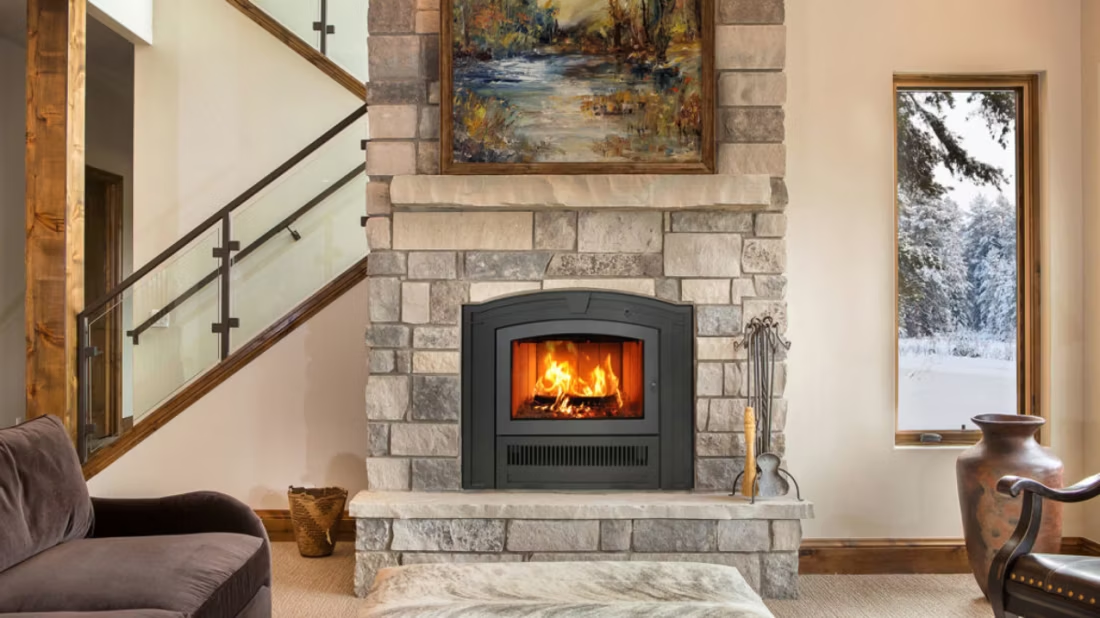
That said, wood stoves haven't disappeared. Riverfront cabins along the Waccamaw, hunting camps in the surrounding pine flatwoods, and homeowners who lost power for a week after a hurricane rolled through Horry County still install them—usually for backup heat, ambiance, or a wood-fired feel that a heat pump can't replicate. Local oak, pine, and hickory are all readily available for anyone who does go this route, even if the stove sits unused most winters.
Three steps. No salesperson until you're ready.
Tell us about your project
Your zip code, your situation, and the fuel you're leaning toward—or let the answers point you to one.
See what's actually available
The brands dealers within 100 miles genuinely carry—real options, never a catalog mirage.
Get your dealer & Project Guide
A trusted local dealer, plus the free Project Guide & Parts List that names every component of the job.
Frequently Asked Questions
Are wood stoves actually a good fit for a Conway home?
For most Conway homes, no—not as a primary heat source. With winter lows averaging 35°F and only a short, mild heating season, the math that makes wood heat pay off in colder climates doesn't apply here. Where a wood stove does make sense in Conway is as backup heat for hurricane-season power outages, as a heat source for a detached workshop or hunting camp, or simply because a homeowner wants the ambiance and doesn't mind that it's rarely load-bearing. If that's your situation, a local hearth dealer can still help—there just aren't as many of them stocking wood units here as you'd find in a colder market.
What does a wood stove installation cost in Conway?
Because demand is lower here than in cold-climate markets, expect pricing closer to national baseline figures for a basic freestanding stove with straightforward Class A chimney venting—often in the $3,000–$6,000 range for a simple install, more if you're adding a chimney chase to a home that never had one. Homes without an existing masonry fireplace will need full chimney construction, which pushes costs toward the higher end. Get a firm number from a local installer after they've seen your framing and roofline—it varies more house to house than it would in a market where every third home already has a chimney.
Do I need a permit to install a wood stove in Conway?
Yes. New wood-burning appliance installations require a building permit through Horry County's building codes department (or the City of Conway's building division if your property is inside city limits), and the stove needs to meet current EPA emissions standards. Because wood stoves are installed less frequently here than gas or electric units, it's worth confirming with your installer that they've pulled this specific type of permit before—most reputable hearth dealers in the area have, but it's not their most common job.
What firewood works best in a Conway wood stove?
Oak and hickory are the standout choices in this part of Horry County—both are dense hardwoods that burn hot and long, and both are widely available from local tree services and firewood sellers given how common they are in the surrounding landscape. Pine is abundant too and easy to source, but it burns fast, runs sappier, and builds creosote quicker, so it's better as kindling or supplemental fuel than a primary firewood in a stove that only gets occasional use. Whatever species you burn, make sure it's seasoned at least six months—humidity here keeps green wood wetter longer than it would stay in a drier climate.
Is a wood stove a good backup heat plan for hurricane season?
It can be one of the better arguments for installing one in Conway. Duke Energy Progress and Santee Cooper both serve this area, and outages after a tropical system can stretch for days, sometimes longer in rural pockets of Horry County. A wood stove keeps working with zero electricity, which is more than you can say for most gas fireplaces (unless they have battery-backup ignition) or any electric unit. If backup heat during storm season is your main reason for considering wood, size the stove for the one or two rooms you'd actually need to keep warm, not the whole house.
Does a wood stove that's rarely used still need chimney inspections?
Yes, and arguably it matters more, not less. A stove that only burns a handful of times a winter—which describes most wood stoves in Conway—can actually build creosote faster relative to hours burned, because low, cool fires (common when someone's just taking the chill off rather than heating all day) don't burn hot enough to keep the flue clean. Coastal humidity doesn't help either. Get an annual inspection before hurricane season or the first cold snap, whichever comes first, even if the stove barely got used the year before.
Will my HOA let me install a wood stove or chimney?
Check your covenants before you buy anything. Many of the newer planned communities around Conway and the broader Myrtle Beach corridor have architectural review boards that restrict exterior chimney chases, stovepipe penetrations, or exposed flue caps for aesthetic reasons—this is a more common obstacle here than in older, wood-heat-heavy markets where every house already has a chimney. Older neighborhoods and rural county properties outside HOA jurisdiction typically don't have this issue.
Wood stove vs. pellet stove vs. gas insert—what actually makes sense in Conway?
Honestly, for most Conway homes, gas or an efficient electric unit makes more practical sense than either wood or pellet—both Duke Energy Progress and Santee Cooper serve reliable power to most of the area, and gas inserts give you instant, thermostat-controlled heat without sourcing fuel. Pellet stoves (brands like Lignetics or Hamer Pellet Fuel are sold regionally) need electricity to run the auger, so they don't help during storm outages, which is one of the few real reasons anyone here reaches for wood in the first place. If backup heat during a power outage is your priority, wood wins by default. If it's just about aesthetics or supplemental warmth, gas is usually the easier, lower-maintenance choice.
Where can I find a dealer who actually installs wood stoves near Conway?
This is the real friction point—wood isn't a big volume category for hearth dealers in the Conway and Myrtle Beach market the way gas and electric are, so not every retailer carries or installs wood-burning units, and fewer still stock the Class A chimney components needed for a home with no existing masonry fireplace. That's exactly the kind of local detail I built this matching service to sort out—rather than calling around and hoping, tell us about your project and we'll point you to a dealer in the Horry County area who genuinely does this work.
Why is a fireplace insert so efficient?
An insert does two things: it seals the chimney completely, so you stop losing air you already paid to heat, and it radiates warmth into the room through the firebox and glass. Most add a heat-exchange fan that pulls cool room air underneath, wraps it around the hot firebox, and pushes it back out warm. Your home is more efficient before you've even lit the first fire.
What's the difference between an insert and a zero-clearance fireplace?
An insert is a fireplace that slides into a pre-existing wood-burning fireplace—if you don't have one, there's nothing to insert it into. A zero-clearance fireplace is built into a framed wall, which makes it the answer for remodels and new construction. Simple test: existing masonry fireplace means insert; blank or framed wall means zero-clearance.
Does a fireplace add value to my home?
On average, a fireplace adds back to the home about the same amount you spent installing it. Add the monthly savings from heating the rooms you actually use instead of the whole house—often hundreds of dollars a year—and the value case is strong before you even count what a fire does for how your family uses the room.
How much should I budget for a fireplace?
For an average home—covering the fireplace, the vent pipe, and basic installation—a budget between $3,900 and $5,500 gives you a lot of options across wood, gas, and pellet. By the time you add finish work, gas line, and electrical, the average complete installation lands between $5,000 and $12,000 all-in. In a remodel or new build, a good rule is to put about 2.5% of the total project cost toward the fireplace.
Nearby Dealers
Hearth shops serving Conway and the surrounding area.
Tropicasual Furniture Warehouse - North Myrtle Beach
Find your wood stove in Conway.
Tell us about your home and why you're considering wood heat—backup power, a hunting camp, or just the feel of a real fire—and we'll match you with a local Conway-area dealer along with a free Project Guide & Parts List, including the vent kit your install actually needs.
Find Your Fireplace →