
Pellet heat that fits Cherokee County's mild-winter climate.
From Gaffney to Blacksburg, Cherokee County homeowners are turning to pellet stoves for clean, automated heat that doesn't require a woodpile or a masonry chimney. Find the right unit and connect with a trusted local dealer.
Every Project Starts From One of These Five Situations
Consistent heat, without the wood-cutting work.
Cherokee County sits in upstate South Carolina's Zone 3A climate—humid, mild, and nowhere near as demanding as the mountain counties an hour west. With about 3,559 heating degree days and winter lows averaging 27°F, the county doesn't need a wood-burning workhorse running 24/7 the way a Duluth, MN or Burlington, VT home does. That makes it good pellet-stove territory: enough cold to justify real supplemental heat in Gaffney, Blacksburg, and the rural stretches near Cowpens National Battlefield and the Broad River, without the punishing overnight lows that push families toward oversized wood setups.
Cherokee County also has no air quality non-attainment designation and no winter inversion concerns, so there's no burn-curtailment schedule to work around here—pellet stoves run on your schedule, not a Yellow/Red air advisory. Regional pellet supply is solid: Hamer Pellet Fuel, based just down the road in Hamer, SC, along with Lignetics and Greenway Renewable Energy, keep hearth retailers in the area stocked with softwood and hardwood-blend bags sourced from the same pine, oak, and hickory that fill the county's forests. Add a thermostat-controlled hopper and a small-diameter vent that skips the need for a full masonry chimney, and pellet heat is an easy fit for both older Gaffney mill-district homes and newer construction along the I-85 corridor.
Three steps. No salesperson until you're ready.
Tell us about your project
Your zip code, your situation, and the fuel you're leaning toward—or let the answers point you to one.
See what's actually available
The brands dealers within 100 miles genuinely carry—real options, never a catalog mirage.
Get your dealer & Project Guide
A trusted local dealer, plus the free Project Guide & Parts List that names every component of the job.
Frequently Asked Questions
How much does a pellet stove installation cost in Cherokee County?
Across the Cherokee County market, a freestanding pellet stove or insert typically installs for $3,000 to $6,500, depending on the unit, the venting run, and whether it's going into an existing fireplace opening or a fresh wall location. Pellet inserts installed into an existing masonry fireplace tend to land on the lower end since the chimney cavity is already there to route a liner through. New freestanding installs in a room without an existing hearth cost more because of framing and hearth-pad work. Because pellet stoves vent through a small horizontal pipe rather than a full Class A chimney, labor is usually less than a comparable wood stove install—your local dealer will quote a firm number after seeing the room.
What size pellet stove do I need for my Cherokee County home?
Because Cherokee County's heating load is moderate—roughly a third of what a place like Bismarck, ND sees over a winter—most homes here don't need the largest hopper on the shelf. A small-to-medium pellet stove (1,200-1,800 sq ft rating) covers most single-story ranch and split-level homes common around Gaffney and Blacksburg comfortably, with a larger unit reserved for homes using pellet heat as a primary source rather than supplemental zone heat. Ceiling height, insulation age, and whether the stove is heating one open floor plan or trying to push heat through a hallway into back bedrooms all factor in—a local retailer can size it properly during an in-home look at the space.
What pellet brands are available near Cherokee County?
Hamer Pellet Fuel, milled in Hamer, SC, is one of the closest regional producers and a common stock item at Upstate hearth retailers. Lignetics and Greenway Renewable Energy also supply this part of South Carolina, giving homeowners a mix of softwood and hardwood-blend bags to choose from. Because the region has plenty of pine along with oak and hickory hardwood stock, pellet quality and ash content tend to be consistent—ask your dealer which brand burns cleanest in the specific stove model you're considering, since burn characteristics vary slightly by pellet density and moisture content.
Do I need a permit to install a pellet stove in Cherokee County?
Yes—a building permit is required for a new pellet stove or insert installation in Cherokee County, covering the venting penetration and hearth clearance requirements. Most hearth retailers handle this paperwork as part of the install so you're not tracking it down yourself. Unlike counties with winter air-quality non-attainment status, Cherokee County has no burn-curtailment periods to navigate—pellet stoves here aren't subject to the kind of Yellow/Red curtailment restrictions that some western wood-burning regions deal with, since there are no listed air quality concerns for the county.
What's the difference between a pellet stove and a pellet insert?
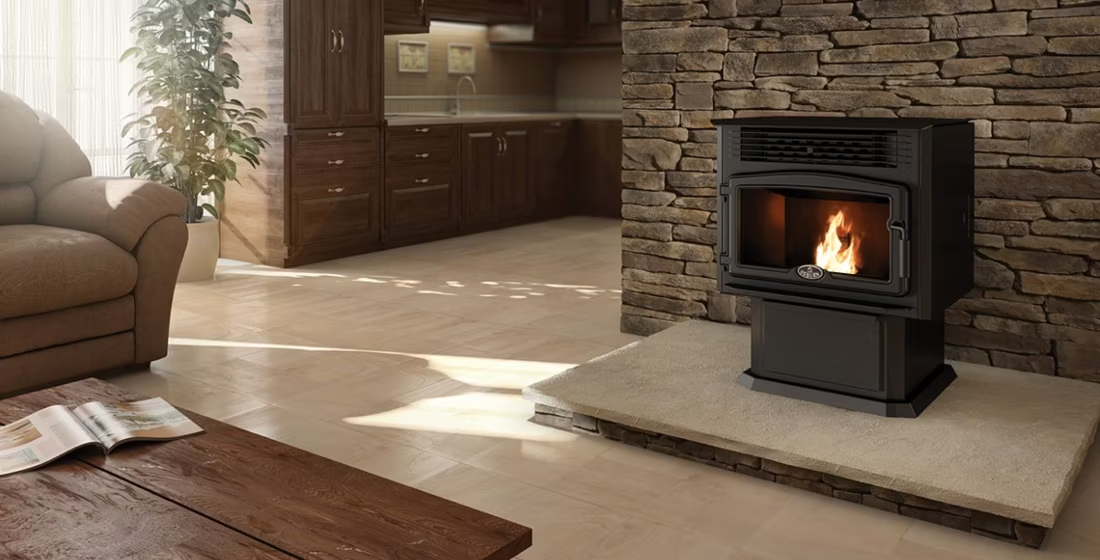
A pellet stove is a freestanding unit that sits on a hearth pad against a wall and vents out through a small pipe—it can go almost anywhere in a room with the right clearances. A pellet insert is built to slide into an existing masonry fireplace opening, using a stainless liner run up the old chimney flue instead of relying on the old open-hearth draft. For Gaffney-area homes with an existing wood fireplace that's rarely used, a pellet insert is often the simpler upgrade because it repurposes the chimney you already have. Homes without an existing fireplace opening are better suited to a freestanding stove.
What's the best pellet stove for Cherokee County's climate?
Because winters here are mild by national standards, most Cherokee County homeowners don't need the largest-hopper, longest-burn-time models built for sub-zero climates—a mid-size unit from a mainstream line like Harman, Englander, or US Stove covers a typical overnight burn on one hopper load without issue. What matters more locally is convenience and reliability: an automatic ignition system and a thermostat that can hold a room steady through the mild-but-real cold snaps that hit the Upstate a few times each winter. Ask your local dealer about hopper capacity relative to your square footage rather than chasing the longest burn-time spec—in this climate, that's rarely the limiting factor.
How much maintenance does a pellet stove need?
Pellet stoves need more routine attention than a gas unit but less than a wood stove chimney sweep. Plan on emptying the ash pan every few days during regular use, cleaning the burn pot weekly to keep the auger feeding cleanly, and scheduling a full professional service annually—typically before burning season starts in the fall—to clean the exhaust fan, inspect the venting, and check the auger motor. Skipping the annual service is the most common cause of feed jams and inefficient burns, so it's worth booking with a local dealer or service tech rather than deferring it.
Where can I buy pellet fuel in Cherokee County?
Local hearth retailers and several farm-supply and hardware stores around Gaffney and Blacksburg carry Lignetics, Hamer Pellet Fuel, and Greenway Renewable Energy bags, usually sold in 40-lb bags (50 bags to a ton) or by the pallet for bulk buyers. Because Hamer Pellet Fuel is produced within the state, supply tends to stay steady through the winter without the shortages that hit some regions during cold snaps further north. Your dealer can advise on which brand's ash content and BTU output work best in the specific stove you buy.
Pellet stove vs. wood stove—which is right for my Cherokee County home?
Wood stoves burn free or low-cost fuel if you're willing to cut your own—Forest Service permits through the Nantahala-Pisgah National Forests to the west run about $20 per cord during the May-to-October cutting season, and local oak, pine, and hickory all split and burn well. Wood also keeps working during a power outage, which matters if Broad River Electric Cooperative service is interrupted during a storm. Pellet stoves trade that off for convenience—load the hopper, set the thermostat, and walk away—plus less ash and no chimney creosote buildup, but they need electricity to run the auger and blower, so they're not a backup option during an outage. For Cherokee County's relatively mild winters, many homeowners choose pellet for the daily-use convenience and keep a wood option or generator as backup for the rare extended outage.
What's the difference between an insert and a zero-clearance fireplace?
An insert is a fireplace that slides into a pre-existing wood-burning fireplace—if you don't have one, there's nothing to insert it into. A zero-clearance fireplace is built into a framed wall, which makes it the answer for remodels and new construction. Simple test: existing masonry fireplace means insert; blank or framed wall means zero-clearance.
Why is my open fireplace making my house colder?
Open fireplaces suck—literally. As the fire burns, it consumes air your furnace already paid to heat and pulls it out through the chimney, so the house is actually colder after the fire goes out than before you lit it. An insert fixes this: it seals the chimney, puts fixed glass across the front, and turns that hole in your house into a real heat source.
Can I install a fireplace myself?
If you're putting a fire in your house on purpose, it's best to work with an expert. Unless you're genuinely experienced in framing, gas line, vent pipe, and the national code on clearances to combustibles, have a professional do it—and ideally the same company that sells you the fireplace, so warranty, service, and liability all live under one roof.
What is an in-home preview and do I need one?
It's a visit where a hearth professional measures your space, confirms the model you picked actually works in your home, and walks the specs—framing, gas line, venting, finish work—before anything is ordered. Some details you just can't know until you see the house. Never make a down payment without one; it's the single most-skipped step that burns buyers.
Stove and Fireplace Dealers in Cherokee County
Listings include WhyFire partner dealers, dealers we have verified as authorized for the brands we recommend, and established local businesses that carry hearth products. Every listing shows which one it is. The ones marked Preferred run on WhyFire's software, so they can show you real pricing and book your appointment right here. No manufacturer pays for placement. How we verify dealers →
Future Energy Of Shelby
Piedmont Chimney & HVAC LLC
Phillips-Lawing Fuel, Inc.
Phillips- Lawing Fuel, Inc- Mooresboro
Kamin Fireplace & Service
Western Carolina Stone
Carolina Hearth & Patio
Forest City Mower
Superior Plus Propane D/b/a Freeman Gas - Spartanburg
Pellet Brands Stocked Around Cherokee County
Manufacturers will point you to the nearest stocking dealer.
Find your pellet stove in Cherokee County.
Tell us a bit about your home and we'll match you with the right pellet stove or insert, plus a free Project Guide & Parts List—the exact parts, vent kit, and a recommended local Cherokee County dealer for your project.
Find Your Fireplace →