
Keep Your Family Warm and Safe—No Matter What
With such a mild, short winter heating season, Cayce doesn't need wood heat the way colder regions do. For the homes that still want it, we'll connect you with a local dealer who actually carries it.
Every Project Starts From One of These Five Situations
Mild Midlands winters make wood heat the exception, not the rule.
Cayce sits at about 120 feet elevation along the Congaree River in South Carolina's Midlands, where the average winter low hovers around 37°F and the city sees a mild, short winter heating season—a fraction of what a place like Fargo, ND or Duluth, MN deals with over the same stretch. That climate reality is why natural gas and electric heat pumps, not wood, are the standard heating choices for most Cayce homes, and why we've flagged wood as a niche fit here rather than a mainstream one.
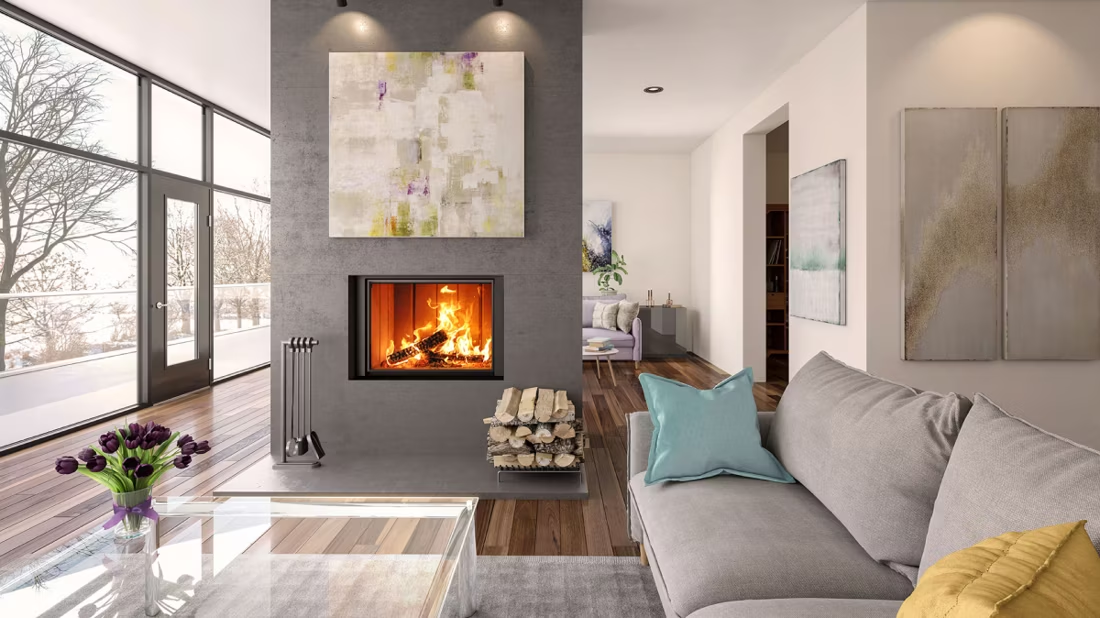
That said, wood hasn't disappeared from Cayce entirely. Older homes in Cayce and neighboring West Columbia often still have working masonry fireplaces, and some homeowners want a wood-burning insert or freestanding stove for ambiance, for occasional cold snaps in the 20s, or as backup heat during the ice storms that periodically knock out power across the Midlands. Oak, pine, and hickory are all readily available locally if you go this route—it's just a smaller, more specialized market than gas or electric, so finding a dealer who actually stocks and installs wood units matters more here than it does in a colder market.
Three steps. No salesperson until you're ready.
Tell us about your project
Your zip code, your situation, and the fuel you're leaning toward—or let the answers point you to one.
See what's actually available
The brands dealers within 100 miles genuinely carry—real options, never a catalog mirage.
Get your dealer & Project Guide
A trusted local dealer, plus the free Project Guide & Parts List that names every component of the job.
Frequently Asked Questions
How much does a wood stove or insert cost to install in Cayce?
Because wood is a niche install in this climate, pricing runs on the higher end of typical Southeast rates—expect roughly $3,800 to $7,500 for a freestanding stove or insert, including a code-compliant chimney or liner. Fewer Midlands dealers stock wood-burning units compared to gas or electric, so sourcing the right stove and a qualified installer sometimes means working with a Columbia-area retailer that serves Cayce and Lexington County rather than a shop physically located in town.
Why isn't wood heat more common in Cayce?
It comes down to how much heating a winter actually demands. Cayce has a mild, short heating season with winter lows typically staying in the high 30s—mild enough that a heat pump or gas furnace handles the season without much strain. Compare that to a wood-heavy market like Bozeman, MT or Burlington, VT, where winters regularly demand 24-hour supplemental heat for months. In Cayce, wood tends to be a choice made for atmosphere, backup power, or a specific existing fireplace rather than a heating necessity.
Can I still put a wood-burning insert into my existing fireplace?
Yes, and it's the most common wood project we see in this area. Many homes in Cayce and West Columbia have older open masonry fireplaces that were built for looks more than heat output. A wood insert with a stainless steel liner uses that existing chimney, tightens up the whole system, and turns a drafty, inefficient fireplace into something that can actually throw heat during a cold snap or power outage. A local dealer will need to inspect your flue's condition and dimensions before quoting the liner.
Do I need a permit for a wood stove installation in Cayce?
Generally yes—new wood-burning appliance installations require a building permit through the City of Cayce or Lexington County building department, depending on your address and zip code (29033, 29172, 29201, or 29209). Most installers handle the permit application and inspection scheduling as part of the job. Since South Carolina doesn't list any air quality non-attainment concerns for this area, there's no wood-burning curtailment program to worry about, unlike in some Western states.
What kind of firewood is available locally for a wood stove?
Oak, pine, and hickory are the three species you'll most reliably find split and stacked around Cayce and Lexington County. Oak and hickory burn longer and hotter, making them the better choice for a stove you actually intend to heat with; pine burns faster and is more common for kindling or shoulder-season fires. Because wood heat is a smaller market here, expect fewer dedicated firewood suppliers than you'd find in a colder state—many sellers are seasonal or word-of-mouth rather than year-round operations.
Wood vs. gas—which makes more sense for a Cayce home?
For most Cayce homes, gas is the more practical primary choice: natural gas and propane fireplaces deliver instant heat with no wood handling, and they're sized correctly for a climate where you're heating maybe a few dozen nights a year, not the whole winter. Wood makes more sense as a secondary system—something to fall back on during an ice storm outage, or to install in a fireplace you already have for the ambiance of a real fire. Very few Cayce homeowners are choosing wood as their sole heat source.
Are there burn bans or air quality restrictions on wood stoves in Cayce?
No—Cayce and Lexington County aren't listed as a non-attainment area, and there's no winter inversion or wildfire smoke pattern here like you'd see in parts of the West. That means no seasonal curtailment periods restricting when you can burn. The main consideration is simply good neighbor etiquette in a fairly dense suburban area—burning well-seasoned hardwood like oak or hickory keeps smoke output low regardless.
Does a wood stove make sense as backup heat during a power outage?
It's one of the better reasons to install one here. The Midlands gets hit by ice storms every few winters that can knock out power for days, and a wood stove or insert is one of the only heating options that keeps working with no electricity at all—unlike most gas fireplaces, which need power for the blower even if the pilot stays lit, and unlike any electric unit. If backup heat during outages is your main motivation, a local dealer can help you pick a stove that doesn't rely on a fan for its primary heat output.
Wood vs. pellet stove—is either one really worth it in Cayce?
Both are niche choices in this climate, and for similar reasons—with such a mild, short heating season, neither is needed as a primary heat source. Between the two, wood has the edge for backup power resilience since it needs no electricity to run, while pellet stoves require power for the auger and blower and won't help during an outage. If ambiance and occasional supplemental heat are the goal rather than storm backup, either can work, but expect a smaller pool of local dealers stocking pellet units than you'd find in the Midwest or Pacific Northwest.
Why won't my new wood stove get going like my old one?
New wood stoves are 70%+ efficient, so far less heat goes up the flue—which also means less draft to get a fire established. The rule: build a genuinely hot fire for about 45 minutes before you choke it down. Skip that and you get smoke in the room, creosote in the chimney, and a fire that never takes off. Most performance complaints trace straight back to this.
Why is my open fireplace making my house colder?
Open fireplaces suck—literally. As the fire burns, it consumes air your furnace already paid to heat and pulls it out through the chimney, so the house is actually colder after the fire goes out than before you lit it. An insert fixes this: it seals the chimney, puts fixed glass across the front, and turns that hole in your house into a real heat source.
Can I install a fireplace myself?
If you're putting a fire in your house on purpose, it's best to work with an expert. Unless you're genuinely experienced in framing, gas line, vent pipe, and the national code on clearances to combustibles, have a professional do it—and ideally the same company that sells you the fireplace, so warranty, service, and liability all live under one roof.
Does a fireplace add value to my home?
On average, a fireplace adds back to the home about the same amount you spent installing it. Add the monthly savings from heating the rooms you actually use instead of the whole house—often hundreds of dollars a year—and the value case is strong before you even count what a fire does for how your family uses the room.
Nearby Dealers
Hearth shops serving Cayce and the surrounding area. Every listing shows whether it is a WhyFire partner, a dealer we have verified as authorized for the brands we recommend, or a local business carrying hearth products. No manufacturer pays for placement. How we verify dealers →
Meetze Plumbing Co Inc
Edisto Gas - Columbia
Palmetto Propane, Fuels, & Ice
Comfort Control Air
Southern Propane
Ridge Lp Gas Inc.
Barnes Oil And Propane
Find your wood fireplace in Cayce.
Tell us about your home and your reason for wanting wood heat—ambiance, backup power, or an existing fireplace—and we'll match you with a local dealer and send over a free Project Guide & Parts List built for your Cayce project.
Find Your Fireplace →